
Everyone forgets a name or misplaces keys now and then. As we get older, these moments can start to feel worrying, and memory supplements begin to look tempting.
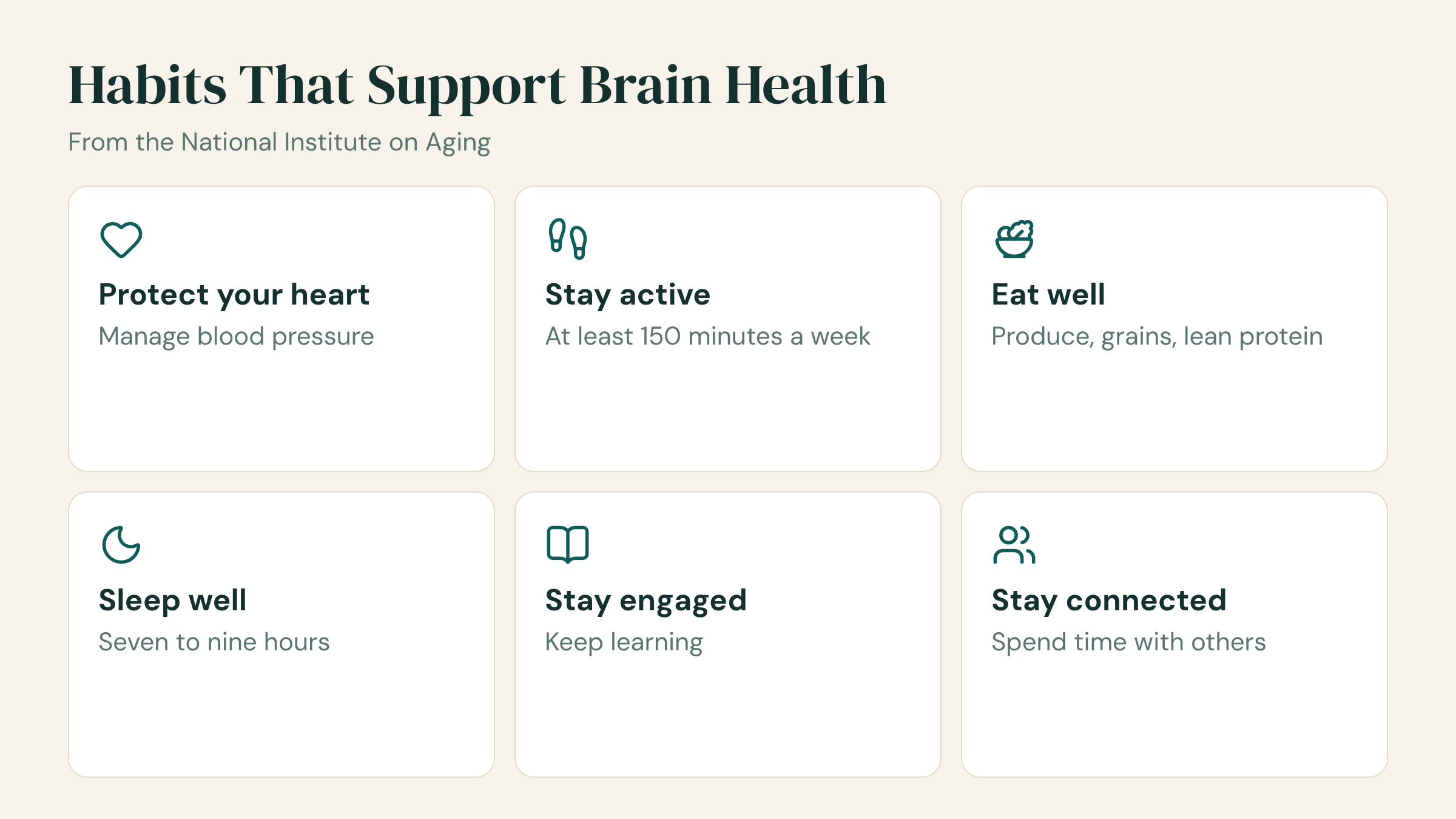
Here are the habits with the best evidence for protecting brain health as you age.
The evidence points somewhere else first. Everyday habits have more support than most pills. Here is what may help your brain, what supplements can and cannot do, and when memory changes need a doctor’s attention.
Is Forgetfulness Normal?
Thinking can slow a little with age. Taking longer to recall a word or misplacing something now and then is common.
Changes that affect daily life are different. The National Institute on Aging notes that declines in thinking can affect everyday abilities such as driving, paying bills, or cooking. These should be checked.
Habits That Support Brain Health
Protect Your Heart
What is good for your heart is often good for your brain. The NIA says high blood pressure in midlife is linked to later cognitive decline. Managing blood pressure, diabetes, and cholesterol all matter.
Stay Active
The NIA cites federal guidelines of at least 150 minutes of physical activity a week. Walking is a good start. Balance and fall-prevention programs also help protect you from injuries.
Eat Well
The NIA recommends a balanced diet with produce, whole grains, lean proteins, and low-fat dairy. The Mediterranean and MIND diets have shown possible benefits, though results are not conclusive.
Sleep Well
Aim for seven to nine hours a night. If you snore loudly or wake up tired, talk to your doctor.
Keep Your Mind Engaged
Learning something new, reading, or taking up a hobby can keep your mind busy. Structured cognitive training has shown some benefits, but the NIA says evidence for commercial brain-training apps is not sufficient.
Stay Connected
Volunteering, group activities, and regular contact with others may support thinking skills. They also lift your mood.
Limit Alcohol and Do Not Smoke
Both can harm your health over time. Ask for support if you want help cutting back or quitting.
Do Memory Supplements Work?
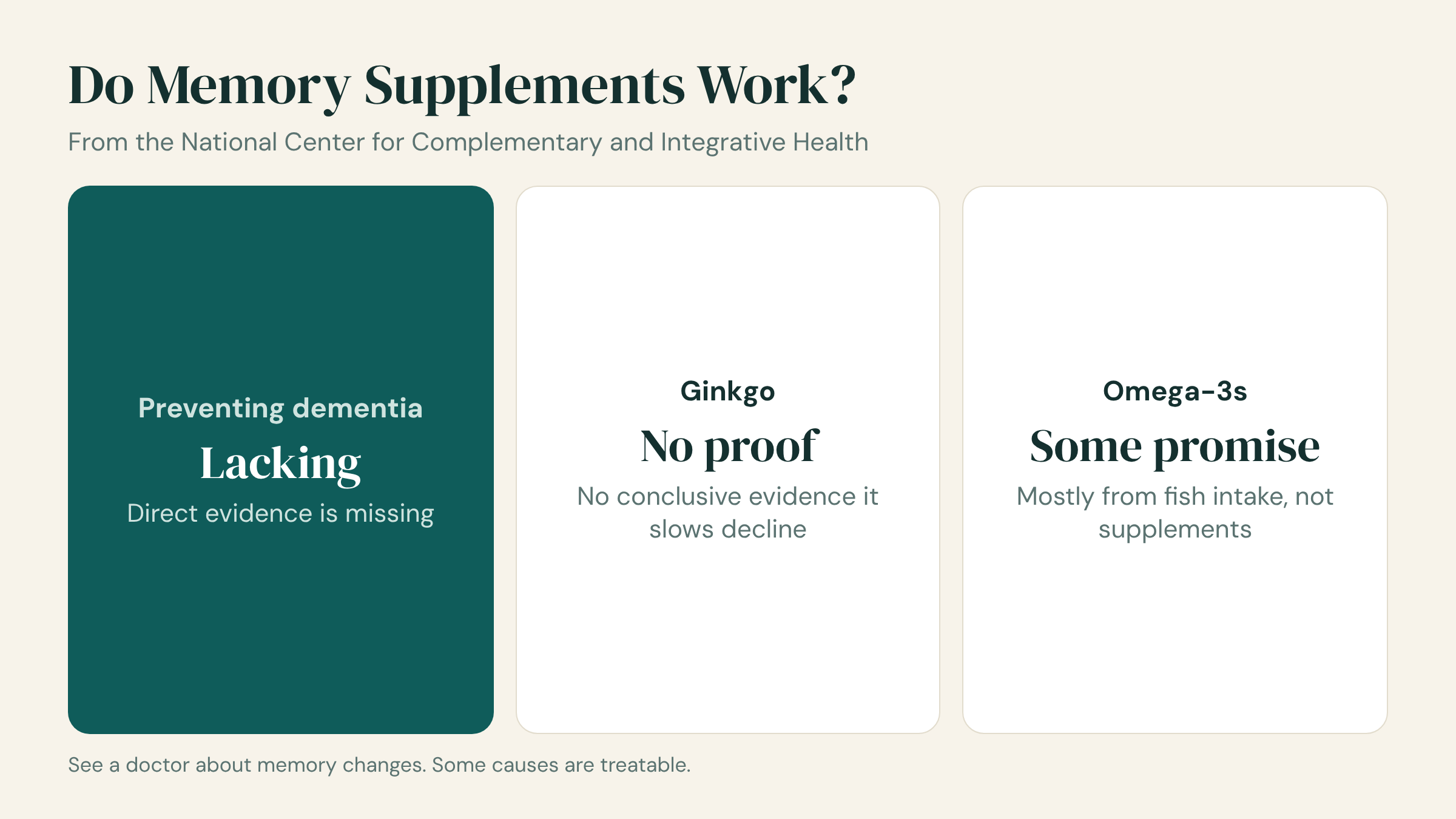
The National Center for Complementary and Integrative Health says direct evidence that dietary supplements can prevent Alzheimer’s disease or other dementias is lacking. A few trials have shown modest effects on cognitive decline.
- Ginkgo biloba: There is no conclusive evidence that it prevents or slows dementia or cognitive decline.
- Omega-3s: They have the most consistent positive findings for preventing decline, often measured through fish intake. Supplements have not been shown to help treat Alzheimer’s.
- Vitamin E: Few studies exist, and most findings are negative.
- Curcumin: Evidence is too limited and inconsistent to support a conclusion.
- B vitamins: Short-term use has not improved thinking in older adults. Too much vitamin B6 can cause serious side effects.
Be wary of products that promise sharper memory in days, or claim to reverse dementia. Talk to your healthcare provider about anything you take.
Treatable Causes of Memory Problems
Memory trouble is not always dementia. The NCCIH says treatable conditions such as depression, medication reactions, and thyroid, liver, or kidney problems can impair memory.
The NIA adds that antihistamines, sleep aids, antipsychotics, and muscle relaxants are among medicines that may affect thinking. Do not stop a prescription by yourself. Ask your doctor to review your medicines.
When to See a Doctor
Do not delay. See a healthcare provider if you or a loved one notice any of these:
- Memory loss that affects daily life
- Getting lost in familiar places
- Trouble managing bills or medicines
- Repeating the same questions
- Changes in mood, personality, or judgment
Sudden confusion, especially during an illness or hospital stay, needs urgent care. Call emergency services for signs of stroke, such as face drooping, arm weakness, or trouble speaking.
Protect Your Head
Falls and accidents can cause brain injuries. Wear a seat belt and a helmet when appropriate. Remove tripping hazards at home, and get your vision checked.
A Simple Brain-Healthy Week
- Walk for 30 minutes on most days
- Eat fish or beans a few times a week
- Call a friend or family member
- Learn something new, such as a word game or a recipe
- Keep regular sleep and wake times
- Book your blood pressure check
Common Questions
Are brain games worth it?
They can be fun, but the evidence for commercial apps is not strong. Real-life learning and social activities are good alternatives.
Can a multivitamin help memory?
Research is ongoing, and a multivitamin is not a proven way to prevent dementia. Ask your doctor whether it makes sense for you.
Does stress affect memory?
Yes. Mayo Clinic links long-term stress with trouble with memory and focus. Poor sleep can have a similar effect.
Can depression look like memory loss?
Yes. The NIA says depression can cause confusion or attention problems. It is treatable, so please speak with a professional.
Should I get tested if dementia runs in my family?
Talk to your doctor about your concerns. They can explain your options and what steps can help you lower your overall risk.
How to Support a Loved One
It can be hard to raise concerns about someone’s memory. Choose a calm moment, mention specific things you have noticed, and offer to go with them to an appointment.
Bring a list of their medicines and a few examples of the changes you have seen. These details help a doctor find out what is going on. Early answers can make it easier to plan and to get the right support.
Start Small
Pick one habit to begin with, such as a daily walk or a regular bedtime, and build from there. Consistency matters more than perfection.
The Bottom Line
No supplement has been proven to prevent dementia. Daily habits such as exercise, good food, sleep, and social contact, along with managing blood pressure, offer a better foundation.
If memory changes affect your daily life, see a doctor soon. Some causes are treatable, and early answers can help you plan.
Related articles
This article is for general information only and is not medical advice. Talk to a healthcare professional about your symptoms, and before starting any supplement, especially if you take medication or have a medical condition.


2 Comments on “Brain Health and Memory: Habits and Supplements That Matter”