
Stiff knees in the morning or sore hips after a walk can make everyday life harder. Many people turn to supplements hoping for an easy way to feel better.
This guide reviews the evidence on the most popular joint health supplements.
The research on joint supplements is mixed. Some movement-based options actually have stronger support. Here is what the evidence says and how to protect your joints.
Why Joints Hurt
Joints are the places where bones meet. Cartilage cushions the ends of the bones, helping them move smoothly. With osteoarthritis, that cushion wears down over time, which can lead to pain and stiffness.
Joint pain can also come from injury, overuse, gout, or inflammatory conditions such as rheumatoid arthritis. These need different care, so a proper diagnosis matters.
Glucosamine and Chondroitin
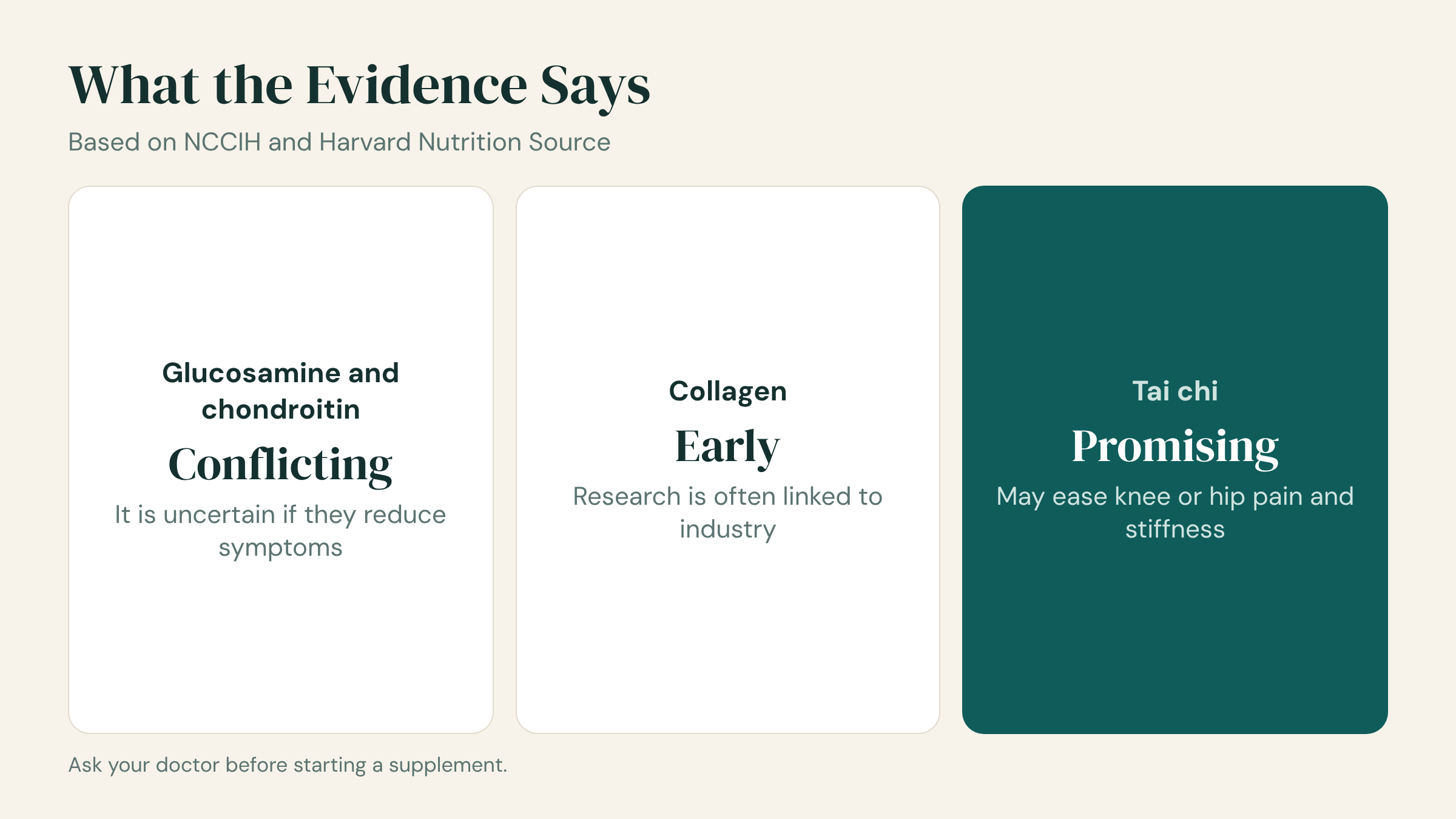
These are among the best-known joint supplements. The National Center for Complementary and Integrative Health says studies on knee osteoarthritis show conflicting results, so it is still uncertain whether they meaningfully reduce symptoms.
Some people feel better while taking them, but this could also be from other factors. If you try them, set a time limit and stop if you see no benefit. Some glucosamine products are made from shellfish, so check the label if you have an allergy.
Collagen
Harvard’s Nutrition Source says some trials suggest collagen supplements may improve joint mobility and reduce joint pain. It also notes that most research is linked to industry funding, and independent research is lacking.
Turmeric and Boswellia
Turmeric and boswellia are often sold for joint comfort because of claims about inflammation. Evidence is still limited, and products vary a lot in strength and quality.
Herbal products can interact with medicines, particularly blood thinners. Ask a doctor or pharmacist before you use them.
Other Supplements
The NCCIH says no conclusions can be drawn about DMSO, MSM, and SAMe. Research on DMSO and MSM is very limited, and SAMe results are inconsistent.
What Has Better Support?
Movement can feel like the last thing you want to do when your joints hurt, but it often helps. The NCCIH reports the following:
- Tai chi: It may help knee or hip osteoarthritis, with studies showing less pain and stiffness and better function.
- Yoga: It may help, but it has less research behind it.
- Acupuncture: It may help, though effects appear modest and short-lived.
- Massage: Evidence is limited and based on small studies.
Everyday Habits for Healthy Joints
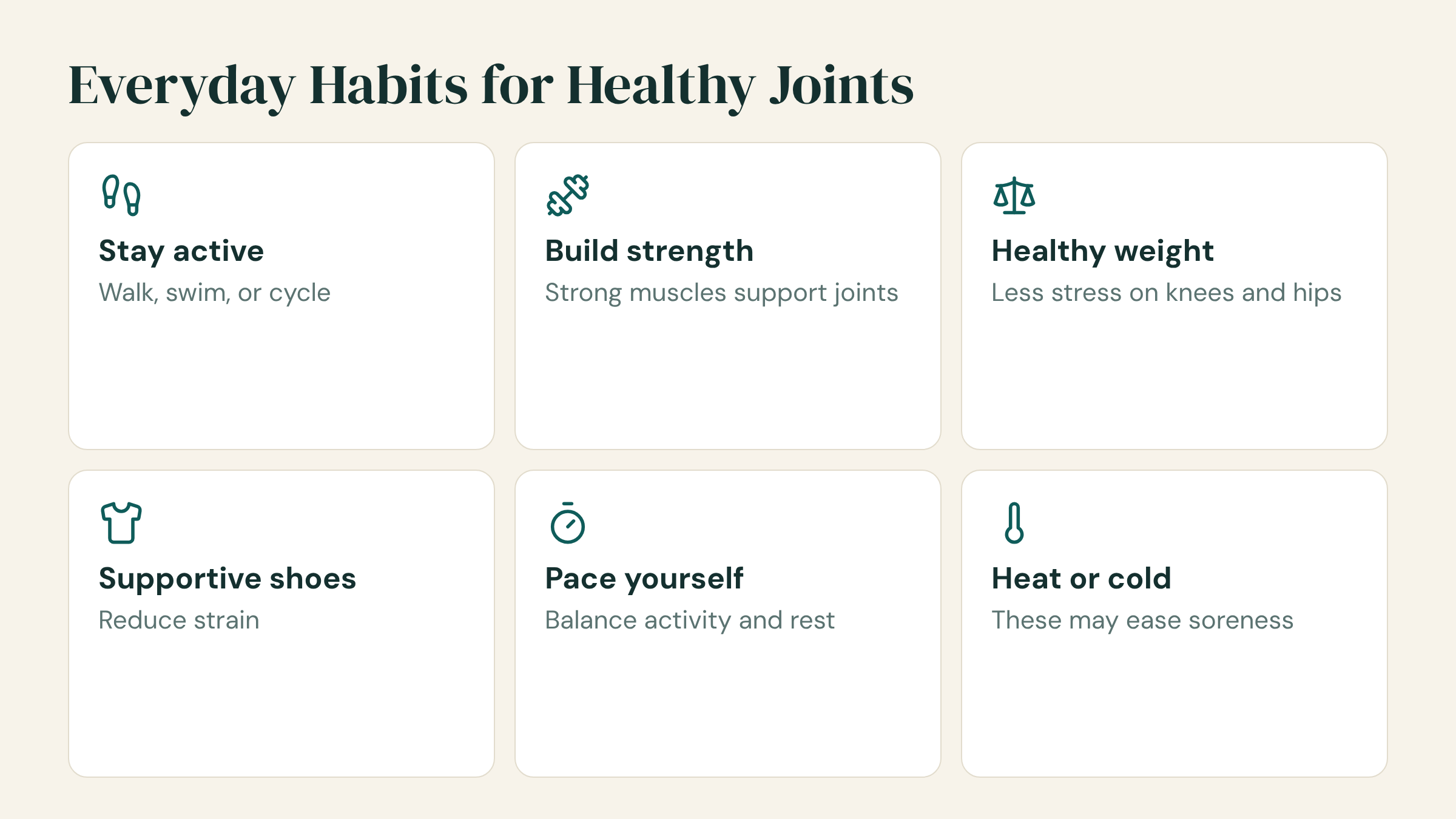
- Stay active: Walking, swimming, and cycling are gentle on joints.
- Build strength: Strong muscles help support your joints.
- Keep a healthy weight: Less weight means less stress on your knees and hips.
- Wear supportive shoes: Good support can reduce strain.
- Pace yourself: Balance activity with rest.
- Try heat or cold: Many people find that these ease soreness.
How to Start Moving When Joints Hurt
Begin with a few minutes of gentle movement and increase slowly. Some mild soreness can be normal when you start. Sharp pain or swelling is a sign to stop and get advice.
A physical therapist can show you exercises that suit your joints. This is especially useful if you have had an injury or you are afraid of making things worse.
Food and Joints
No food will rebuild cartilage, but a balanced diet supports your overall health and weight. Vegetables, fruits, whole grains, beans, fish, and olive oil are good choices.
Harvard says a balanced diet with enough protein, fruits, and vegetables supports your body’s own collagen.
How to Choose a Supplement Safely
- Talk to your doctor or pharmacist first
- Look for a third-party testing seal
- Avoid products that promise to cure arthritis or rebuild cartilage
- Be careful with blends that hide ingredient amounts
- Give it a fair trial, then stop if it does not help
When to See a Doctor
See a doctor if joint pain lasts more than a few weeks or limits your daily activities. Get prompt care if you have:
- A hot, red, or very swollen joint
- Fever along with joint pain
- Pain after a fall or injury
- A joint that cannot bear weight
- Stiffness that lasts a long time each morning
A hot, swollen joint can be a sign of infection or gout, and it should be checked quickly.
Common Questions
Does cracking your knuckles cause arthritis?
There is no good evidence of this, but stop if it causes pain or swelling.
Is walking bad for sore knees?
Walking is often helpful, as long as you pace yourself. Ask a professional if it makes your pain worse.
Will a supplement rebuild my cartilage?
Be doubtful of this claim. There is no reliable evidence that a supplement can restore worn cartilage.
A Simple Weekly Joint Routine
- Three days: Take a gentle walk, swim, or cycle.
- Two days: Do light strength exercises for your legs and hips.
- Most days: Stretch gently for a few minutes.
- One or two days: Try tai chi or yoga, if you enjoy them.
Adjust this to fit how your joints feel. A physical therapist can tailor a plan for you, and consistency usually matters more than intensity. Keep a short note of what makes your joints feel better or worse, and share it at your next appointment.
How long should I try a supplement?
Ask your doctor or pharmacist, since this depends on the product and your health. Set a review date before you begin, and write down how your joints feel so you can judge it fairly.
Can heat or ice replace a doctor’s visit?
They may ease everyday soreness, but they will not show why a joint hurts. Lasting pain still needs a proper check.
The Bottom Line: Joint Health Supplements
Joint supplements have mixed or limited evidence. Glucosamine and chondroitin show conflicting results, and collagen research is often tied to industry.
Movement, strength, healthy weight, and practices such as tai chi are often better places to start. See a doctor if your pain is severe, lasting, or sudden.
Related articles
This article is for general information only and is not medical advice. Talk to a healthcare professional about your symptoms, and before starting any supplement, especially if you take medication or have a medical condition.