

Collagen powders and drinks are everywhere, and many promise smoother, younger-looking skin. It is easy to see the appeal. A daily scoop sounds much simpler than a full skin care routine.
Here is what the research says about collagen for skin, and where it falls short.
The research does show some promise, but it also has real limits. This guide explains what collagen is, what studies say, and how to protect the collagen you already have.
What Is Collagen?
Collagen is the most abundant protein in your body. According to Harvard’s Nutrition Source, its fibers form connective tissue in your skin, bones, muscles, tendons, and cartilage. They help these tissues stay strong and resilient.
In your skin, collagen works like a support structure. Your body makes less of it as you get older, and that loss plays a part in sagging and wrinkles.
What Do Studies Show About Collagen and Skin?
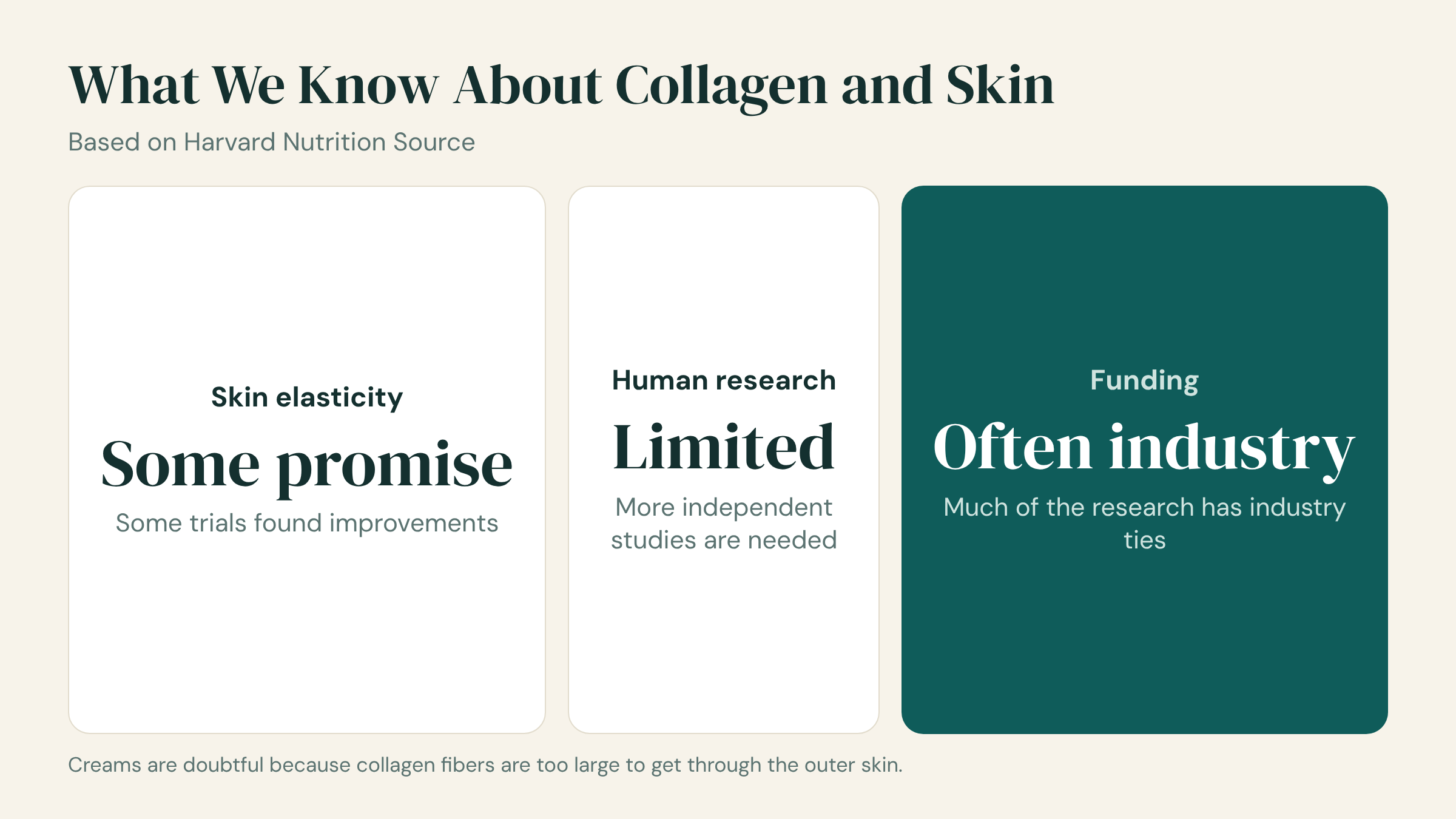
Harvard notes that some randomized controlled trials found collagen supplements improve skin elasticity. That is encouraging, but it says human studies are limited.
The American Academy of Dermatology says collagen may improve skin appearance, along with joint pain and possibly hair and nail strength. It also says more research is needed.
So collagen may offer some benefit, but it is not proven in the way many ads suggest.
Why the Evidence Has Limits
A major concern is who pays for the studies. Harvard says most collagen supplement research is funded at least partly by related industries, or its authors have industry ties. That makes it harder to judge how well these products work.
Other problems include:
- Product differences: Studies use different types and amounts of collagen.
- Small studies: Human research on skin remains limited.
- Uncertain contents: Supplement ingredients can be hard to confirm.
- Short timelines: Long-term benefits are not well understood.
How Does Your Body Use Collagen?
When you swallow collagen, your body does not send it straight to your skin. Digestion breaks it into amino acids, and your body then uses them wherever it needs protein.
This is why Harvard says eating collagen directly is not shown to benefit skin or joints in a simple, direct way. It is also why a label promising that collagen will “go straight to your wrinkles” deserves caution.
What About Collagen Creams?
Creams may help your skin feel moisturized, but Harvard says topical collagen is doubtful as a way to replace lost collagen. The fibers are too large to get through the outer layers of skin.
Are Collagen Supplements Safe?
Harvard says available research has not shown negative side effects in people taking collagen supplements. There are still some cautions to keep in mind.
- Heavy metals: Harvard notes concerns about heavy metals in some products.
- Mercury: The AAD says seafood-derived collagen may contain mercury.
- Testing: The AAD says many products lack third-party verification.
- Allergies: Collagen often comes from fish, beef, or eggs, so check labels if you have allergies.
The FDA does not review supplements for safety or effectiveness before they are sold. Look for a third-party testing seal if you decide to try one.
What About Bone Broth?
Bone broth is often sold as a natural collagen source. Harvard says its nutrient content varies widely, and one small study found lead in broth made with chicken bones.
It can be a warm, satisfying food, but it is not a reliable skin treatment.
What Damages Collagen?
Your body’s collagen production falls with age, and Harvard says some habits speed up the loss:
- Too much sun exposure
- Smoking
- Excess alcohol
- Lack of sleep
- Lack of exercise
How to Protect Your Collagen Naturally
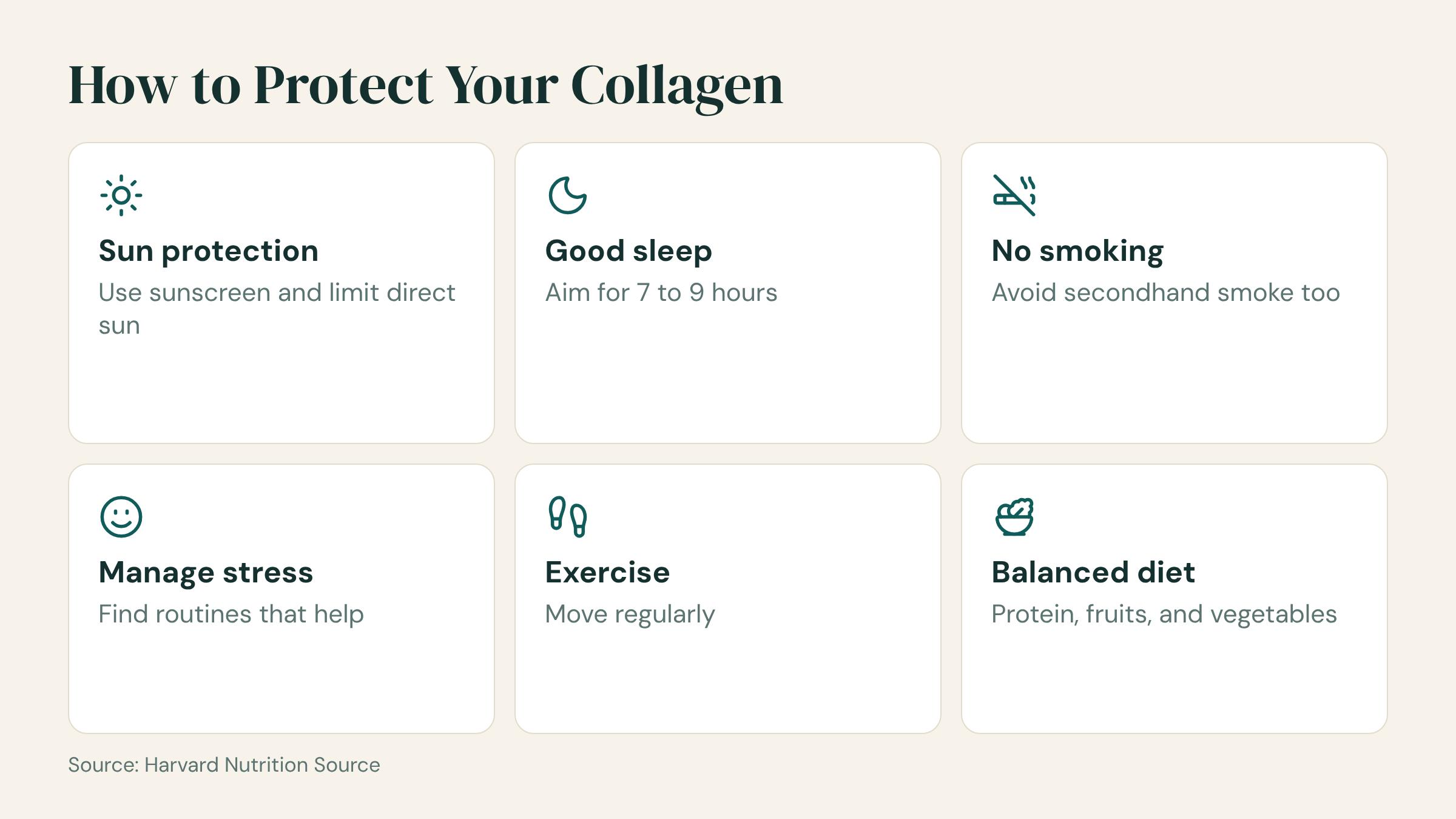
These habits cost little and support your health in other ways too.
- Protect your skin from the sun: Use sunscreen and limit direct sun. Cleveland Clinic suggests SPF 30 or higher.
- Sleep well: Aim for 7 to 9 hours a night.
- Do not smoke: Avoid secondhand smoke too.
- Manage stress: Find routines that help you relax.
- Exercise regularly: Choose movement you enjoy.
Foods That Help Your Body Make Collagen
Your body builds collagen from amino acids such as glycine and proline, along with zinc and vitamin C. Harvard says you can get these from a balanced diet.
- Protein foods: Fish, poultry, meat, eggs, dairy, beans, and soy
- Vitamin C foods: Citrus fruits, peppers, strawberries, and broccoli
- Zinc foods: Meat, seafood, nuts, and whole grains
Should You Try a Collagen Supplement?
That depends on your budget and expectations. If you try one, choose a tested product and treat it as a small extra, not a replacement for sun protection and healthy habits.
Ask your doctor first if you are pregnant, have a health condition, or take medication. The AAD also suggests weighing supplements as carefully as you would medicines.
Red Flags in Collagen Marketing
Be careful with any product that makes these claims:
- It erases wrinkles or reverses aging
- It works in days
- It uses a secret or proprietary formula with no amounts listed
- It relies only on before-and-after photos
- It claims to be doctor approved without saying who or how
Common Questions About Collagen
How long do you need to take collagen to see a change?
There is no reliable timeline, because studies use different products and amounts. Be wary of any brand that promises fast results. If you try a supplement, take a photo in the same light at the start, then judge it honestly after a few months.
Is marine collagen better than bovine collagen?
There is not enough independent research to say that one source is better. Choose based on allergies, diet, and quality testing. Keep in mind the AAD’s warning that seafood-derived products may contain mercury.
Can vegans get collagen?
True collagen comes from animals. Plant-based “collagen boosters” usually contain nutrients such as vitamin C and zinc, which support your body’s own production. You can get these from a varied diet as well.
Do I need collagen if I eat enough protein?
Most people can get the building blocks from food. A balanced diet with protein, fruits, and vegetables covers the basics at a lower cost than most powders.
The Bottom Line: Collagen for Skin
Collagen supplements may slightly improve skin elasticity, but the evidence is limited and much of it is tied to industry funding.
The best proven steps are simple: protect your skin from the sun, avoid smoking, sleep well, and eat enough protein and vegetables. If you still want a supplement, choose one with independent testing and keep your expectations modest.
Related articles
- Dry Skin After 50: Causes and Simple Care Tips
- How Sleep and Stress Affect Your Skin
- Vitamin C for Skin: Food, Serum, or Supplement?
This article is for general information only and is not medical advice. Talk to a healthcare professional about your symptoms, and before starting any supplement, especially if you take medication or have a medical condition.

1 Comment on “Does Collagen Really Work for Skin? What Studies Show”