
After a rough week, you may notice it in the mirror first. Your skin looks dull, a breakout appears, or an old rash flares up again. This is not just in your head.
The link between stress and skin is real, and poor sleep makes it stronger.
Your skin and your stress response are closely connected. Here is how stress and poor sleep can affect your skin, hair, and nails, and what you can do about it.
How Stress Reaches Your Skin
When you are stressed, your body releases hormones such as cortisol and adrenaline. Mayo Clinic explains that these prepare you to respond to a challenge.
The American Academy of Dermatology says stress hormones can increase oil production in your skin. It also says stress can intensify itching and slow skin healing.
The AAD also notes that stress can trigger first-time skin disease and worsen conditions such as acne, eczema, psoriasis, and rosacea.
Skin Conditions Linked to Stress
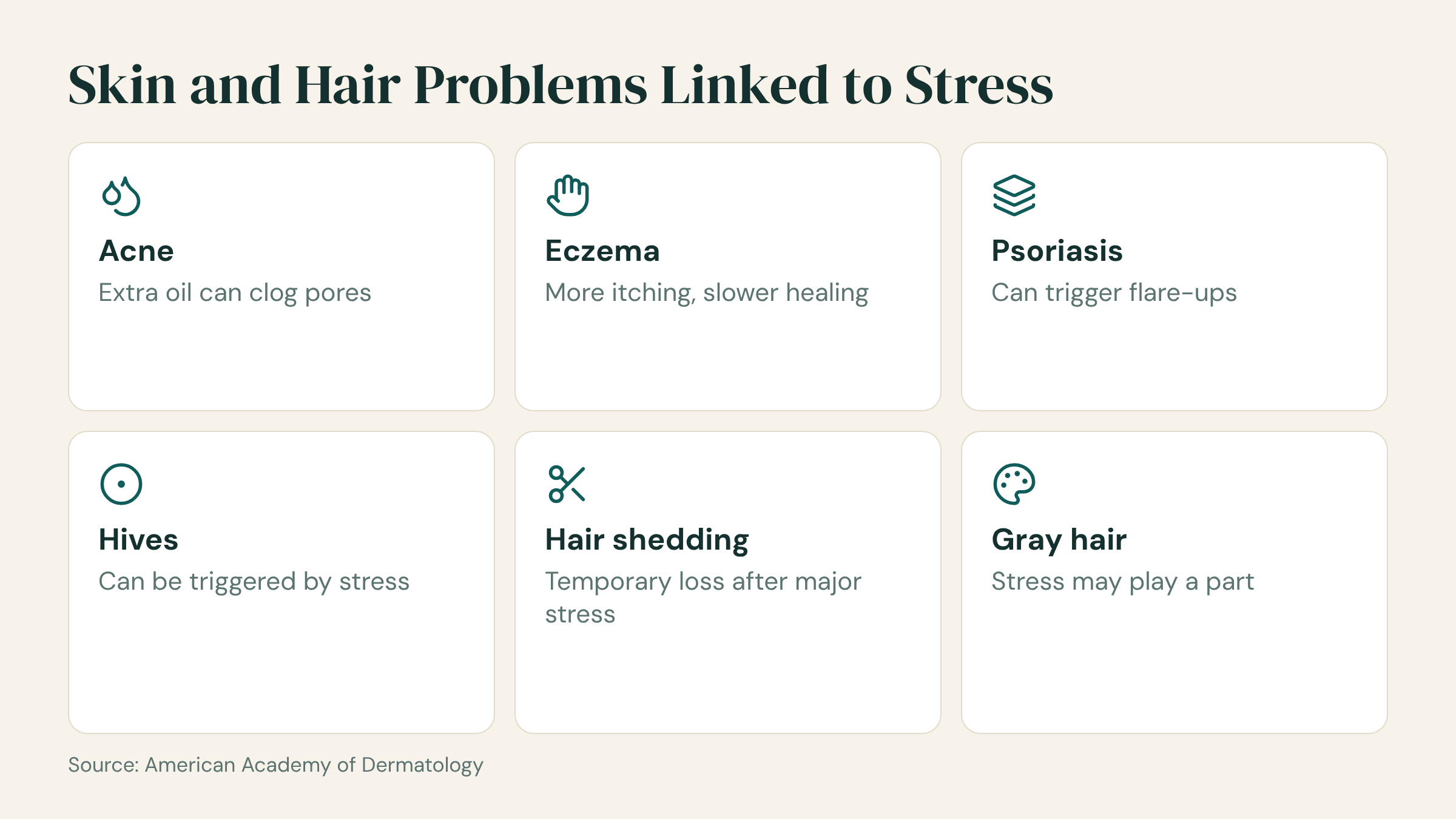
Acne
Extra oil can clog pores and cause breakouts. A dermatologist can treat acne and help prevent scarring, which is worth doing if your breakouts keep coming back.
Eczema
Stress does not cause eczema, but it can intensify itching and slow healing. Daily moisturizing and a treatment plan from a dermatologist are key.
Psoriasis
Stress does not cause psoriasis either, but some people find it triggers flare-ups. Learning your personal triggers can help.
Hives
Stress can trigger hives, which can then disrupt mood and sleep. Fragrance-free skin care and medical or light therapy may help.
Stress and Your Hair
Major stress can cause temporary shedding called telogen effluvium. Cleveland Clinic says acute cases tend to start two to three months after the stressor, and new growth follows once the cause is addressed.
The AAD also says stress is linked to compulsive hair pulling and may be connected to alopecia areata. It adds that stress may contribute to graying, though aging and genetics play a big role.
How Poor Sleep Affects Your Skin
Your body uses sleep for rest and repair. Harvard’s Nutrition Source lists lack of sleep among the habits that speed up collagen loss, and recommends 7 to 9 hours a night.
Poor sleep and skin problems can also feed each other. Itchy skin can keep you awake, and a lack of sleep can make stress harder to manage.
That can create a cycle. Stress makes your skin itch, itching disrupts your sleep, and tiredness makes the stress feel worse.
Why Your Skin Looks Tired
After a bad night, you might see dark circles, puffiness, or a dull complexion. These are usually temporary. Your sleep position and fluid buildup can play a part, so one bad night is nothing to worry about.
A long-running sleep shortage is more of a concern, for your general health as well as your skin.
A Simple Routine for Stressed Skin
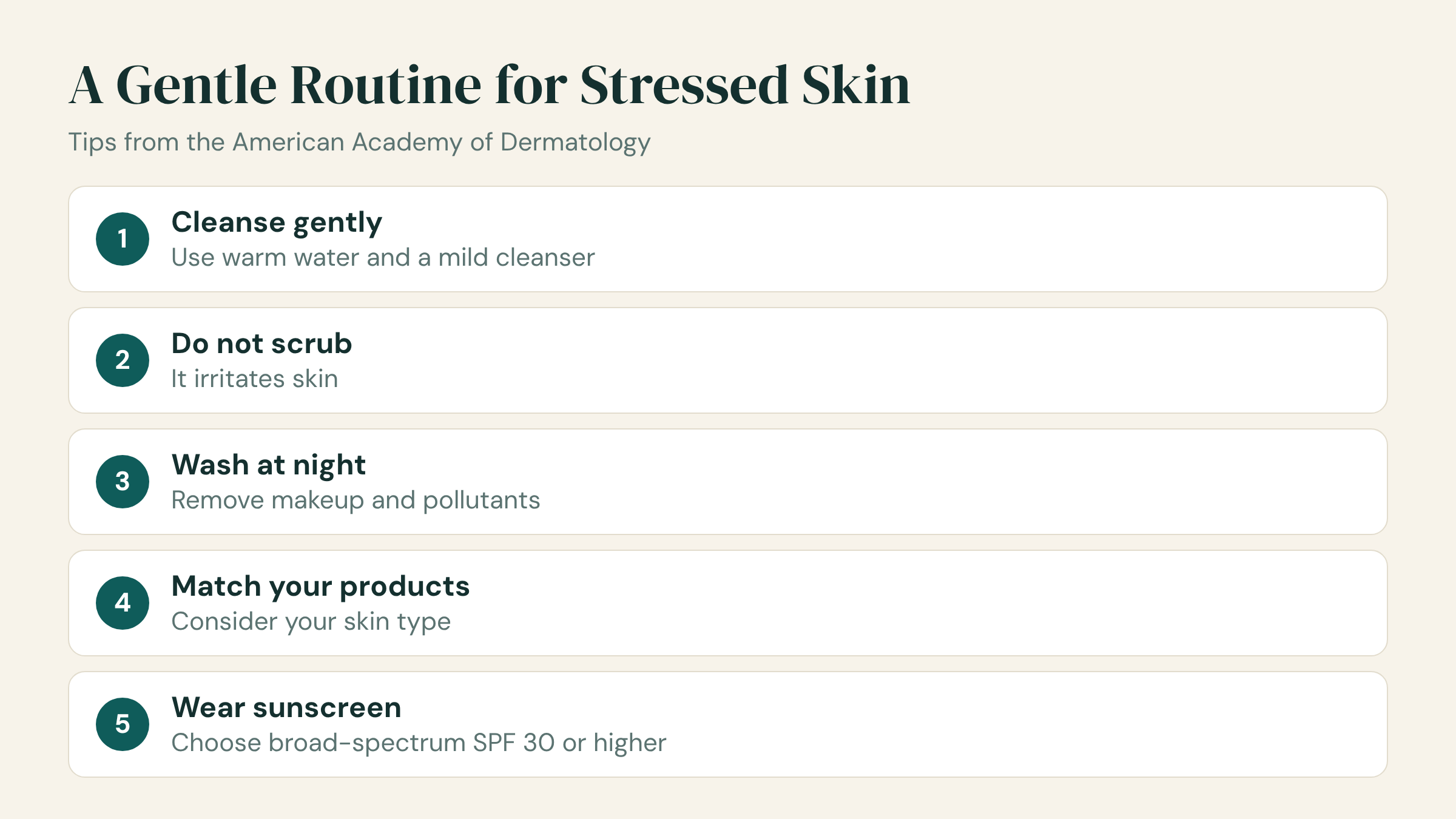
When your skin is reacting, keep your routine gentle. The AAD suggests these steps:
- Cleanse gently: Use warm water and a mild cleanser with your fingertips, then pat dry.
- Avoid scrubbing: It irritates skin and can make conditions worse.
- Wash at night: This removes makeup and pollutants from the day.
- Match products to your skin: Consider your skin type and any conditions.
- Wear sunscreen daily: Choose broad-spectrum SPF 30 or higher.
Avoid adding lots of new products when your skin is flaring. It is harder to see what helps, and more ingredients can mean more irritation.
Ways to Manage Stress
The AAD says mind-body practices can help when combined with medical treatment. Try these options:
- Meditation or mindfulness
- Yoga
- Breathing exercises
- Visualization
- Regular exercise
- Talking with friends, a support group, or a therapist
Ways to Sleep Better
Mayo Clinic’s sleep tips can also help your skin:
- Keep steady sleep and wake times
- Avoid large meals, caffeine, and alcohol near bedtime
- Keep your room cool, dark, and quiet
- Limit screens before bed
- Write down your worries before bed
If itching keeps you awake, moisturize before bed and speak with a doctor or dermatologist. Better control of your skin can improve your sleep too.
Do Supplements Help?
Probiotics are sometimes promoted for skin. The AAD says they may improve skin moisture and help conditions such as atopic dermatitis, with usually mild side effects. Most people can still meet their needs through a balanced diet.
Check with a dermatologist before starting a supplement, and do not use one in place of treatment that has been prescribed for you.
When to See a Dermatologist
See a board-certified dermatologist if you have a rash that keeps returning, acne that leaves scars, or sudden hair loss. Early treatment tends to give better results for many hair and skin problems.
Get medical help right away if hives come with swelling of your lips or throat, or trouble breathing. If stress feels unmanageable, talk with a healthcare professional. In a crisis in the US, call or text 988.
Small Habits That Add Up
You do not need a perfect routine to help your skin. Start with one or two changes you can repeat, such as a set bedtime or five minutes of slow breathing each evening.
Avoid picking at breakouts, since this can make them last longer and may leave marks. Try to wash pillowcases regularly, and keep your phone screen clean, as both touch your face often.
A short skin diary can help as well. Note when your skin flares, how you slept, and what was happening that week. Patterns can be useful to share with a dermatologist.
Small Steps Add Up
Start with one change, such as a regular bedtime, and give your skin a few weeks to respond.
The Bottom Line: Stress and Skin
Stress and poor sleep can make acne, eczema, psoriasis, hives, and hair shedding worse. They rarely act alone, but they can tip your skin over the edge.
Keep your skin care gentle, protect your sleep, and find a way to manage stress that you can stick with. If your skin is not improving, a dermatologist can help.
Related articles
- Dry Skin After 50: Causes and Simple Care Tips
- Vitamin C for Skin: Food, Serum, or Supplement?
- What Your Nails Can Say About Your Health
This article is for general information only and is not medical advice. Talk to a healthcare professional about your symptoms, and before starting any supplement, especially if you take medication or have a medical condition.
1 Comment on “How Sleep and Stress Affect Your Skin”