Cortisol is often called the stress hormone, and social media has made it sound like a villain. In reality, your body needs it to work properly.
Too much or too little can cause problems, but normal daily changes are healthy. Here is what cortisol does, what can go wrong, and what claims to be wary of.
What Is Cortisol?
Cortisol is a steroid hormone made by your adrenal glands, which sit on top of your kidneys. According to Cleveland Clinic, it affects many parts of the body, not only your stress response.
Your brain controls how much is made. When levels are low, the hypothalamus sends a signal to the pituitary gland. The pituitary then tells your adrenal glands to make more.
What Does Cortisol Do?
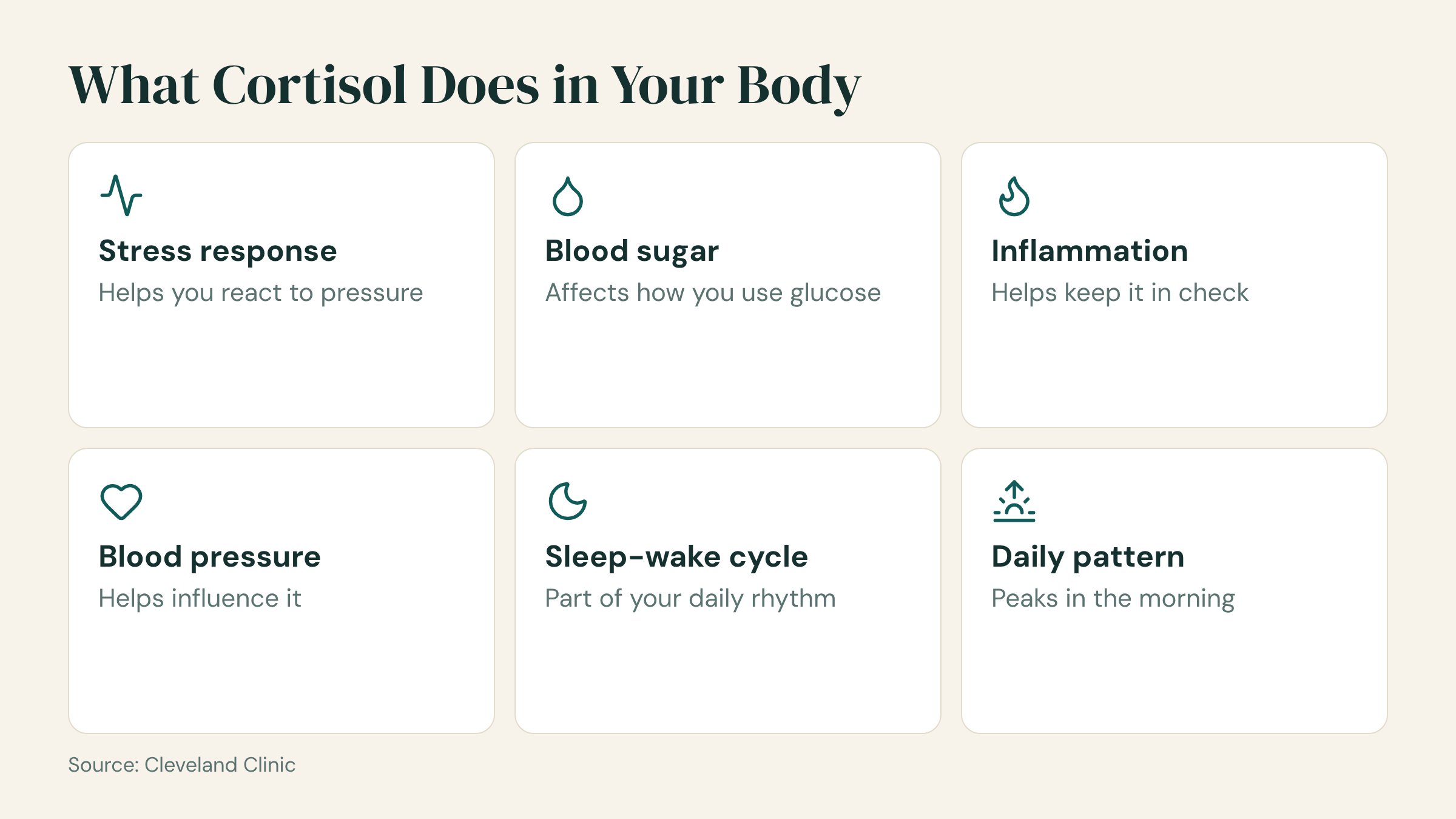
Cleveland Clinic lists several key roles:
- Manages the stress response: It helps your body react to pressure or danger.
- Regulates blood sugar: It affects how your body uses glucose for energy.
- Reduces inflammation: It helps keep inflammation in check.
- Influences blood pressure: It plays a part in keeping blood pressure steady.
- Helps control your sleep-wake cycle: It is part of your body’s daily rhythm.
During stress, Mayo Clinic explains, cortisol raises blood sugar and helps your brain use it. It also slows functions that are not needed in an emergency, such as digestion and growth.
How Cortisol Changes During the Day
Cortisol follows a daily pattern. It is usually lowest around bedtime and peaks in the morning just before you wake up.
This morning rise is normal. It is not a sign that something is wrong. In fact, it seems to help set your body’s internal clock.
Because levels change through the day, a single number means little without context. That is one reason doctors time cortisol tests carefully.
What Is the Link Between Cortisol and Stress?
Your body releases cortisol when you face a stressful situation. Once the stress passes, levels should fall.
With long-term stress, the stress response can stay switched on. Mayo Clinic links ongoing stress with anxiety, poor sleep, digestive problems, headaches, weight gain, and heart problems.
However, feeling stressed does not mean you have a cortisol disorder. Everyday stress and a medical condition that affects cortisol are very different things.
What Causes High Cortisol?
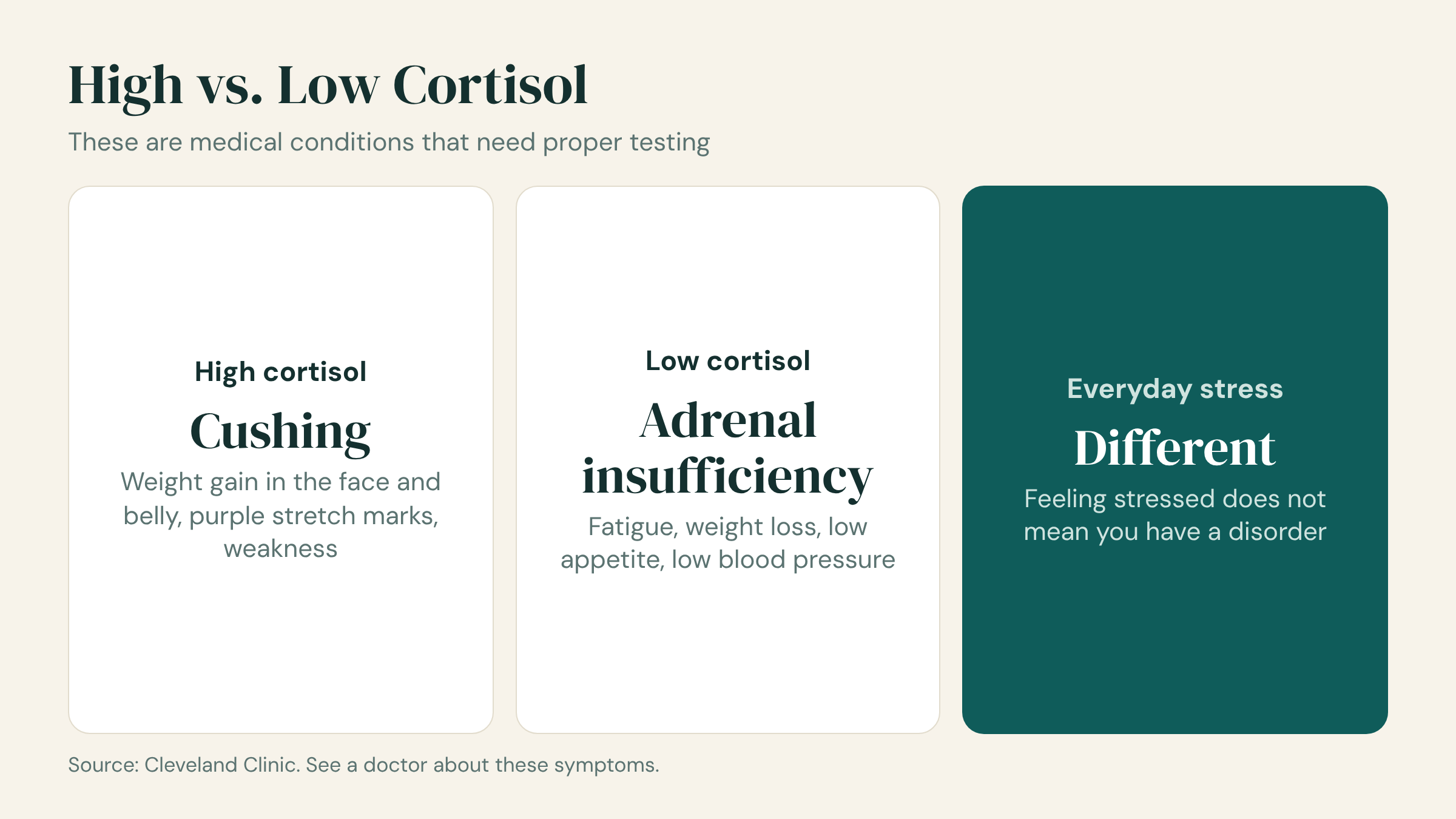
Very high cortisol over a long time can lead to Cushing syndrome. Cleveland Clinic says common causes include:
- Long-term use of high-dose corticosteroid medicines
- Tumors that produce ACTH, usually in the pituitary gland
- Tumors in the adrenal glands
Symptoms can include weight gain in the face and belly, purple stretch marks, muscle weakness, high blood sugar, high blood pressure, and weak bones.
Do not stop prescribed steroids on your own. Talk with your doctor first, because stopping suddenly can also cause problems.
What Causes Low Cortisol?
When the body does not make enough cortisol, this is called adrenal insufficiency. Addison’s disease is one cause, where the immune system attacks the adrenal glands.
Other causes include infection, bleeding in the glands, pituitary problems, and abruptly stopping corticosteroid treatment.
Symptoms include fatigue, unintentional weight loss, loss of appetite, and low blood pressure. These signs are worth discussing with a doctor.
How Is Cortisol Tested?
A healthcare provider can check cortisol if your symptoms suggest a problem. MedlinePlus has a guide to cortisol testing.
Testing should be ordered and interpreted by a professional. Results depend on the time of day, your medicines, and your symptoms. Home tests and online quizzes cannot diagnose a cortisol disorder.
What About “Cortisol Face” and “Cortisol Belly”?
You may have seen these terms on social media. They are not medical diagnoses. Weight gain and a puffy face have many possible causes, including diet, sleep, medicines, and fluid retention.
True Cushing syndrome is a medical condition that needs proper testing. If you have rapid weight changes, purple stretch marks, or muscle weakness, see a doctor rather than relying on online advice.
Can Supplements Lower Cortisol?
Many products promise to balance or lower cortisol. Be careful with these claims. Most people do not need to lower a healthy hormone, and normal changes through the day are not a problem to fix.
The NIH says some studies found ashwagandha lowered stress hormone levels, but research is limited, and it carries safety concerns. Cleveland Clinic notes that treatment for Cushing syndrome usually involves medication, surgery, or both, not supplements.
Healthy Habits That Support Your Stress Response
You do not need a special product to support healthy cortisol patterns. Cleveland Clinic recommends these habits:
- Sleep well: Aim for a steady sleep schedule.
- Stay active: Choose regular physical activity you enjoy.
- Breathe deeply: Slow breathing can help you calm down.
- Have fun: Enjoyable activities and laughter help too.
- Build relationships: Healthy connections with others are good for you.
When to See a Doctor
See a doctor if you have unexplained weight changes, severe fatigue, muscle weakness, or stretch marks that look purple. Also speak up if you feel dizzy, lose your appetite, or lose weight without trying.
Your doctor can decide whether testing makes sense and look for other causes. Many of these symptoms are not related to cortisol at all.
Common Cortisol Myths
Myth: Cortisol is bad for you. Your body needs it to manage energy, inflammation, and daily rhythm. The goal is a healthy pattern, not the lowest possible level.
Myth: High morning cortisol means something is wrong. Levels normally peak around the time you wake up.
Myth: A stressful job means you have a hormone disorder. Everyday stress is common, while Cushing syndrome and Addison’s disease are specific medical conditions.
Myth: A supplement can reset your hormones. Be wary of any product that makes this promise. There is no quick way to reset a complex hormone system.
The Bottom Line
Cortisol is an essential hormone that helps control stress, blood sugar, inflammation, and your daily rhythm. It rises and falls naturally each day.
True high or low cortisol is a medical issue that needs testing. For everyday stress, focus on sleep, movement, relaxation, and strong relationships, and be skeptical of quick fixes.
Related articles
- Melatonin: How Much Is Too Much?
- Foods and Drinks That May Help You Relax at Night
- Is Caffeine Hurting Your Sleep? How Late Is Too Late
This article is for general information only and is not medical advice. Talk to a healthcare professional about your symptoms, and before starting any supplement, especially if you take medication or have a medical condition.