
Melatonin is one of the most common sleep aids in the world. It is sold without a prescription, so many people assume more is harmless.
So how much melatonin is too much? The answer depends on the dose, the timing and the person.
That is not always true. Stronger products are easy to find, but a higher amount does not always mean better sleep. Here is what to know before you take it.
What Is Melatonin?
Melatonin is a hormone your body makes naturally. Levels usually rise in the evening when it gets dark. This helps signal to your body that it is time to sleep.
Supplements are made to imitate this signal. They work more like a nudge to your body clock than a sedative that forces you to sleep.
What Can Melatonin Help With?
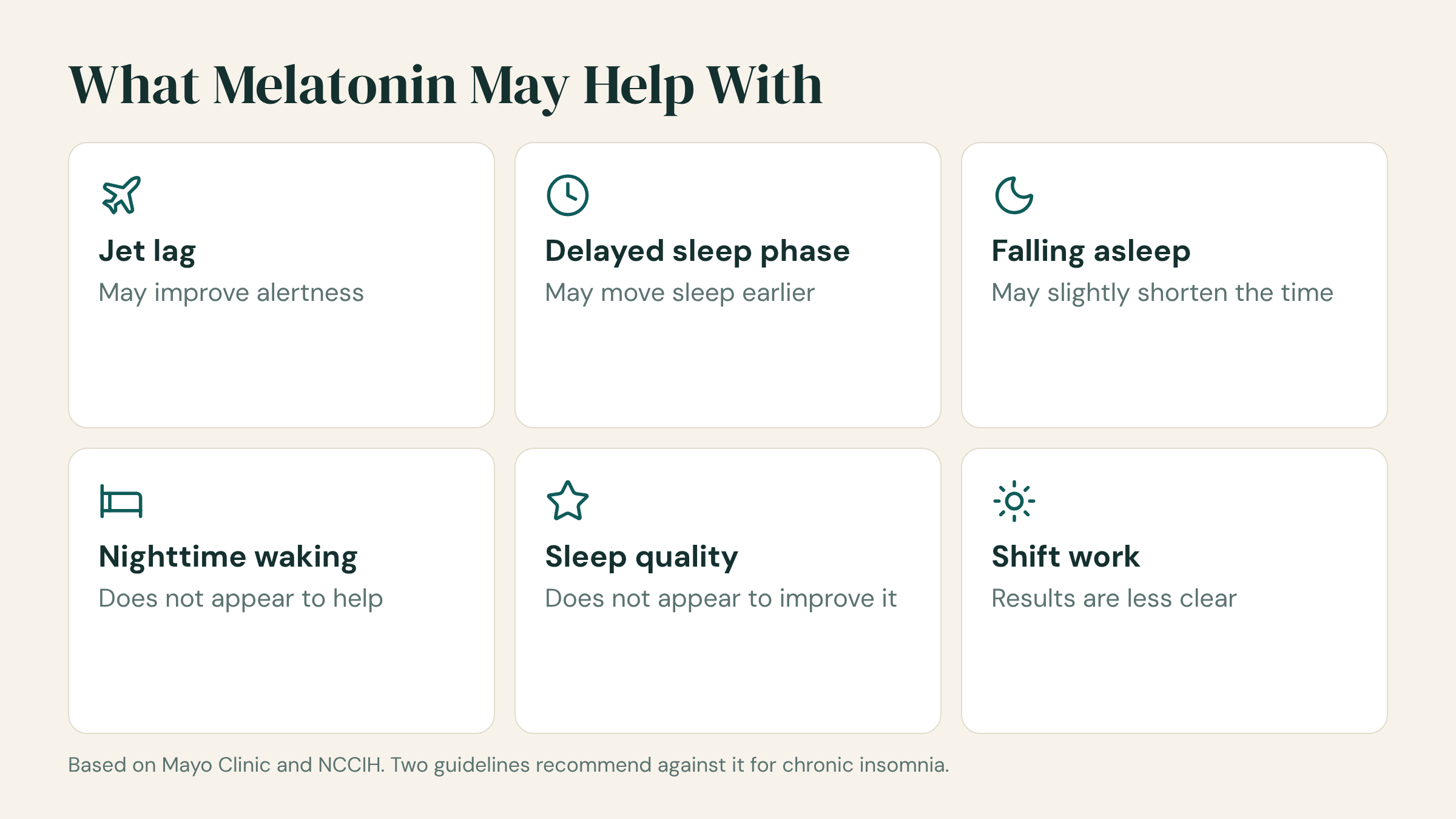
Mayo Clinic and the National Center for Complementary and Integrative Health describe a mixed picture:
- Jet lag: It may improve alertness and reduce daytime sleepiness.
- Delayed sleep phase: It can shorten the time to fall asleep and move sleep earlier.
- Insomnia: It may slightly shorten the time to fall asleep, but it does not appear to improve overall sleep quality or nighttime waking.
- Shift work: Results are less clear, and it is not certain that it helps daytime sleep.
Two guidelines, from 2017 and 2019, recommend against using melatonin for chronic insomnia. If you have struggled with sleep for months, a supplement is unlikely to solve the problem by itself.
So How Much Is Too Much?
There is no single number that applies to everyone. The right amount can depend on your age, health, medicines, and reason for taking it.
Follow the directions on the label and do not take more than it says. If you think you need more, speak with a doctor or pharmacist instead of raising the amount yourself.
A higher amount may mean more side effects without better sleep. If a normal amount does not help, the cause of your sleep problem may be something melatonin cannot fix.
Why the Label May Not Tell the Whole Story
Melatonin is sold as a dietary supplement in the United States, and quality can vary. That makes it hard to know exactly how much you are getting.
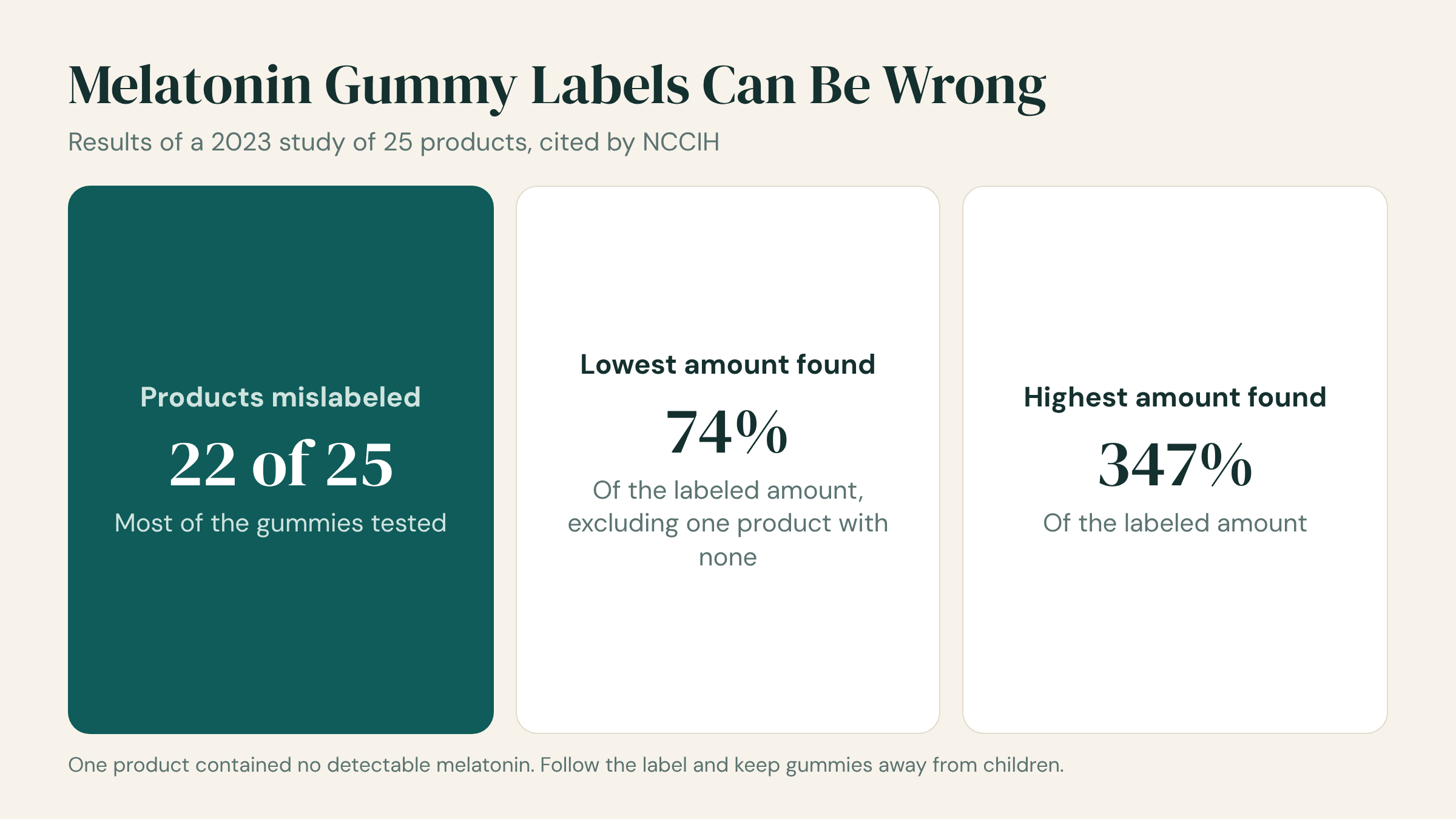
A 2023 study cited by the NCCIH tested 25 melatonin gummy products. It found that 22 were mislabeled. One contained no detectable melatonin, and the others ranged from 74% to 347% of the labeled amount.
That means some gummies held about three and a half times the stated dose. Looking for a product checked by an independent testing group can help reduce this risk.
Signs You May Be Taking Too Much
Mayo Clinic lists these common side effects:
- Headache
- Dizziness
- Nausea
- Drowsiness
Less common effects include short-lasting low mood, mild tremor, mild anxiety, stomach cramps, irritability, reduced alertness, and confusion.
If you feel groggy the next day or notice any of these effects, stop and talk to a healthcare professional. Mayo Clinic advises against driving or using machinery within five hours of taking melatonin.
Who Should Be Careful?
Mayo Clinic says not to use melatonin if you have an autoimmune disease. You should also check with a doctor first if you are in any of these groups:
- You take blood thinners or anti-platelet drugs
- You take seizure medicines
- You take blood pressure or diabetes medicines
- You take sedatives or immune-suppressing drugs
- You use birth control pills
- You take fluvoxamine, which can raise melatonin levels
- You are pregnant or breastfeeding
Keep Melatonin Away From Children
Gummies can look and taste like candy. The NCCIH reports an estimated 11,000 emergency visits between 2019 and 2022 for children age 5 and under who took melatonin without supervision. Many cases involved gummies.
Store all melatonin up high and out of sight. Do not give it to a child unless a doctor recommends it. If a child takes melatonin by accident, call Poison Control in the US at 1-800-222-1222, or call your local emergency service if the child seems very unwell.
Is Long-Term Use Safe?
Short-term safety appears relatively good, according to the NCCIH. Long-term safety has not been established.
That is a good reason to treat melatonin as a short-term tool. If you have been using it for weeks with no end in sight, it is time to talk with a healthcare professional.
Better Ways to Improve Sleep
Good sleep habits are often more useful than a stronger supplement. Mayo Clinic suggests these basics:
- Keep the same sleep and wake times every day
- Avoid big meals, nicotine, caffeine, and alcohol close to bedtime
- Keep your bedroom cool, dark, and quiet
- Limit screens before bed
- Stay active during the day
- Write down worries before bed
For chronic insomnia, ask about cognitive behavioral therapy for insomnia. It is a structured form of treatment that helps change the thoughts and habits that keep poor sleep going.
When to Take Melatonin
Timing can matter as much as the amount, because melatonin is tied to your body clock. Follow the directions on your product’s label, or ask a pharmacist how timing applies to your situation.
Do not take it and then stay up on your phone in bright light. Light works against the signal melatonin is meant to send, so a dim, quiet evening gives it a better chance.
Avoid mixing it with alcohol or other sleep aids unless your doctor says it is safe. Combining products can add to drowsiness and make it harder to tell what is causing any side effects.
Questions to Ask Your Pharmacist
A pharmacist is an easy, often free source of advice. Bring your product and your list of medicines, and ask these questions:
- Is melatonin safe with the medicines I take?
- How much of this product should I use, and when?
- How long should I use it before stopping?
- Is there a better option for my sleep problem?
These few questions can help you avoid interactions and wasted money.
The Bottom Line: How Much Melatonin Is Too Much?
More melatonin is not always better. Follow the label, watch for side effects, and treat it as a short-term aid for specific problems such as jet lag.
If sleep trouble lasts for weeks, get it checked. A doctor can look for the real cause and help you find an approach that works.
Related articles
- Foods and Drinks That May Help You Relax at Night
- How Much Sleep Do Adults Really Need?
- Cortisol Explained: What It Does and Why It Matters
This article is for general information only and is not medical advice. Talk to a healthcare professional about your symptoms, and before starting any supplement, especially if you take medication or have a medical condition.
3 Comments on “Melatonin: How Much Is Too Much?”