Many men do not think about their prostate until something changes. Maybe you start getting up at night to urinate, or your stream feels weaker than it used to.
Here is what every man should know about prostate health after 40.
Prostate changes are common with age, and many can be managed. Other causes need medical care, though, so it is important not to guess. Here is what men should know after 40.
What Does the Prostate Do?
The prostate is a small gland below the bladder that wraps around part of the urethra, the tube that carries urine out of the body. It helps make the fluid in semen.
Because of where it sits, a larger prostate can press on the urethra. That is why prostate changes often show up as urinary symptoms.
What Is an Enlarged Prostate?
An enlarged prostate is also called benign prostatic hyperplasia, or BPH. It is not cancer. Mayo Clinic says an enlarged prostate is not thought to raise your risk of prostate cancer.
Symptoms rarely appear before 40, and they become more likely after that. Prostate size does not reliably predict how bad symptoms will be. Some men with large glands have few problems, while others with smaller glands have many.
Common Urinary Symptoms
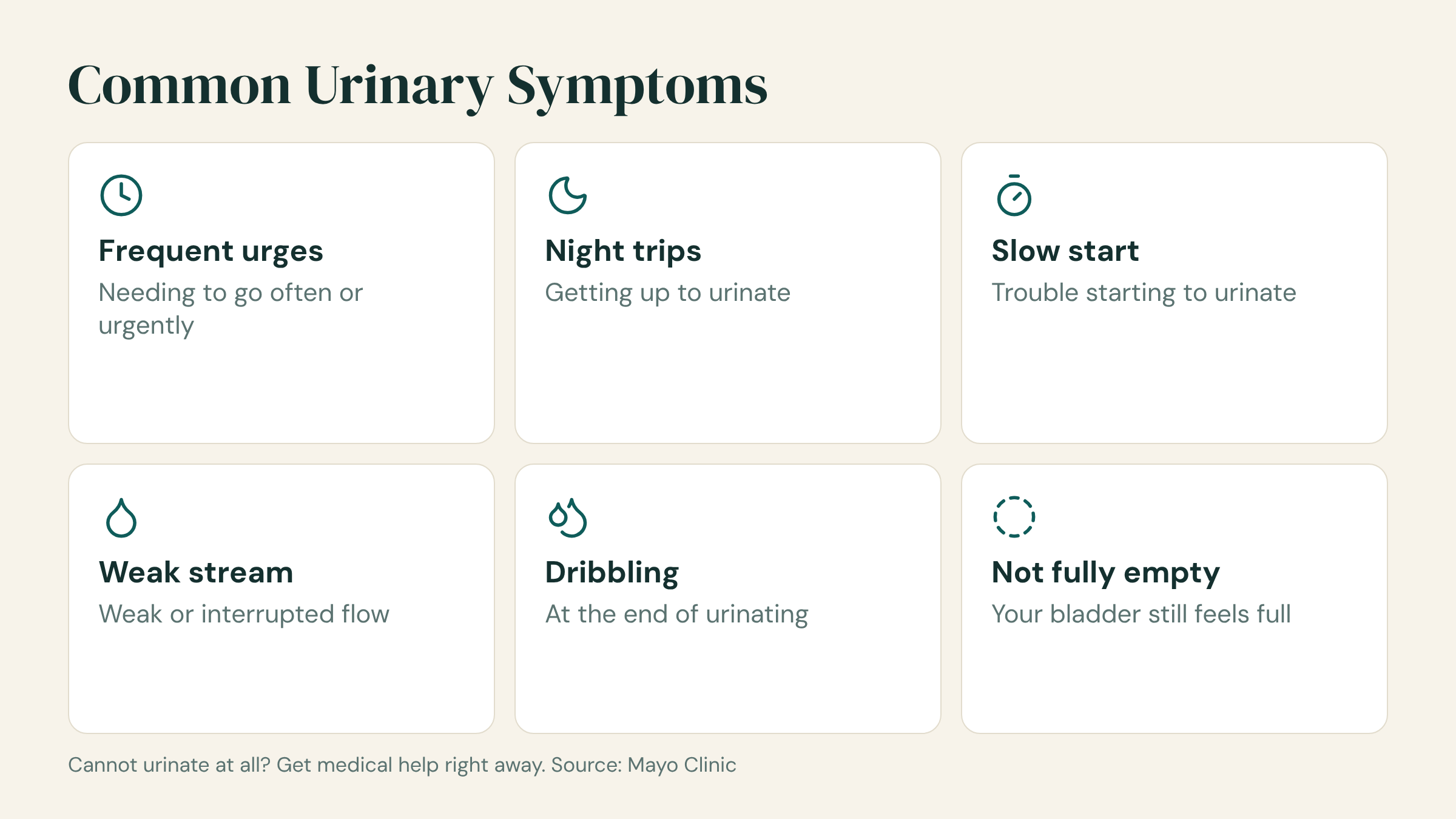
Mayo Clinic lists these common signs:
- Needing to urinate often or urgently
- Getting up at night to urinate
- Trouble starting to urinate
- A weak or interrupted stream
- Dribbling at the end
- Feeling that your bladder is not fully empty
Symptoms usually get worse slowly, although they can stay the same or improve. Infections and other health problems can cause similar symptoms, so get them checked rather than assuming the cause.
Who Is at Higher Risk?
Age is the main risk factor. Other factors include:
- A blood relative with prostate problems
- Diabetes
- Heart disease
- Obesity
Mayo Clinic says exercise may help lower the risk.
When to Get Urgent Help
If you cannot pass any urine, get medical help right away. This can become a serious problem quickly.
Also see a healthcare provider soon if you notice blood in your urine, or urinary symptoms along with fever or significant pain. Untreated blockage can become dangerous, even if symptoms seem mild.
Prostate Cancer Screening
Prostate cancer can develop without early symptoms, so a lack of symptoms does not prove everything is fine. Screening decisions depend on your age, family history, and other risks.
Ask your doctor when it makes sense for you to talk about screening. This is especially useful if you have a close relative who had prostate cancer.
What About Testosterone?
Men’s energy, sex drive, and mood can change with age for many reasons. The American Psychological Association says chronic stress may lower testosterone and sex drive, and may contribute to erectile problems.
Sleep, weight, stress, medicines, and health conditions can all play a part. If you are concerned, ask your doctor about testing instead of buying a testosterone booster online.
Do Prostate Supplements Help?
Many supplements are marketed for prostate health, but the evidence is often weak. The National Center for Complementary and Integrative Health says saw palmetto is probably not helpful for urinary symptoms linked to an enlarged prostate.
A supplement should not replace a medical check. Urinary symptoms can have many causes, and delaying care can let a treatable problem get worse.
Everyday Habits That May Help
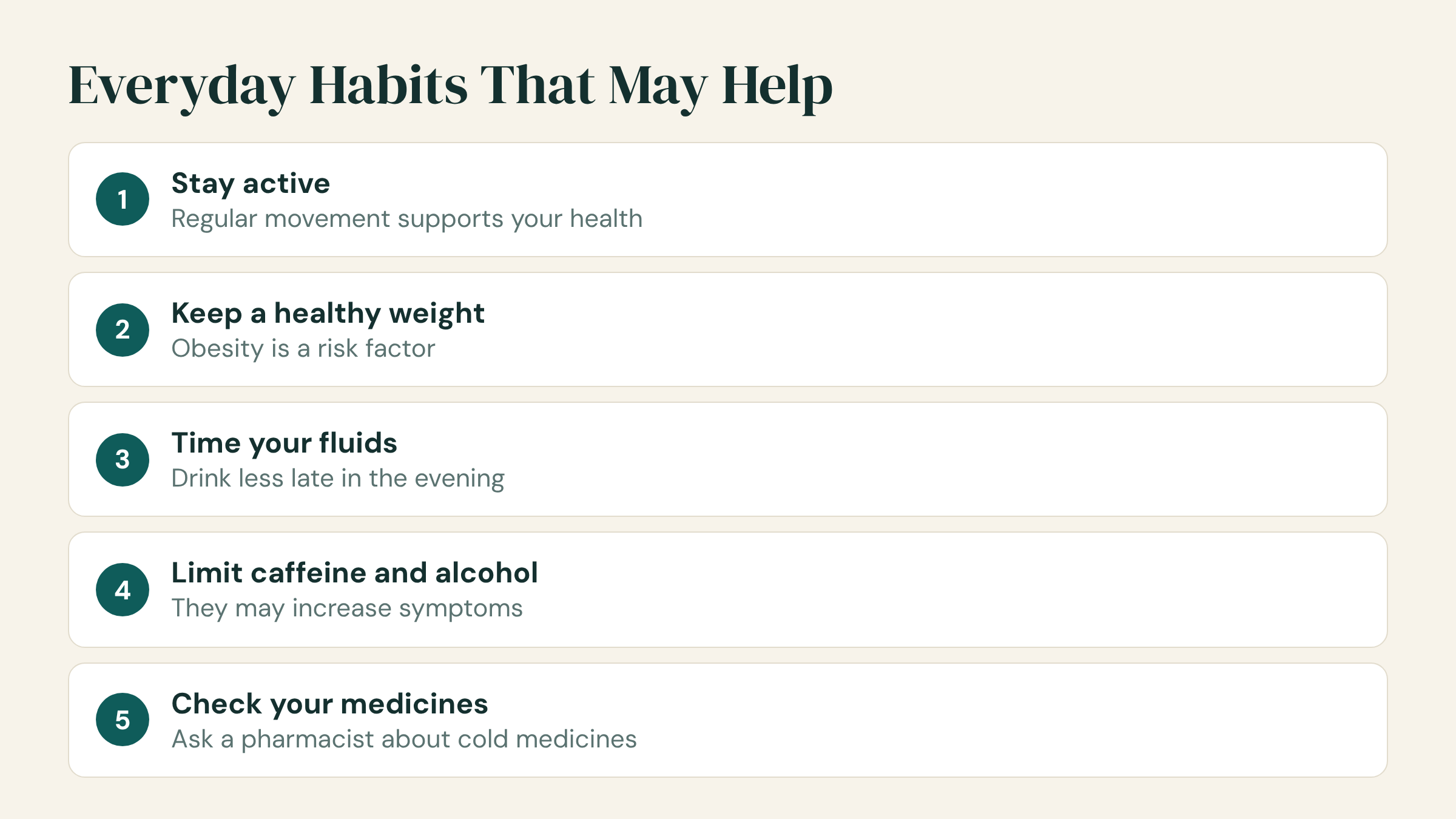
These simple steps may make symptoms easier to live with:
- Stay active: Regular movement supports your overall health.
- Keep a healthy weight: Obesity is a risk factor.
- Time your fluids: Drinking less late in the evening may mean fewer night trips.
- Limit caffeine and alcohol: These may increase urinary symptoms for some men.
- Check your medicines: Some cold medicines can make symptoms worse, so ask a pharmacist.
How Doctors Treat an Enlarged Prostate
Treatment depends on your symptoms and how much they bother you. Options range from watching and waiting to medicines and procedures.
Medicine can help relax the muscles around the bladder neck and prostate, or lower the hormones that drive growth. Your doctor can explain the benefits and side effects that apply to you.
What to Tell Your Doctor
A little preparation helps. Keep a record for a few days of how often you urinate and how many times you wake up at night. Bring a list of your medicines and supplements.
Your doctor may ask about your symptoms, examine you, and order tests of your urine or blood. Mention any family history of prostate problems.
Common Questions
Does an enlarged prostate mean I have cancer?
No. BPH is not cancer. The symptoms can overlap with other problems, though, so a check is still important.
Is waking up to urinate normal with age?
It is common, but it is not something you have to ignore. Evening drinks, medicines, sleep apnea, and other issues can all be involved, so bring it up with your doctor.
Can I prevent prostate problems?
You cannot change your age or family history. Staying active and keeping a healthy weight may help lower your risk of BPH.
At what age should I start thinking about my prostate?
Symptoms are uncommon before 40. Pay attention to any changes from then on, and talk with your doctor about screening when the time is right for you.
Keep Up With Regular Checkups
Many men only see a doctor when something is wrong. A regular checkup gives you a chance to mention small changes before they become bigger problems. It is also a good time to check blood pressure, blood sugar, and weight, since diabetes and heart disease are linked with BPH.
The Bottom Line: Prostate Health
Prostate changes are common as men age, and an enlarged prostate is not cancer. Urinary symptoms still deserve attention, since they can have many causes.
Stay active, watch your evening drinks, and do not rely on supplements alone. If you cannot urinate, or you see blood in your urine, get medical help promptly.
Related articles
This article is for general information only and is not medical advice. Talk to a healthcare professional about your symptoms, and before starting any supplement, especially if you take medication or have a medical condition.