
Coffee in the morning is a daily ritual for millions of people. Many also reach for tea, soda, or an energy drink in the afternoon. Then they wonder why they cannot fall asleep at night.
Here is what the research says about caffeine and sleep, and how late is too late.
Caffeine can stay active in your body far longer than you may expect. Here is how it affects sleep, how late is too late, and how to cut back without feeling awful.
How Caffeine Keeps You Awake
Caffeine is a stimulant. It works in the brain by blocking a chemical called adenosine, which builds up during the day and helps you feel sleepy.
With adenosine blocked, you feel more alert. That can be useful in the morning. It can be a problem when bedtime comes and caffeine is still active.
Mayo Clinic lists caffeine among the stimulants that can contribute to insomnia, along with nicotine.
How Late Is Too Late for Caffeine?
There is no single cutoff that fits everyone, but earlier is better. One well-known sleep study tested 400 mg of caffeine taken 0, 3, or 6 hours before bed. Even at 6 hours before bedtime, it reduced sleep by more than an hour.
That was a large dose, so a small cup of coffee may have less effect. Still, the study shows that afternoon caffeine can follow you into the night, even if you do not feel wired.
A practical rule is to stop at least 6 hours before bed. If you go to bed at 10 PM, that means no caffeine after 4 PM. If you are sensitive, try stopping at noon.
How Much Caffeine Is Too Much?
The FDA says 400 mg a day, about two to three 12-ounce cups of coffee, is not generally linked to negative effects in most adults. That is a general guide, not a target, since people react differently.
Some people should be more careful. People with certain health conditions or who take certain medicines may be more sensitive. If you are pregnant, trying to conceive, or breastfeeding, ask your healthcare provider whether to limit caffeine.
How Much Caffeine Is in Common Drinks?
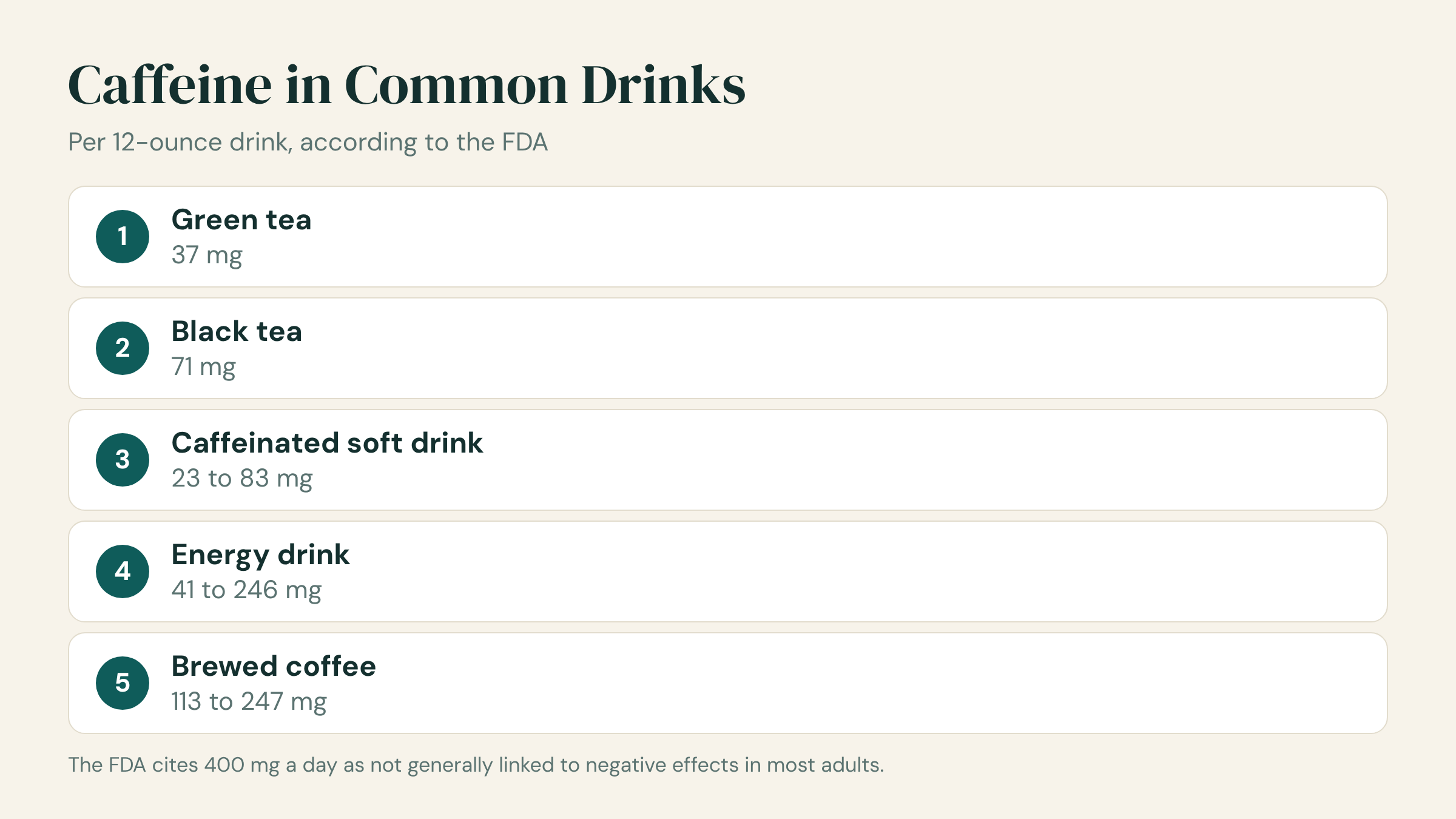
Amounts vary widely. The FDA gives these ranges for a 12-ounce drink:
- Caffeinated soft drink: 23 to 83 mg
- Green tea: 37 mg
- Black tea: 71 mg
- Brewed coffee: 113 to 247 mg
- Energy drink: 41 to 246 mg
Decaf is not fully caffeine-free either. It typically has 2 to 15 mg in an 8-ounce cup.
Hidden Sources of Caffeine
Coffee is not the only place caffeine hides. The FDA says it can be found in:
- Energy and protein bars
- Ice cream and chocolate
- Chewing gum
- Dietary supplements
- Some over-the-counter medicines
Pre-workout powders and weight-loss supplements are worth checking too. Added caffeine must be listed on packaged foods, but caffeine that occurs naturally in ingredients such as chocolate is not listed separately. Restaurants generally do not have to share caffeine amounts, so you may need to ask.
Signs You Are Having Too Much
The FDA lists these signs:
- Insomnia
- Jitters or anxiety
- Fast heart rate or palpitations
- Upset stomach or nausea
- Headache
Talk to a health professional if you notice these. Seek urgent care for chest pain or a racing heart that does not settle.
The Coffee and Poor Sleep Cycle
Caffeine can trap you in a loop. You sleep badly, feel tired, and drink more coffee. That extra caffeine then makes the next night worse.
Breaking the cycle usually means accepting a few tired days. A short walk, daylight, water, and a brief early nap can help you get through them.
How to Cut Back Without Headaches
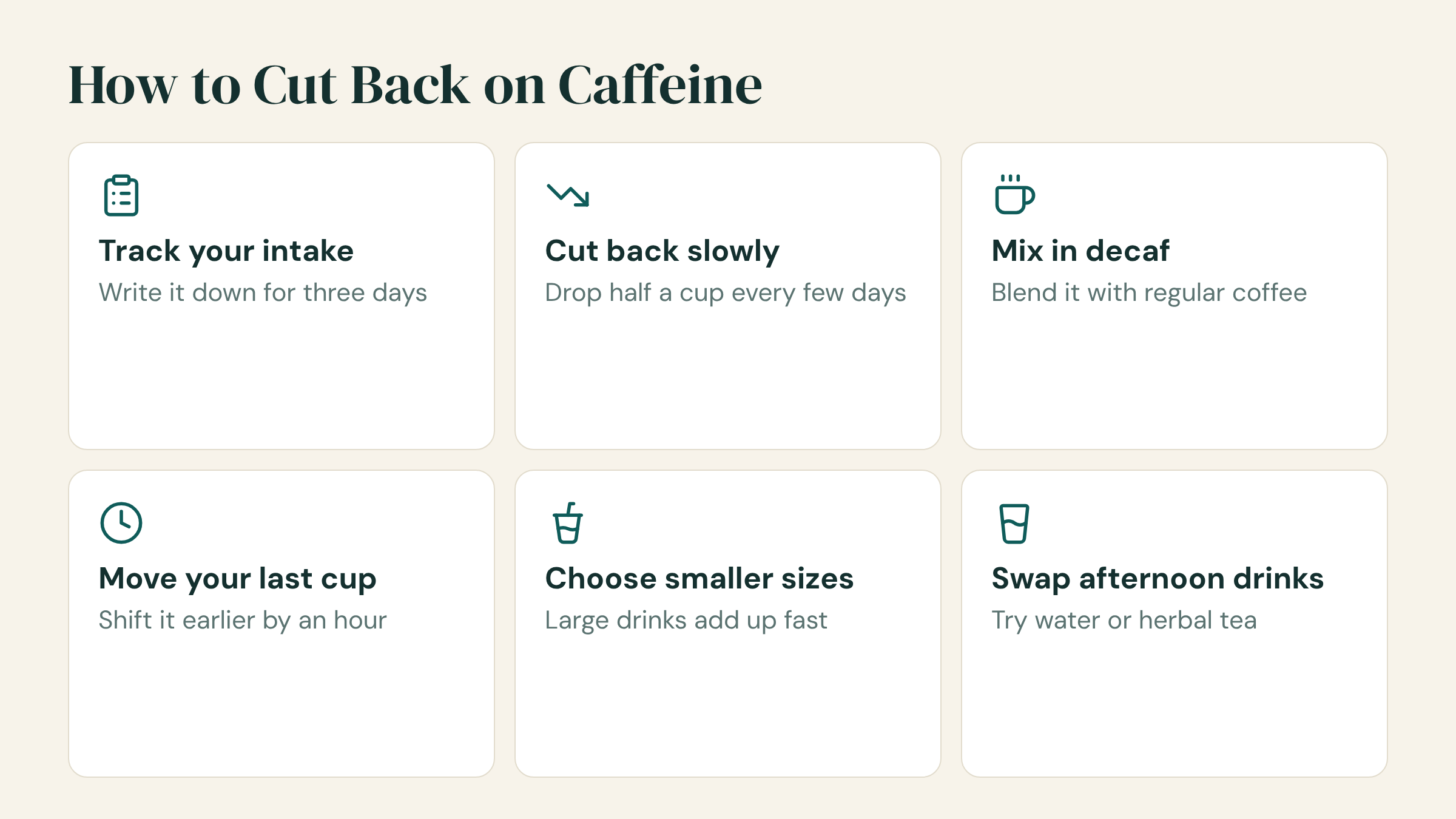
Stopping suddenly can leave some people with headaches and fatigue. Slow changes are often easier.
- Track your intake: Write down everything you drink for three days.
- Cut back slowly: Drop about half a cup every few days.
- Mix in decaf: Blend regular and decaf coffee to reduce the dose.
- Move your last cup earlier: Shift it by an hour at a time.
- Choose smaller sizes: A large coffee shop drink can hold far more than you think.
- Swap afternoon drinks: Try water, herbal tea, or sparkling water.
Better Ways to Beat the Afternoon Slump
If you reach for caffeine at 3 PM, try one of these instead:
- Take a 10-minute walk outside
- Drink a glass of cold water
- Stretch at your desk
- Eat a snack with protein and fiber
- Take a short nap, if you can, before late afternoon
Run Your Own Two-Week Test
The best way to learn your limit is to test it. For two weeks, keep your bedtime steady and stop caffeine at least 8 hours before bed.
Each morning, write down how long it took you to fall asleep and how rested you feel. If your sleep improves, you may have found your cutoff. If not, look at other sleep habits or speak to a doctor.
Does Caffeine Affect Everyone the Same Way?
No. The FDA says tolerance varies, so what feels fine for one person can keep another awake. Some people can have coffee after lunch and sleep well, while others feel it for hours.
Medicines and health conditions can also change how you respond. Ask your doctor or pharmacist if you are unsure whether caffeine is a good choice for you.
You may also fall asleep easily and still sleep lighter than usual. Falling asleep fast does not prove that caffeine is having no effect, so judge your sleep by how rested you feel in the morning.
A Note on Very Strong Products
Be careful with pure or highly concentrated caffeine. The FDA warns that about 1,200 mg consumed quickly may cause toxic effects such as seizures, and that highly concentrated products can be fatal.
Energy shots, powders, and pre-workout mixes can contain a lot in a small serving. Read labels closely, and avoid stacking several caffeinated products in one day.
Children and teens need special care too. The American Academy of Pediatrics advises against energy drinks for this group.
The Bottom Line: Caffeine and Sleep
Caffeine can disturb your sleep hours after your last cup. For most people, stopping at least 6 hours before bed is a good start, and earlier may be better if you are sensitive.
Watch for hidden sources, cut back slowly, and test what works for you. If you still sleep badly after cutting back, talk to a healthcare professional.
Related articles
- Melatonin: How Much Is Too Much?
- Foods and Drinks That May Help You Relax at Night
- How Much Sleep Do Adults Really Need?
This article is for general information only and is not medical advice. Talk to a healthcare professional about your symptoms, and before starting any supplement, especially if you take medication or have a medical condition.
3 Comments on “Is Caffeine Hurting Your Sleep? How Late Is Too Late”