
You have probably heard that everyone needs eight hours of sleep. It is a simple rule, but the real answer is a little more flexible.
So how much sleep do adults need each night? Here is what the experts recommend.
Most adults need at least seven hours a night, and many feel best with a bit more. Here is what experts recommend, what can change your needs, and how to tell whether you are getting enough.
How Many Hours Do Adults Need?
The National Heart, Lung, and Blood Institute says adults should get 7 to 9 hours of sleep per night. The CDC and Mayo Clinic both say adults need at least 7 hours.
Older adults need about the same amount as younger adults. Mayo Clinic notes that their sleep tends to be lighter, shorter, and more broken up by waking, so getting enough can be harder.
How Many Adults Fall Short?
Short sleep is common. CDC figures show that in 2022, the share of adults reporting too little sleep ranged from 30% in Vermont to 46% in Hawaii.
Rates were higher among men, at 37%, and adults aged 45 to 64, at 39%. If you are not getting enough sleep, you are in large company.
Sleep Needs by Age
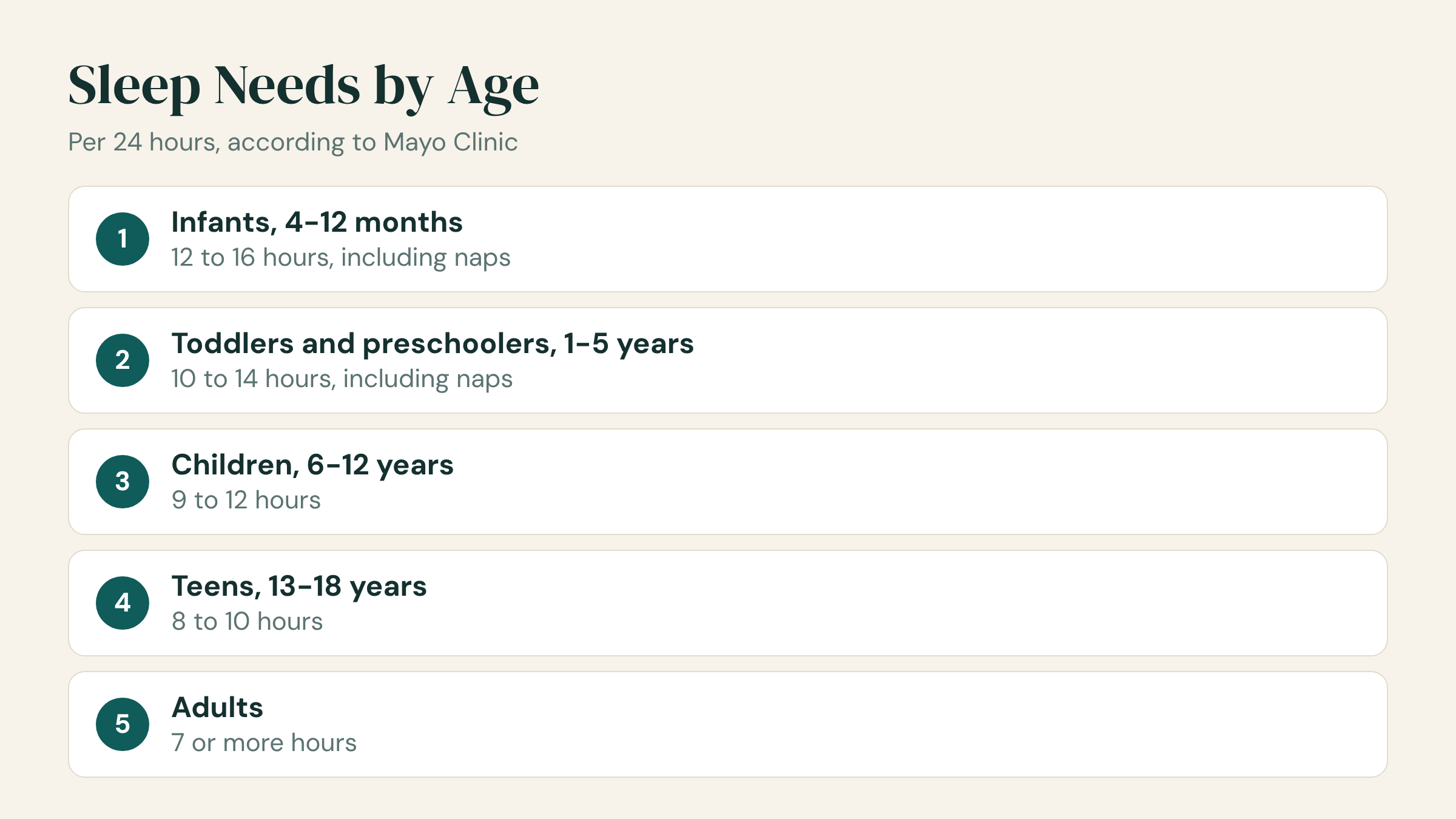
Mayo Clinic gives these general amounts over 24 hours:
- Infants, 4 to 12 months: 12 to 16 hours, including naps
- Toddlers, 1 to 2 years: 11 to 14 hours, including naps
- Preschoolers, 3 to 5 years: 10 to 13 hours, including naps
- Children, 6 to 12 years: 9 to 12 hours
- Teens, 13 to 18 years: 8 to 10 hours
- Adults: 7 or more hours
What Can Change How Much Sleep You Need?
Sleep Quality
Time in bed is not the same as good sleep. If you wake often, you may not feel rested even after eight hours. Quality matters as much as quantity.
Sleep Debt
If you have been sleeping too little, you will need more to catch up. Mayo Clinic notes that being behind on sleep raises how much you need.
Pregnancy
Hormone shifts and physical discomfort can lower sleep quality, so you may need more rest during pregnancy.
Aging
The need for sleep does not drop much with age, but sleep can become lighter. You may also wake more often at night.
Illness and Recovery
The NHLBI says sleeping more than 9 hours is not necessarily harmful. It may help young adults, people recovering from lost sleep, and people who are sick.
What Happens When You Do Not Get Enough?
A bad night here and there is normal. A long-term pattern is different. Mayo Clinic says regularly getting less than 7 hours is linked with weight gain, diabetes, high blood pressure, heart disease, stroke, and depression.
These are links rather than proof of direct cause, but they show why sleep is worth protecting.
Short sleep can also affect your days. You may feel drowsy, moody, or find it harder to focus. Drowsy driving is especially dangerous, so pull over if you are struggling to stay awake.
Signs You May Need More Sleep
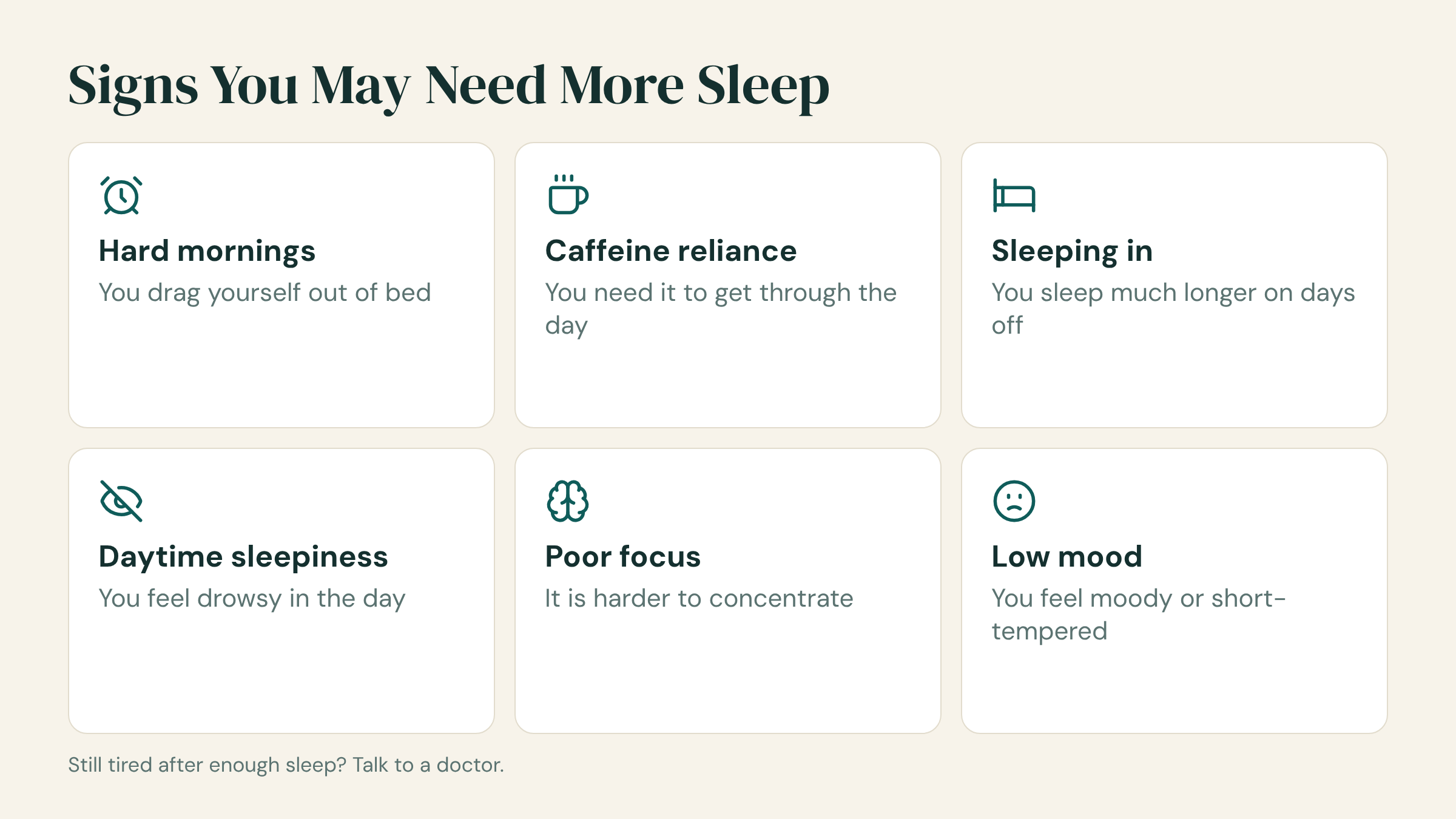
Your body usually tells you when it needs more rest. Ask yourself these questions:
- Do you need an alarm to drag yourself out of bed?
- Do you feel sleepy during the day?
- Do you rely on caffeine to get through the afternoon?
- Do you sleep much longer on days off?
- Do you fall asleep within moments of sitting down?
If you said yes to several, you may need more sleep, or better sleep.
How to Find Your Sleep Number
You can use a simple test during a holiday or a quieter week. Go to bed at the same time each night and wake up without an alarm.
After several nights, your sleep time often settles into a pattern. That can be a useful guide to how much rest your body wants.
A sleep diary can help too. Write down when you went to bed, when you woke up, and how you felt during the day.
Can You Catch Up on Weekends?
Extra sleep can help after a short night, but it may not fully make up for a long-running habit. Sleeping late on weekends can also confuse your body clock.
A better goal is to keep your times steady. If you must catch up, an earlier bedtime or a short nap is often better than sleeping very late. Keep naps under an hour and avoid them late in the day.
How to Get More Quality Sleep
Mayo Clinic’s sleep tips are a good place to start:
- Keep the same sleep and wake times each day
- Avoid big meals, nicotine, caffeine, and alcohol close to bedtime
- Keep your room cool, dark, and quiet
- Limit screens before bed
- Stay active during the day
- Manage worries with notes or relaxation
When to See a Doctor
Talk to a doctor if you still feel tired after getting enough sleep, or if poor sleep affects your daily life. Sleep apnea, restless legs, depression, and other conditions can all affect rest.
Needing far more sleep than usual, or suddenly feeling exhausted, is also worth a checkup. It could point to a health issue that needs attention.
Is Too Much Sleep a Problem?
Sleeping a little longer now and then is usually fine, especially if you are sick or catching up. The NHLBI says sleeping more than 9 hours is not necessarily harmful.
Still, needing much more sleep than usual and feeling unrefreshed can be a sign that something is off. Poor sleep quality, depression, medicines, and other health problems can all play a part.
The key question is how you feel when you are awake. If you sleep for long periods and still feel exhausted, mention it to your doctor.
The Bottom Line: How Much Sleep Do Adults Need?
Most adults need 7 to 9 hours of sleep a night. Your ideal amount depends on your health, age, and how well you sleep.
Pay attention to how you feel during the day, and keep your schedule steady. If you still feel tired, talk with a doctor rather than simply reaching for more coffee.
Related articles
- Melatonin: How Much Is Too Much?
- Foods and Drinks That May Help You Relax at Night
- Cortisol Explained: What It Does and Why It Matters
- Why You Wake Up at 3 AM and What May Help
This article is for general information only and is not medical advice. Talk to a healthcare professional about your symptoms, and before starting any supplement, especially if you take medication or have a medical condition.
5 Comments on “How Much Sleep Do Adults Really Need?”