
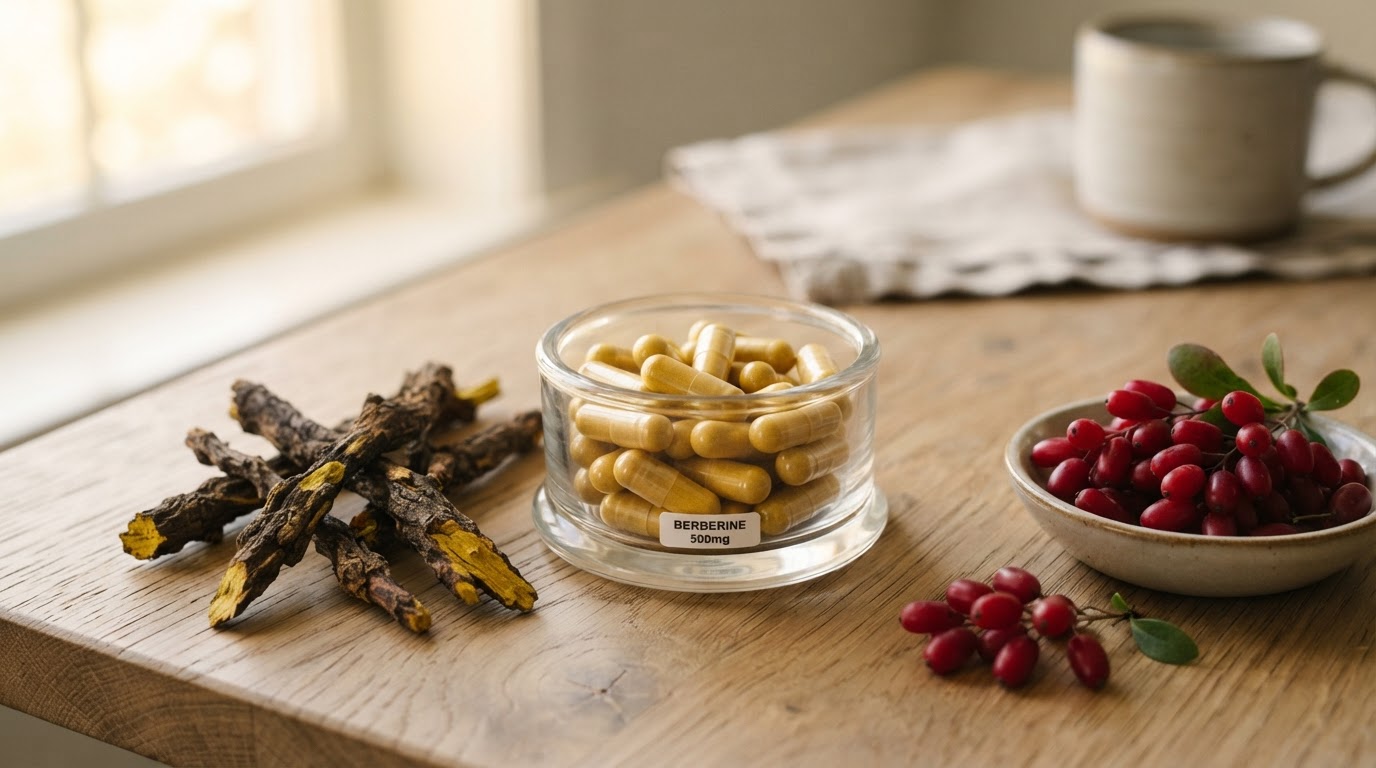
Berberine is a bitter yellow compound found in plants such as goldenseal, barberry and Oregon grape. It has been used in traditional Chinese and Ayurvedic medicine for centuries, and in recent years it has become one of the most talked-about supplements for blood sugar, sometimes marketed as “nature’s Ozempic.” Here is what the research actually shows.
Here is what the research shows about berberine for blood sugar, and what it doesn’t.
Key takeaways: Berberine for Blood Sugar
- Studies suggest berberine can modestly lower fasting blood sugar, HbA1c and cholesterol in people with type 2 diabetes or prediabetes.
- Most trials are small and short, and many come from a limited number of countries, so quality is mixed.
- It is not a replacement for diabetes medication and does not work like GLP-1 drugs such as semaglutide.
- Digestive side effects are common, and it interacts with several medicines.
- It is not safe during pregnancy or breastfeeding.
How berberine may work
Berberine appears to activate an enzyme called AMPK, which helps regulate how cells use energy. This may improve insulin sensitivity, reduce the amount of glucose the liver releases and increase glucose uptake by muscles. It may also affect gut bacteria and slow carbohydrate absorption. Some of these effects overlap with metformin, a first-line diabetes medicine.
What studies show
- Blood sugar: reviews of clinical trials in people with type 2 diabetes have found reductions in fasting glucose and HbA1c, especially when berberine is added to lifestyle changes or standard treatment.
- Cholesterol and triglycerides: several reviews report lower LDL cholesterol and triglycerides.
- Weight: effects on weight are small. Claims of dramatic weight loss are not supported.
Researchers caution that many of the trials have a high risk of bias, used different doses and lasted only a few months. Larger, longer, high-quality studies are still needed.
Is berberine “nature’s Ozempic”?
No. Semaglutide (Ozempic, Wegovy) is a GLP-1 receptor agonist that strongly reduces appetite and leads to substantial weight loss in clinical trials. Berberine works differently, and its effects on weight are far smaller. The comparison is a marketing slogan, not a scientific one.
Typical dose
Studies usually use 900–1,500 mg a day, split into two or three doses of 300–500 mg taken with meals. Berberine is cleared from the body quickly, which is why doses are split. Supplement quality varies, so choose a product with third-party testing.
Side effects
- Constipation, diarrhea, gas and stomach cramps (most common)
- Nausea
- Low blood sugar when combined with diabetes medicines
Drug interactions and who should avoid it
- Diabetes medicines (including insulin, sulfonylureas and metformin): risk of low blood sugar. Only combine under medical supervision.
- Medicines broken down by liver enzymes such as CYP3A4 and CYP2D6, including some statins, blood thinners, antidepressants and cyclosporine. Berberine may raise their levels.
- Pregnancy and breastfeeding: berberine can cross the placenta and pass into breast milk and may harm a baby. Avoid it.
- Newborns and infants: never give berberine to babies.
Better first steps for blood sugar
The strongest evidence for blood sugar control comes from losing excess weight, regular exercise, a fiber-rich diet with fewer refined carbs, and good sleep. Read our guides on healthy weight management and how much sleep adults need. If you have diabetes or prediabetes, talk to your doctor before trying berberine.
Frequently asked questions
Can I take berberine with metformin?
Only with your doctor’s approval. The combination can lower blood sugar more than expected, and your medication may need adjusting.
How long does berberine take to work?
In studies, changes in fasting blood sugar were often seen within a few weeks, with HbA1c changes measured after about 3 months.
Is berberine safe long term?
Long-term safety has not been well studied, since most trials last 3–6 months.
Related articles
For more detail, see the official guidance from NCCIH: Diabetes and Dietary Supplements.
This article is for general information only and is not medical advice. Do not stop or change diabetes medicines without speaking to your doctor. Talk to a pharmacist before combining berberine with any medication.

1 Comment on “Berberine for Blood Sugar: What the Evidence Says”