A dry mouth now and then is nothing to worry about. Maybe you are thirsty, nervous, or have been breathing through your mouth. But when your mouth feels dry and sticky most of the time, it deserves attention.
Saliva does far more than keep your mouth comfortable. It protects your teeth, helps you taste and swallow, and helps control germs. Doctors call persistent dry mouth xerostomia. Here is what causes it, why it matters, and what can help.
What Does Saliva Do?
Saliva helps control harmful germs in the mouth and washes away food particles. It also helps neutralize acids and moistens food so that you can chew and swallow. When there is less of it, your teeth and gums lose an important layer of protection.
Symptoms of Dry Mouth
According to the National Institute of Dental and Craniofacial Research (NIDCR), symptoms can include:
- A sticky, dry mouth and dry throat
- Trouble chewing, swallowing, tasting, or speaking
- A burning or itching feeling in the mouth or throat
- Cracked lips or mouth sores
- A dry, rough, or cracked tongue
- Repeated mouth or throat infections
- Bad breath
What Causes Dry Mouth?
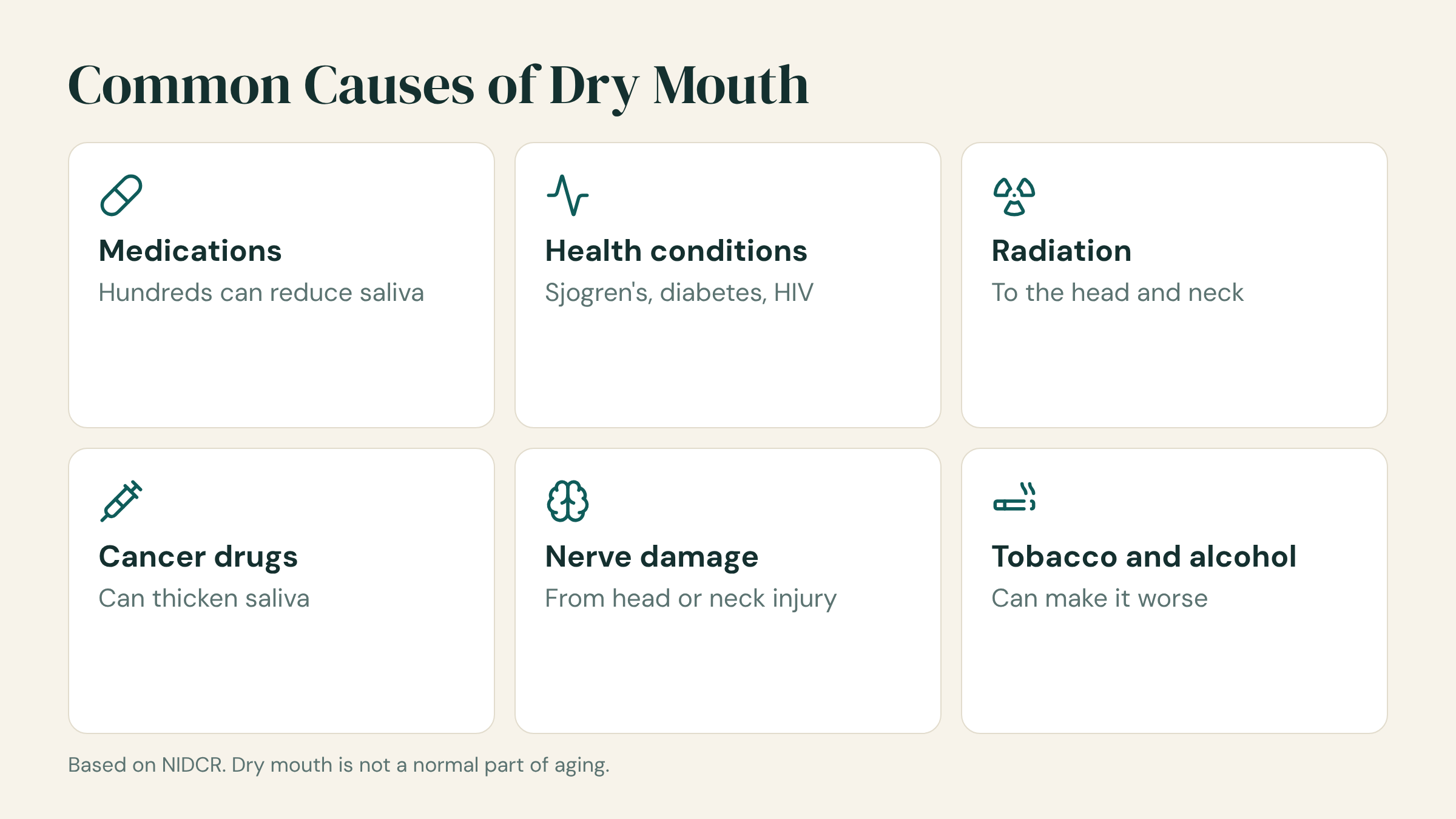
Medications
This is a major cause. NIDCR says hundreds of drugs can reduce saliva, including some for high blood pressure, depression, and bladder control. Mayo Clinic adds that over-the-counter antihistamines and decongestants can also worsen dryness.
Diseases
Sjogren’s disease, HIV/AIDS, and diabetes can all cause dry mouth. Sjogren’s is an autoimmune disease in which the immune system affects moisture-producing glands.
Radiation Therapy
Radiation to the head and neck can damage the salivary glands.
Cancer Drugs
Chemotherapy and immunotherapy can thicken saliva.
Nerve Damage
Head or neck injuries can affect the nerves that signal your glands to make saliva.
Lifestyle Factors
Caffeine, alcohol, and tobacco can make dryness worse. So can breathing through your mouth, which may happen if you snore or have a blocked nose.
Is Dry Mouth a Normal Part of Aging?
No. NIDCR states clearly that dry mouth is not a normal part of aging. Older adults may experience it more often because they tend to take more medications, but it should not simply be accepted. It is worth finding out what is behind it.
Why Dry Mouth Matters
Without enough saliva, you face a higher chance of tooth decay and fungal infections in the mouth, since saliva normally helps control harmful germs. Persistent dry mouth can also make eating and talking difficult, which can affect nutrition and quality of life. It can also lead to bad breath, because saliva helps wash away odor-causing particles.
How Dry Mouth Is Diagnosed
A dentist or doctor will look at your medical history and all the medicines you take, including over-the-counter products, and will examine your mouth. Blood tests, imaging of the salivary glands, or tests that measure saliva may be needed. If Sjogren’s is suspected, a small sample of salivary gland tissue may be taken from the lip.
Treatment Options
Treatment depends on the cause. According to Mayo Clinic, options include:
- Medication changes: A dose may be adjusted, or a different medicine may be used. Do not stop or change prescriptions on your own.
- Moisturizing products: Prescription products, over-the-counter rinses, artificial saliva, and lubricating gels.
- Saliva-stimulating drugs: Pilocarpine may be prescribed for severe dryness from Sjogren’s or head and neck radiation. Cevimeline is an option for Sjogren’s.
What You Can Do at Home
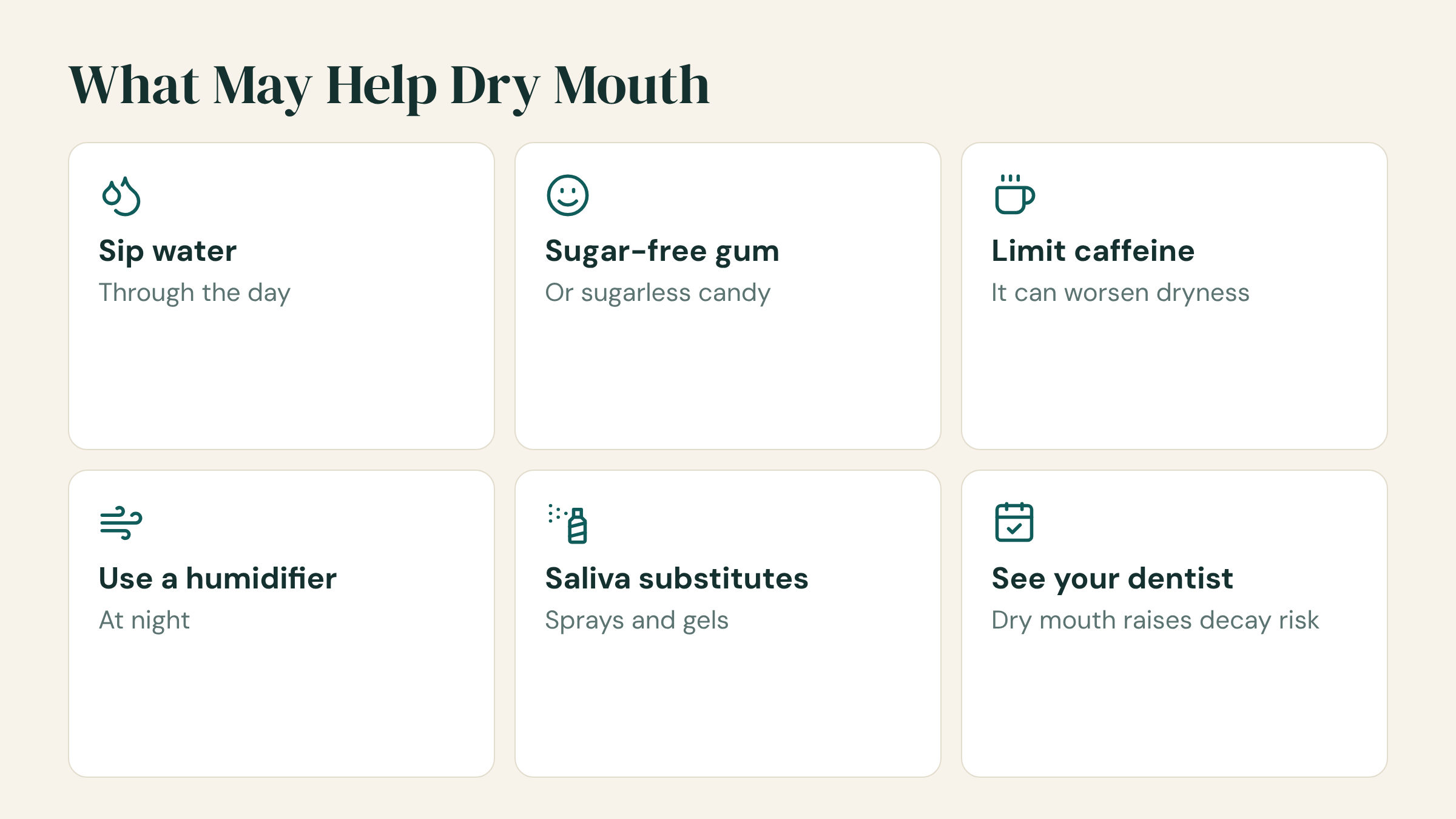
NIDCR and Mayo Clinic suggest several self-care steps:
- Sip water or sugar-free drinks through the day, and drink water with meals.
- Suck on ice chips.
- Chew sugar-free gum or suck on sugarless hard candy to stimulate saliva.
- Limit caffeine and avoid alcohol, including alcohol-based mouthwash.
- Avoid tobacco.
- Run a humidifier at night.
- Breathe through your nose when you can.
- Moisturize your lips.
- Limit sugary, acidic, spicy, or salty foods if they irritate your mouth.
NIDCR suggests drinking about 8 to 12 cups of water daily, unless your doctor has told you to limit fluids.
What About Xylitol?
Xylitol is a sugar alcohol found in some gums, candies, mouthwashes, and saliva substitutes. Mayo Clinic says it may help prevent cavities, but it can cause gas or diarrhea in large amounts. Keep xylitol products away from dogs, because it can be dangerous for them.
Protect Your Teeth
Because dry mouth raises your risk of decay, dental care matters even more. Mayo Clinic advises using fluoride toothpaste, flossing daily, asking your dentist about fluoride treatments, and seeing a dentist at least twice a year. Let your dentist know about any new medicines so they can watch for changes.
When to See a Dentist or Doctor
See your dentist or doctor if your dry mouth does not go away. It is especially important if you have trouble swallowing or speaking, mouth sores, new tooth decay, or dry eyes along with dry mouth, since that combination can be a sign of Sjogren’s. If you have diabetes and your dry mouth comes with strong thirst and frequent urination, contact your care team.
Questions to Ask Your Clinician
A short list of questions can make your visit more useful:
- Could any of my medicines be causing this?
- Is there a different option or dose that might help?
- Do I need any tests?
- Which saliva substitutes or rinses would suit me?
- Should I have fluoride treatments or more frequent dental checks?
Bring a full list of what you take, including vitamins, herbal products, and over-the-counter remedies.
The Bottom Line
Dry mouth is common, but it is not a normal part of aging. Medications are a frequent cause, along with certain diseases and cancer treatments. Low saliva raises the risk of decay and mouth infections, so see a dentist or doctor if it persists. Sipping water, using sugar-free gum, avoiding tobacco and alcohol, and keeping up with careful dental care can all help.
Related articles
- Best and Worst Foods for Your Teeth
- Does Oil Pulling Work? What the Research Says
- Plaque vs. Tartar: What’s the Difference?
For more detail, see the official guidance from NIDCR: Dry Mouth.
This article is for general information only and is not medical advice. Talk to a healthcare professional about your symptoms, and before starting any supplement, especially if you take medication or have a medical condition.