
Your teeth meet everything you eat and drink, so your diet has a direct effect on your mouth. Sugar feeds the bacteria in plaque, acid wears away enamel, and some foods stick around long after the meal has ended. Other foods help by increasing saliva or supplying the minerals teeth need.
You do not need a perfect diet to protect your teeth. A few smart choices, and some attention to when you eat, can make a real difference. Here are the best and worst foods for your teeth, and why.
How Food Affects Your Teeth
The American Dental Association (ADA) explains that bacteria in plaque turn sugars into acids that attack enamel and can lead to cavities. Acids from food and drinks also erode enamel over time, making teeth more vulnerable.
Saliva is your natural defense. It helps wash away food and neutralize acids, and according to Vanderbilt Health, it also helps restore minerals to the teeth.
Best Foods for Your Teeth
Fiber-Rich Fruit and Vegetables
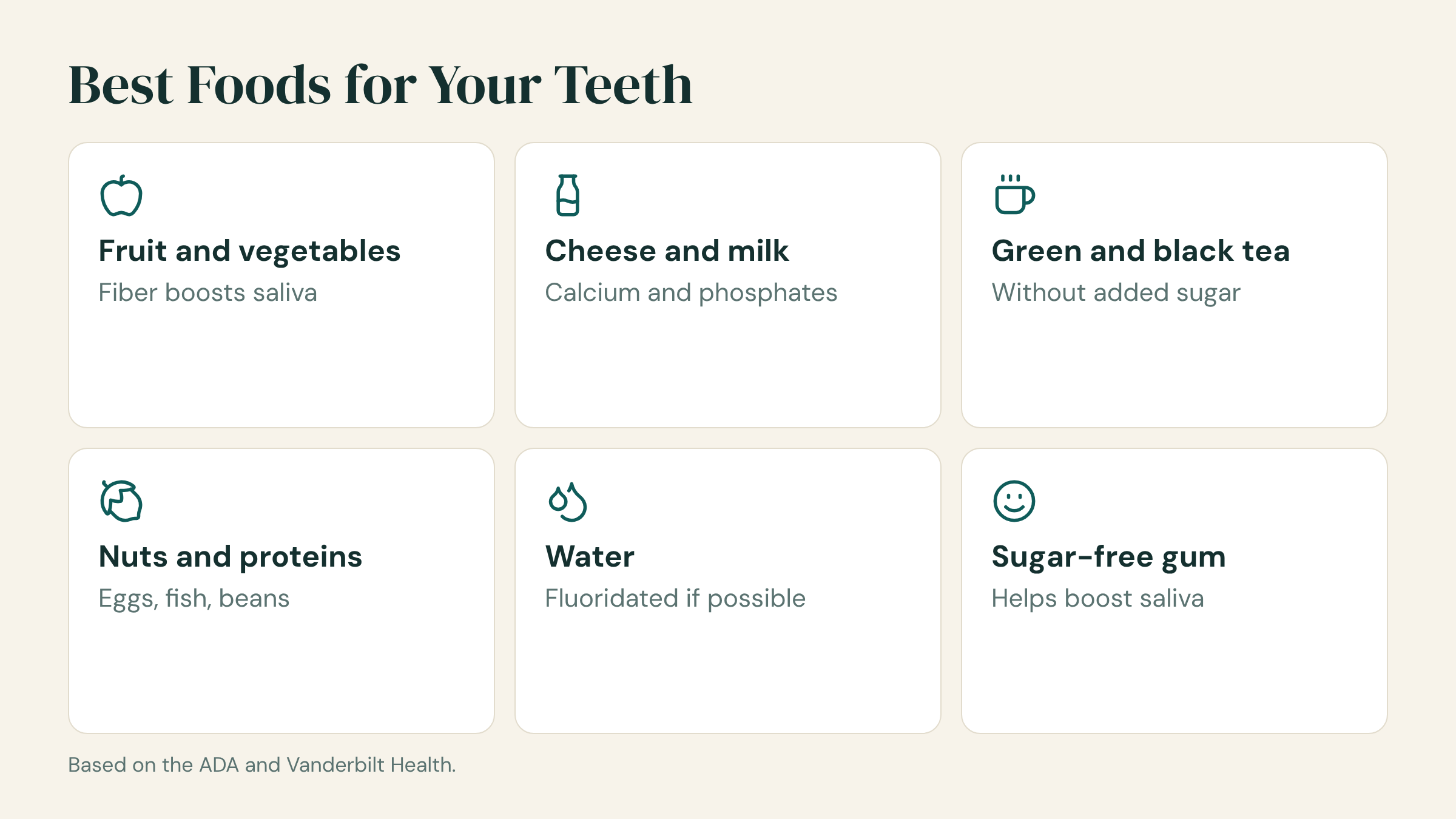
Fiber helps clean teeth and gums and increases saliva. Apples, carrots, celery, and leafy greens are all good options. The ADA suggests fruit and vegetables as a better choice for snacks.
Cheese, Milk, and Plain Yogurt
Dairy without added sugars provides calcium, and Vanderbilt Health notes that calcium and phosphates help rebuild enamel. Cheese also stimulates saliva, and the ADA says cheese and peanuts may counter acid attacks.
Green and Black Tea
Vanderbilt Health says polyphenols in green and black tea can weaken or kill plaque bacteria. Tea may also contain fluoride, depending on the water used. Skip the sugar to keep these benefits, and bear in mind that tea can stain teeth.
Protein Foods
Eggs, poultry, seafood, beans, nuts, and seeds are all listed by the ADA as foods that support dental health.
Whole Grains
Whole grains and fiber-rich foods can increase saliva and help remove plaque.
Sugar-Free Gum
Sugarless gum boosts saliva and helps wash away food particles. The ADA says sugar-free gum with its Seal may help counter acidity.
Water
Still or sparkling water helps rinse away bacteria and weaken acids. Fluoridated water helps strengthen teeth against cavities.
Worst Foods for Your Teeth
Sticky Candies and Sweets
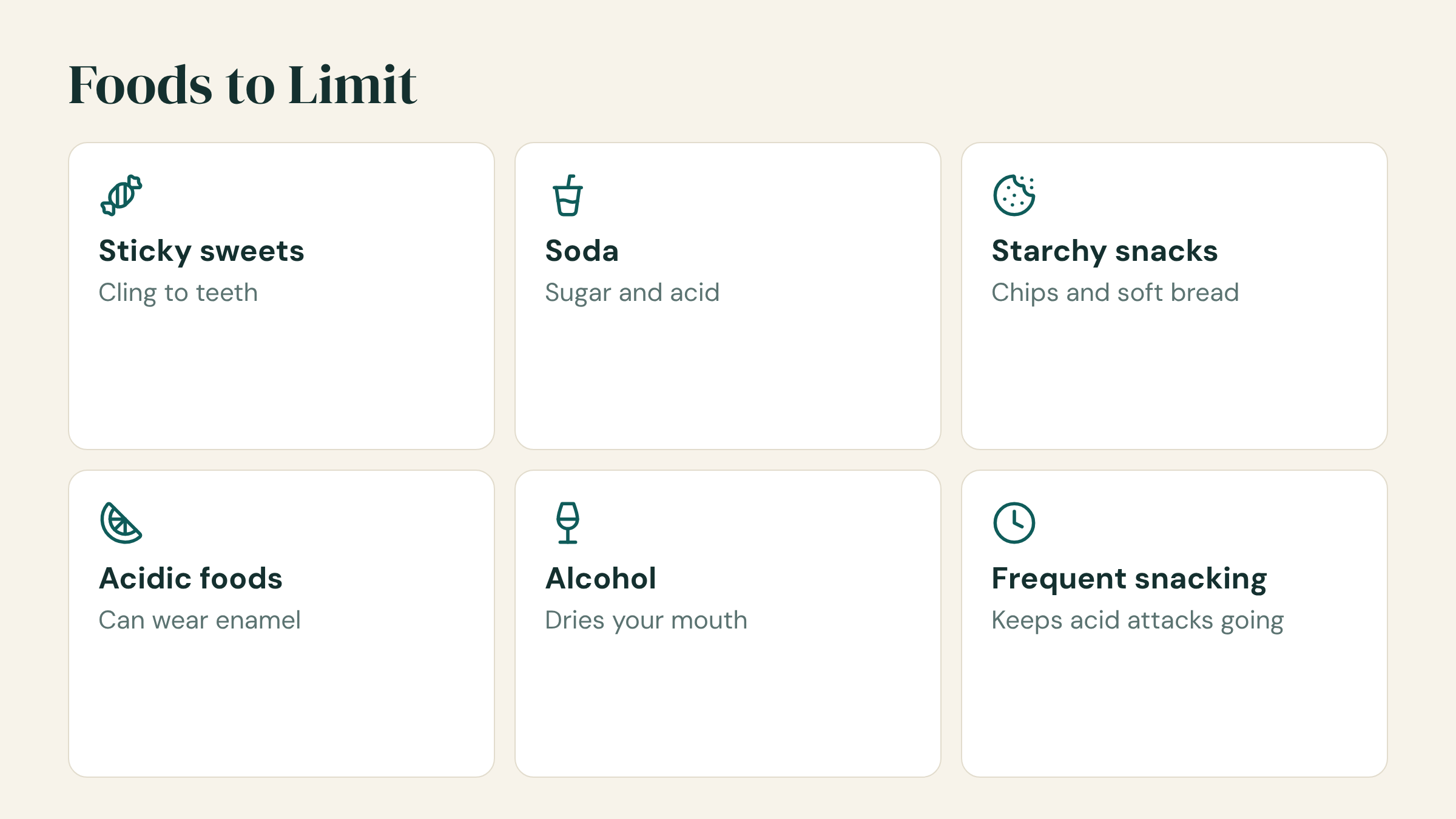
Lollipops, caramels, and other sticky candies cling to teeth and feed bacteria. Vanderbilt Health notes chocolate clears from the mouth more quickly, and dark chocolate may be less harmful.
Sodas and Sugary Drinks
Soft drinks combine large amounts of sugar with acids that wear away enamel. Fruit drinks and energy drinks are also on the ADA’s list of drinks to limit. Sipping one slowly over a long time keeps your teeth exposed for longer.
Starchy Foods That Get Stuck
Soft bread and potato chips can lodge between your teeth, where bacteria feed on them.
Acidic Foods
Citrus fruits and other acidic foods can wear away enamel. These fruits still offer nutrients, so there is no need to avoid them completely. Enjoying them with a meal and rinsing with water afterward can help.
Alcohol
Alcohol can dry out your mouth, and less saliva means less protection.
Hidden Sugars
The ADA also lists flavored milk and yogurt, breakfast cereals, pastries, and packaged foods as items to limit. Check labels for ingredients containing “sugar” or “syrup,” or ending in “-ose.”
Timing Matters as Much as Food
According to the ADA, eating during meals is less harmful than frequent snacking, because saliva flow is higher during meals. Each sugary snack or sip gives bacteria a fresh chance to make acid. If you need a snack, choose fruit, vegetables, or cheese.
MedlinePlus also advises brushing after evening snacks and having nothing except water after you brush at night.
Natural Sugar vs. Added Sugar
Natural sugars in fruit and milk come packaged with nutrients, while added sugars offer no nutritional value. Whole fruit is a far better choice than candy. Dried fruit deserves more care, though, because it can be sticky. Keep it to mealtimes, and clean your teeth afterward.
Simple Swaps for Healthier Teeth
- Swap soda for water or unsweetened sparkling water.
- Swap candy for sugar-free gum or a piece of cheese.
- Swap chips for raw vegetables or nuts.
- Swap sweetened yogurt for plain yogurt with fresh fruit.
- Swap sugary cereal for plain oatmeal with fruit.
- Swap sipping all day for finishing drinks with meals.
Do Sports and Energy Drinks Count?
They do. These drinks are often both sugary and acidic. If you drink them during exercise, follow up with water, and do not sip them through the day. For most everyday activity, water is enough.
A Tooth-Friendly Day of Eating
- Breakfast: Plain yogurt with berries and oats
- Lunch: Chicken and vegetable salad with whole-grain bread
- Snack: Cheese with apple slices
- Dinner: Salmon, brown rice, and broccoli
- Drinks: Water through the day, and unsweetened tea if you like
When to See a Dentist
See your dentist if you have tooth sensitivity, pain, visible holes or dark spots, or worn-looking teeth. If your mouth often feels dry, mention this too. Medicines may be involved, and low saliva raises your risk of decay.
Should You Brush Right After Eating?
Acid can soften enamel for a short time, so many dentists suggest rinsing with water after acidic foods or drinks and waiting a little before brushing. Your dentist can advise you on what suits your teeth, especially if you already have sensitivity or enamel wear.
Foods and Dental Work
If you have braces, crowns, or bridges, sticky and very hard foods can cause extra problems. Ask your dentist which foods to avoid, and clean carefully around any dental work after eating.
The Bottom Line
Fiber-rich produce, unsweetened dairy, protein foods, whole grains, and water are good for your teeth. Sticky sweets, sugary drinks, starchy snacks, and frequent acidic foods are the main ones to limit. How often you eat matters too, so keep sugary foods to mealtimes, drink water, and keep up with brushing and cleaning between your teeth.
Related articles
- Dry Mouth: Causes and Why It Matters
- How to Brush and Floss the Right Way
- Does Oil Pulling Work? What the Research Says
For more detail, see the official guidance from NIDCR: Periodontal (Gum) Disease.
This article is for general information only and is not medical advice. Talk to a healthcare professional about your symptoms, and before starting any supplement, especially if you take medication or have a medical condition.
2 Comments on “Best and Worst Foods for Your Teeth”