
Most of us learned to brush as children, and few of us have thought about it much since. Yet many everyday dental problems come down to small gaps in technique. A rushed brush, a missed gum line, or skipping the spaces between teeth can leave plaque behind.
The good news is that a few small adjustments can make a big difference. This guide walks through how to brush and floss properly, how to choose your tools, and which mistakes to avoid.
Why Technique Matters
Plaque is a sticky film of bacteria that forms constantly on your teeth. If you do not remove it, it can lead to cavities and gum inflammation, and it can harden into tartar that only a dental professional can remove. The aim of brushing and flossing is to remove that plaque every day.
What You Need
- A soft-bristled toothbrush: The American Dental Association (ADA) recommends a soft brush that fits your mouth and reaches all areas easily.
- Fluoride toothpaste: Look for one with the ADA Seal of Acceptance.
- A tool to clean between your teeth: Floss, interdental brushes, picks, or a water flosser.
Manual or Electric?
Either can work if you use it well. MedlinePlus says electric brushes, some of which have built-in timers, clean better than manual brushes. If you have arthritis or find it difficult to brush thoroughly, an electric brush can be especially helpful.
How to Brush Your Teeth: Step by Step
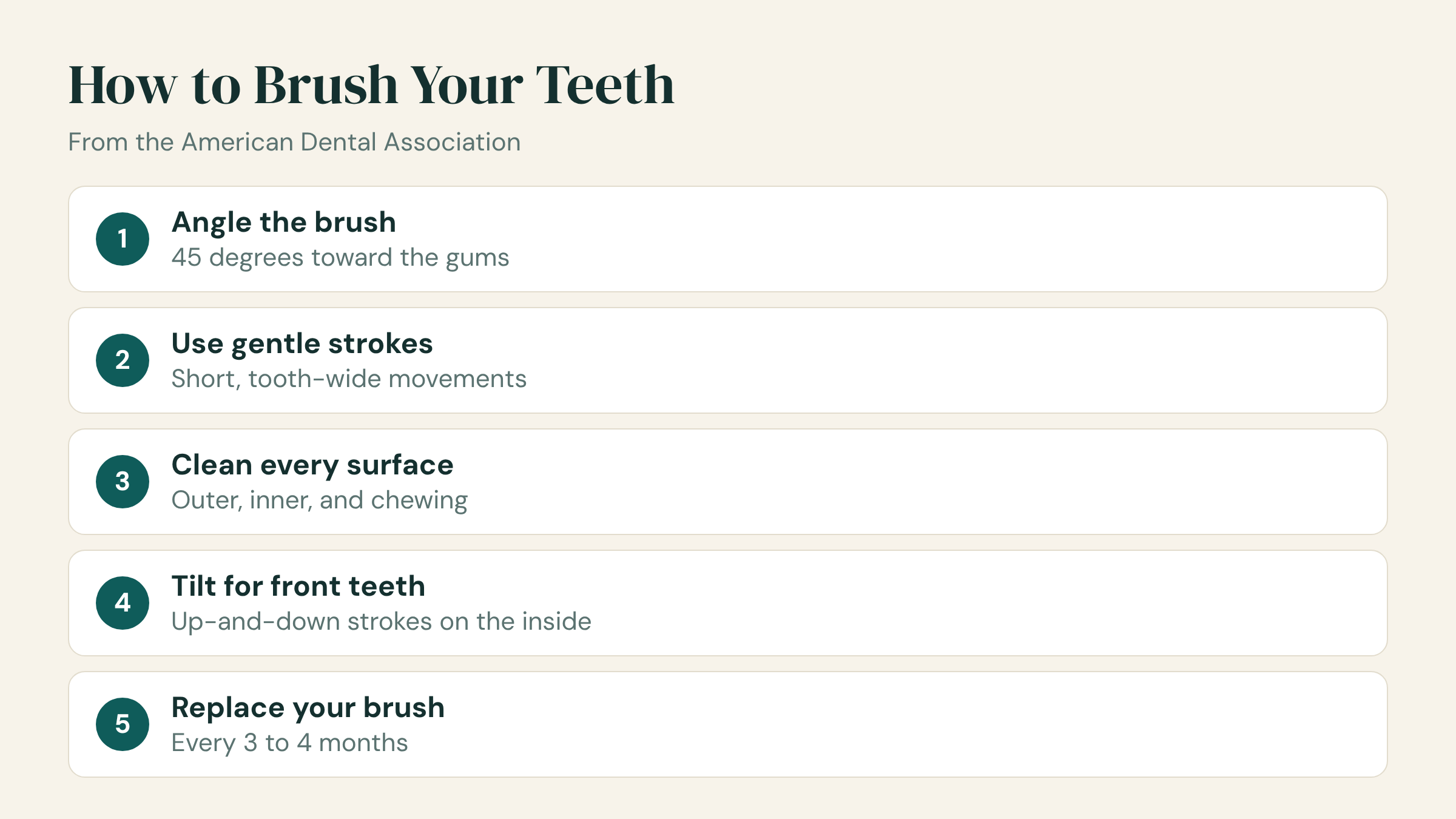
The ADA recommends this technique:
- Place your toothbrush at a 45-degree angle toward your gums.
- Move the brush gently back and forth in short, tooth-wide strokes.
- Clean the outer surfaces of each tooth.
- Clean the inner surfaces of each tooth.
- Clean the chewing surfaces.
- For the inside of your front teeth, tilt the brush vertically and make several up-and-down strokes.
Follow the same path each time, so you do not miss any areas. Mayo Clinic also recommends brushing your tongue, which can help with bad breath.
How Long and How Often?
Brush twice a day. MedlinePlus says to brush for at least two minutes each time. Two minutes feels longer than you might expect, so a timer or an electric brush can help.
The bedtime brush is particularly valuable. MedlinePlus suggests that after you brush at night, you should not eat or drink anything except water.
How to Floss: Step by Step
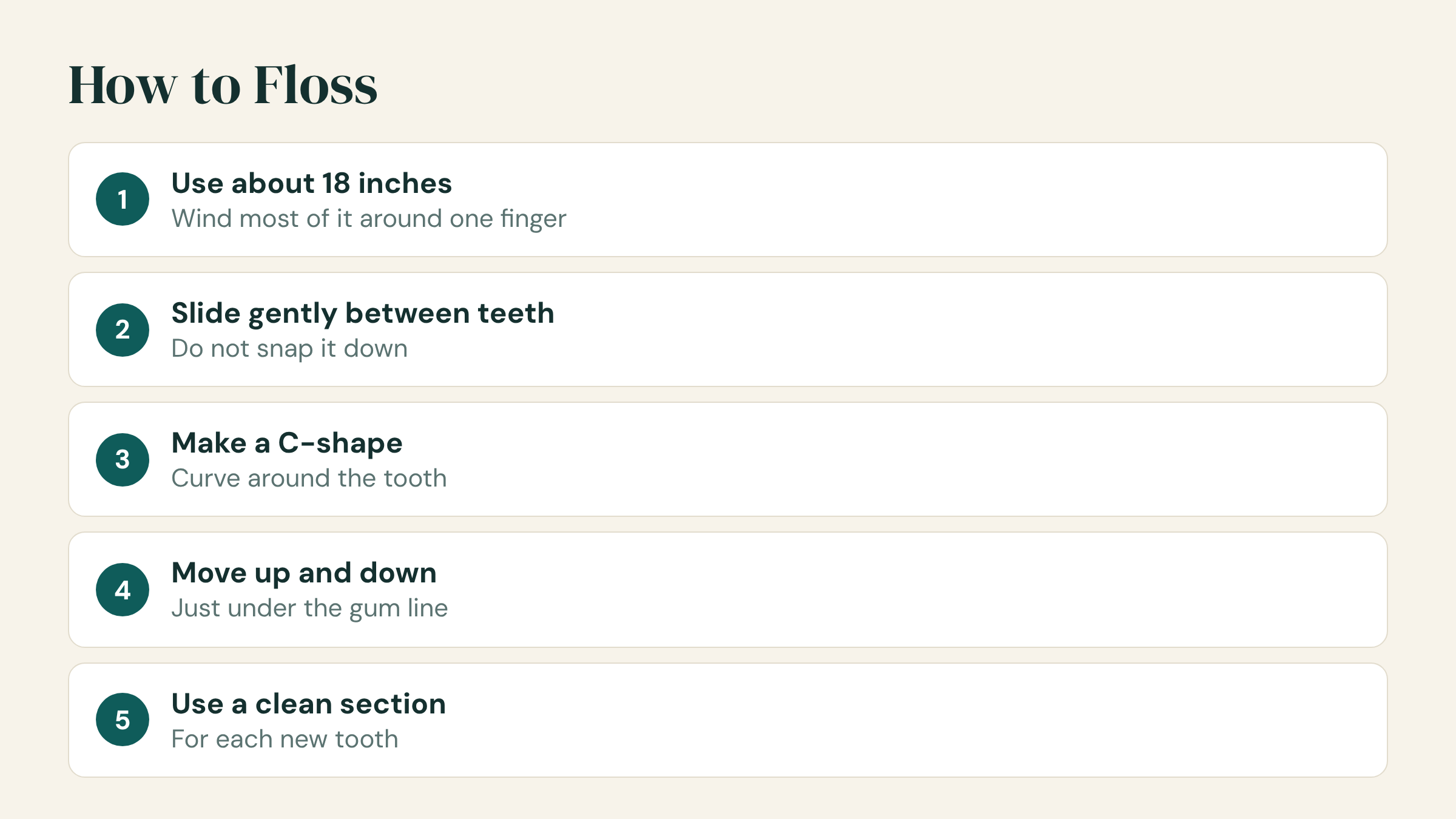
The ADA says to clean between your teeth once a day. This removes plaque and food particles under the gum line and in places bristles cannot reach. Follow the technique your dental professional recommends. A common approach is:
- Break off about 18 inches of floss, and wind most of it around one finger.
- Hold a short section tightly between your thumbs and forefingers.
- Gently guide the floss between your teeth. Do not snap it into your gums.
- Curve it into a C-shape against the side of one tooth.
- Slide it gently up and down, going just under the gum line.
- Repeat on the neighboring tooth, and use a clean section as you move along.
A little bleeding may happen when you first start. This should settle as your gums get healthier. If it does not stop within a couple of weeks, see your dentist.
Alternatives to String Floss
If you find floss difficult, you have other options. The National Institute of Dental and Craniofacial Research lists interdental brushes, wooden or plastic picks, and water flossers as alternatives, used as recommended by a dental professional. MedlinePlus notes that water irrigators can help flush debris from between teeth and below the gum line. The best tool is one you will actually use every day.
Should You Brush or Floss First?
People often debate this. What really matters is doing both thoroughly every day. Pick the order that helps you stick to it.
When to Replace Your Toothbrush
The ADA advises replacing your brush every three to four months, or sooner if the bristles are frayed. A worn brush does not clean as well. If your bristles fray quickly, you may be pressing too hard.
Common Mistakes to Avoid
- Scrubbing too hard: Pressure can irritate your gums. Let the bristles do the work.
- Using a firm brush: Stick to a soft brush.
- Rushing: Thirty seconds will not cover all your teeth.
- Skipping the gum line: This is where plaque tends to collect.
- Skipping the back teeth and inner surfaces: These are easy to miss.
- Skipping between your teeth: A brush cannot reach everywhere.
- Avoiding areas that bleed: Plaque will stay there, and the inflammation will continue. Clean gently instead.
- Replacing brushing with mouthwash: Rinsing does not remove plaque the way brushing does.
Tips for Braces, Bridges, and Implants
Braces, bridges, and implants create extra places for plaque to hide. Ask your dentist or orthodontist to show you how to clean around them. Special floss threaders, small interdental brushes, and water flossers can make this easier. Clean dentures and other oral appliances regularly as well, following your dentist’s advice.
Helping Children Brush
Young children need help brushing properly. Brush with them, supervise, and make it part of their daily routine. Use fluoride toothpaste as advised by your dentist or pediatrician, and teach them to spit it out. Disclosing tablets, which color leftover plaque, can make brushing more fun and show them which areas they have missed.
Do Not Skip the Dentist
Even a great routine does not replace professional care. MedlinePlus suggests seeing a dentist or hygienist at least every six months for a cleaning and exam, or more often if you have gum disease. Ask your hygienist to check your technique. They can point out the areas you tend to miss.
The Bottom Line: How to Brush and Floss
Brush twice a day for two minutes with a soft brush and fluoride toothpaste, angling the bristles toward your gums and using gentle strokes. Clean between your teeth once a day, replace your brush every three to four months, and see your dentist regularly. Good technique costs almost nothing and helps protect your teeth and gums for life.
Related articles
- Dry Mouth: Causes and Why It Matters
- Best and Worst Foods for Your Teeth
- Does Oil Pulling Work? What the Research Says
For more detail, see the official guidance from NIDCR: Periodontal (Gum) Disease.
This article is for general information only and is not medical advice. Talk to a healthcare professional about your symptoms, and before starting any supplement, especially if you take medication or have a medical condition.

1 Comment on “How to Brush and Floss the Right Way”