
Gum disease often starts quietly. You might see a little pink in the sink after brushing, or notice that your gums look puffier than usual. Because it may not hurt at first, it is easy to ignore.
Spotting the early signs of gum disease means it can often be reversed.
That is a shame, because the early stage is often reversible. Knowing what to look for gives you a chance to act before the damage reaches the bone that holds your teeth in place.
What Is Gum Disease?
The National Institute of Dental and Craniofacial Research (NIDCR) describes gum disease as an infection that inflames the tissues holding your teeth in place. It usually starts when plaque, a sticky film of bacteria, builds up on your teeth.
Dentists often talk about two stages:
- Gingivitis: The early stage, with red, swollen gums that may bleed. No lasting bone damage has occurred yet.
- Periodontitis: The advanced stage, where the infection spreads to the bone supporting the teeth. Teeth can become loose or may need to be removed.
NIDCR notes that early disease caused by plaque can often be reversed with daily brushing and flossing.
Early Signs to Watch For
Bleeding Gums
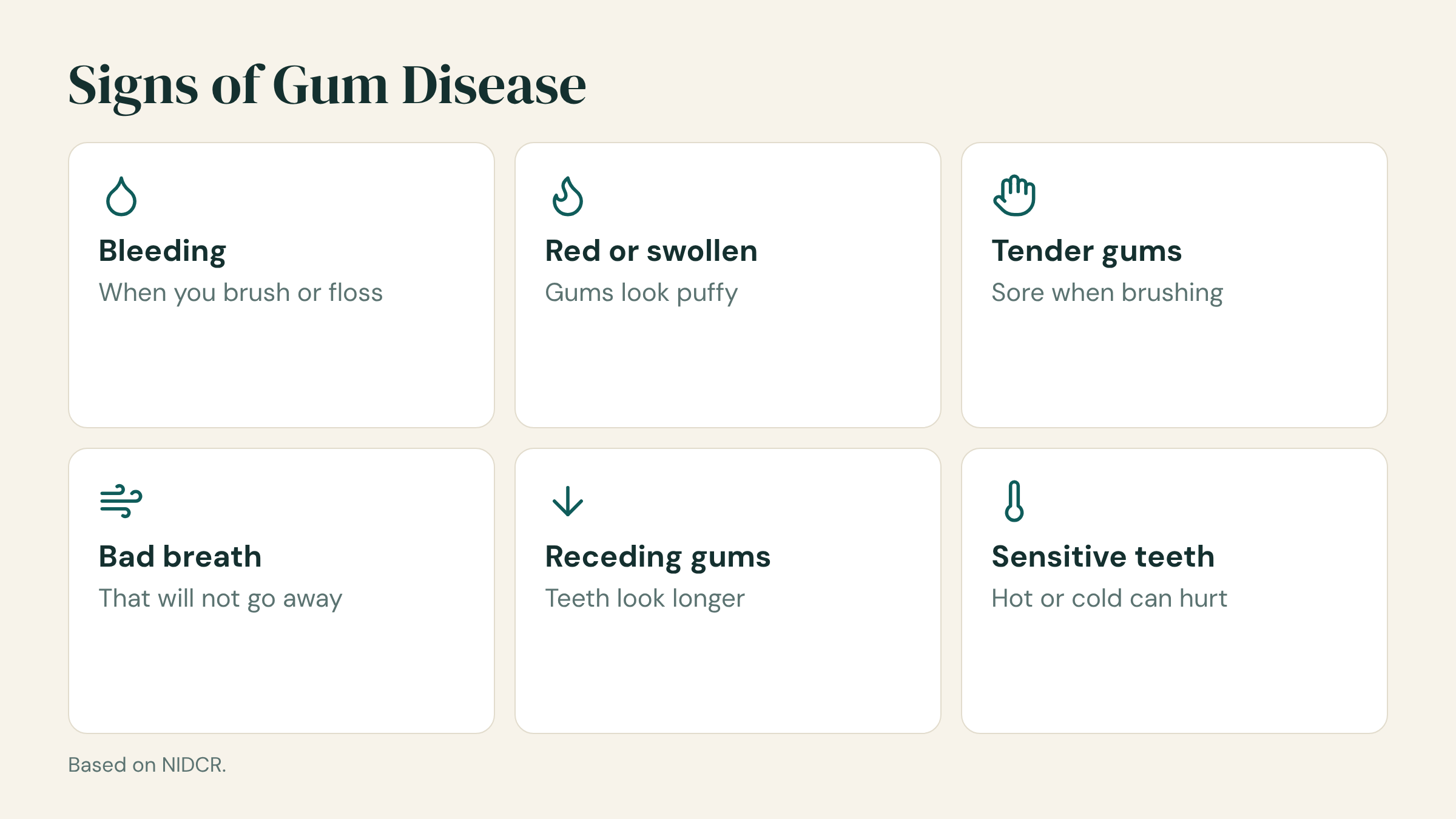
Healthy gums do not usually bleed from normal brushing or flossing. Blood on your toothbrush, floss, or in the sink is one of the first signs many people notice.
Red or Swollen Gums
Healthy gums generally look firm and pink, although normal color varies from person to person. Gums that look red, darker than usual, or puffy may be inflamed.
Tender Gums
Soreness when you brush or eat can be a sign that your gums are irritated.
Persistent Bad Breath
Bacteria in plaque can produce unpleasant odors. If bad breath remains even after you brush, gum disease may be one possible cause.
Gums Pulling Away From Your Teeth
Your teeth may start to look longer as your gums recede. You may also feel small gaps near the gum line.
Sensitive Teeth
When gums pull back, more of the tooth is exposed, which can make hot or cold food and drinks uncomfortable.
Later Warning Signs
If gum disease advances, you may notice:
- Loose teeth
- Pain when chewing
- Changes in the way your teeth fit together
Do not wait for these signs. They mean you should see a dentist soon.
What Causes Gum Disease?
Plaque is the main cause. If it is not removed, it hardens into tartar, also known as calculus. NIDCR says only a professional cleaning by a dentist or hygienist can remove tartar. Bacteria in plaque and tartar trigger inflammation that damages the gums and supporting tissue.
Who Is at Higher Risk?
NIDCR lists several risk factors:
- Smoking or tobacco use: The most significant risk factor. It can also slow healing and reduce treatment success.
- Being male: Gum disease is more common and severe in men.
- Older age, diabetes, and genetics
- Stress
- Rheumatoid arthritis, cardiovascular disease, obesity, AIDS, and their treatments
- Hormonal changes in girls and women
If any of these apply to you, regular dental checks are even more worthwhile.
How Gum Disease Is Treated
Treatment aims to control the infection, and the approach depends on severity. Options include:
- Professional deep cleaning, known as scaling and root planing
- Prescribed medication, such as an oral rinse
- Surgery for advanced cases
- Consistent daily care at home
- Quitting tobacco
Your dentist may refer you to a periodontist, a specialist in gum disease.
How to Prevent Gum Disease
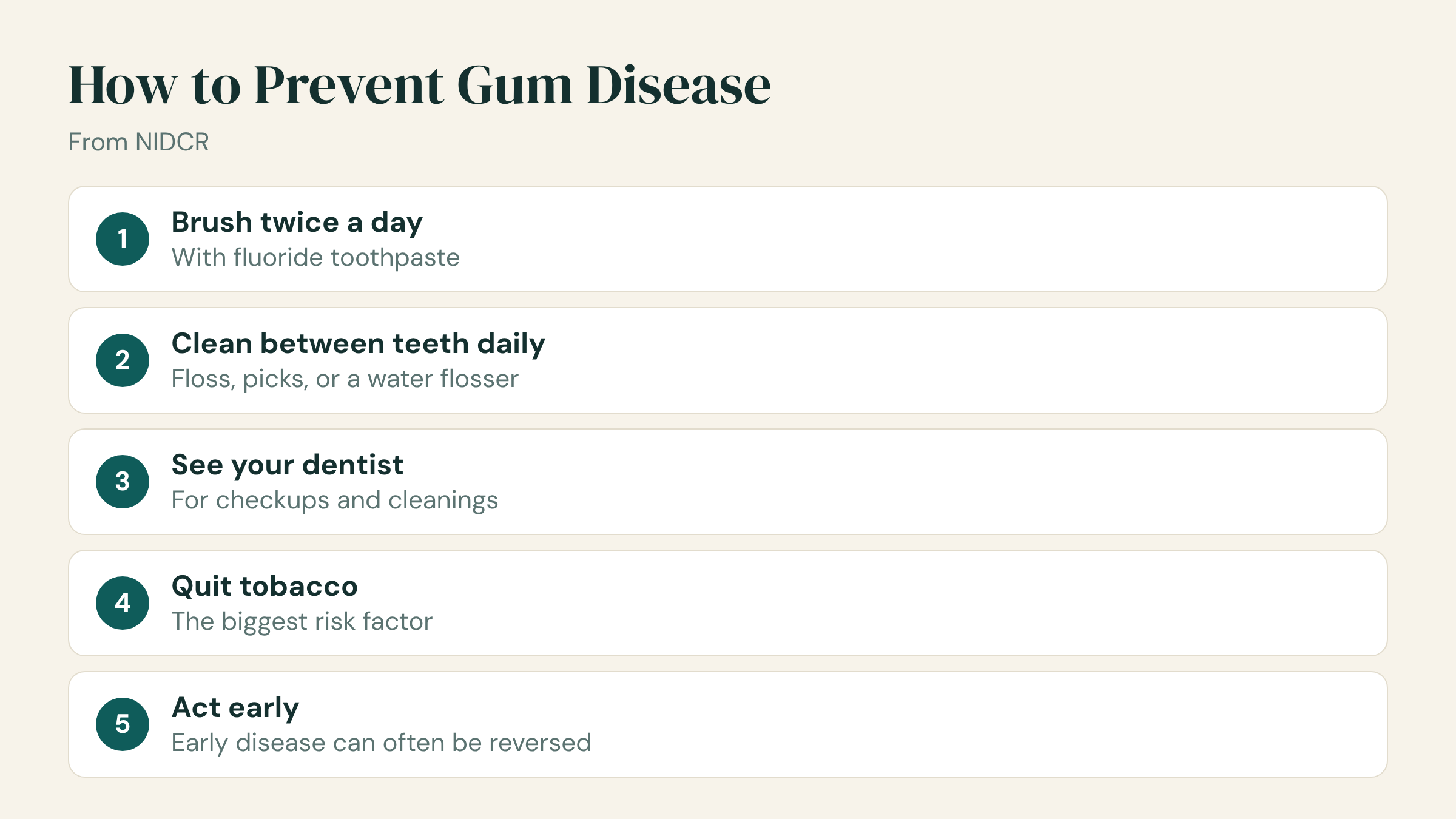
NIDCR’s advice is simple:
- Brush twice a day with fluoride toothpaste
- Floss daily, or use interdental brushes, wooden or plastic picks, or a water flosser recommended by a dental professional
- Have routine checkups and professional cleanings
- Quit all forms of tobacco
A Quick At-Home Check
Once a month, take a minute in good light to look at your gums in the mirror. Lift your lip and check for color changes, swelling, or areas that seem to be pulling back. Pay attention to whether you see blood when you brush. This is not a replacement for a dental exam, since dentists can measure the pockets around your teeth and take X-rays to look for bone loss. It simply helps you notice changes sooner.
Can Supplements Help?
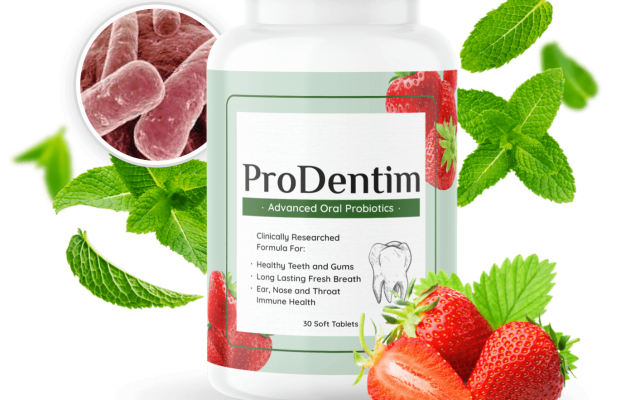
Dental probiotics and other products are often marketed for gum health, but evidence is weak, and they do not remove plaque or tartar. Do not use a supplement to put off a dental visit. If your gums are bleeding or swollen, a proper exam comes first.
When to See a Dentist
Book a dental visit if your gums bleed often, stay swollen or tender, pull away from your teeth, or if your teeth feel loose or painful when you chew. Also mention persistent bad breath. Early treatment is simpler than treating advanced disease, and it gives you the best chance of keeping your natural teeth.
Why Early Action Matters
Gum disease tends to get worse slowly, and the bone support it destroys is hard to restore. Early on, the fix may be nothing more than a professional cleaning and better daily habits. Later, treatment can involve deep cleaning, medication, or surgery. Acting on small signs can help you avoid more involved care.
What Happens at a Gum Check
At a checkup, your dentist or hygienist will look at your gums and ask about bleeding, smoking, and your medical history. They may gently measure the space between your gums and teeth, and may take X-rays if they are concerned about the bone. Tell them about any health conditions and medications, since these can affect your gums and your treatment. If you have diabetes, let your dentist know, because it is a risk factor for gum disease.
The Bottom Line: Early Signs of Gum Disease
Red, swollen, tender, or bleeding gums are the most common early signs of gum disease. The early stage can often be reversed with good daily care and professional cleaning, but advanced disease can harm the bone and lead to tooth loss. If you notice any warning signs, do not wait. See your dentist.
Related articles
- Dry Mouth: Causes and Why It Matters
- Best and Worst Foods for Your Teeth
- Does Oil Pulling Work? What the Research Says
For more detail, see the official guidance from NIDCR: Periodontal (Gum) Disease.
This article is for general information only and is not medical advice. Talk to a healthcare professional about your symptoms, and before starting any supplement, especially if you take medication or have a medical condition.
1 Comment on “Early Signs of Gum Disease”