
Almost everyone has bad breath now and then, especially after a garlicky lunch or first thing in the morning. But when it keeps coming back, it can be embarrassing, and it can make you self-conscious about talking to people up close.
Bad breath, known medically as halitosis, usually starts in the mouth, and most causes can be managed. Mints may hide the smell for a while, but finding the cause is what brings lasting improvement. Here is what is behind it and how to deal with it.
What Causes Bad Breath?
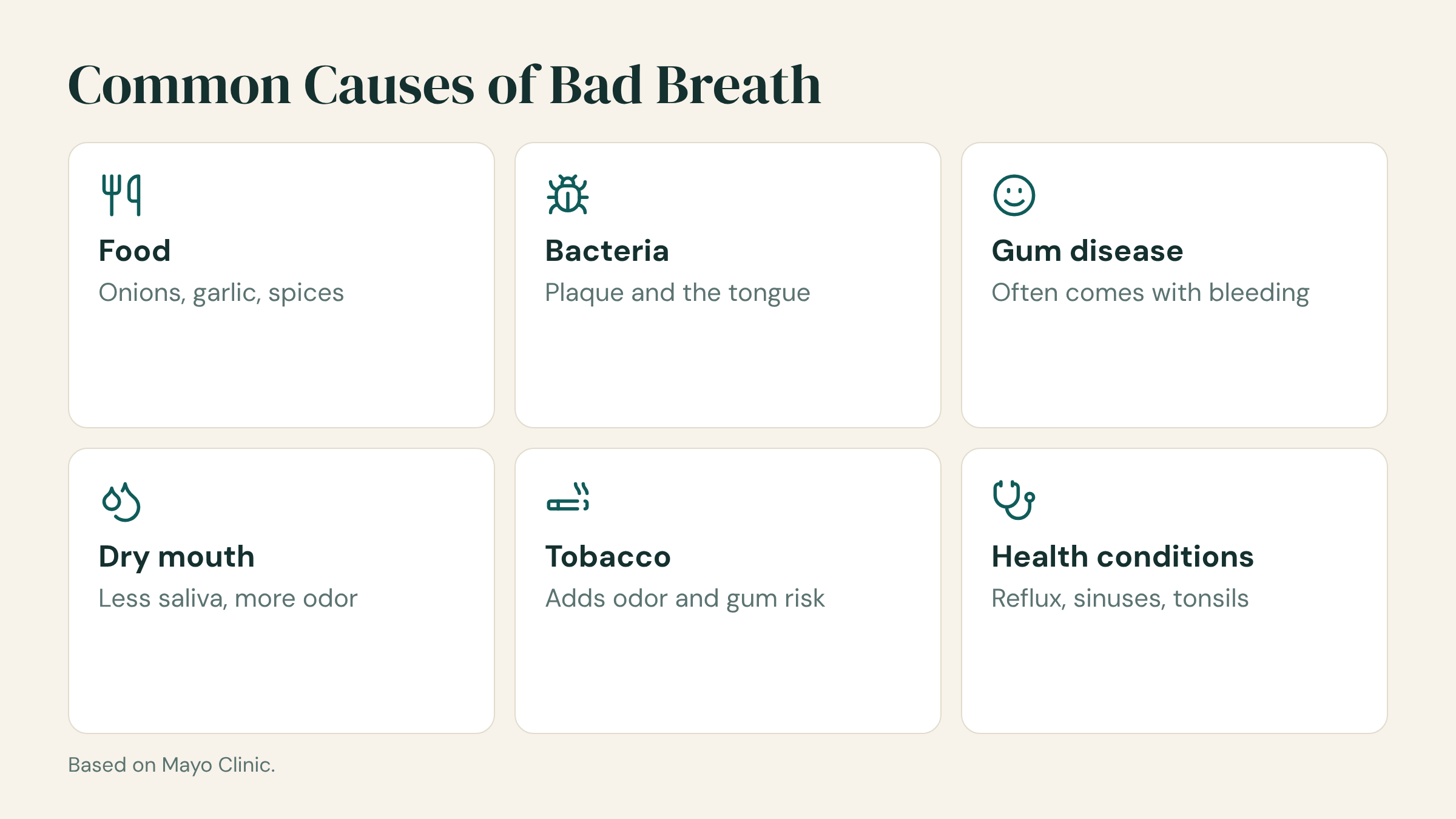
Mayo Clinic lists a number of possible causes. The most common ones are below.
Food
Food particles left in your mouth break down and feed odor-causing bacteria. Onions, garlic, and spices can also affect your breath after they are digested, because their compounds enter your bloodstream and reach your lungs. That is why brushing does not fully remove garlic breath.
Poor Oral Hygiene
If you do not brush and clean between your teeth well, food remains in your mouth. Plaque, a sticky film of bacteria, then builds up. Bacteria also collect on the tongue, particularly toward the back. Dentures and braces that are not cleaned well can trap odor-causing bacteria too.
Gum Disease
Persistent bad breath is a listed sign of gum disease, according to the National Institute of Dental and Craniofacial Research (NIDCR). If it comes with bleeding or swollen gums, get checked.
Dry Mouth
Saliva helps wash away odor-causing particles, so less saliva means worse breath. This is one reason morning breath is so common, especially if you sleep with your mouth open. Medicines and salivary gland problems can also cause dry mouth.
Tobacco
Smoking and other tobacco use create their own unpleasant odor and raise your risk of gum disease.
Mouth Infections
Tooth decay, mouth sores, and wounds following mouth surgery can all contribute.
Other Health Conditions
Less often, the source is outside the mouth. Tonsil stones, postnasal drip, gastroesophageal reflux disease (GERD), some cancers, and metabolic disorders can cause bad breath. In young children, an object lodged in a nostril, such as food, may be to blame.
How to Tell If You Have Bad Breath
It can be hard to judge your own breath. One way is to ask someone you trust. Another clue is a coating on your tongue or a bad taste in your mouth. Your dentist can also tell you if there is a problem and what is likely causing it.
How to Manage Bad Breath
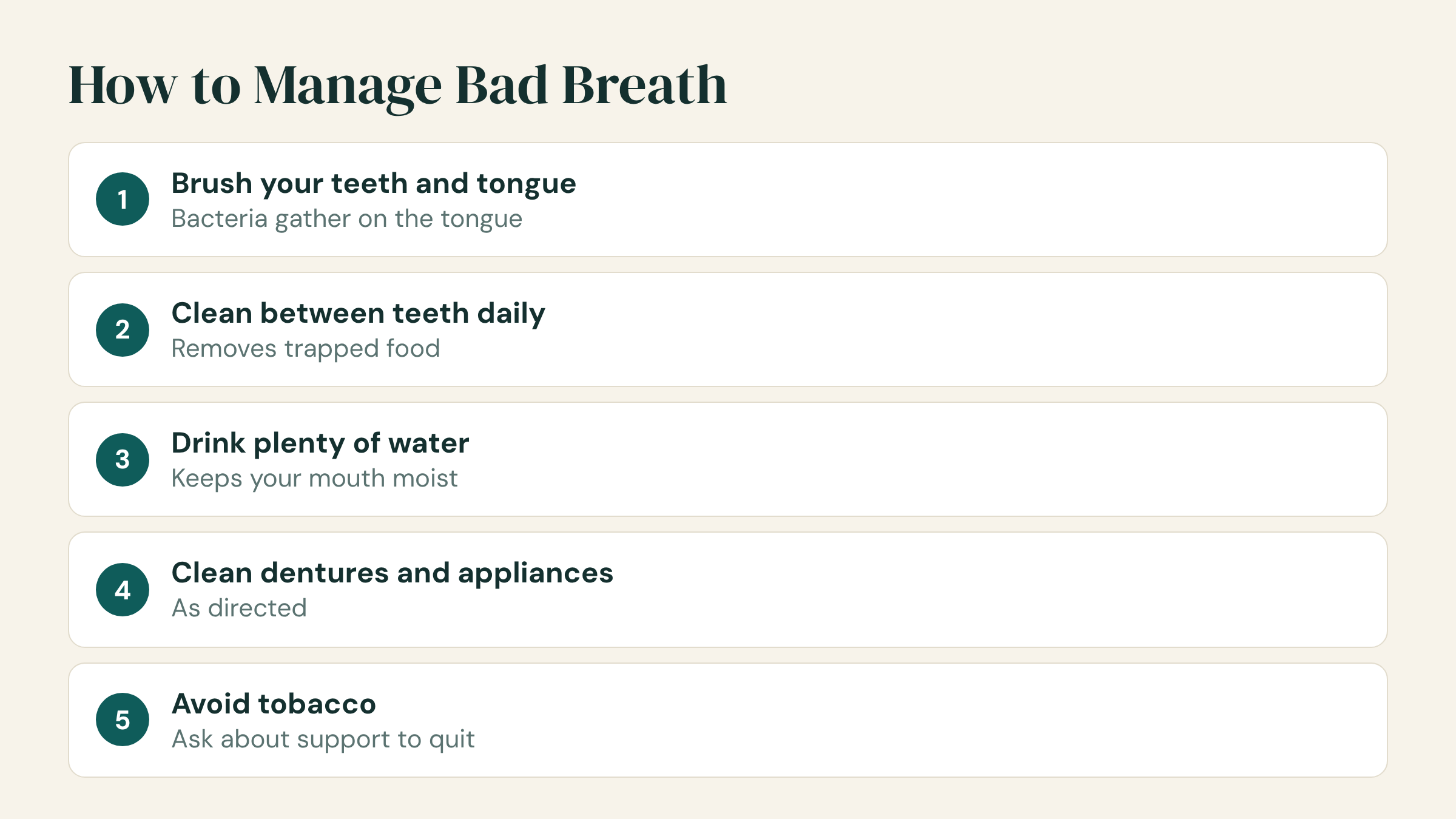
Mayo Clinic suggests these steps:
- Brush your teeth and tongue: Mayo Clinic suggests brushing after eating. Pay attention to the tongue, where bacteria can gather.
- Floss daily: This removes food particles between your teeth.
- Drink plenty of water: It keeps your mouth moist.
- Clean dentures and oral appliances regularly: Follow the instructions from your dentist.
- Avoid tobacco products: Ask your doctor about support to quit.
Some extra tips can also help:
- Chew sugar-free gum to get saliva flowing.
- Replace your toothbrush every three to four months.
- See your dentist regularly for checkups and cleaning.
- Eat regular meals, and include crunchy fruit and vegetables, which can help increase saliva.
Do Mouthwash, Mints, and Gum Work?
Mayo Clinic points out that gum, mints, and mouthwash are usually short-term fixes because they do not address the underlying cause. They can be handy before a meeting, but they are not a solution on their own. Choose sugar-free options, because sugary mints feed the same bacteria that cause the problem.
If dry mouth is part of the issue, be careful with alcohol-based mouthwash. Mayo Clinic advises people with dry mouth to avoid it.
What About Supplements?
Breath-freshening supplements and dental probiotics are widely advertised, but they have much weaker support than basic oral care. Reviews of dental probiotics have focused on gum inflammation, and even there the evidence is weak. Treat any product claiming to “cure” bad breath with skepticism.
Morning Breath: What Can You Do?
Saliva flow drops during sleep, so bacteria get to work overnight. To reduce morning breath, brush and floss before bed, drink water when you wake up, and try to breathe through your nose. If you snore or sleep with your mouth open, mention this to your doctor, since it can dry your mouth and may have a treatable cause.
Bad Breath and Low-Carb Diets
Some people notice a change in their breath when they sharply cut carbohydrates or skip meals. Drinking water and eating regularly may help. If you have diabetes and notice a sudden fruity smell on your breath, or feel unwell, contact a healthcare professional promptly.
When to See a Dentist or Doctor
If bad breath continues after you improve your oral care, see your dentist. They can check for gum disease, cavities, or dry mouth. If your mouth seems healthy, you may be referred to a doctor to look for another cause, such as reflux, sinus problems, or tonsil issues.
Also see a clinician if you have mouth sores that do not heal, persistent pain, trouble swallowing, or swollen glands along with bad breath.
Keep a Short Breath Log
If you are having trouble finding a pattern, note for a week when your breath seems worse, along with what you ate, any medicines you took, and how dry your mouth felt. Bring these notes to your dentist. They can help narrow down whether the cause is more likely to be food, dry mouth, or something that needs an exam.
The Bottom Line
Most bad breath comes from bacteria and food in the mouth, dry mouth, gum problems, or tobacco. Brushing your teeth and tongue, cleaning between your teeth, drinking water, and avoiding tobacco are the main steps. Mints and mouthwash only help for a short time, so if the problem continues, ask your dentist to help you find the cause.
Related articles
- Best and Worst Foods for Your Teeth
- How to Brush and Floss the Right Way
- Does Oil Pulling Work? What the Research Says
For more detail, see the official guidance from NIDCR: Periodontal (Gum) Disease.
This article is for general information only and is not medical advice. Talk to a healthcare professional about your symptoms, and before starting any supplement, especially if you take medication or have a medical condition.
1 Comment on “What Causes Bad Breath and How to Manage It”