
You may have heard that flossing your teeth could protect your heart. It is a catchy idea, and it has appeared in many headlines over the years. Gum disease and heart disease do seem to be connected in some way, but that connection is more complicated than the headlines suggest.
Here is what research says about oral health and heart health, and what it means for you.
This article explains what scientists have found, what a major statement from the American Heart Association said, and why the difference between a link and a cause really matters.
Why Researchers Have Looked at This Link
Gum disease is an infection that causes long-term inflammation in the tissues around your teeth. Atherosclerosis, the buildup of plaque in arteries, also involves inflammation. It seemed logical to ask whether one could be feeding the other.
Researchers proposed that bacteria from the mouth might enter the bloodstream, or that inflammation in the gums might affect the rest of the body. Note that dental plaque and arterial plaque are completely different things, even though they share a name.
What the American Heart Association Said
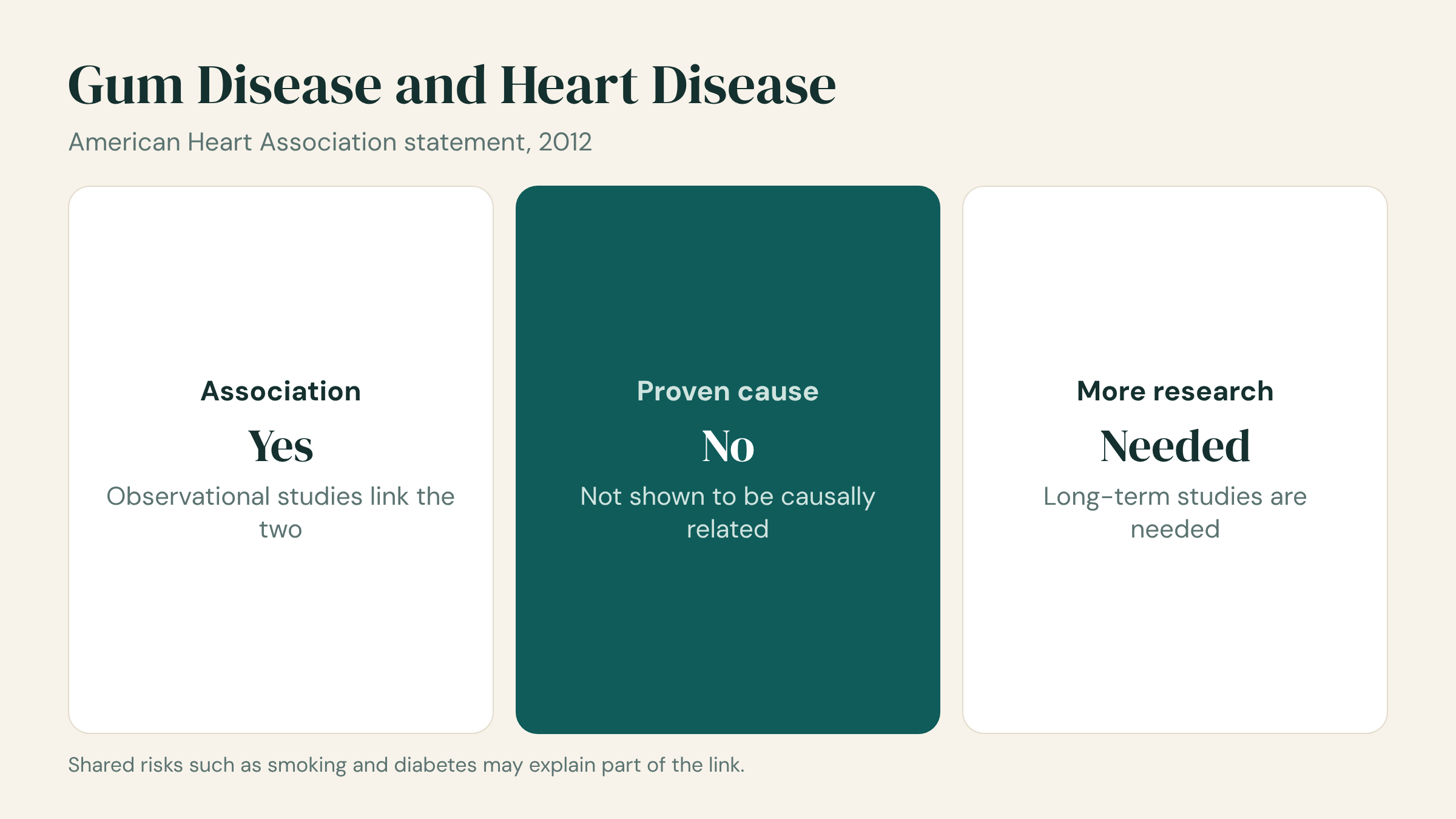
In 2012, the American Heart Association published a scientific statement in its journal Circulation that looked at this question. As reported by the American College of Cardiology, the statement reached two main conclusions:
- Observational studies support an association between gum disease and atherosclerotic vascular disease, independent of known confounders.
- The two conditions were not shown to be causally related.
The authors also said there are significant gaps in understanding how oral health and vascular disease interact, and that long-term studies are needed.
Link vs. Cause: What’s the Difference?
This is the key point. An association means two things tend to happen together. A cause means one directly leads to the other.
People with gum disease may have more heart disease, but that does not prove gum disease is the reason. A third factor could be behind both. For example, ice cream sales and sunburns rise together in summer, but ice cream does not cause sunburn. Hot, sunny weather explains both.
Shared Risk Factors
Gum disease and heart disease have several risk factors in common, which may explain some of the overlap:
- Smoking: NIDCR calls it the most significant risk factor for gum disease, and it is also a major cause of heart disease.
- Diabetes: A risk factor for both conditions.
- Older age: Risk for both increases as we age.
- Obesity: Linked with both conditions.
- Stress and lifestyle habits: These can affect both oral and heart health.
NIDCR lists cardiovascular disease among the conditions connected with gum disease risk, but again, this describes a relationship and does not prove one causes the other.
Will Treating Gum Disease Prevent Heart Disease?
This has not been shown. The AHA statement did not find a causal link, which means there is no basis for saying that treating gum disease will prevent heart attacks or strokes. Be wary of any dental product or supplement that claims it protects your heart.
That said, gum disease deserves treatment for its own sake. It can cause pain, bad breath, and tooth loss. You do not need a heart benefit to justify looking after your gums.
What You Can Do for Both Your Mouth and Your Heart
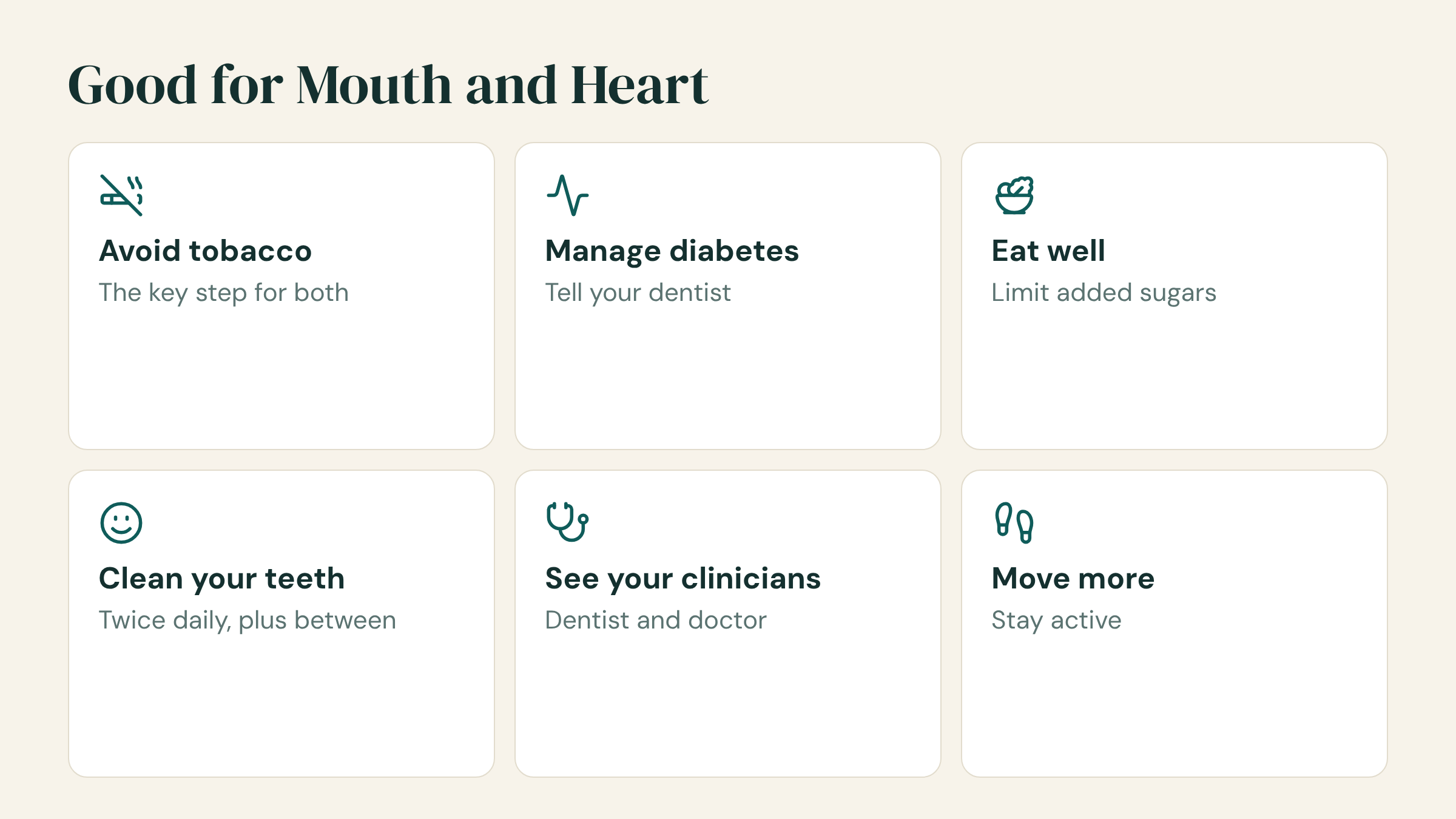
Good news: a lot of the advice overlaps.
- Do not use tobacco: This is probably the single most useful step for both.
- Manage diabetes: Follow your care plan and tell your dentist that you have it.
- Eat well: Limit added sugars and highly processed foods, and eat plenty of fruit, vegetables, and whole grains.
- Brush and clean between your teeth: Brush twice a day with fluoride toothpaste and clean between your teeth once a day.
- See your dentist: Regular exams can detect gum disease early.
- See your doctor: Check your blood pressure, cholesterol, and blood sugar as advised.
- Move more: Regular activity supports heart health and helps manage weight.
Should Heart Patients Take Extra Care With Dental Work?
If you have a heart condition, always tell your dentist. This includes any artificial heart valves, previous heart infections, or blood-thinning medicines. Some people with certain heart conditions may need antibiotics before specific dental procedures, and some medicines affect bleeding. Your dentist and cardiologist can decide together what is right for you. Do not stop a blood thinner before dental work unless you are told to.
How to Read Headlines on This Topic
When you see a claim like “flossing protects your heart,” ask a few questions. Was it an observational study, or a trial where people were randomly assigned to treatment? Did the study measure real outcomes such as heart attacks, or only markers in the blood? Who is selling something? Observational studies are useful, but they cannot prove cause and effect, and people who floss regularly may also have other healthy habits.
When to See a Dentist or Doctor
See a dentist if you have bleeding, swollen, or receding gums, loose teeth, or persistent bad breath. Seek emergency care right away for chest pain, trouble breathing, sudden weakness, or trouble speaking. These can be signs of a heart attack or stroke.
Tell Each Clinician About the Other
Your dentist and doctor do not always share notes, so it helps to keep them both informed. Tell your dentist about your medical conditions and medicines, and tell your doctor about any gum treatment you are having. That way, each one has a fuller picture of your health.
The Bottom Line: Oral Health and Heart Health
Gum disease and heart disease are associated, but the American Heart Association has concluded the link has not been shown to be causal. Shared risk factors such as smoking and diabetes may explain part of the connection. Take care of your gums because they matter in their own right, and take care of your heart with proven steps such as not smoking, staying active, and managing blood pressure, cholesterol, and diabetes.
Related articles
- Dry Mouth: Causes and Why It Matters
- Best and Worst Foods for Your Teeth
- Does Oil Pulling Work? What the Research Says
For more detail, see the official guidance from NIDCR: Periodontal (Gum) Disease.
This article is for general information only and is not medical advice. Talk to a healthcare professional about your symptoms, and before starting any supplement, especially if you take medication or have a medical condition.
1 Comment on “Are Oral Health and Heart Health Linked?”