
Your heart works every minute of every day, yet many people only think about it after a scare. High blood pressure and high cholesterol often cause no symptoms at all, so problems can build quietly for years.
The good news is that everyday habits can make a real difference. Here is a simple guide to protecting your heart, and what to think about before buying a heart supplement.
What Is Life’s Essential 8?
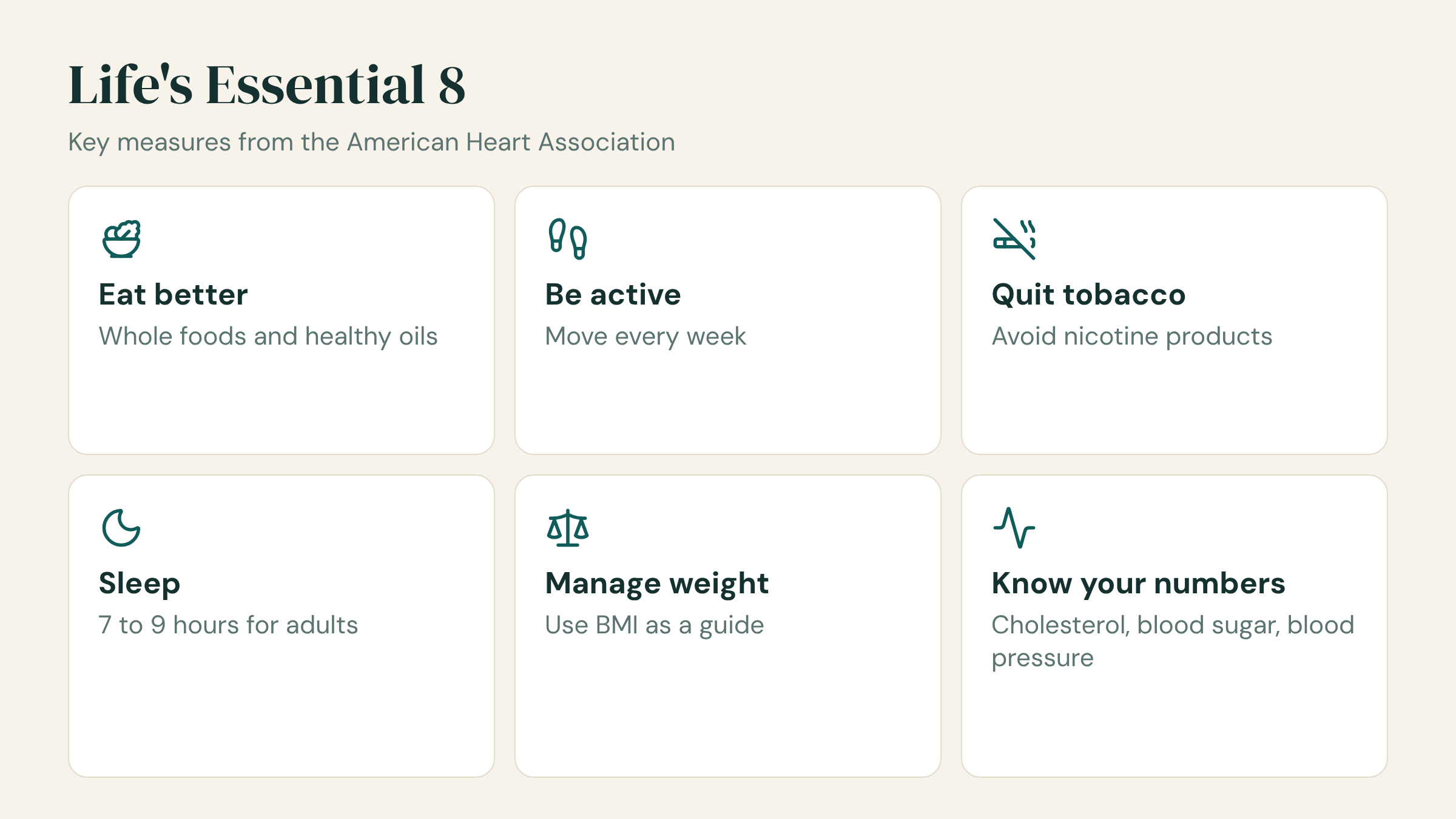
The American Heart Association uses a checklist called Life’s Essential 8 to describe the key measures of heart health. Four are behaviors, and four are health factors.
- Eat better
- Be more active
- Quit tobacco
- Get healthy sleep
- Manage weight
- Control cholesterol
- Manage blood sugar
- Manage blood pressure
Know Your Numbers
You cannot feel most of these numbers, so regular testing matters.
- Blood pressure: The AHA says optimal is below 120/80 mm Hg.
- Cholesterol: High non-HDL (“bad”) cholesterol raises your risk of heart disease.
- Blood sugar: A hemoglobin A1c test shows long-term control.
- Body mass index: The AHA uses BMI as a guide and considers below 25 optimal.
Ask your doctor what your own targets should be. They can vary with your age and health.
Eat for Your Heart
The AHA recommends a healthy eating pattern built on whole foods. That means plenty of fruits and vegetables, lean protein, nuts, and seeds, with oils such as olive and canola instead of tropical oils.
You do not need a perfect diet. Try adding beans to soup, swapping chips for nuts, or cooking at home one more night each week. Cutting back on salty packaged foods can also help your blood pressure.
Move More
Adults should get regular moderate or vigorous activity each week. Moderate activity means your heart beats faster, but you can still talk. Brisk walking is a great example.
If you have been inactive or have a heart condition, ask your doctor how to begin safely. Start small and build up over time.
Quit Tobacco
The AHA calls cigarettes the leading cause of preventable death in the United States. Quitting is one of the most useful things you can do for your heart. Ask your doctor about support and treatments that can help.
Sleep Well
The AHA added sleep to its list because it matters for heart health. Adults generally need 7 to 9 hours a night. If you snore loudly or feel exhausted during the day, ask about sleep apnea.
Manage Stress
Stress is not on the checklist, but it can still affect your heart. The American Psychological Association says long-term stress may raise the risk of high blood pressure, heart attack, and stroke.
Regular movement, relaxation, and time with others can all help you manage it.
Do Heart Supplements Help?
Coenzyme Q10, or CoQ10, is one of the most popular heart supplements. The National Center for Complementary and Integrative Health gives a mixed picture:
- Preventing heart disease: Few studies exist, and the results are inconclusive.
- Heart failure: Research is inconclusive.
- Blood pressure: It probably has no meaningful effect.
- Statin muscle pain: Overall evidence does not support it.
No serious side effects have been reported, but CoQ10 may interact with warfarin, a blood thinner. Talk to your doctor before using it, and never replace prescribed heart medicine with a supplement.
Warning Signs of a Heart Attack or Stroke
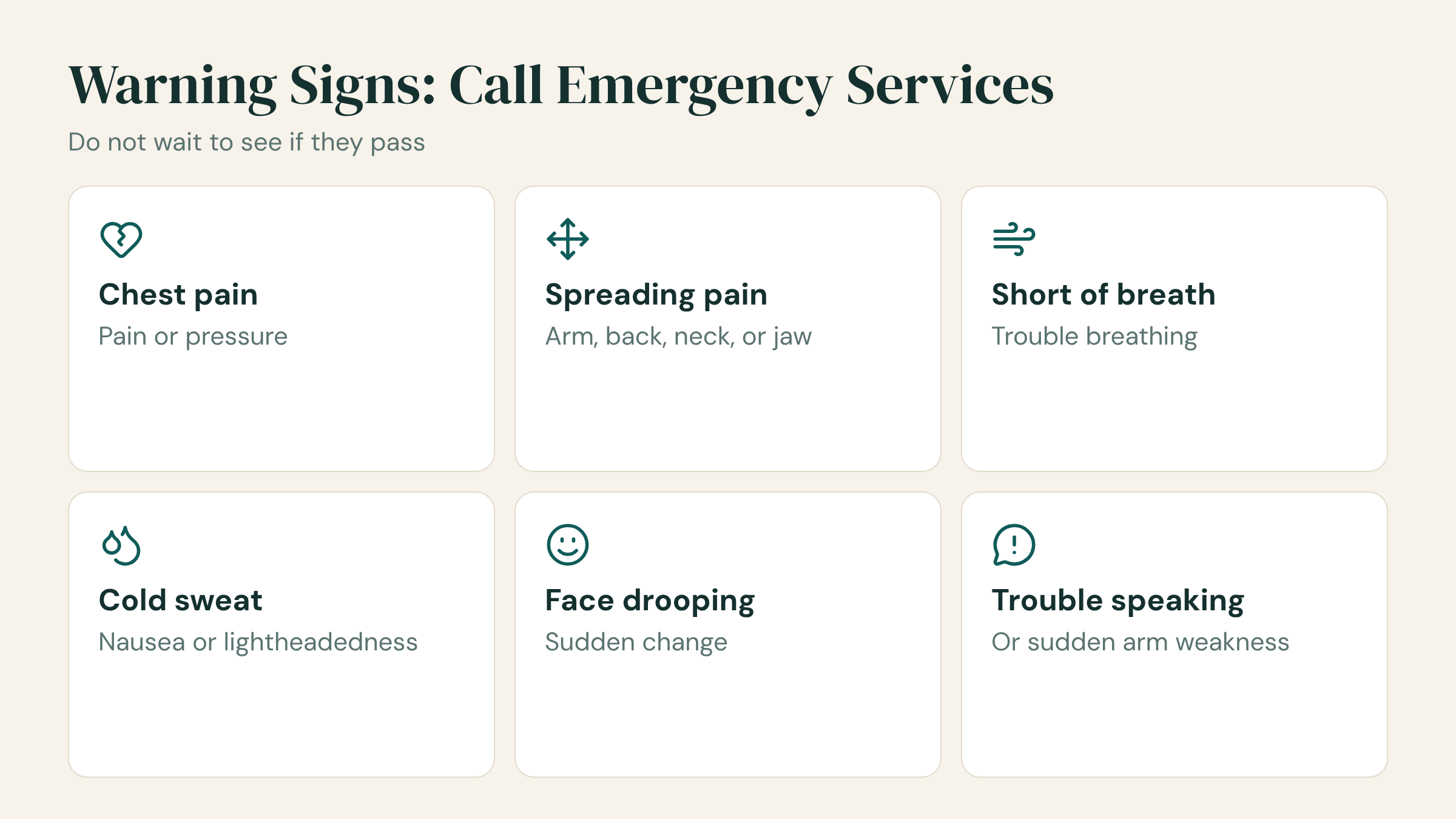
Call emergency services right away if you notice any of these signs. Do not wait to see if they pass.
- Chest pain or pressure
- Pain in the arm, back, neck, jaw, or stomach
- Shortness of breath
- Cold sweat, nausea, or lightheadedness
- Sudden face drooping, arm weakness, or trouble speaking
Simple Steps to Start This Week
- Book a blood pressure and cholesterol check
- Take a 10-minute walk after dinner
- Add a fruit or vegetable to one meal
- Set a regular bedtime
- Take your medicines as prescribed
Why Family History Matters
Heart disease can run in families. Tell your doctor if a close relative had heart problems or a stroke, particularly at a younger age. This can affect when you begin screening and which steps make the most sense.
Common Questions
Can I feel high blood pressure?
Usually not. Many people have no symptoms, so checking it is the only way to know.
How often should I check my numbers?
That depends on your age and health. Ask your doctor how often you need blood pressure, cholesterol, and blood sugar checks.
Is it too late to improve my heart health?
It is rarely too late. Small changes can still help at any age, even if you already have a heart condition.
Can I stop my medicine if my numbers improve?
Do not stop on your own. Talk to your doctor, because your numbers may be better because of the medicine.
Eating Out and Busy Days
Heart-healthy habits still work when life is busy. When eating out, try a side salad or vegetables, ask for sauces on the side, and share large portions. At home, frozen vegetables, canned beans, and whole-grain rice can make a quick meal.
If you take medicine for blood pressure or cholesterol, set a daily reminder on your phone. Taking it as prescribed matters as much as your food and exercise choices, and a simple routine can make it easier.
Do I need to avoid all fats?
No. The AHA suggests oils such as olive and canola instead of tropical oils. Nuts and seeds can also be part of a heart-healthy eating pattern.
Start Small
Choose one habit to work on first, and ask your doctor when to check your numbers.
The Bottom Line
Heart health comes down to everyday choices and knowing your numbers. Eat well, move often, avoid tobacco, sleep well, and keep your weight, cholesterol, blood sugar, and blood pressure in check.
Supplements such as CoQ10 have limited evidence, so talk to your doctor first and do not use them in place of proven care.
Related articles
This article is for general information only and is not medical advice. Talk to a healthcare professional about your symptoms, and before starting any supplement, especially if you take medication or have a medical condition.

3 Comments on “Heart Health Basics: Blood Pressure, Cholesterol, and Daily Habits”