Good sleep often begins hours before you get into bed. What you eat, drink, watch, and think about in the evening can shape the night ahead.
The good news is that small changes can make a difference. You do not need expensive gadgets or a perfect routine. You just need a few habits that you can repeat.
Adults need 7 to 9 hours of sleep a night, according to the National Heart, Lung, and Blood Institute. Here are 10 evening habits that may help you get there.
1. Keep a Steady Bedtime
Your body clock loves routine. Mayo Clinic advises going to bed and getting up at the same times every day, including weekends.
If your schedule is all over the place, change it slowly. Moving your bedtime by 15 to 30 minutes every few days is often easier than one big jump.
2. Finish Large Meals Early
A heavy meal close to bedtime can leave you uncomfortable when you lie down. It can also trigger heartburn.
Try to make dinner your last big meal of the day. If you feel hungry later, choose a light snack rather than a full plate.
3. Set a Caffeine Cutoff
Caffeine can stay in your system for hours. Coffee is the obvious source, but tea, soft drinks, energy drinks, and some medicines contain it too.
Pick a daily cutoff, such as noon or early afternoon, and see how your sleep changes. Some people are more sensitive than others, so you may need to adjust it.
4. Go Easy on Alcohol
A drink may make you feel sleepy, but it does not lead to better rest. Mayo Clinic notes that alcohol can disrupt deeper sleep stages.
If you drink, have less and finish earlier in the evening. Nicotine is also a stimulant, so avoid it close to bedtime.
5. Dim the Lights
Darkness tells your body that night is coming. Bright overhead lights send the opposite message.
An hour or so before bed, switch to lamps or lower the lights. Keep your routine calm and quiet so your body has time to shift gears.
6. Put Screens Away
Phones, tablets, and laptops can keep your mind busy. Work emails, news, and endless videos all make it easier to stay up later than planned.
Mayo Clinic suggests limiting screens before bed. Its stress advice goes further and suggests turning them off at least an hour before sleep.
Try charging your phone outside the bedroom. If you use it as an alarm, a basic alarm clock is an easy swap.
7. Do Something Relaxing
A wind-down routine helps your body learn that sleep is coming. Pick something calm and repeat it each night.
- Take a warm bath or shower
- Read a paper book
- Listen to quiet music
- Do gentle stretches
- Practice slow breathing or meditation
8. Write Down Your Worries
Bedtime is often when your brain starts reviewing its to-do list. Mayo Clinic suggests resolving concerns before bed or writing them down and setting them aside.
Keep a notebook nearby. Spend five minutes listing what is on your mind and what you will do tomorrow. Then close the notebook.
9. Make Your Bedroom Sleep-Friendly
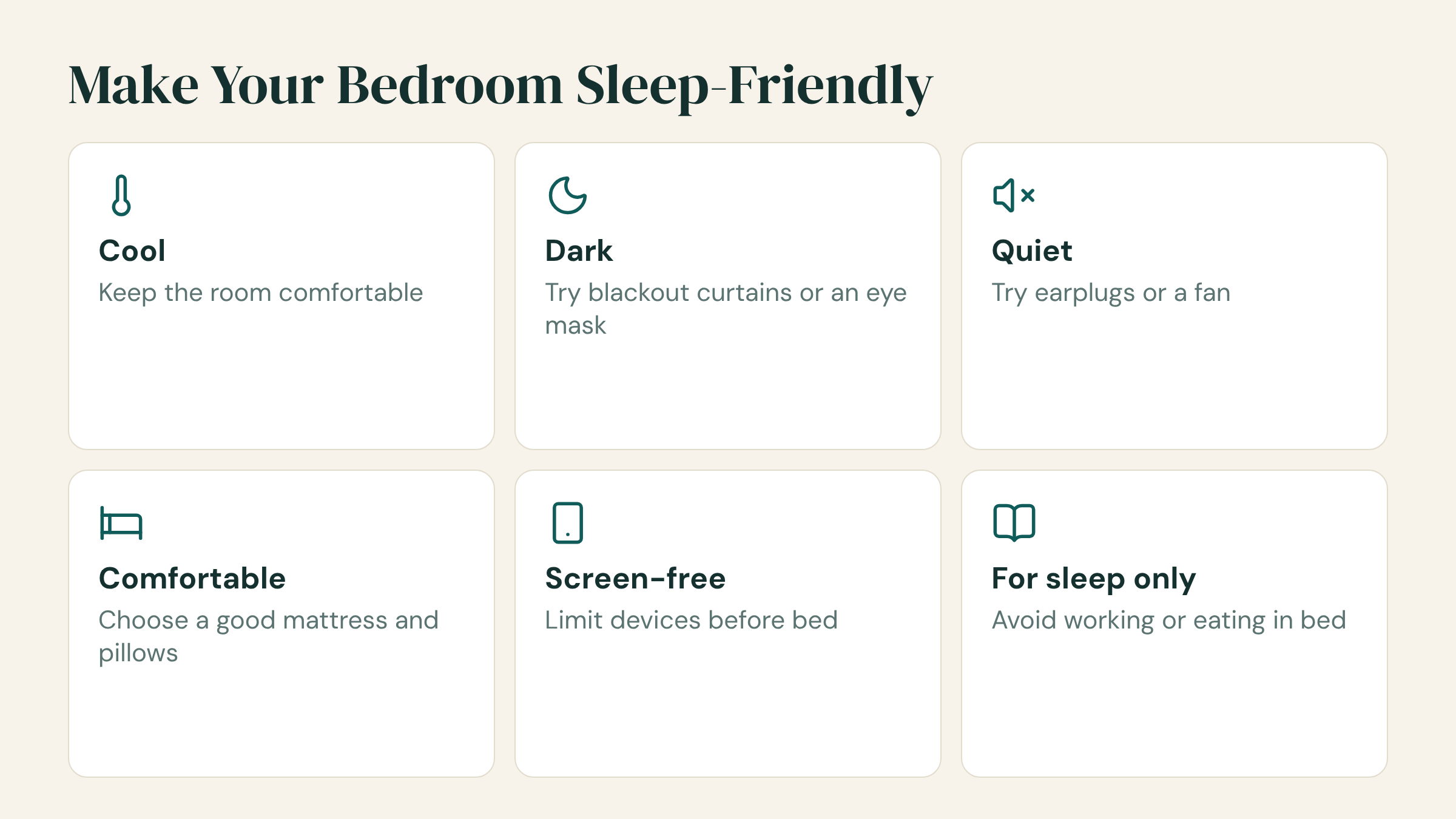
Your room should feel restful. A cool, dark, and quiet space is best.
- Use blackout curtains or an eye mask if light gets in
- Try earplugs or a fan if noise is a problem
- Keep your mattress and pillows comfortable
- Avoid working, eating, or watching TV in bed
Using your bed only for sleep helps your brain connect it with rest.
10. Go to Bed When You Feel Sleepy
Lying awake and trying hard to sleep can backfire. If you are not asleep after about 20 minutes, Mayo Clinic suggests getting up and doing something relaxing.
Keep the lights low and avoid your phone. Go back to bed when you feel sleepy. Over time, this helps your brain link your bed with sleep rather than frustration.
A Simple Evening Routine to Try
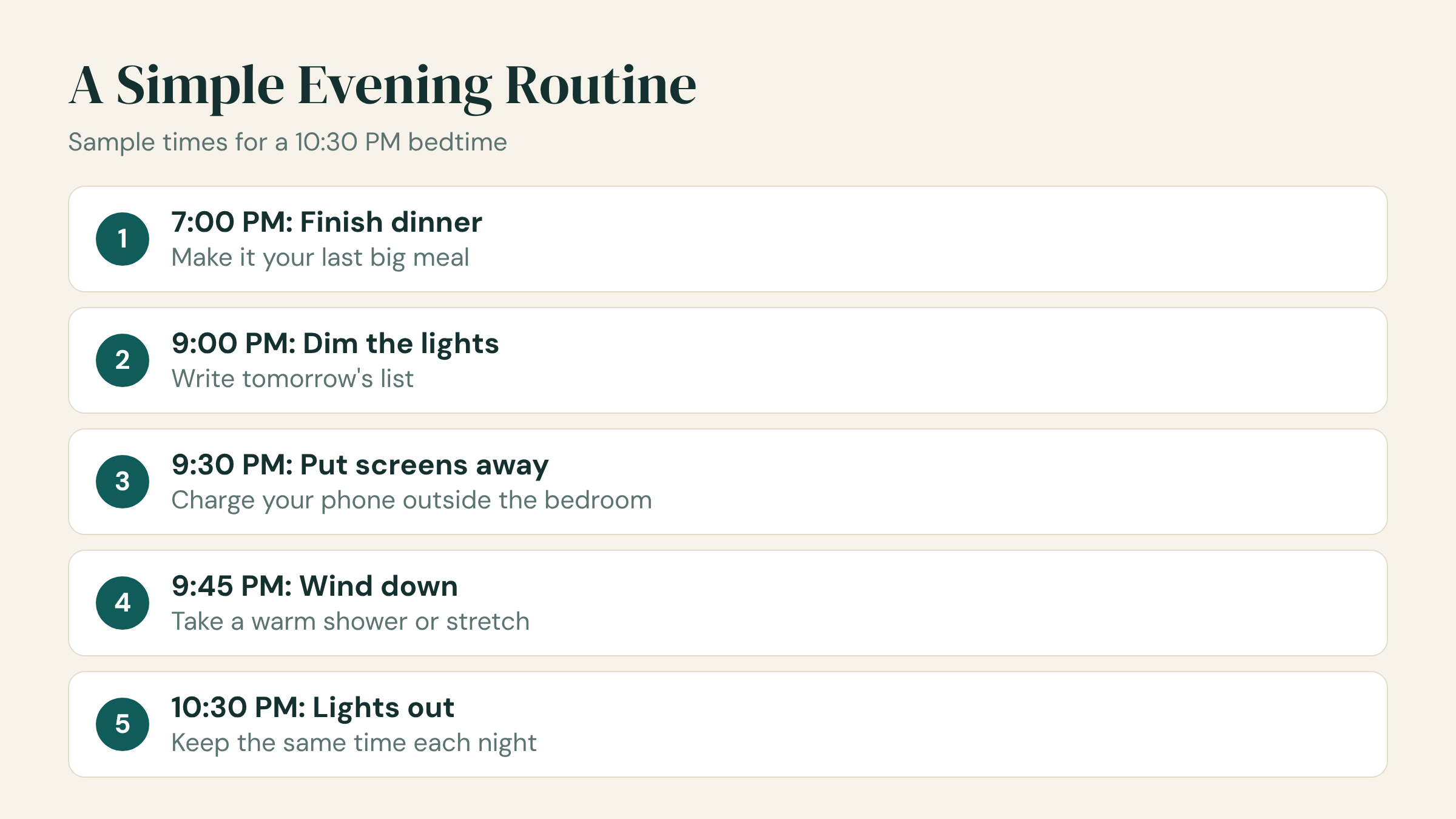
You do not need to change everything at once. Here is a sample routine for a 10:30 PM bedtime. Adjust the times to suit your life.
- 7:00 PM: Finish dinner
- 9:00 PM: Dim the lights and write tomorrow’s list
- 9:30 PM: Put screens away
- 9:45 PM: Take a warm shower or stretch
- 10:00 PM: Read a few pages in bed
- 10:30 PM: Lights out
What About Daytime Habits?
Your evenings work best when your days support them. Regular exercise helps sleep, though intense workouts right before bed may not. Time outdoors may also help.
Keep naps under an hour and avoid them late in the day. Long or late naps can make it harder to feel sleepy at night.
When to See a Doctor
Habits can help, but they cannot treat everything. See a doctor if poor sleep lasts for weeks or affects your daily life. Long-term insomnia is defined as lasting three months or more, and it may be tied to other health conditions or medicines.
Loud snoring, gasping, or restless legs are also worth mentioning. These can be signs of a sleep disorder that needs its own care.
Common Mistakes to Avoid
Some well-meant habits can get in the way. Sleeping in on weekends is one, since it can throw off your body clock for the week ahead.
Another is watching the clock. Checking the time again and again usually adds stress, so turn the clock away from your bed.
Try not to expect instant results either. A new routine may take a couple of weeks to feel natural, and one bad night does not mean it has failed.
The Bottom Line: Evening Habits
Better sleep comes from small habits repeated every night. Start with one or two from this list, such as a steady bedtime and a screen-free hour.
Give each change a couple of weeks before you judge it. Once it feels easy, add another. Your evenings can slowly become the start of better rest.
Related articles
- Melatonin: How Much Is Too Much?
- Foods and Drinks That May Help You Relax at Night
- How Much Sleep Do Adults Really Need?
- Why You Wake Up at 3 AM and What May Help
This article is for general information only and is not medical advice. Talk to a healthcare professional about your symptoms, and before starting any supplement, especially if you take medication or have a medical condition.