
Magnesium has become one of the most talked-about sleep supplements. You will see it in powders, capsules, and bedtime drinks. Many people say it helps them relax at night.
Here is what the evidence really says about magnesium for sleep.
The research is less clear than the marketing suggests. Here is what we know, what we do not know, and how to approach magnesium safely.
What Is Magnesium?
Magnesium is an essential mineral. Your body needs it for many everyday functions, and it comes mainly from food.
The NIH Office of Dietary Supplements recommends 400 to 420 mg per day for adult men and 310 to 320 mg for adult women. Those totals include all sources, including food.
Why People Link Magnesium With Sleep
Magnesium plays a role in how nerves and muscles work. That has led to the idea that it could help the body relax. It is a reasonable theory, but a theory is not proof that a supplement improves sleep.
Some people who feel better after taking magnesium may also have changed other habits. A calm bedtime routine can help by itself, which makes supplements harder to judge.
What the Research Shows
The National Center for Complementary and Integrative Health describes the research on magnesium and sleep as very limited.
It points to two reviews:
- A 2021 review of three small, low-quality studies suggested magnesium might help older adults fall asleep faster.
- A 2022 review of nine studies found conflicting results.
So magnesium may help some people, but the evidence is weak. It should not be seen as a proven insomnia treatment.
It is also possible that results differ based on a person’s starting magnesium levels. Researchers still need better studies to answer that question.
Who Might Be Low in Magnesium?
Certain medicines can affect magnesium levels. The NIH notes that long-term use of prescription drugs for acid reflux or ulcers can lower blood magnesium. Some diuretics can also increase magnesium loss through urine.
If you think you may be low, ask your doctor. Do not assume that poor sleep means you need more magnesium, because insomnia has many possible causes.
Best Food Sources of Magnesium
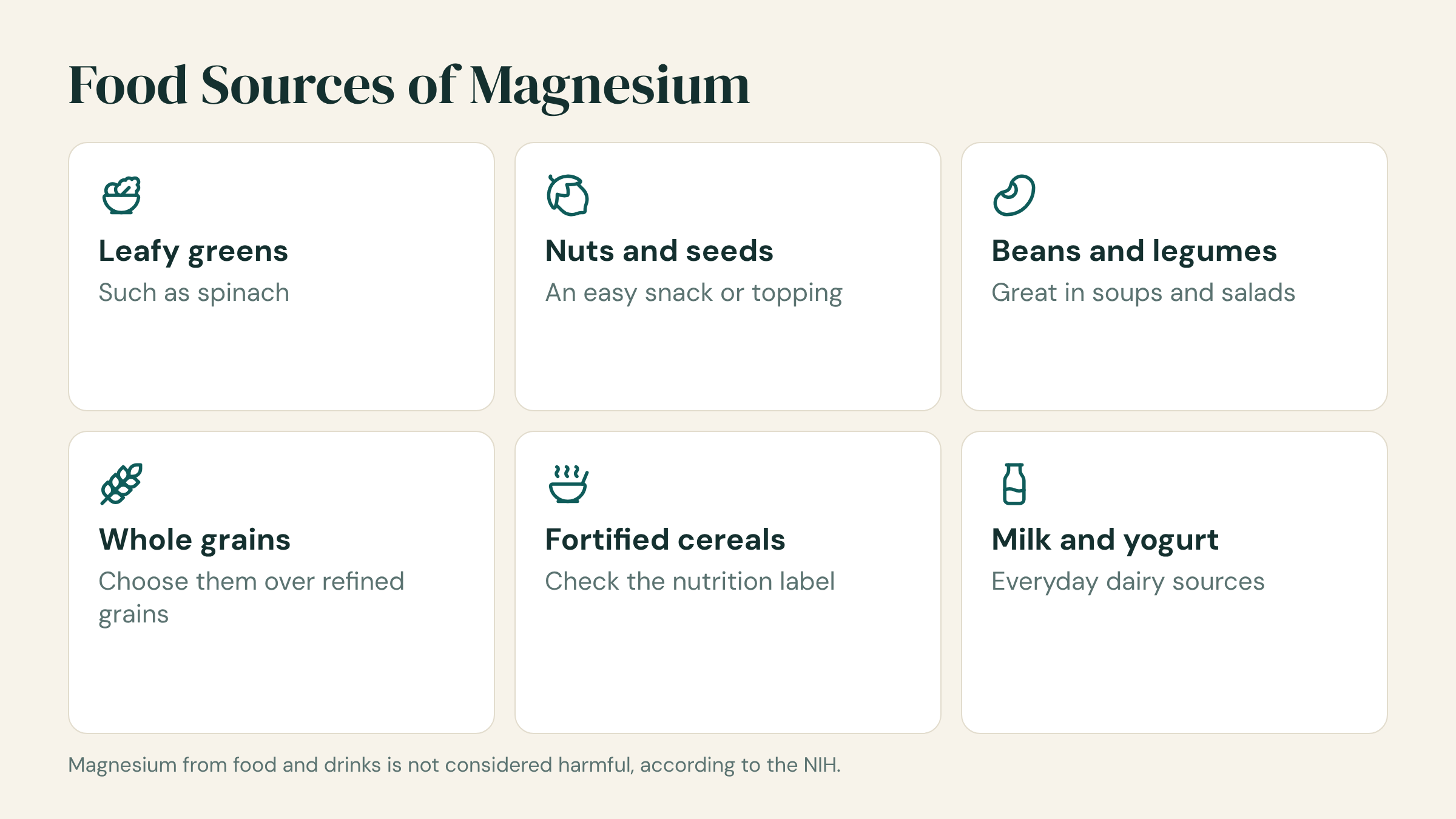
Food is the simplest place to start, and it adds other nutrients too. Good sources include:
- Leafy greens, such as spinach
- Nuts and seeds
- Beans and other legumes
- Whole grains
- Fortified breakfast cereals
- Milk and yogurt
The NIH says magnesium from food and drinks is not considered harmful. That makes a balanced diet a low-risk first step.
How Much Is Too Much?
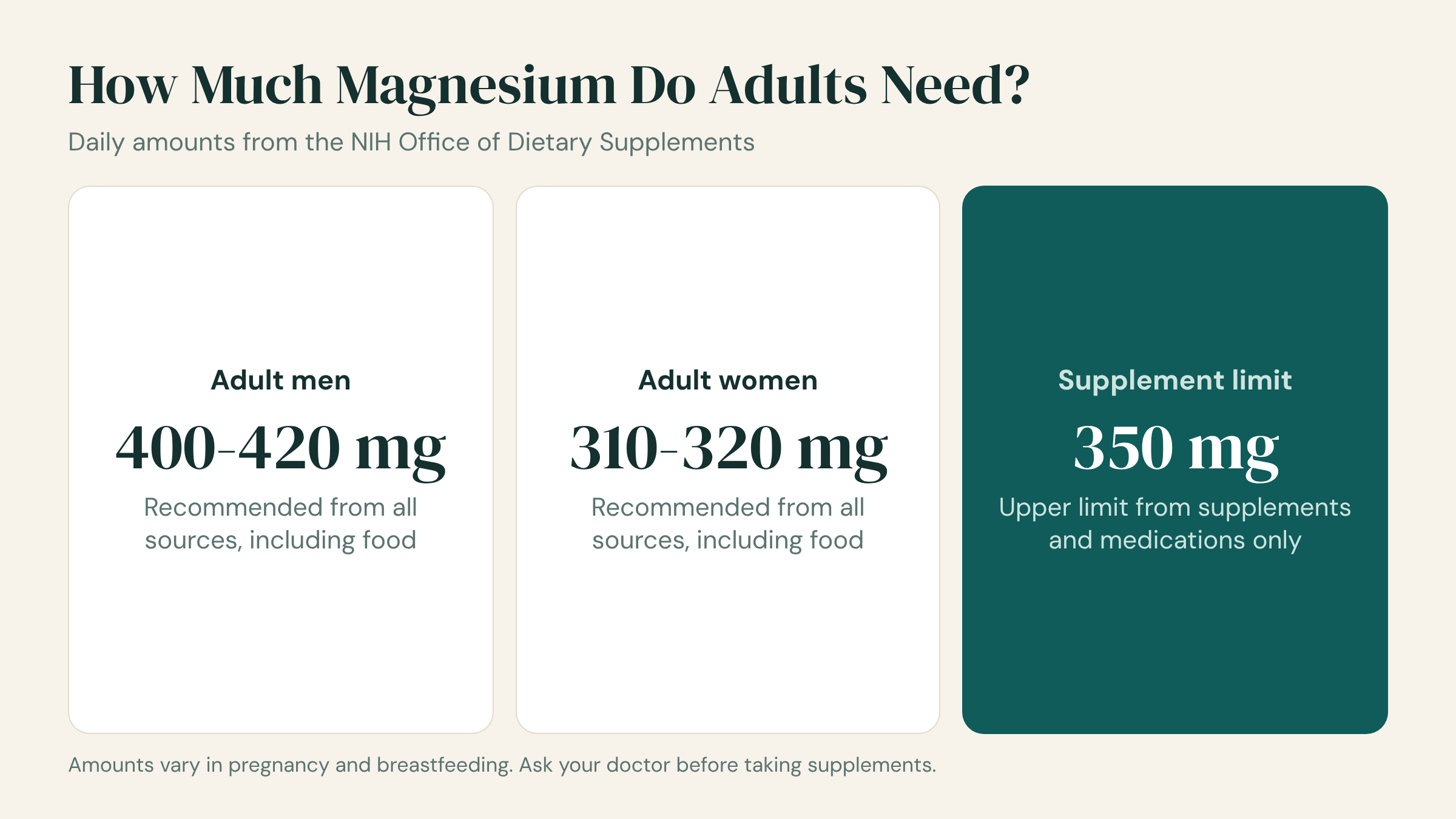
For supplements and medications, the NIH sets the adult upper limit at 350 mg per day. This limit does not include magnesium from food.
Too much from supplements can cause diarrhea, nausea, and stomach cramps. Extremely high amounts can cause an irregular heartbeat and cardiac arrest.
Check the label on any product you use. Some multivitamins, antacids, and laxatives contain magnesium too, so amounts can add up. Stay within the upper limit unless a healthcare provider tells you otherwise.
Medications That May Interact With Magnesium
Magnesium supplements can interfere with some medicines. According to the NIH, you should pay attention to these:
- Bisphosphonates: These osteoporosis drugs are poorly absorbed if taken too close to magnesium.
- Antibiotics: Some may not be absorbed well if taken too close to a magnesium supplement.
- Diuretics: These can raise or lower magnesium loss, depending on the type.
- Acid reflux drugs: Long-term use of some prescription products can lower magnesium levels.
A pharmacist can help you space your doses safely. People with kidney problems should ask a doctor before using magnesium, since the kidneys help clear excess amounts from the body.
Which Form of Magnesium Is Best for Sleep?
You will see many forms on store shelves, such as citrate, glycinate, and oxide. Marketing often claims one form is best for sleep.
Current evidence does not settle that question. Forms may differ in how they affect digestion, but a sleep claim on a label is not proof.
When comparing products, look at the amount of elemental magnesium per serving, and compare it with the upper limit. Also consider a product that has been checked by an independent testing group.
Should You Try Magnesium for Sleep?
If you already eat a varied diet, sleep habits may be a better first focus. Mayo Clinic’s sleep advice includes keeping a steady schedule, limiting naps, managing stress, and making your bedroom cool, dark, and quiet.
If you still want to try magnesium, speak with a healthcare professional first. Keep a simple sleep diary for a few weeks, and stop if you get side effects or see no benefit.
See a doctor if poor sleep lasts for weeks or affects your daily life. Sleep apnea, restless legs, depression, and other conditions all need different care.
What to Expect If You Try It
Be realistic about what a supplement can do. Magnesium is not a sleeping pill, and you should not expect to feel drowsy right after taking it.
Give any change a fair trial and track it. Write down when you went to bed, how long it took to fall asleep, how often you woke, and how rested you felt.
A simple diary makes it easier to see whether something is really helping. It also gives your doctor useful information if your sleep does not improve.
Other Reasons You May Be Sleeping Poorly
Magnesium will not fix a sleep problem caused by something else. Mayo Clinic lists stress, an irregular schedule, late meals, caffeine, nicotine, and alcohol as common causes of insomnia.
Some medicines and health conditions can also affect sleep, including chronic pain, reflux, and an overactive thyroid. Sleep apnea and restless legs syndrome are other possible causes.
If you snore loudly, wake up gasping, or feel exhausted after a full night in bed, ask about being checked for a sleep disorder.
The Bottom Line
Magnesium is essential for health, but its benefit for sleep is not well proven. The best evidence so far is small and mixed.
Start with food and good sleep habits. If you try a supplement, stay within the 350 mg limit, check for drug interactions, and keep your expectations realistic.
Related articles
- Melatonin: How Much Is Too Much?
- Foods and Drinks That May Help You Relax at Night
- How Much Sleep Do Adults Really Need?
This article is for general information only and is not medical advice. Talk to a healthcare professional about your symptoms, and before starting any supplement, especially if you take medication or have a medical condition.
1 Comment on “Magnesium for Sleep: What the Research Says”