
Ashwagandha is one of the most popular herbs for stress. It appears in capsules, powders, gummies, and teas, and it is often described as a natural way to calm down.
This guide looks at what studies show about ashwagandha for stress, and who should avoid it.
Some research is promising, but there are real safety concerns too. Here is a balanced look at what ashwagandha may do, what it may not do, and who should be careful.
What Is Ashwagandha?
Ashwagandha is a plant used for centuries in Ayurvedic medicine, a traditional system from India. Its root and sometimes its leaves are used to make extracts.
It is often called an adaptogen. That word is popular in wellness marketing, and it means a substance said to help the body handle stress. It is not an official medical category.
What the Research Says About Stress
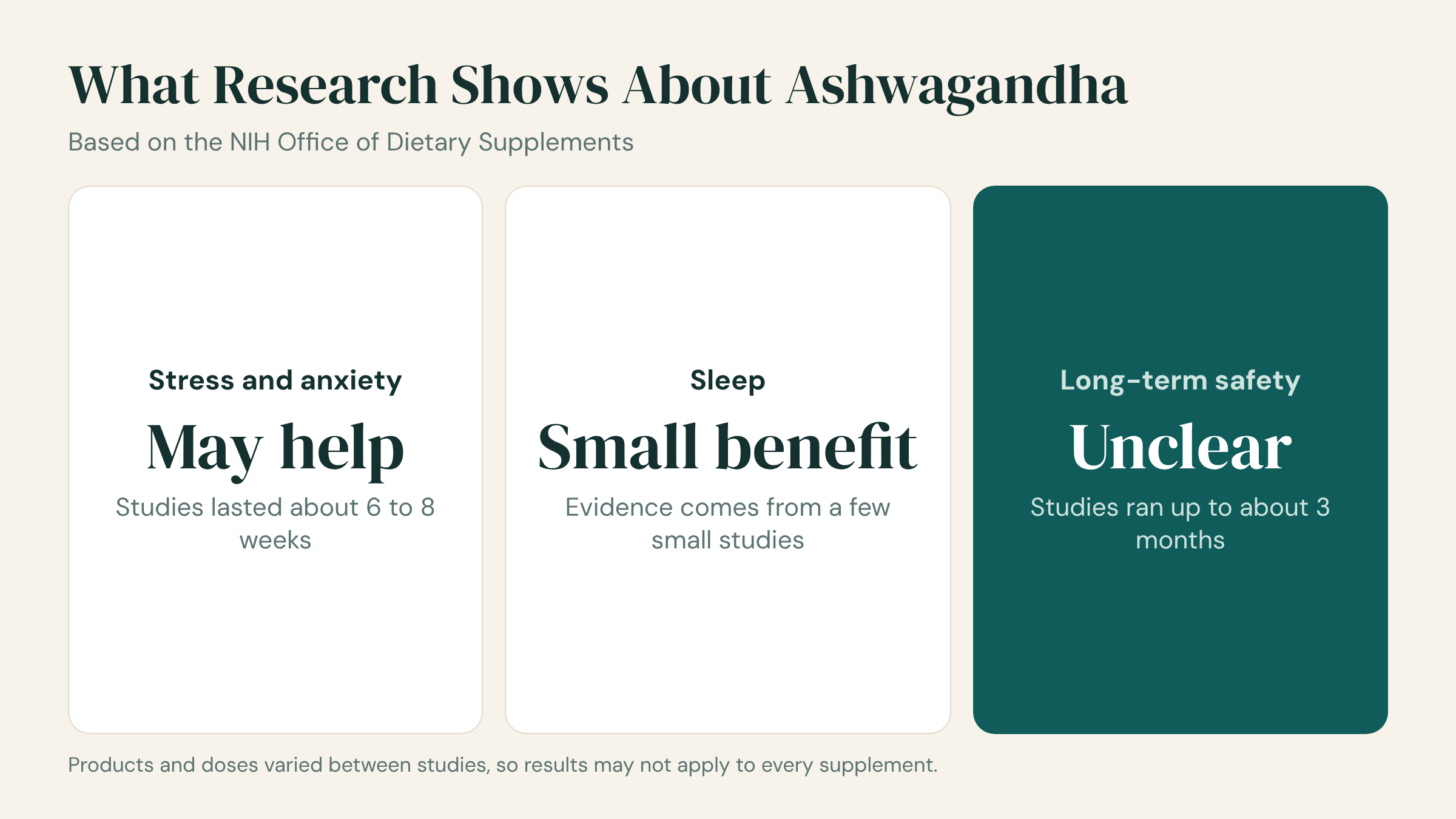
The NIH Office of Dietary Supplements says ashwagandha extracts may help with stress and anxiety. In several studies, people who took it for 6 to 8 weeks reported less stress, anxiety, fatigue, and sleeplessness. Their stress hormone levels also dropped.
Some studies found that 500 to 600 mg per day worked better than lower amounts. That does not make it a recommended dose for you, since products vary widely.
The research has clear limits. Studies used many different products and doses, and more research is needed. A result from one extract may not apply to another.
What About Sleep?
Evidence for sleep is more limited. According to the NIH, a few small studies suggest ashwagandha may help people with sleep trouble fall asleep faster, sleep longer, and wake less often.
The benefits appear small. The most helpful results were seen at 600 mg or more per day for at least 8 weeks.
Why Stress Management Still Comes First
A supplement cannot fix the source of your stress. Long-term stress can affect sleep, mood, digestion, and heart health, so it deserves more than a quick solution.
Mayo Clinic recommends regular exercise, enough sleep, relaxation practices, time with friends, and professional support if symptoms persist. These steps have broad health benefits, so they are worth trying first.
Possible Side Effects
The NIH says no safety concerns appeared in studies lasting up to about 3 months. Common side effects are usually mild and include:
- Upset stomach
- Loose stools
- Nausea
- Drowsiness
Long-term safety is unclear, which matters because many people take supplements for months or years.
Serious Safety Concerns
Liver Injury
Liver injury has been linked to ashwagandha in some people. Stop taking it and call a doctor right away if you notice yellow skin or eyes, dark urine, or unusual tiredness.
Thyroid Effects
Ashwagandha may affect thyroid function. This matters for anyone with a thyroid condition or anyone taking thyroid medicine.
Prostate Cancer
The NIH says ashwagandha may not be safe for people with prostate cancer.
Pregnancy and Breastfeeding
It may not be safe during pregnancy or breastfeeding, so people in these groups should avoid it unless a doctor says otherwise.
Medications That May Interact
Ashwagandha may interact with several types of medicine:
- Thyroid medicines
- Diabetes medicines
- Blood pressure medicines
- Sedatives
- Drugs that suppress the immune system
Show your full medicine list to a doctor or pharmacist before you start. Include any other herbs and supplements you take.
Who Should Avoid Ashwagandha?
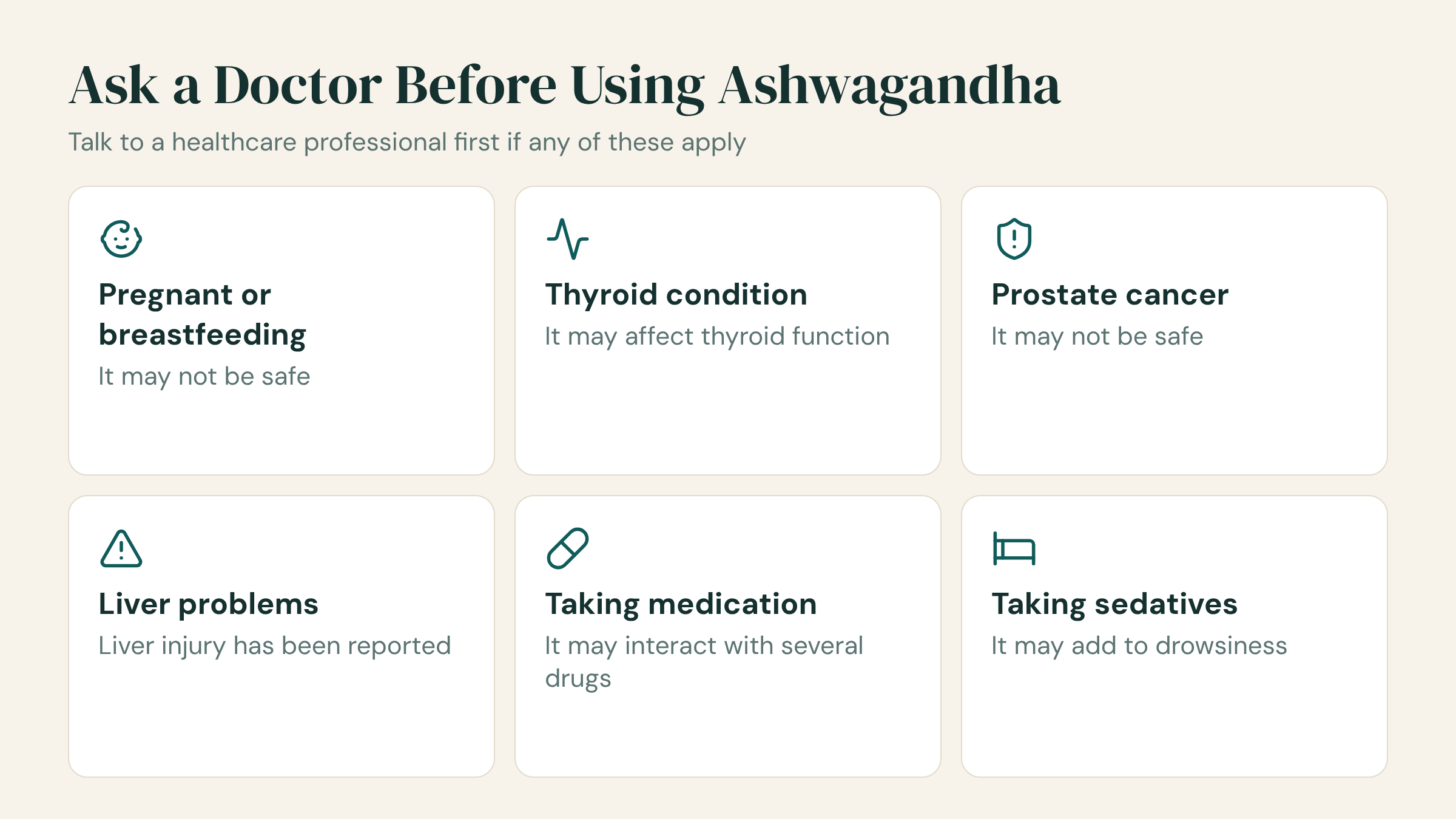
Talk to a doctor first, or avoid it, if any of these apply to you:
- You are pregnant or breastfeeding
- You have a thyroid condition
- You have prostate cancer
- You have a history of liver problems
- You take any of the medicines listed above
- You are having surgery soon, because it can cause drowsiness
How to Choose a Product More Carefully
Supplements are not reviewed by the FDA for safety and effectiveness before they are sold, so quality can vary. These tips can help:
- Check that the label lists the amount of extract per serving.
- Look for a seal from an independent testing group.
- Avoid products that promise to cure anxiety or replace medicine.
- Be cautious with blends that hide ingredient amounts.
- Do not take more than the label says.
When to Get Help for Stress
Stress is part of life, but it should not take over. Talk to a healthcare professional if stress affects your sleep, work, or relationships for more than a few weeks.
Anxiety and depression are treatable, and talk therapy and other care have strong support. If you feel unable to cope or have thoughts of harming yourself, seek help right away from a crisis service or emergency care.
How Long Does Ashwagandha Take to Work?
Many of the studies on stress lasted 6 to 8 weeks, so it may not act quickly. A product that promises instant calm is making a claim the research does not support.
If you and your doctor decide it is worth trying, set a clear review date. Note your stress levels, sleep, and any side effects each week. Stop and call your doctor if you feel unwell.
Because safety beyond about 3 months is unclear, it should not be treated as something to take indefinitely without medical advice.
Stress vs. Anxiety
The two are related but not the same. The National Institute of Mental Health explains that stress is usually a response to an outside cause and fades once the situation is resolved. Anxiety can continue even without an immediate threat.
That difference matters. If you feel a lasting sense of dread or worry, or you avoid things you normally do, speak with a professional. Talk therapy and medication are the main treatments for anxiety, and many people benefit from them.
The Bottom Line: Ashwagandha for Stress
Ashwagandha may reduce stress and anxiety in the short term, based on studies lasting a few weeks. Its effect on sleep appears small, and long-term safety is unknown.
Because of liver, thyroid, and medication concerns, check with a healthcare professional before you start. Pair any supplement with proven habits such as exercise, good sleep, and support from people you trust.
Related articles
- Melatonin: How Much Is Too Much?
- Foods and Drinks That May Help You Relax at Night
- Is Caffeine Hurting Your Sleep? How Late Is Too Late
This article is for general information only and is not medical advice. Talk to a healthcare professional about your symptoms, and before starting any supplement, especially if you take medication or have a medical condition.
1 Comment on “Ashwagandha for Stress: Benefits, Risks, and Evidence”