
Skin that was once fine can start to feel tight, rough, or itchy after 50. Lotion seems to wear off faster, and winter can make things worse.
Dry skin after 50 is very common, and simple daily habits can make a big difference.
Dry skin is very common with age. In most cases, simple changes to your routine can help a lot. Here is why it happens, how to care for your skin, and when it may be a sign of something else.
Why Skin Gets Drier With Age
The American Academy of Dermatology says skin dries out when it loses water faster than it can replace it. Aging reduces sebum, your skin’s natural oil, beginning in your 40s.
Cleveland Clinic adds that aging skin becomes rough, dry, itchy, thinner, and more fragile. It also has fewer sweat and oil glands, and sun damage can make these changes worse.
Common Causes of Dry Skin
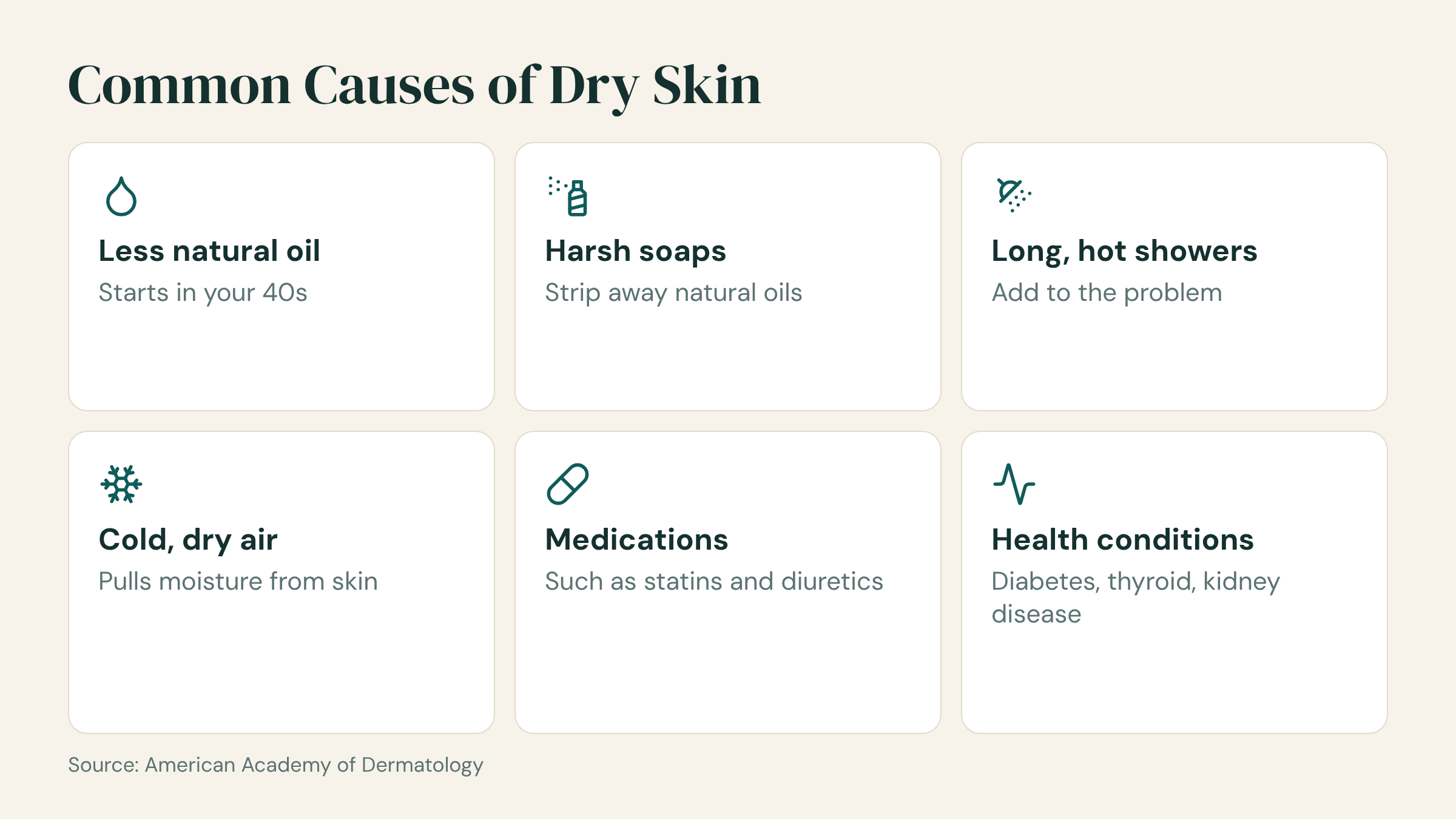
- Harsh soaps: These strip away natural oils.
- Long, hot showers: Hot water adds to the problem.
- Cold, dry air: Winter weather pulls moisture from skin.
- Medications: Statins and diuretics are examples.
- Medical treatments: Cancer treatments and dialysis can cause dryness.
- Health conditions: Diabetes, thyroid disease, and kidney disease can play a part.
- Smoking: This is another known contributor.
- Low nutrients: Low levels of vitamin D, vitamin A, zinc, or iron may be involved.
Do not stop a medicine because of dry skin. Ask your doctor or pharmacist if it could be a cause.
Who Is at Higher Risk?
Besides older adults, the AAD says risk is higher for people whose jobs involve frequent water or harsh chemicals, such as nurses, cooks, and hairdressers. People with eczema or psoriasis and those living in cold climates are also more likely to have dry skin.
Simple Care Tips for Dry Skin
Moisturize Often
The AAD recommends applying moisturizer several times a day. Applying it right after washing, while your skin is still slightly damp, can help hold in moisture.
Choose a Gentle Cleanser
Swap harsh soap for a gentler cleanser. Look for fragrance-free products, as added scents can bother sensitive skin. Cleveland Clinic says overusing soaps, antiperspirants, and perfumes can make dryness worse.
Take Shorter, Cooler Showers
Keep showers short and use warm water instead of hot. Pat your skin dry with a towel instead of rubbing it.
Protect Your Skin Outdoors
Wear gloves and layers in cold weather. Use broad-spectrum sunscreen with SPF 30 or higher, and reapply about every two hours, or sooner if you get wet or sweat heavily.
Add Moisture to the Air
Indoor heating can make air very dry. A humidifier may help during the colder months. Keep it clean according to the instructions.
Choose Soft Fabrics
Rough fabrics can irritate dry skin. Soft cotton next to your skin may feel better, and fragrance-free laundry detergent may help too.
Choosing a Moisturizer
You do not need an expensive product. Thicker creams and ointments often work better for very dry skin than thin lotions. Ingredients such as glycerin, ceramides, and petrolatum are common in moisturizers for dry skin.
Keep a small tube by the sink, so that you can apply it after washing your hands. Use a product you like, since you are more likely to use it often.
Does Diet Help Dry Skin?
A balanced diet supports healthy skin, and staying hydrated is good for your overall health. Drinking more water alone will not usually fix dry skin, though.
The AAD links low levels of some nutrients with dry skin. If you think you may be low in something, ask your doctor for a blood test before taking a supplement.
A Simple Daily Routine
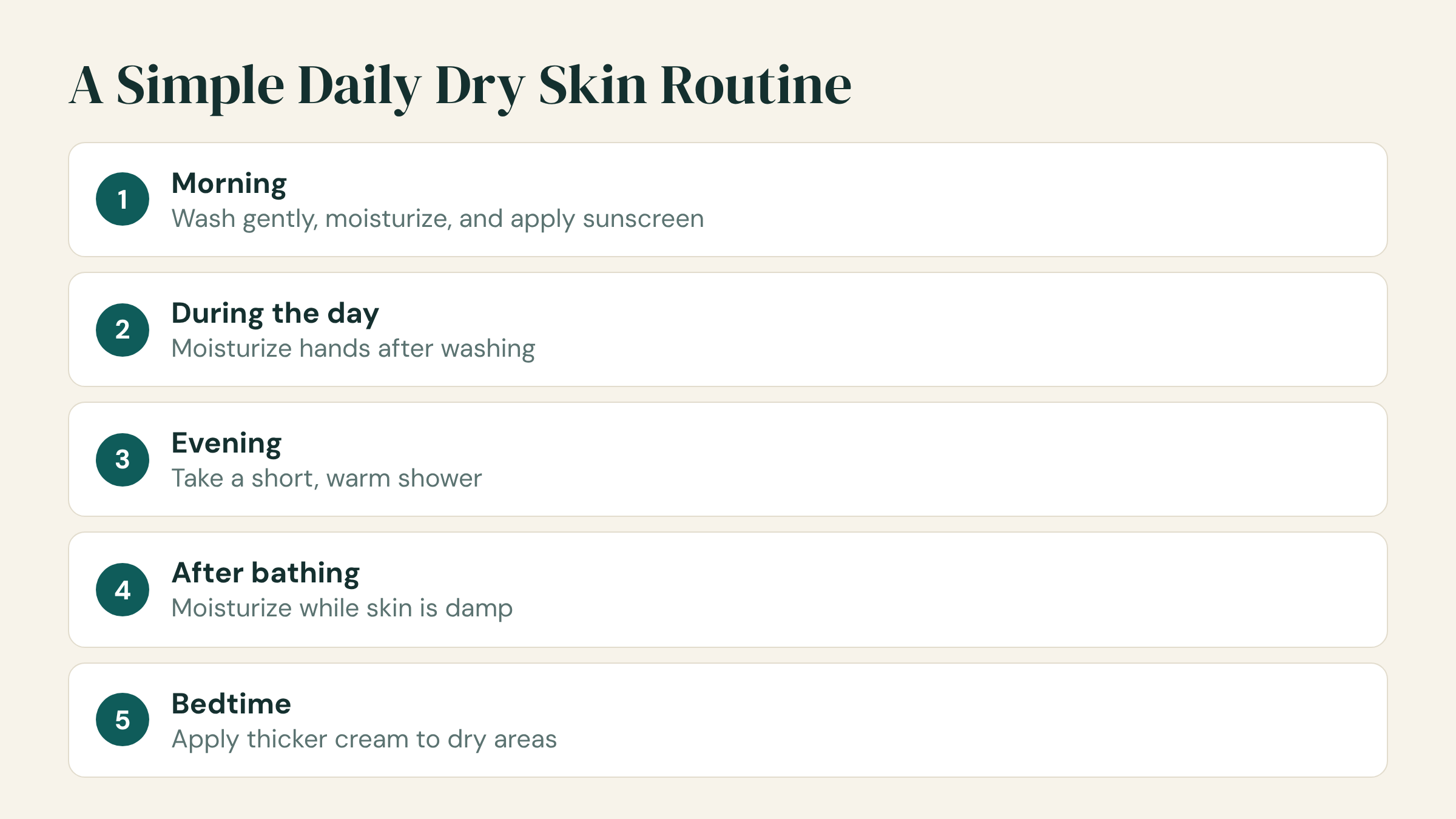
- Morning: Rinse or wash gently, moisturize, and apply sunscreen.
- During the day: Moisturize your hands after washing them.
- Evening: Take a short, warm shower and moisturize while your skin is damp.
- Bedtime: Apply a thicker cream to dry areas, such as hands, shins, and heels.
When Dry Skin May Be Something Else
Very dry, itchy skin that disrupts your sleep may signal a condition such as diabetes or kidney disease, or a medication side effect, according to Cleveland Clinic. Eczema and psoriasis can also look like simple dry skin at first.
When to See a Dermatologist
The AAD says to seek care if your dry skin is severe or persistent. Without treatment, severe dryness can lead to constant itching, irritation, and a higher risk of serious skin infections.
See a doctor if you notice cracked or bleeding skin, a rash, signs of infection, or itching that keeps you awake. New or changing spots should also be checked.
Common Questions
Is itching normal with age?
Dry skin often causes itching in older adults, but it should not be ignored if it lasts. Ask a doctor if moisturizer does not help.
Should I shower less often?
You may not need a long, soapy shower each day. Focus on short, warm showers and using cleanser mainly where you need it.
Common Mistakes With Dry Skin
Some habits can make things worse without you realizing it. Scrubbing dry patches can irritate skin, and using a very hot shower to soothe itching can leave skin drier afterward.
Skipping moisturizer on good days is another mistake. Dry skin care works best when it is regular, not only when your skin feels bad.
Be careful with heavily scented lotions as well. They may smell lovely, but fragrance can irritate dry or sensitive skin. Check the label for a fragrance-free option.
Be Patient With Changes
Skin can take a few weeks to respond to a new routine. Change one product at a time, so you can tell what helps and what irritates your skin.
The Bottom Line: Dry Skin After 50
Dry skin after 50 is common because your skin makes less natural oil. Gentle cleansers, shorter warm showers, and regular moisturizer can make a big difference.
If your skin stays dry or itchy despite good care, see a doctor or dermatologist. A simple routine and early help can keep you comfortable.
Related articles
- How Sleep and Stress Affect Your Skin
- Vitamin C for Skin: Food, Serum, or Supplement?
- What Your Nails Can Say About Your Health
This article is for general information only and is not medical advice. Talk to a healthcare professional about your symptoms, and before starting any supplement, especially if you take medication or have a medical condition.


3 Comments on “Dry Skin After 50: Causes and Simple Care Tips”