Beauty products get most of the attention, but your skin, hair, and nails are built from the inside. They rely on protein, vitamins, and minerals from your everyday diet.
Here are the best foods for healthy skin, hair and nails, and the nutrients they provide.
No single food will erase wrinkles or make hair grow faster. A balanced eating pattern can give your body the materials it needs, though. Here are some of the best foods to include and why they matter.
Why Diet Matters for Skin, Hair, and Nails
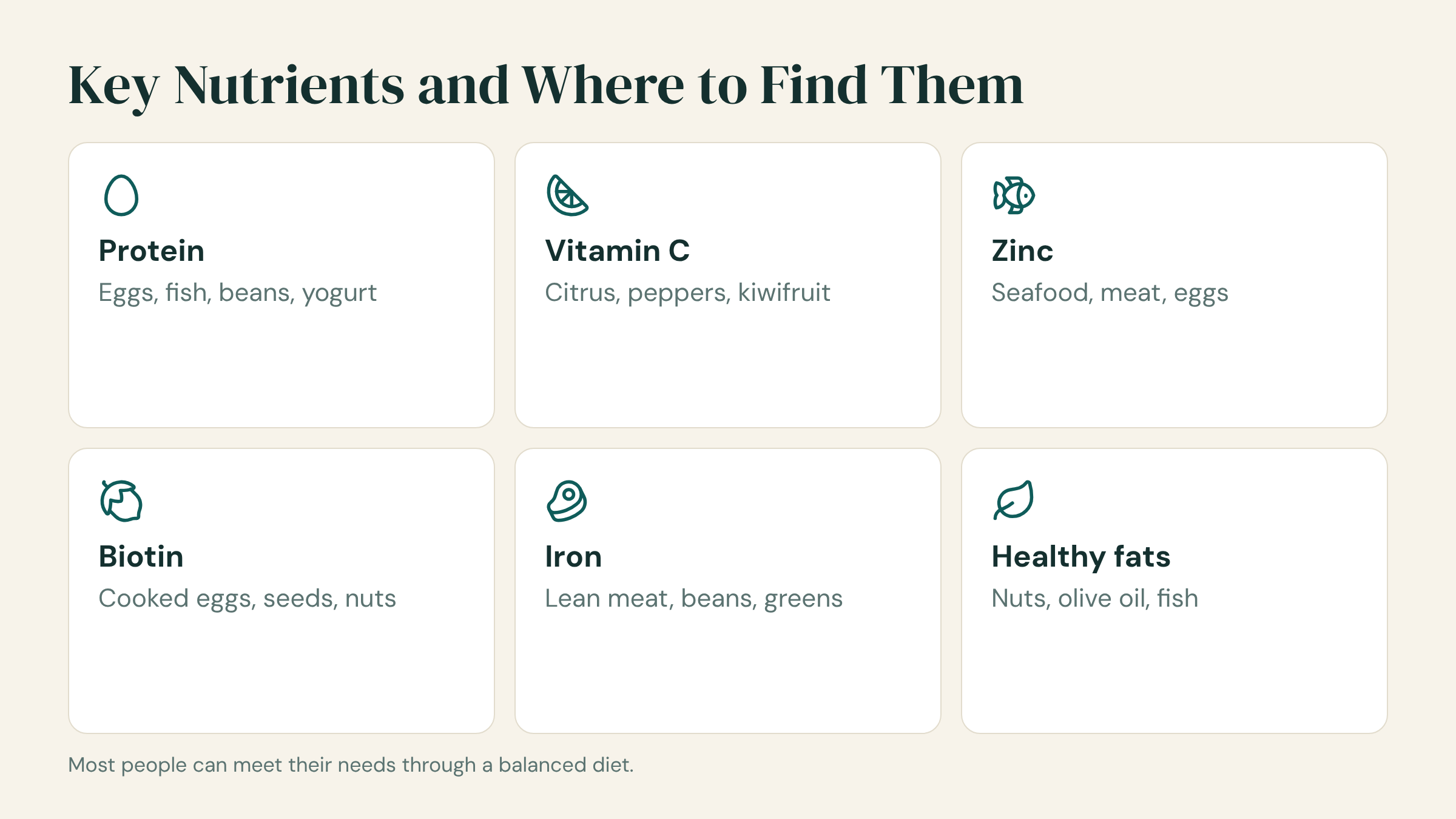
Hair and nails are made mostly of keratin, a protein. Your skin relies on collagen, another protein. Harvard’s Nutrition Source says your body builds collagen using amino acids, along with zinc and vitamin C.
The American Academy of Dermatology says most people can meet their needs through a balanced diet. Supplements are not usually necessary unless you have a shortage.
Protein-Rich Foods
Protein gives your body the raw materials for hair, nails, and collagen. Harvard lists fish, poultry, meat, eggs, dairy, legumes, and soy as useful sources.
- Eggs: A simple source of protein, plus biotin when cooked.
- Fish: Provides protein along with healthy fats.
- Beans and lentils: Great plant-based options that also add fiber.
- Greek yogurt: Easy to add to breakfast or snacks.
- Tofu: A flexible choice for meat-free meals.
Vitamin C Foods
Your body needs vitamin C to make collagen. The NIH lists citrus fruits, red and green peppers, kiwifruit, broccoli, strawberries, and Brussels sprouts among the best sources.
Vitamin C can be damaged by heat and long storage, so raw or lightly cooked foods are good choices. Vitamin C also improves the absorption of iron from plant foods.
Zinc Foods
Zinc supports wound healing and cell growth. The NIH says oysters contain more zinc per serving than any other food. Meat, fish, seafood, eggs, and dairy are also good sources.
Beans, nuts, and whole grains contain zinc too, but your body absorbs it less easily from these foods.
Biotin Foods
The NIH lists eggs, fish, meat, seeds, nuts, and sweet potatoes as sources of biotin. Most people get enough from food, and true deficiency is rare.
Cook your eggs. Raw egg whites contain avidin, which blocks biotin absorption.
Iron Foods
Very low iron can affect hair and nails. Cleveland Clinic notes that spoon-shaped nails can point to iron-deficiency anemia, and brittle nails may reflect low iron.
Good sources include lean red meat, poultry, beans, lentils, and leafy greens. Do not take iron supplements unless a test shows you need them, since too much can be harmful.
Healthy Fats
Fats help your body absorb vitamins A, D, E, and K. Nuts, seeds, avocado, olive oil, and fatty fish are all helpful choices.
Nuts and seeds also provide magnesium and vitamin E, so a small handful is a useful snack.
Colorful Fruits and Vegetables
Bright produce provides vitamins and plant compounds. Try to eat a variety of colors across the week.
- Orange: Carrots, sweet potatoes, and mango
- Red: Tomatoes, red peppers, and strawberries
- Green: Spinach, kale, and broccoli
- Blue and purple: Blueberries and red cabbage
Don’t Forget Water
Staying hydrated is good for your general health. Drinking extra water will not cure dry skin, however, since dryness is often related to your environment and skin barrier. Moisturizer and gentle washing tend to help more.
Foods and Habits to Limit
Some habits can work against your skin. Harvard says excess alcohol and smoking speed up collagen loss. Consider cutting back on:
- Alcohol
- Very low-calorie crash diets
- Highly processed snacks in place of whole foods
Mayo Clinic lists significant weight loss and poor nutrition as risk factors for hair loss, so extreme diets are worth avoiding.
A Sample Day of Eating
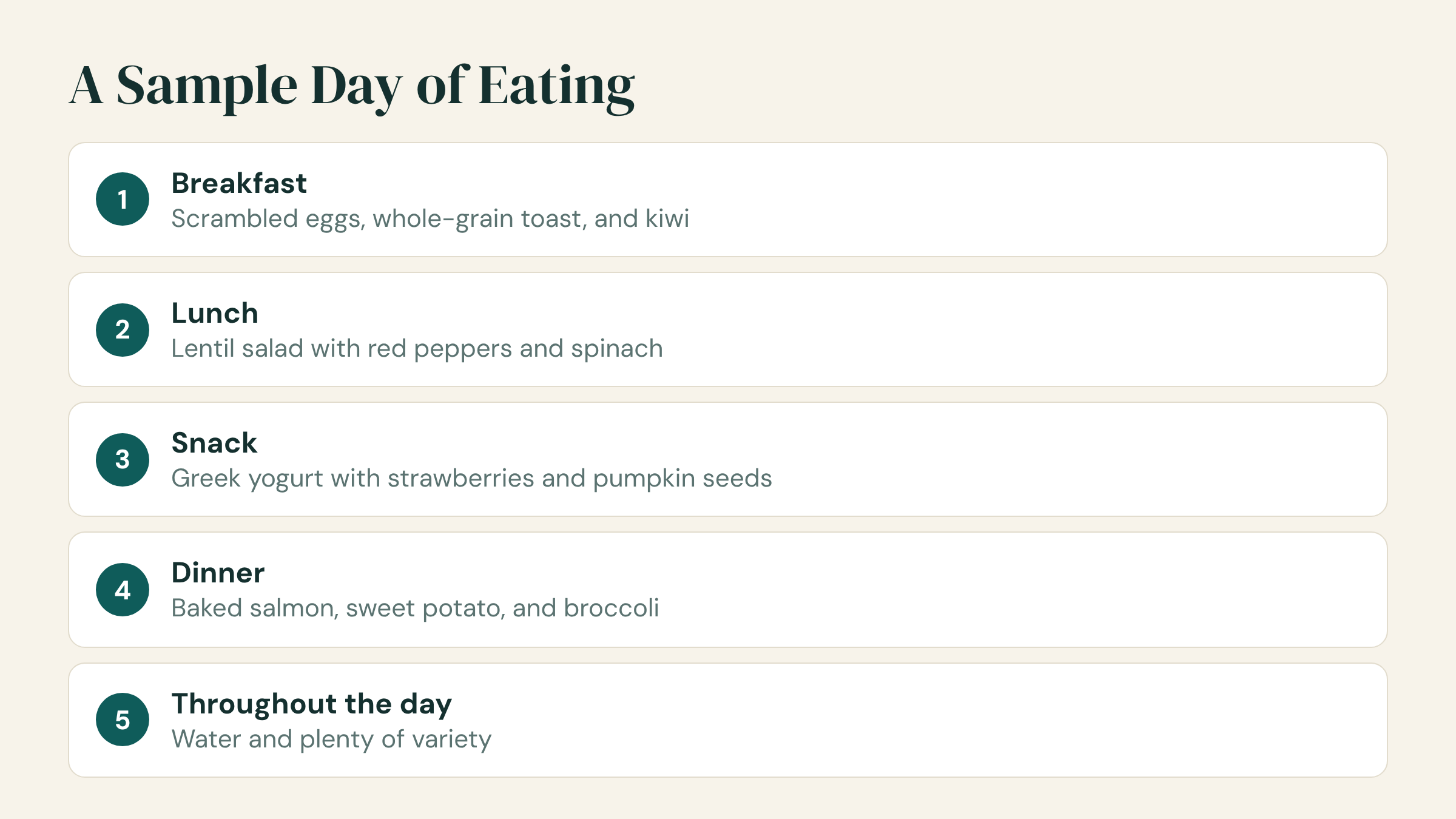
- Breakfast: Scrambled eggs, whole-grain toast, and sliced kiwi
- Lunch: Lentil salad with red peppers, spinach, and olive oil
- Snack: Greek yogurt with strawberries and pumpkin seeds
- Dinner: Baked salmon, sweet potato, and broccoli
Adjust this to fit your budget, culture, allergies, and health needs. A dietitian can help if you have a medical condition.
Food Is Only Part of the Picture
Good food works best alongside other healthy habits. The American Academy of Dermatology recommends daily sunscreen, not smoking, gentle cleansing, and managing stress.
Sun protection is especially important. No diet can undo the effects of repeated sun damage.
Common Questions
How long will it take to see changes from my diet?
Hair and nails grow slowly, so changes can take months. Focus on steady habits instead of quick results.
Do I need a hair, skin, and nail supplement?
Most people do not. The AAD says these supplements are often inconsistent and advises weighing them like medications. Ask a professional if you think you are low in a nutrient.
Can vegetarians get enough of these nutrients?
Yes, with some planning. Beans, lentils, tofu, nuts, seeds, whole grains, and dairy all help. Vegans should talk to a dietitian about nutrients such as vitamin B12.
When to See a Doctor
Talk to a doctor if you notice sudden hair loss, unusual nail changes, or lasting skin problems. These can be signs of a health issue that diet alone will not fix. A simple blood test can check for shortages such as low iron.
Easy Ways to Add These Foods
Small swaps are easier to keep up than a whole new diet. Try adding a handful of spinach to eggs, keeping nuts in your bag, or swapping one white-bread meal for whole grains.
Frozen fruit and vegetables can be just as useful as fresh, and canned beans are a low-cost source of protein. Rinse them to cut down on salt.
The Bottom Line: Foods for Healthy Skin
Healthy skin, hair, and nails start with a balanced diet. Focus on protein, colorful produce, whole grains, healthy fats, and foods rich in vitamin C and zinc.
Add sun protection, good sleep, and no smoking for the best results. Be patient, and see a doctor if something changes suddenly.
Related articles
- How Sleep and Stress Affect Your Skin
- Vitamin C for Skin: Food, Serum, or Supplement?
- Hair Thinning After 40: What Changes and Why
This article is for general information only and is not medical advice. Talk to a healthcare professional about your symptoms, and before starting any supplement, especially if you take medication or have a medical condition.