
Biotin is one of the best-known hair supplements on the market. It appears in gummies, capsules, shampoos, and “hair, skin, and nails” blends.
Here is who may actually benefit from biotin for hair growth, and who probably won’t.
Many people take it hoping for thicker hair. The evidence suggests that most of them may not need it, and there is an important safety issue that many buyers do not know about.
What Is Biotin?
Biotin is a water-soluble B vitamin, sometimes called vitamin B7. The NIH Office of Dietary Supplements explains that it helps enzymes process fats, carbohydrates, and amino acids.
In simple terms, it helps your body use food for energy. That role is essential, but it does not mean that extra biotin builds extra hair.
How Much Biotin Do You Need?
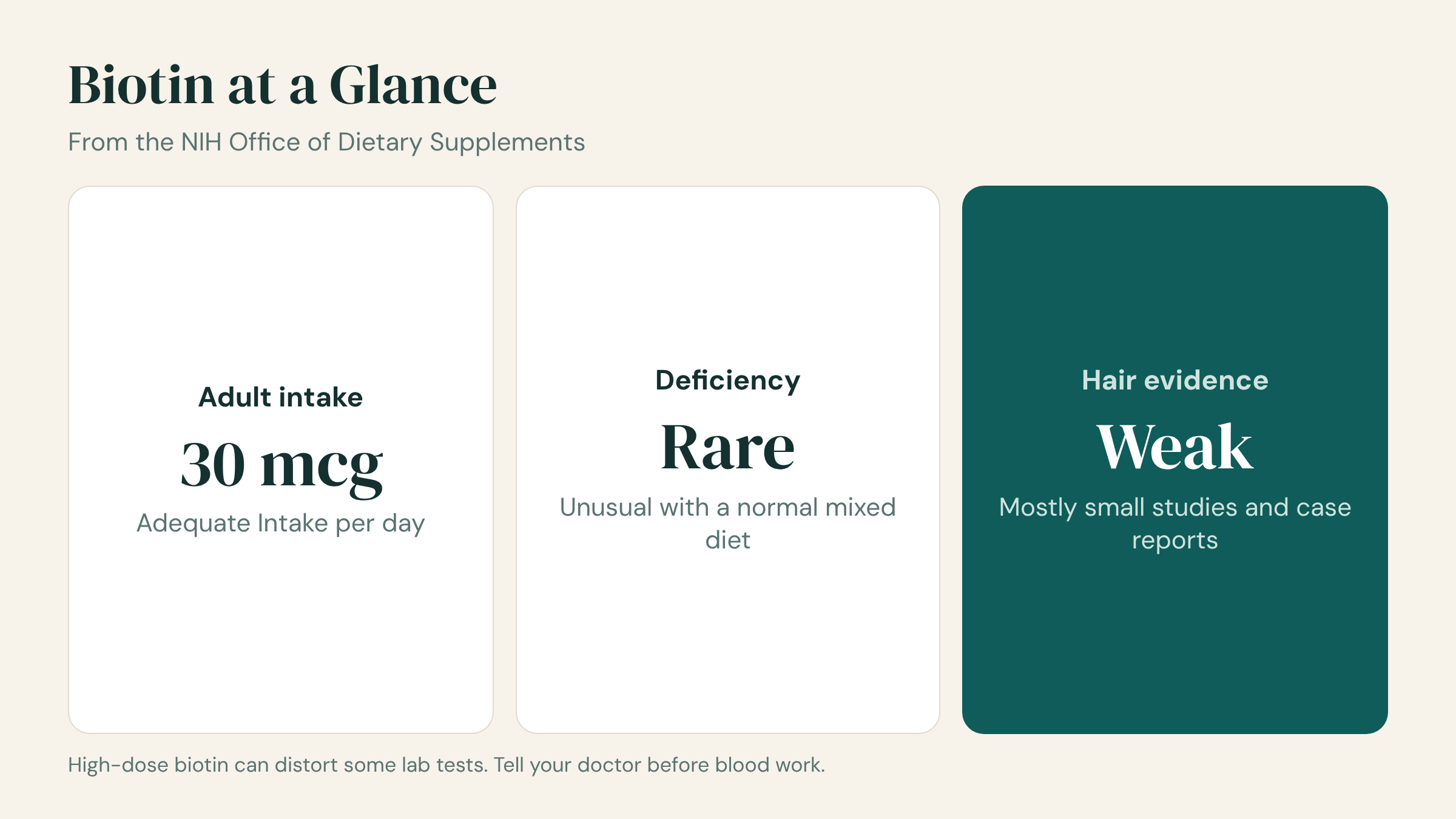
The NIH lists an Adequate Intake of 30 mcg per day for adults, including during pregnancy, and 35 mcg per day during breastfeeding.
Many supplements contain far more than this. Some labels list thousands of micrograms, which is a good reason to read them carefully.
Does Biotin Help Hair Grow?
For most healthy people, there is little proof. The NIH says the evidence for hair, skin, and nails is weak. It consists mainly of small studies without placebo controls, case reports, and studies in children.
The American Academy of Dermatology says biotin shortages are uncommon, so supplements mainly make sense when a deficiency exists.
Who May Actually Benefit?
Biotin may be more useful for people who are truly low in it. The NIH says deficiency is rare, and severe deficiency has not been documented in healthy people eating a normal mixed diet.
Groups at higher risk include:
- People with biotinidase deficiency, a rare inherited condition
- People who drink alcohol heavily
- People who are pregnant or breastfeeding
If you think you may be low, ask your doctor. Do not assume that thinning hair means a biotin problem.
The Lab Test Risk You Should Know About
This is the most important safety point. The NIH says high-dose biotin, including a single 10 mg dose, can distort certain lab tests.
It can produce falsely normal or falsely abnormal results for thyroid hormones, troponin, and other markers. Troponin is used to help check for heart attacks, so a wrong result could affect medical care.
Always tell your doctor and lab about any biotin you take, including multivitamins and hair blends. Ask if you should stop before a blood test.
Why Is Your Hair Thinning?
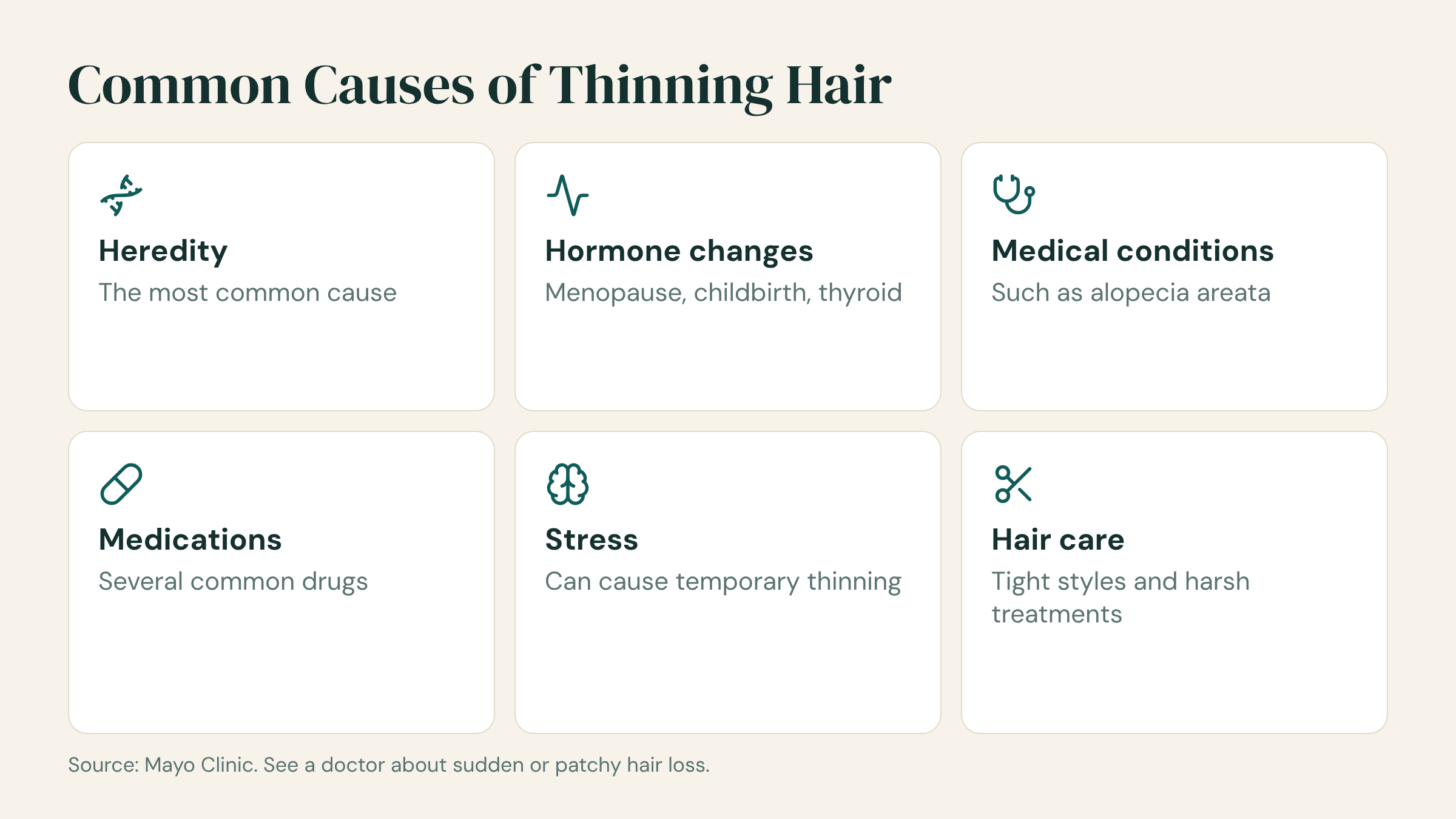
Hair loss has many causes, and most have nothing to do with biotin. Mayo Clinic lists these common causes:
- Heredity: This is the most common cause.
- Hormonal changes: Pregnancy, childbirth, menopause, and thyroid problems can all play a part.
- Medical conditions: Alopecia areata and scalp infections are two examples.
- Medications: Some drugs for cancer, arthritis, depression, heart problems, gout, and high blood pressure can cause hair loss.
- Stress: A very stressful event can cause temporary thinning.
- Hair care: Tight hairstyles and harsh treatments can cause damage.
Because the causes vary, a single supplement will not suit everyone.
Foods That Contain Biotin
Most people get enough biotin from food. The NIH lists these sources:
- Eggs, cooked rather than raw
- Fish and meat, especially beef liver
- Seeds and nuts
- Sweet potatoes and some other vegetables
Raw egg whites contain avidin, which blocks biotin absorption. Cooking deactivates it, so cooked eggs are a better choice.
What About Biotin Shampoos?
Biotin shampoos can clean your hair and may make it feel fuller for a while. There is little evidence that they treat hair loss. Choose a shampoo based on your scalp and hair type, not on its vitamin claims.
What Actually Helps Thinning Hair?
The right treatment depends on the cause. A doctor or dermatologist may check for thyroid problems, low iron, or other issues, and can discuss options that fit your type of hair loss.
At home, try these gentler habits:
- Avoid tight ponytails and braids
- Limit harsh chemical treatments and high heat
- Eat enough protein and a balanced diet
- Manage stress as well as you can
- Be gentle when washing and combing wet hair
When to See a Doctor
Mayo Clinic advises seeing a doctor if you notice sudden or patchy hair loss, or more hair loss than usual when you comb or wash your hair. It says sudden hair loss can signal an underlying condition.
Also speak up if your hair loss bothers you and you want treatment. Early care can sometimes help you keep more of your hair.
How to Choose a Supplement If You Still Want One
If your doctor agrees it makes sense, use these tips:
- Check the biotin amount on the label
- Avoid taking several products that all contain biotin
- Look for a third-party testing seal
- Be wary of blends that hide ingredient amounts
- Tell your care team before any blood work
Common Questions About Biotin
How long does biotin take to work?
Hair grows slowly, so any change takes time. Even so, the evidence that biotin helps healthy people is weak, so a long wait may simply cost you money. If you see no change after a few months, it may not be the answer.
Can you take too much biotin?
The NIH has not set an upper limit, but that does not mean high doses are risk-free. The main known concern is that they can distort lab results. That is why you should stick to what your doctor recommends.
Does stopping biotin make your hair fall out?
There is no good evidence of this. If your hair sheds after you stop, another cause may be behind it. Telogen effluvium, a common type of temporary shedding, often starts two to three months after a stressful event, so the timing can be misleading.
The Bottom Line: Biotin for Hair Growth
Biotin is an essential vitamin, but true deficiency is rare, and evidence that supplements grow hair in healthy people is weak.
If your hair is thinning, find the cause first. Skip high doses unless a doctor recommends them, and always mention biotin before a blood test.
Related articles
- Dry Skin After 50: Causes and Simple Care Tips
- How Sleep and Stress Affect Your Skin
- Vitamin C for Skin: Food, Serum, or Supplement?
This article is for general information only and is not medical advice. Talk to a healthcare professional about your symptoms, and before starting any supplement, especially if you take medication or have a medical condition.
1 Comment on “Biotin for Hair Growth: Who May Actually Benefit”