
Hot flashes, poor sleep, irregular periods, and brain fog can all appear in your 40s or 50s. For many women, these are signs that the body is moving toward menopause.
Menopause is a natural stage of life, but that does not mean you have to simply put up with difficult symptoms. Here is what to expect and what can help.
What Is Menopause?
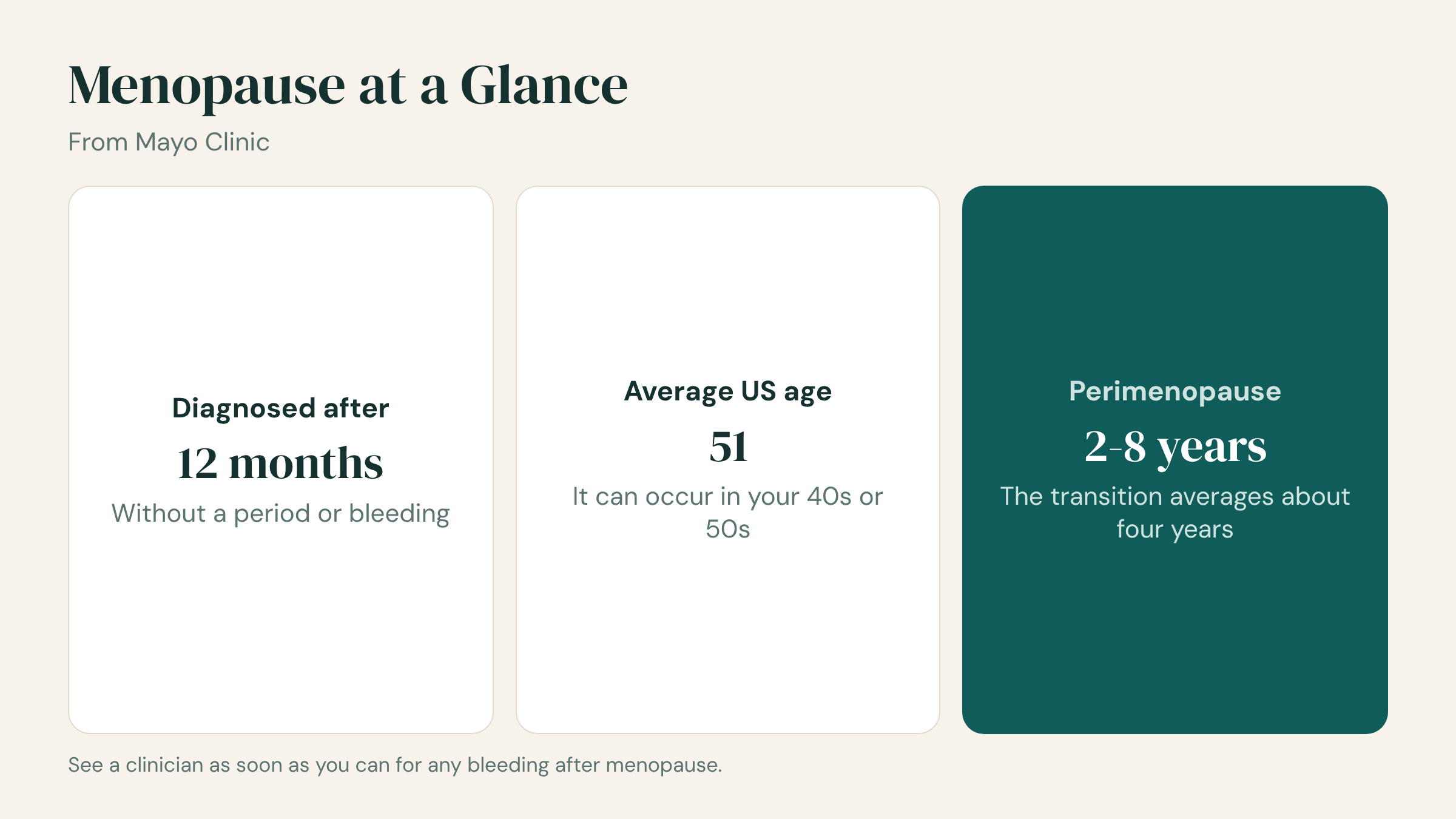
Mayo Clinic says menopause is diagnosed after 12 months without a menstrual period, vaginal bleeding, or spotting. It can happen in your 40s or 50s, and the average age in the United States is 51.
Natural decline in ovarian hormones is the most common cause. Surgery to remove the ovaries and some cancer treatments can also cause it.
What Is Perimenopause?
Perimenopause is the transition before menopause. It can last 2 to 8 years, with an average of about four.
Skipped periods are common during this time, but pregnancy is still possible. If you are unsure, consider taking a pregnancy test.
Common Symptoms
- Irregular periods
- Hot flashes
- Night sweats
- Sleep problems
- Mood changes
- Brain fog
- Vaginal dryness
Symptoms vary a lot from one woman to the next. Some have few problems, while others find daily life affected.
Could It Be Your Thyroid?
Fatigue, mood changes, sleep trouble, and changes in weight can have other causes as well. Thyroid problems are one example, and they can overlap with menopause symptoms.
A blood test can check your thyroid. Ask your doctor instead of trying a “hormone balance” product. Supplements cannot tell you what is causing your symptoms.
Health Changes After Menopause
Lower estrogen can affect your long-term health. Mayo Clinic lists these concerns:
- Heart disease: Risk rises as estrogen levels fall.
- Osteoporosis: Bone density can drop quickly in the first few years, which raises the risk of fractures.
- Urinary issues: Incontinence and urinary tract infections can become more common.
- Sexual health: Vaginal dryness can cause discomfort.
- Weight gain: Metabolism slows, which often leads to weight gain.
Treatment Options
Hormone Therapy
Mayo Clinic says estrogen is the most effective treatment for hot flashes. It also eases other symptoms and slows bone loss. It tends to fit best for people under 60 or within 10 years of the start of menopause.
Long-term use carries some heart disease and breast cancer risks, so it is a personal decision to make with your clinician. People who still have a uterus also need a progestin.
Vaginal Treatments
Low-dose vaginal estrogen can help with dryness, painful sex, and some urinary symptoms.
Non-Hormone Medicines
Some antidepressants, gabapentin, and newer hormone-free medicines such as fezolinetant may reduce hot flashes. Each has its own side effects, so your clinician can help you compare them.
Therapy and Movement
Cognitive behavior therapy can reduce how much symptoms bother you. Yoga and tai chi may ease symptoms and improve balance.
What About Supplements?
Be careful here. Mayo Clinic says black cohosh has little proof it works, can harm the liver, and is not safe for people with a history of breast cancer.
It also says phytoestrogens from soy and flaxseed have not been proven to relieve symptoms. Red clover, kava, dong quai, DHEA, evening primrose oil, and wild yam have no scientific support, and some may be harmful.
Bioidentical hormones are not shown to be safer or more effective than other hormone therapy, and compounded versions are not FDA-regulated.
Self-Care Tips
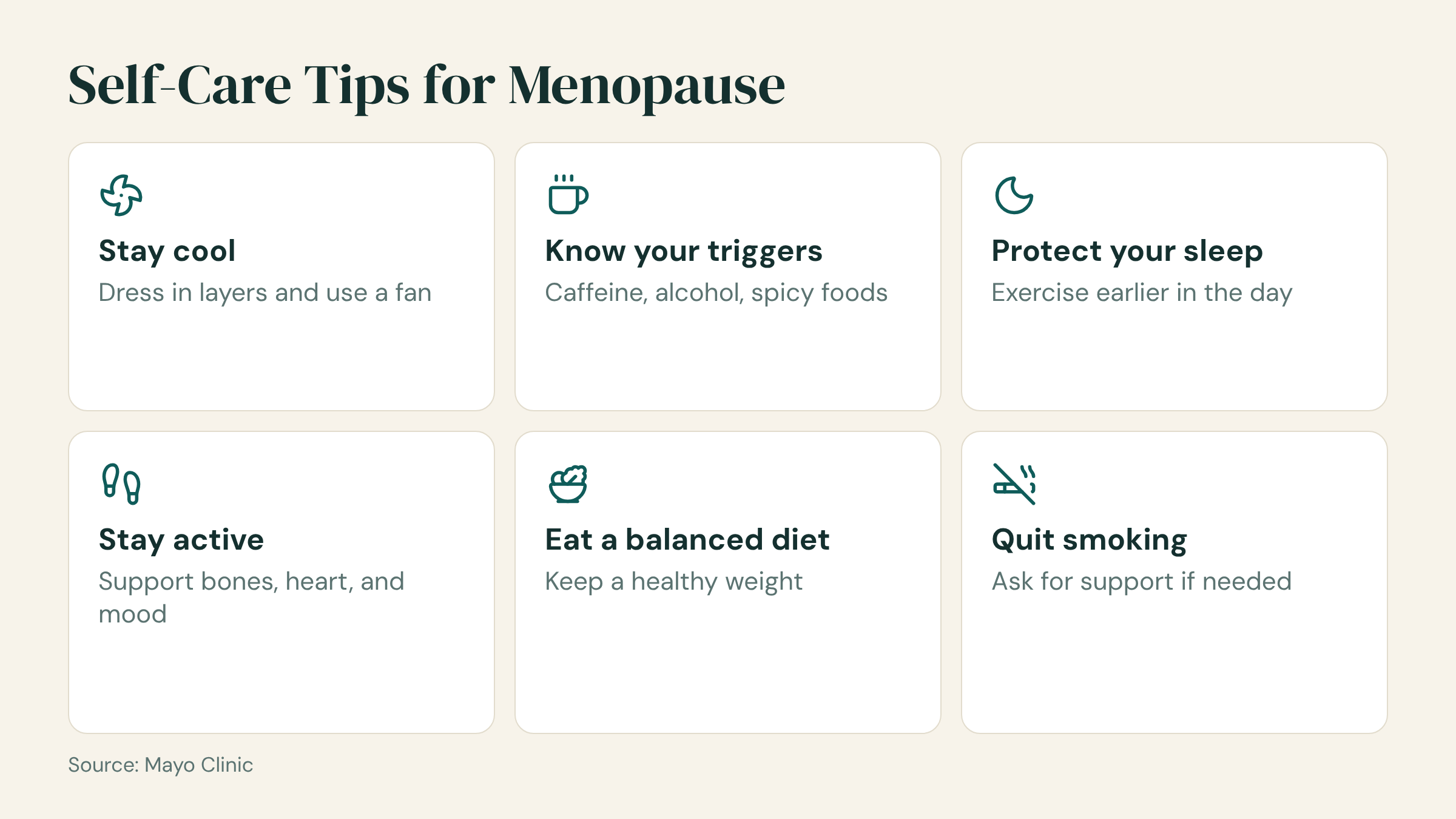
- Stay cool: Dress in layers and use a fan.
- Know your triggers: Caffeine, alcohol, and spicy foods can set off hot flashes.
- Protect sleep: Limit caffeine and alcohol, and exercise earlier in the day.
- Stay active: Regular exercise supports your bones, heart, and mood.
- Eat a balanced diet: A healthy weight lowers your health risks.
- Quit smoking: Ask for support if you need it.
- Try Kegel exercises: These can help with urinary incontinence.
- Use lubricants: Water-based or silicone products can ease dryness.
Protect Your Bones and Heart
This is a good time to talk about long-term health. Ask your doctor about blood pressure, cholesterol, and bone health checks. Regular movement, enough protein, and not smoking all help.
Mayo Clinic notes that osteoporosis medicines and vitamin D can help with bone health. Ask your doctor what is right for you.
When to See a Doctor
Keep up with regular wellness visits before, during, and after menopause. See a doctor if your symptoms affect your daily life or your mood.
See your healthcare professional as soon as you can if you bleed from your vagina after menopause. This should always be checked.
Common Questions
How long do hot flashes last?
It varies widely. Some women have them for a short time, while others have them for years. Treatment can help if they bother you.
Can a blood test confirm menopause?
Menopause is usually diagnosed based on your age and periods. Your doctor can decide whether any tests are useful for you.
Can I still get pregnant during perimenopause?
Yes. Pregnancy is still possible until you have reached menopause, so talk to your doctor about birth control if you need it.
Talking to Your Doctor
It can feel awkward to bring up symptoms such as vaginal dryness or mood changes, but doctors hear about them often. Before your visit, write down your symptoms, how often they happen, and how they affect your sleep and daily life.
Bring your family history too, including any heart disease, breast cancer, or osteoporosis. These details can help you and your clinician choose the safest treatment.
Do I need to treat menopause at all?
Not always. If your symptoms are mild, you may choose not to use medicine. Your clinician can help you decide based on how you feel and your long-term health.
The Bottom Line
Menopause is a natural change, but the symptoms can be hard, and help is available. Hormone therapy, non-hormone medicines, and everyday habits can all play a role.
Be cautious with supplements, keep up with your checkups, and review your treatment choices each year.
Related articles
This article is for general information only and is not medical advice. Talk to a healthcare professional about your symptoms, and before starting any supplement, especially if you take medication or have a medical condition.

2 Comments on “Menopause and Women’s Health After 40: What to Expect”