Vitamin D is best known for its role in bone health, but it has also drawn plenty of attention for its possible link with immunity. Search for immune supplements and you will find it near the top of nearly every list.
Here is what the research says about vitamin D and immune health.
The research is more measured than the marketing. Vitamin D plays a part in normal health, and low levels are worth correcting, but taking more does not automatically mean better protection. This guide covers what the evidence shows, how much is recommended, and how to avoid getting too much.
What Vitamin D Does
Vitamin D helps your body absorb calcium, which is why it matters for bones. It is unusual among vitamins because your skin can make it when exposed to sunlight, and you can also get it from food and supplements.
Because immune function depends on adequate nutrition in general, researchers have studied whether vitamin D supplements can help prevent or treat infections. The answer so far is mixed.
What the Research Says About Vitamin D and Infections
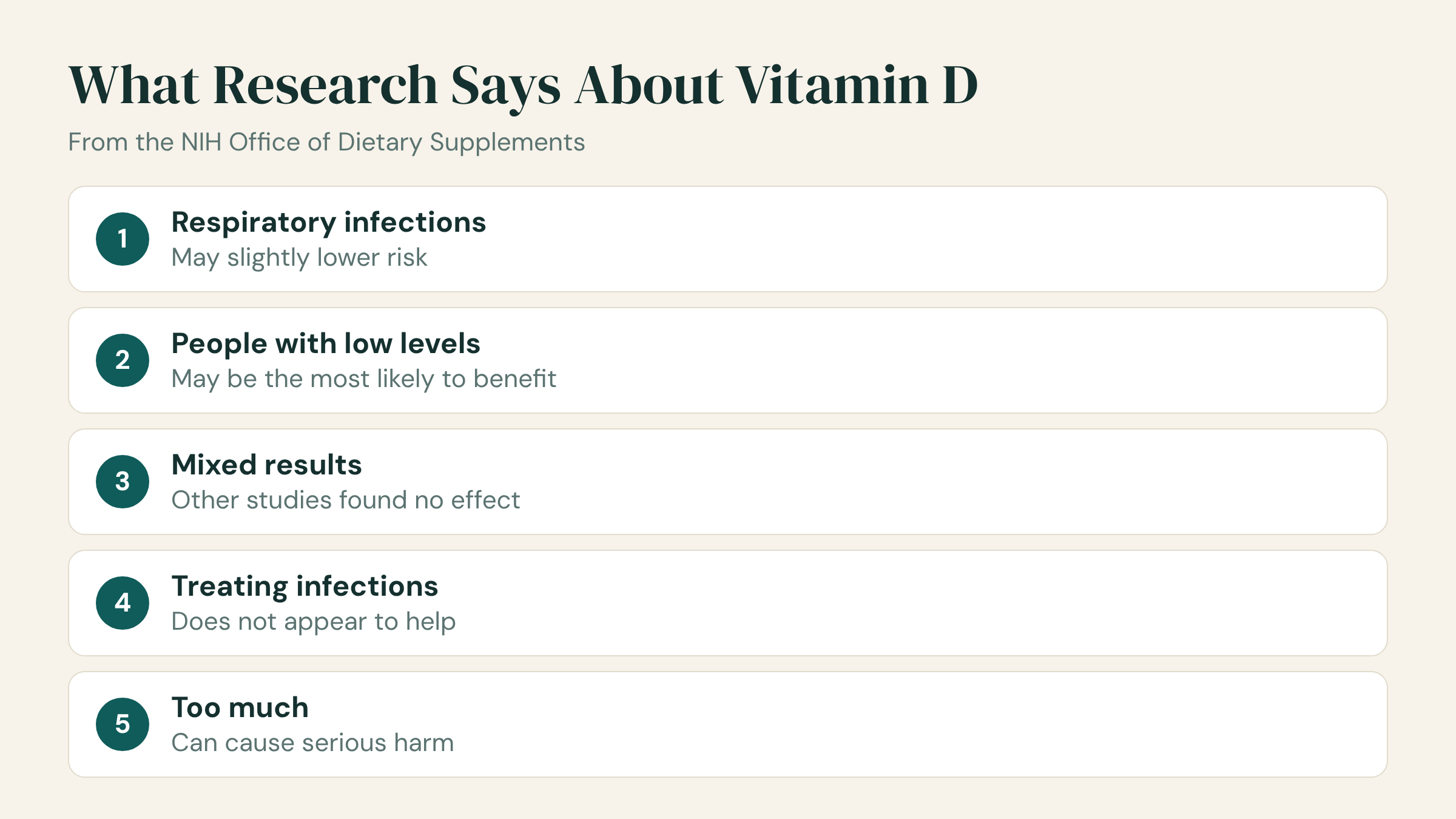
The NIH Office of Dietary Supplements summarizes the evidence this way: regular vitamin D supplements may slightly lower the risk of respiratory infections, especially in people with low vitamin D levels, but other studies have found no effect. Supplements do not appear to treat infections, and they have not shown a benefit for people with HIV.
A few points are worth drawing out from that summary:
- Any benefit appears modest. The word used is “slightly,” not dramatically.
- People with low levels may be the ones most likely to benefit. That fits a broader pattern with nutrients, where correcting a shortfall matters more than adding extra on top of adequate intake.
- Prevention and treatment are different questions. Taking a large dose once you already feel ill is not supported by this evidence.
- Results are not consistent. Some studies show a small effect, and others show none.
How Much Vitamin D Do You Need?
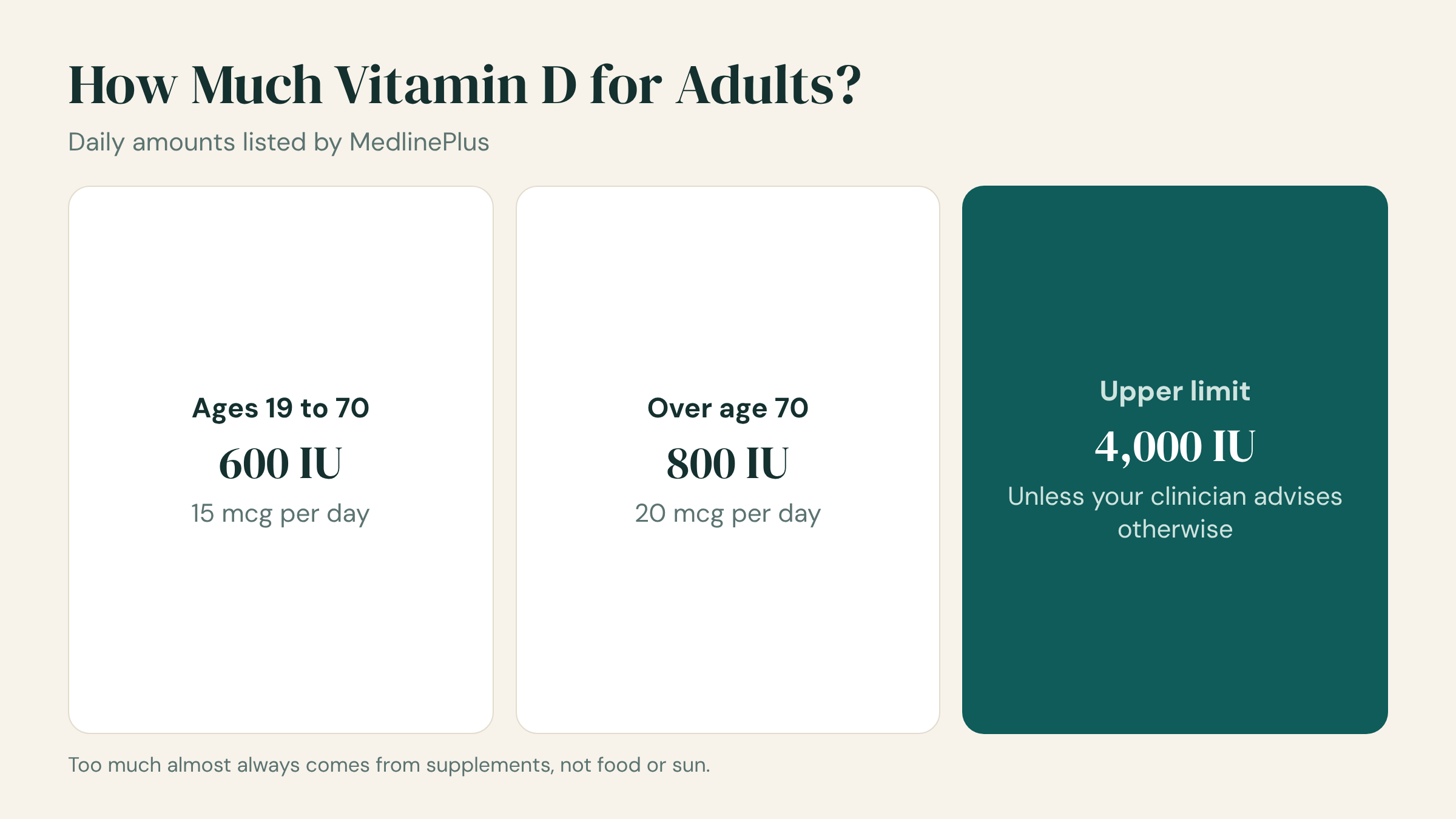
According to MedlinePlus, the recommended daily amounts for adults are:
- Ages 19 to 70: 600 IU (15 mcg) per day
- Over age 70: 800 IU (20 mcg) per day
- Pregnancy and breastfeeding: 600 IU (15 mcg) per day
MedlinePlus also notes that the Bone Health and Osteoporosis Foundation suggests 800 to 1,000 IU daily for people aged 50 and older. Your own needs may differ depending on your health, so a clinician is the best person to advise you.
Best Food Sources of Vitamin D
Few foods naturally contain a lot of vitamin D, but several can help:
- Fatty fish: Salmon, tuna, and mackerel are among the best sources.
- Smaller amounts: Beef liver, cheese, and egg yolks.
- Mushrooms: These contain some, and those exposed to ultraviolet light contain more.
- Fortified foods: Most US milk, many breakfast cereals, and some soy drinks, orange juice, yogurt, and margarine. Check the nutrition label, since amounts vary.
What About Sunlight?
Your skin makes vitamin D in response to sun exposure, but how much varies from person to person. Clouds, shade, and darker skin all reduce production. MedlinePlus advises against long periods of unprotected sun exposure because of the risk of skin cancer, so deliberately seeking out sun is not a good plan for raising your levels.
Who May Be Low in Vitamin D?
You may be more likely to have low levels if you get little direct sunlight, have darker skin, rarely eat fortified foods or fatty fish, or are an older adult. Conditions that affect fat absorption may also play a role, because vitamin D is fat-soluble.
You cannot reliably tell your vitamin D status from how you feel. If you think you may be at risk, ask your healthcare provider whether a blood test makes sense. Testing can help you avoid guessing at a dose.
Can You Get Too Much Vitamin D?
Yes. The upper limit for adults and children aged 9 and older is 4,000 IU (100 mcg) per day unless a clinician advises otherwise. MedlinePlus notes that toxicity almost always comes from taking too many supplements, not from food or sun.
Too much vitamin D raises blood calcium, which can cause:
- Nausea, vomiting, constipation, and poor appetite
- Weakness and weight loss
- Confusion and disorientation
- Kidney stones and kidney damage
- Calcium deposits in soft tissues such as the heart and lungs
The NIH Office of Dietary Supplements warns that extremely high doses can cause kidney failure, heart problems, and death. Check the dose in each product you take, because vitamin D can appear in multivitamins, calcium supplements, and “immune” blends. Those amounts add up.
Tips for Choosing a Vitamin D Supplement
If you and your clinician decide a supplement makes sense, a few practical steps help:
- Check whether the label lists the amount per serving in IU, mcg, or both. 1 mcg equals 40 IU.
- Avoid very high-dose products unless a clinician has prescribed them for you.
- Be cautious with products that make broad immune claims.
- Look for independent third-party testing, since supplements are not reviewed for effectiveness before sale in the same way as medicines.
- Tell your healthcare team, especially if you take other medicines or have a health condition.
The Bigger Picture for Immune Health
Vitamin D is one small piece of immune health. It works alongside the basics: enough sleep, a varied diet, regular activity, recommended vaccines, and not smoking. A supplement cannot make up for missing those foundations, and it is not a replacement for vaccines or medical care.
The Bottom Line: Vitamin D and Immune Health
Vitamin D matters for health, and correcting a low level is sensible. For immune protection, research suggests at most a slight reduction in respiratory infection risk, most likely in people who are low to begin with. Stick to recommended amounts, stay under the 4,000 IU upper limit unless your clinician advises otherwise, and ask about testing if you think you may be at risk.
Related articles
- How Aging Changes Your Immune System
- Best Foods for Immune Support
- Why You Keep Getting Sick: Common Reasons
For more detail, see the official guidance from NIH Office of Dietary Supplements: Vitamin D.
This article is for general information only and is not medical advice. Talk to a healthcare professional about your symptoms, and before starting any supplement, especially if you take medication or have a medical condition.