Just as you recover from one cold, another one seems to start. It can be frustrating, and it can leave you wondering if something is wrong with your immune system.
If you are wondering why you keep getting sick, a few common factors are often to blame.
Often the answer is ordinary. There are many cold viruses, and daily life puts you in contact with lots of them. Sometimes, though, frequent illness points to something worth fixing. Here are the most common reasons, what may help, and when to get checked out.
How Often Is Too Often?
There is no set number of illnesses that counts as normal. Cleveland Clinic says there are no firm rules because everyone is different. Your own normal is how often you usually get sick. The more useful question is whether you are getting sick more often than is typical for you, or whether something simply feels off.
Reason 1: You Are Exposed to More Germs
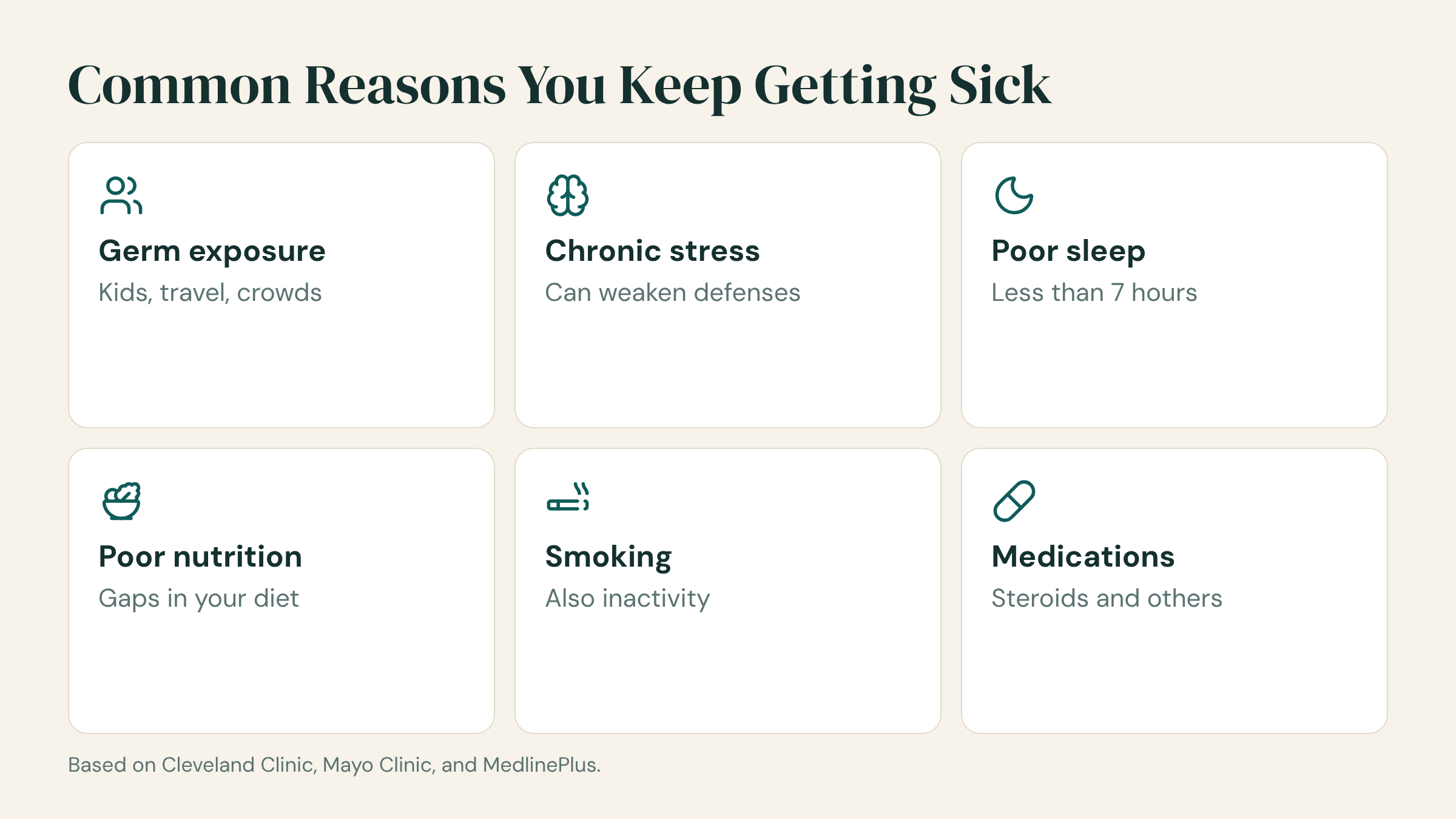
This is often the simplest explanation. Cleveland Clinic notes that shaking lots of hands, working with or caring for young children, and using crowded public transport or air travel all raise your exposure. Starting a new job, having a child begin school or daycare, or working in healthcare can bring on a run of illnesses that has nothing to do with weak immunity.
Immune memory does not fully protect you here, either. Because many different viruses can cause colds, getting over one does not protect you from the next.
Reason 2: Chronic Stress
A stressful week is one thing. Long-term stress is another. Cleveland Clinic says chronic stress weakens your body’s ability to fight illness. Stress can also affect things that matter for immunity, including sleep, eating habits, and activity levels.
Reason 3: Not Enough Sleep
Mayo Clinic says people who do not get enough quality sleep are more likely to catch a virus after exposure and may take longer to recover. If you are often sleeping fewer than 7 hours, this is a good place to start.
Reason 4: Poor Nutrition
Cleveland Clinic lists poor nutrition among the factors that raise your risk. A varied diet usually provides what the immune system needs. Skipping meals, relying on highly processed foods, or following very restrictive diets may leave gaps. If a deficiency is suspected, a clinician can test for it instead of leaving you to guess with supplements.
Reason 5: Lifestyle Factors
Physical inactivity and substance use also raise your risk, according to Cleveland Clinic. MedlinePlus adds that smoking weakens immunity and recommends limiting alcohol.
Reason 6: Age
Immune function declines with age. The system gets slower to respond, and vaccines may be less effective or protect for a shorter time. That is why vaccines for flu, COVID-19, shingles, and pneumococcal infections are recommended for many older adults.
Reason 7: Poor Dental Health
This one surprises many people. Cleveland Clinic says bacteria in the mouth can enter the body, and mouth infections may lead to more colds. Brushing twice a day, cleaning between your teeth, and seeing a dentist regularly are good habits in their own right.
Reason 8: Medications and Health Conditions
Some treatments suppress the immune system, including corticosteroids, immunosuppressants, and chemotherapy. Conditions such as diabetes, cancer, and HIV can also weaken immune defenses. In autoimmune disease, the treatment is often the bigger factor, because immune-suppressing medicines make you more susceptible to infections.
Never stop a prescribed medicine on your own because you think it is making you sick. Speak to your doctor first.
Reason 9: It May Not Be an Infection
Allergies can cause a runny nose, sneezing, and congestion that feel like a never-ending cold. A lingering cough after a virus, sinus problems, and acid reflux can also make it seem as though you are repeatedly unwell. If you never have a fever or body aches, and symptoms flare at certain times of year, ask your doctor whether allergies could be the cause.
What You Can Do
A few basic habits can reduce your risk:
- Wash your hands often, especially before eating and after being in public spaces
- Avoid touching your eyes, nose, and mouth
- Aim for 7 to 9 hours of sleep
- Eat a varied diet with plenty of fruit, vegetables, whole grains, and protein
- Stay active on most days
- Find a stress outlet that works for you
- Stay up to date with recommended vaccines
- Do not smoke, and limit alcohol
- Look after your teeth and gums
Will a Supplement Help?
Probably not, unless you have a deficiency. The NIH Office of Dietary Supplements says that for most people supplements do not prevent infections or speed recovery. If you do want to try something, look at the evidence for each ingredient and keep doses within recommended limits. Too much zinc, for example, can impair immunity over time.
When to See a Doctor
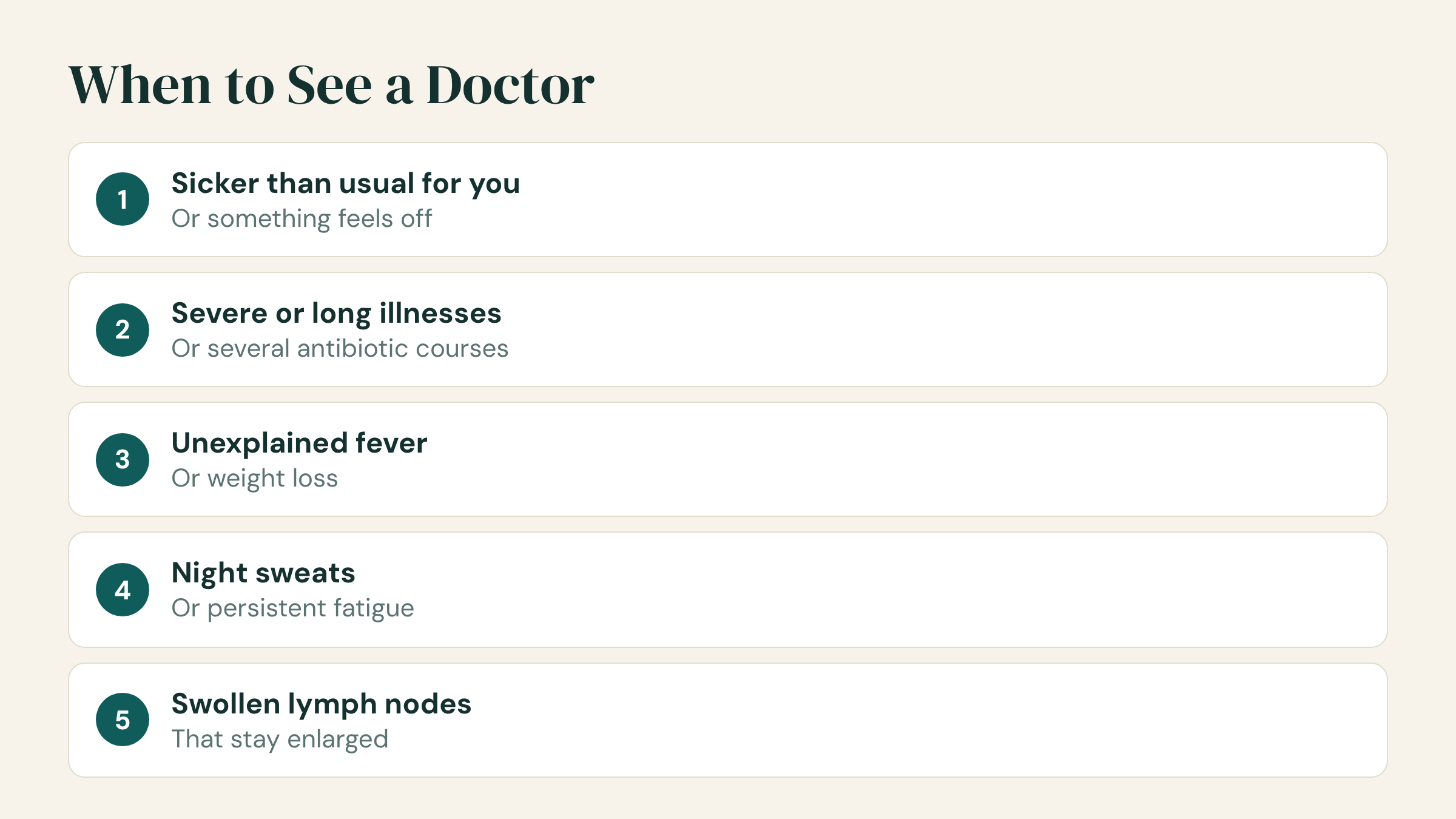
Get checked if you are getting sick more often than usual, if your illnesses last longer than expected or are severe, or if you have needed several courses of antibiotics. You should also seek care for unexplained fever or weight loss, night sweats, swollen lymph nodes that stay enlarged, or persistent fatigue.
A clinician can review your history and medications, and may order blood tests if needed. You do not need a dramatic symptom to justify the visit. If something concerns you, that is reason enough to get checked.
Keep a Simple Illness Diary
If you are unsure how often you are really sick, jot down each illness, how long it lasted, and any likely triggers. Notes like these can show a pattern and give your doctor something useful to work with.
The Bottom Line: Why You Keep Getting Sick
Frequent illness often comes down to germ exposure, stress, poor sleep, or everyday habits. Sometimes, medications or an underlying health condition play a role. Focus on the basics, stay current on vaccines, and see a healthcare professional if you are getting sick more than is normal for you or if something just does not feel right.
Related articles
- How Aging Changes Your Immune System
- Best Foods for Immune Support
- Gut Health and Immunity: What’s the Connection?
For more detail, see the official guidance from MedlinePlus: Immune System and Disorders.
This article is for general information only and is not medical advice. Talk to a healthcare professional about your symptoms, and before starting any supplement, especially if you take medication or have a medical condition.