
No single food can stop you from catching a cold, whatever a wellness headline might suggest. But your immune system does depend on steady nutrition. Cells need protein, vitamins, and minerals to do their jobs, and a poor diet can leave gaps.
Here are the best foods for immune support and how to work them into your meals.
The NIH Office of Dietary Supplements notes that a varied diet usually provides enough vitamins and minerals for immune function. So the goal is not to find a superfood. It is to eat a mix of foods that covers the nutrients your body uses. Here is what to put on your plate.
Citrus Fruits, Berries, and Peppers
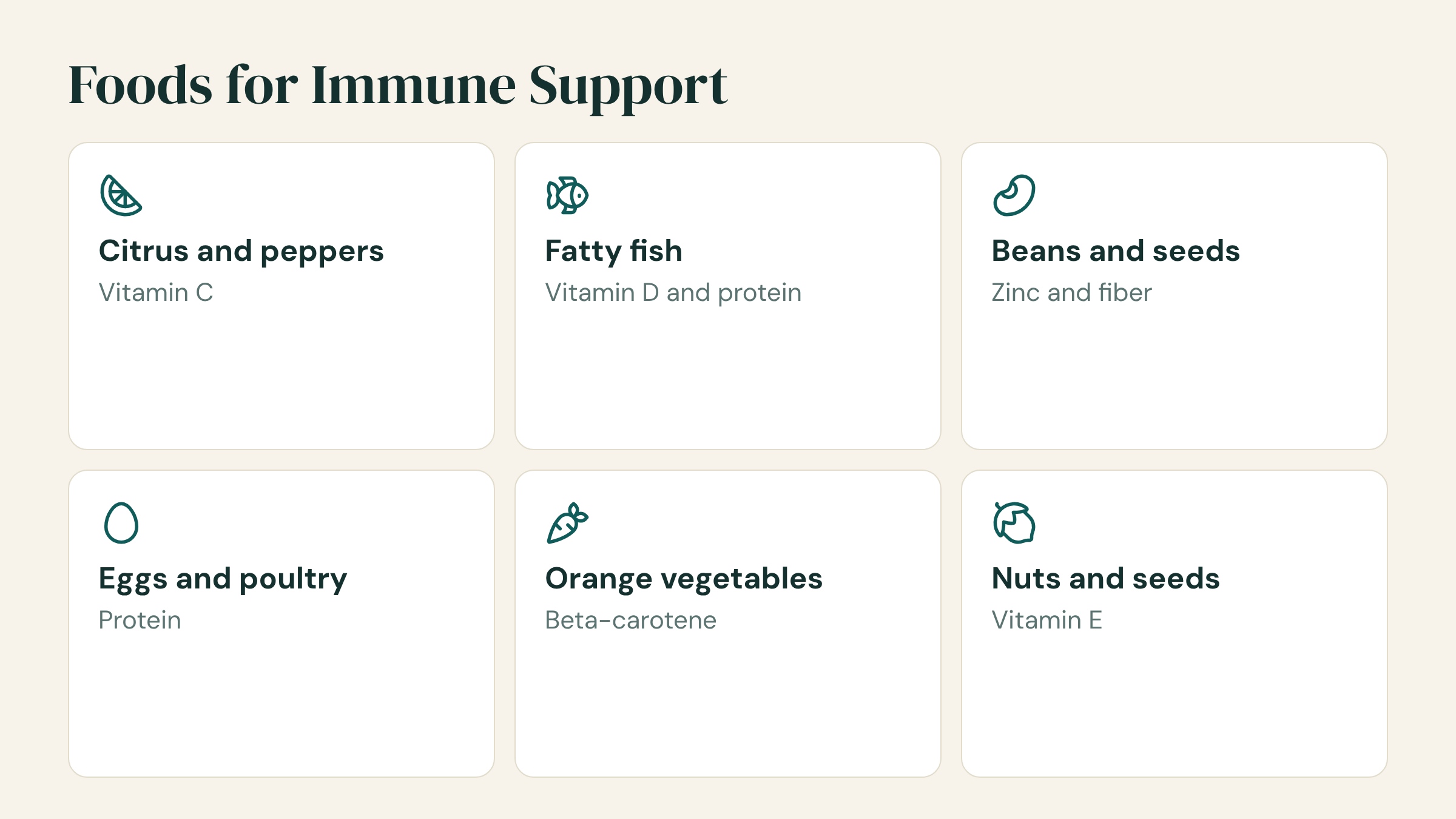
Key nutrient: vitamin C. Oranges, grapefruit, kiwifruit, strawberries, bell peppers, and broccoli are all good sources. Research suggests regular vitamin C may modestly shorten colds, and people with low intake may benefit most. Food is an easy way to reach adequate levels.
Fatty Fish
Key nutrients: vitamin D, protein, and omega-3 fats. Salmon, tuna, and mackerel are among the best food sources of vitamin D. Few foods supply much of this vitamin, so fatty fish is especially useful. If you do not eat fish, fortified milk, cereals, and plant drinks can help.
Shellfish, Meat, Beans, and Seeds
Key nutrient: zinc. Zinc supports normal immune function, and your body cannot store much of it. Oysters and other shellfish are very rich sources. Beef, poultry, beans, lentils, chickpeas, pumpkin seeds, and cashews all contribute.
Eggs, Poultry, and Other Protein Foods
Key nutrient: protein. Antibodies are proteins, and so are cytokines, the messengers immune cells use. Eggs, poultry, fish, lean meats, dairy, tofu, beans, and lentils all supply protein. Try to include a source at each meal, especially if your appetite is smaller than it used to be.
Orange and Dark Green Vegetables
Key nutrients: vitamin A and beta-carotene. Carrots, sweet potatoes, spinach, and kale provide beta-carotene, which your body can convert to vitamin A. High doses of preformed vitamin A in supplements can be harmful, so food is the better route for most people.
Nuts, Seeds, and Vegetable Oils
Key nutrient: vitamin E. Almonds, sunflower seeds, and vegetable oils provide vitamin E. The NIH Office of Dietary Supplements notes vitamin E in food is safe at any level, while high-dose supplements raise bleeding and stroke risk and, in one study, worsened respiratory symptoms in people with normal levels. That is a good example of why food often comes first.
Yogurt, Kefir, and Fermented Foods
Key feature: live cultures. Your gut lining and microbes interact with your immune system. Yogurt with live cultures, kefir, sauerkraut, and kimchi can add variety. Pick lower-sugar yogurts, and be mindful of salt in fermented vegetables. Research on live microbes varies by strain, so think of these as healthy foods, not treatments.
Whole Grains, Beans, and Vegetables
Key nutrient: fiber. Fiber feeds gut microbes and supports a healthy digestive system. Oats, barley, brown rice, beans, and vegetables all add fiber. Increase your intake gradually and drink enough water to avoid bloating.
Seafood, Eggs, and Brazil Nuts
Key nutrient: selenium. Selenium is another mineral often linked with immune function, although no clear benefit from supplements has been established. Seafood, meat, eggs, and whole grains supply it. Brazil nuts are very rich in it, so only a few are needed. The upper limit for adults is 400 mcg a day.
What About Garlic and Ginger?
Garlic gets a lot of attention, but according to the NIH Office of Dietary Supplements, few studies exist and it is unclear whether it helps prevent colds or flu. That does not mean you should avoid it. Garlic and ginger add flavor to healthy meals, which can make it easier to eat more vegetables, beans, and fish. Just do not expect them to work as medicine.
A Sample Day of Immune-Friendly Eating
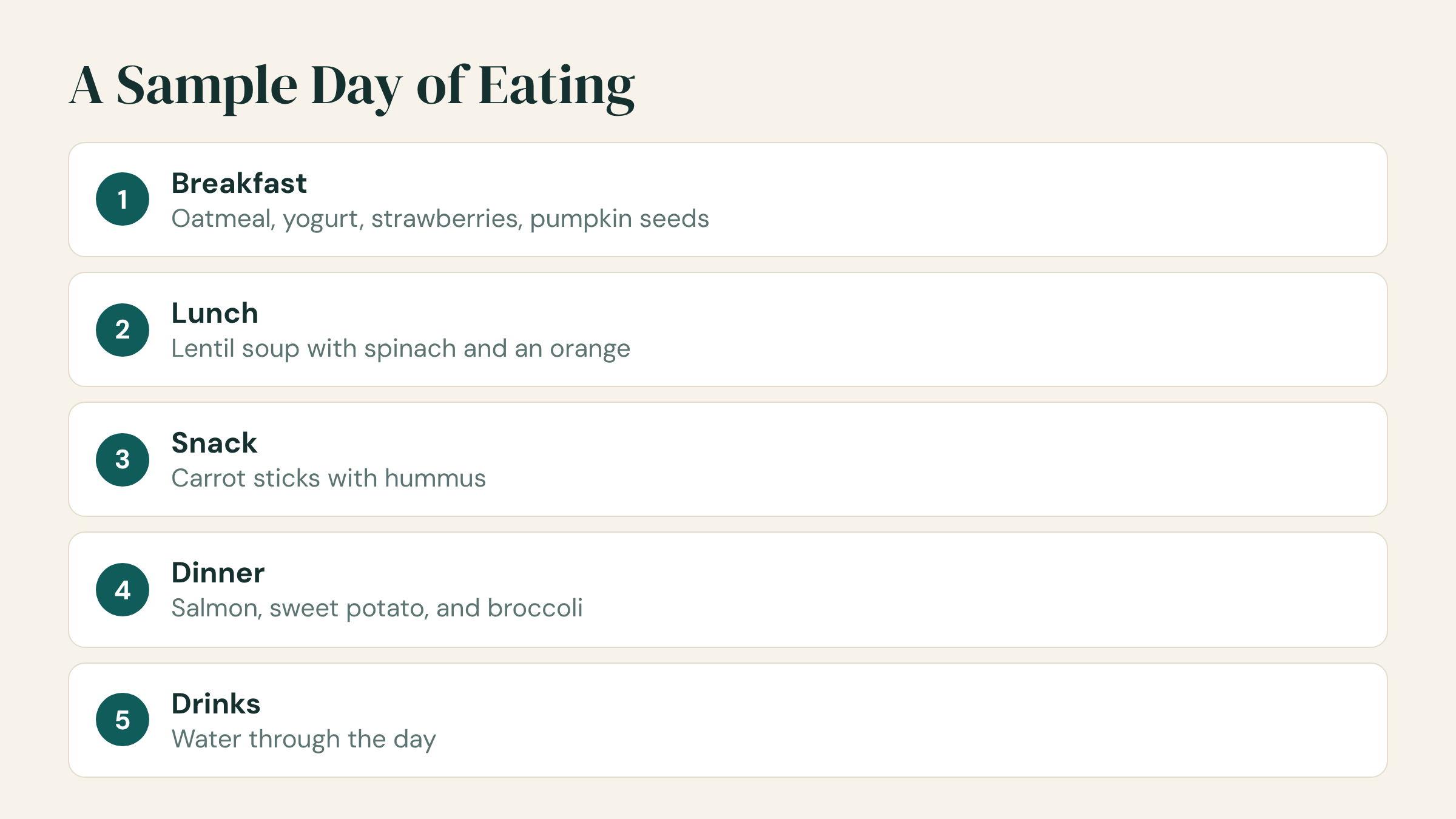
- Breakfast: Oatmeal with plain yogurt, strawberries, and pumpkin seeds
- Lunch: Lentil soup with spinach, plus whole-grain bread and an orange
- Snack: Carrot sticks with hummus, or a small handful of almonds
- Dinner: Baked salmon, roasted sweet potato, and broccoli with lemon
- Drinks: Water through the day, with fortified milk or plant milk if you like
Adjust this to suit your own tastes, budget, and health needs.
Foods to Limit
You do not need to cut out your favorite foods, but it helps to limit:
- Sugary drinks and sweets, which can crowd out nutrient-rich foods
- Highly processed snacks and fast food
- Alcohol, since MedlinePlus recommends limiting it to protect immunity
Eating Well on a Budget
Immune-friendly eating does not have to be expensive. Frozen fruit and vegetables keep their nutrients well and reduce waste. Canned beans, lentils, canned salmon or sardines, oats, eggs, and seasonal produce are all good value. Cook larger batches of soups or stews and freeze portions for busy days, or for when you are ill and do not feel like cooking.
Do You Also Need a Supplement?
Most people who eat a varied diet do not need an immune supplement. Some may benefit from targeted supplements, including those with a confirmed deficiency, restricted diets, or limited sun exposure. Ask a clinician or registered dietitian rather than taking a broad “immune” blend, since doses from multiple products can add up.
If you have food allergies, kidney disease, or take blood thinners, get personal advice before making large dietary changes. Leafy greens, for example, contain vitamin K, which can affect warfarin if your intake changes suddenly.
Eating When You Are Unwell
When you are ill, you may not feel like eating much. Soups, yogurt, soft fruit, and toast are easy options, and fluids matter. Your usual eating pattern can return as your appetite does.
The Bottom Line: Best Foods for Immune Support
The best foods for immune support are the same ones that support your overall health: fruit, vegetables, whole grains, beans, nuts, seeds, fish, and other protein foods. Aim for variety, not any one superfood. Good nutrition works best alongside sleep, activity, recommended vaccines, and not smoking.
Related articles
- How Aging Changes Your Immune System
- Why You Keep Getting Sick: Common Reasons
- Gut Health and Immunity: What’s the Connection?
For more detail, see the official guidance from MedlinePlus: Immune System and Disorders.
This article is for general information only and is not medical advice. Talk to a healthcare professional about your symptoms, and before starting any supplement, especially if you take medication or have a medical condition.

3 Comments on “Best Foods for Immune Support”