
When a cold starts to creep in, many people reach straight for vitamin C. Fizzy tablets and high-dose powders line pharmacy shelves, and the idea has been popular for decades.
Here is what decades of research show about vitamin C for colds.
Vitamin C has been studied for colds more thoroughly than most supplements, so we have a reasonably clear picture. It is not the cold cure many people hope for, but the findings are also more nuanced than a simple yes or no. Here is what the research shows.
What the Best Evidence Found
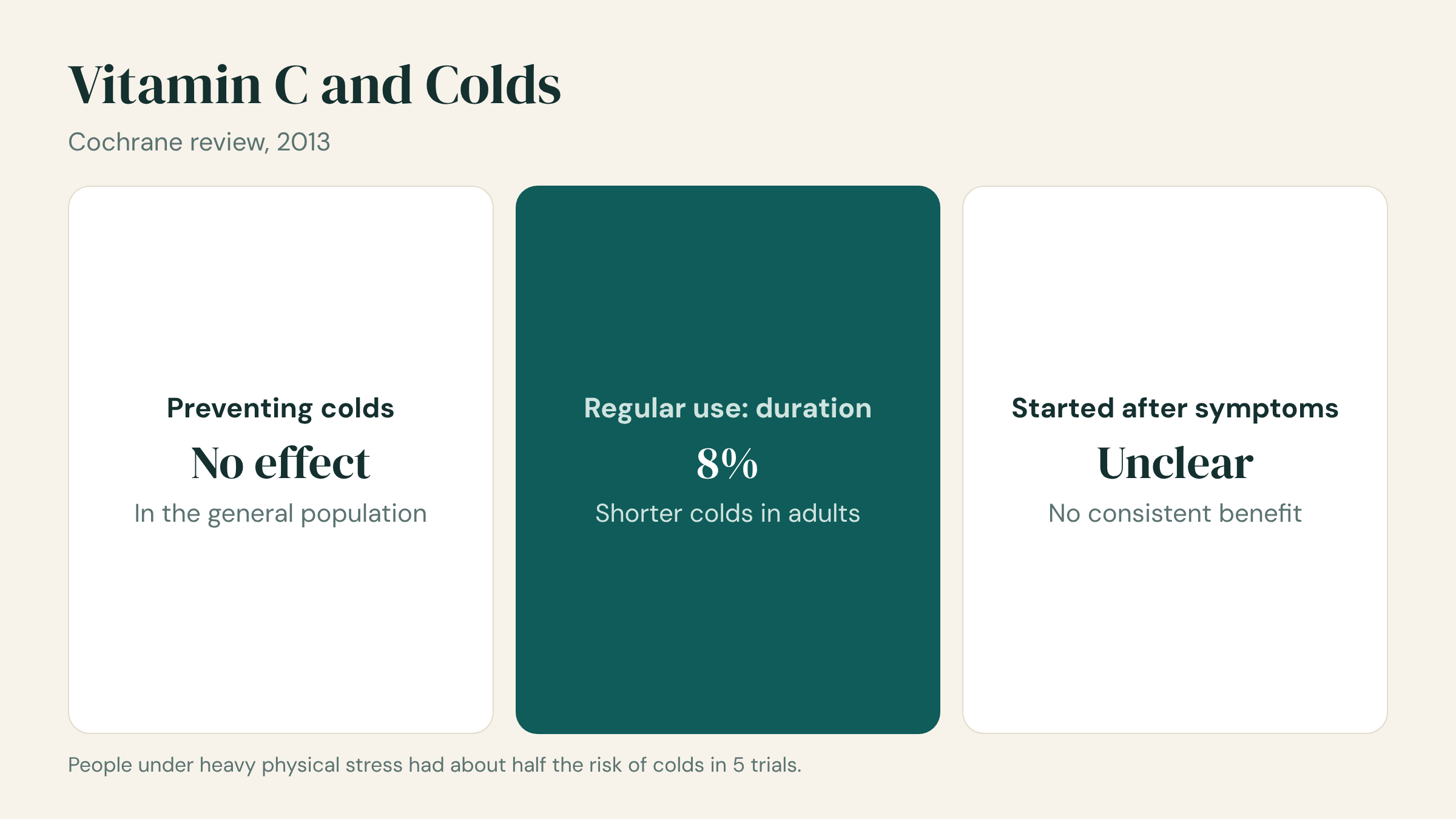
The most widely cited summary is a 2013 Cochrane review, which pooled placebo-controlled trials using at least 200 mg of vitamin C a day. It looked at three separate questions: whether vitamin C prevents colds, whether regular use shortens them, and whether taking it after symptoms start helps.
Does Vitamin C Prevent Colds?
For most people, no. In the general population, the review found regular vitamin C had no meaningful effect on how often people caught colds. This was based on 29 trial comparisons involving 11,306 participants.
The exception was people under heavy physical stress. In five trials of 598 marathon runners, skiers, and soldiers on subarctic exercises, vitamin C roughly halved the risk of a cold. These results apply to people under intense short-term physical strain, so they should not be assumed to apply to everyone.
Does It Shorten a Cold?
Regular use may help a little. When taken daily before getting sick, vitamin C was linked with:
- Adults: Colds about 8% shorter
- Children: Colds about 14% shorter
- Children on 1 to 2 grams daily: Colds about 18% shorter
Severity was also somewhat reduced. To put that in everyday terms, an 8% reduction in a week-long cold works out to roughly half a day. That is real, but modest, and it depends on taking vitamin C all the time rather than only when you feel ill.
Does It Help After a Cold Starts?
This is the question most people care about, and the answer is disappointing. Across seven comparisons with 3,249 cold episodes, starting vitamin C after symptoms began had no consistent effect on how long the cold lasted or how bad it felt.
There were some interesting exceptions. One large adult trial reported benefit from an 8 gram dose at onset, and two trials reported benefit from five days of supplements. However, the results were not consistent enough to draw firm conclusions, and the Cochrane authors said more trials are needed. An 8 gram dose is also far above the adult upper limit, so this is not something to try on your own.
So Should You Take Vitamin C for Colds?
The Cochrane authors concluded that routine supplementation is not justified for the general population. The NIH Office of Dietary Supplements reaches a similar view: regular intake may modestly shorten colds and may help people with low dietary intake, while taking it after a cold starts may not help.
In practice:
- If you already eat plenty of fruit and vegetables, an added supplement is unlikely to make a noticeable difference.
- If your diet is low in vitamin C, improving it makes sense for general health.
- If you are about to do extreme endurance training, the evidence is more interesting, but you can discuss it with a clinician or sports dietitian.
How Much Vitamin C Is Too Much?
The NIH Office of Dietary Supplements lists an upper limit of 2,000 mg a day for adults. Lower limits apply to children and teens, from 400 to 1,800 mg depending on age.
Too much vitamin C can cause:
- Stomach upset and other digestive problems
- False readings on some blood sugar monitors
- Iron buildup in people with hemochromatosis
Vitamin C may also reduce the effectiveness of chemotherapy and radiation, so anyone receiving cancer treatment should talk to their oncology team first. If you have diabetes and use a glucose monitor, it is worth mentioning high-dose vitamin C to your care team too.
Food Sources of Vitamin C
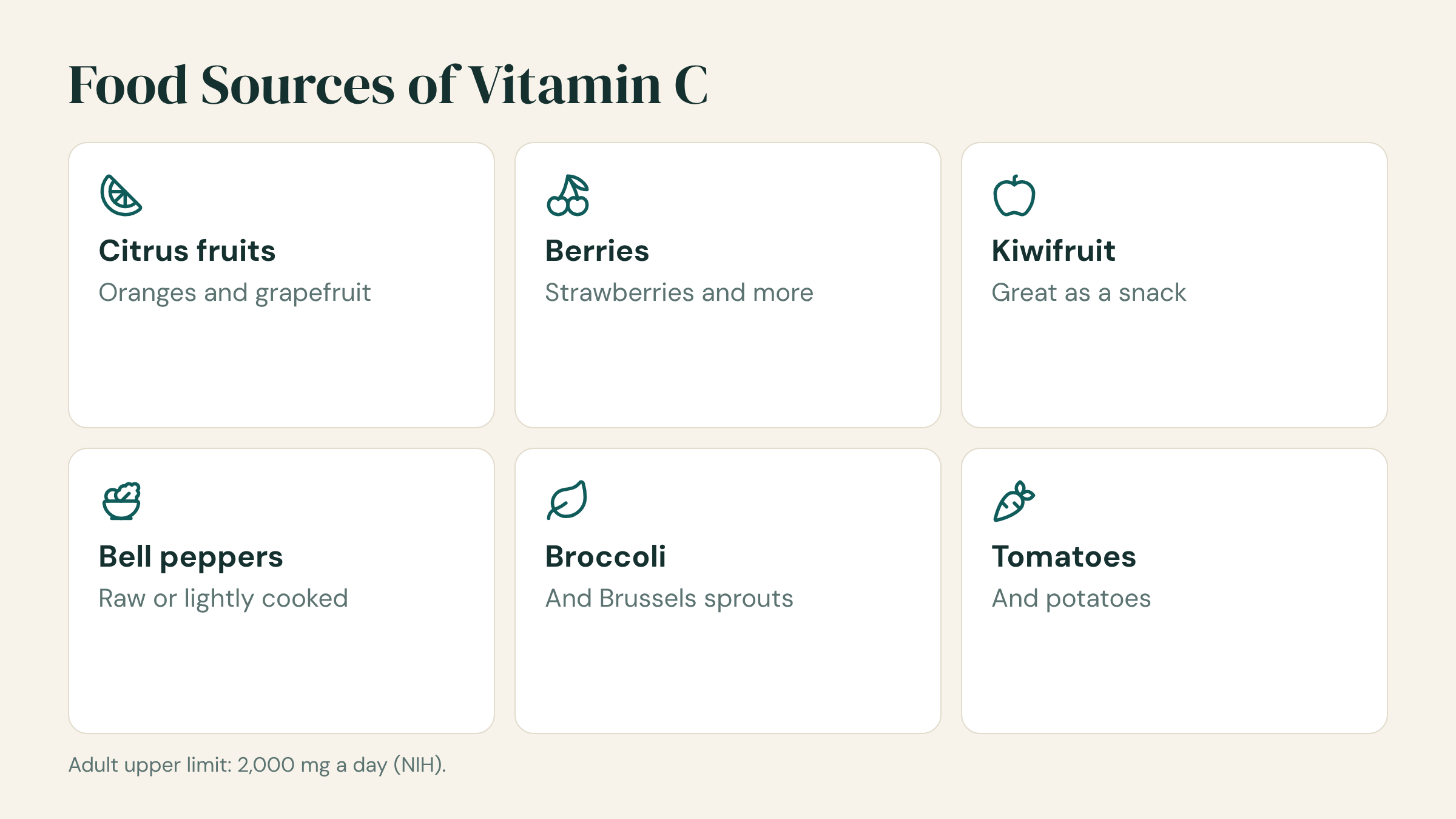
Most people can get what they need from food. Good sources include:
- Oranges, grapefruit, and other citrus fruits
- Kiwifruit, strawberries, and other berries
- Bell peppers
- Broccoli and Brussels sprouts
- Tomatoes and potatoes
Vitamin C is sensitive to heat, so eating some of these raw or lightly cooked can help preserve it.
What Else Helps When You Have a Cold?
No supplement cures a cold, which is caused by viruses and usually gets better on its own. Rest, fluids, and over-the-counter symptom relief used according to the label are the usual approach. Zinc lozenges or syrup started within 24 hours of symptoms may shorten a cold, according to Mayo Clinic, although they also carry side effects and limits of their own.
Antibiotics do not work on cold viruses, so they will not help with an ordinary cold.
When to See a Doctor
Most colds clear up without medical care, but check with a healthcare professional if you have trouble breathing, a high or lasting fever, symptoms that get worse instead of better, or symptoms that do not improve after about 10 days. People with weakened immune systems or chronic health conditions, and older adults, should be quicker to seek advice.
Should Children Take Vitamin C for Colds?
The stronger results in children may catch a parent’s eye, but those findings come from regular use, not from a dose given once a cold has started. None of the trials of treatment after symptoms began included children. Upper limits for children are also lower than for adults, so talk with a pediatrician before giving a daily supplement.
The Bottom Line
Vitamin C does not prevent colds for most people, and starting it once you are already sick has not been shown to help consistently. Taken regularly, it may shorten colds slightly, and it may lower risk in people under extreme physical stress. For most people, a diet rich in fruit and vegetables is a better foundation than a high-dose supplement. Stay under 2,000 mg a day unless your clinician advises otherwise.
Related articles
- How Aging Changes Your Immune System
- Best Foods for Immune Support
- Why You Keep Getting Sick: Common Reasons
For more detail, see the official guidance from MedlinePlus: Immune System and Disorders.
This article is for general information only and is not medical advice. Talk to a healthcare professional about your symptoms, and before starting any supplement, especially if you take medication or have a medical condition.
1 Comment on “Does Vitamin C Help With Colds? What Research Shows”