
As you get older, you may notice that colds take longer to shift, or that small cuts take more time to heal. These changes can be part of normal aging, and your immune system is one reason why.
Here is how aging changes your immune system and what you can do to stay protected.
Scientists use the term immunosenescence to describe this gradual change in immune function. It does not mean your immune system stops working. It means it tends to respond more slowly and less effectively. The good news is that there are practical steps that can help you stay protected.
What Changes in the Immune System With Age?
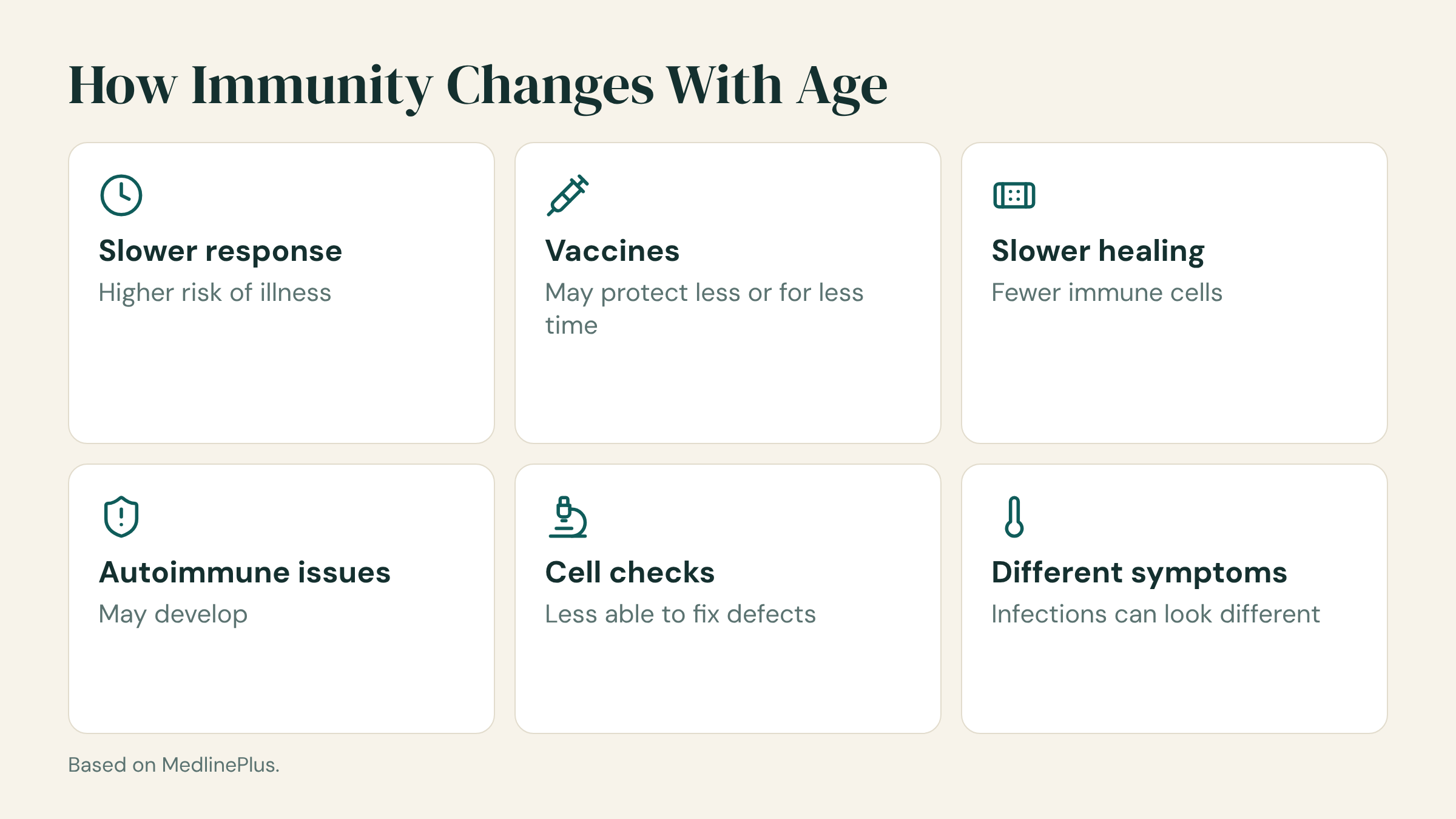
MedlinePlus describes several age-related changes:
- A slower response: The immune system becomes slower to react, which raises the risk of getting sick.
- Weaker vaccine protection: Vaccines may be less effective or protect for a shorter time.
- Slower healing: Fewer immune cells are available to support healing.
- More autoimmune problems: Autoimmune disorders, where the immune system attacks healthy tissue, may develop.
- Less cell surveillance: The body becomes less able to detect and correct cell defects, which can increase cancer risk.
Your hormones, organs, and tissues change with age as well, and these changes can have an effect on health overall.
Why This Matters
A slower immune response means an infection has more time to take hold. Illnesses such as flu, COVID-19, and pneumonia tend to be more serious for older adults, and they may take longer to recover from. Older adults may also have other health conditions, such as diabetes, heart disease, or lung disease, which can make infections harder to deal with.
Signs of infection can look different in older people too. Instead of a high fever, an older adult might simply seem more confused, more tired, or weaker than usual. Family members and caregivers should take sudden changes like these seriously.
Why Vaccines Remain Important
You might wonder why vaccines matter if they can be less effective with age. The answer is that partial protection is still valuable, and older adults are often the people at highest risk from these infections.
MedlinePlus recommends that older adults get vaccines for flu, COVID-19, shingles, and pneumococcal infections, plus any others a healthcare provider recommends. Vaccine schedules change over time, and your needs depend on your age and health, so ask your doctor or pharmacist what is right for you this year.
Stay Active
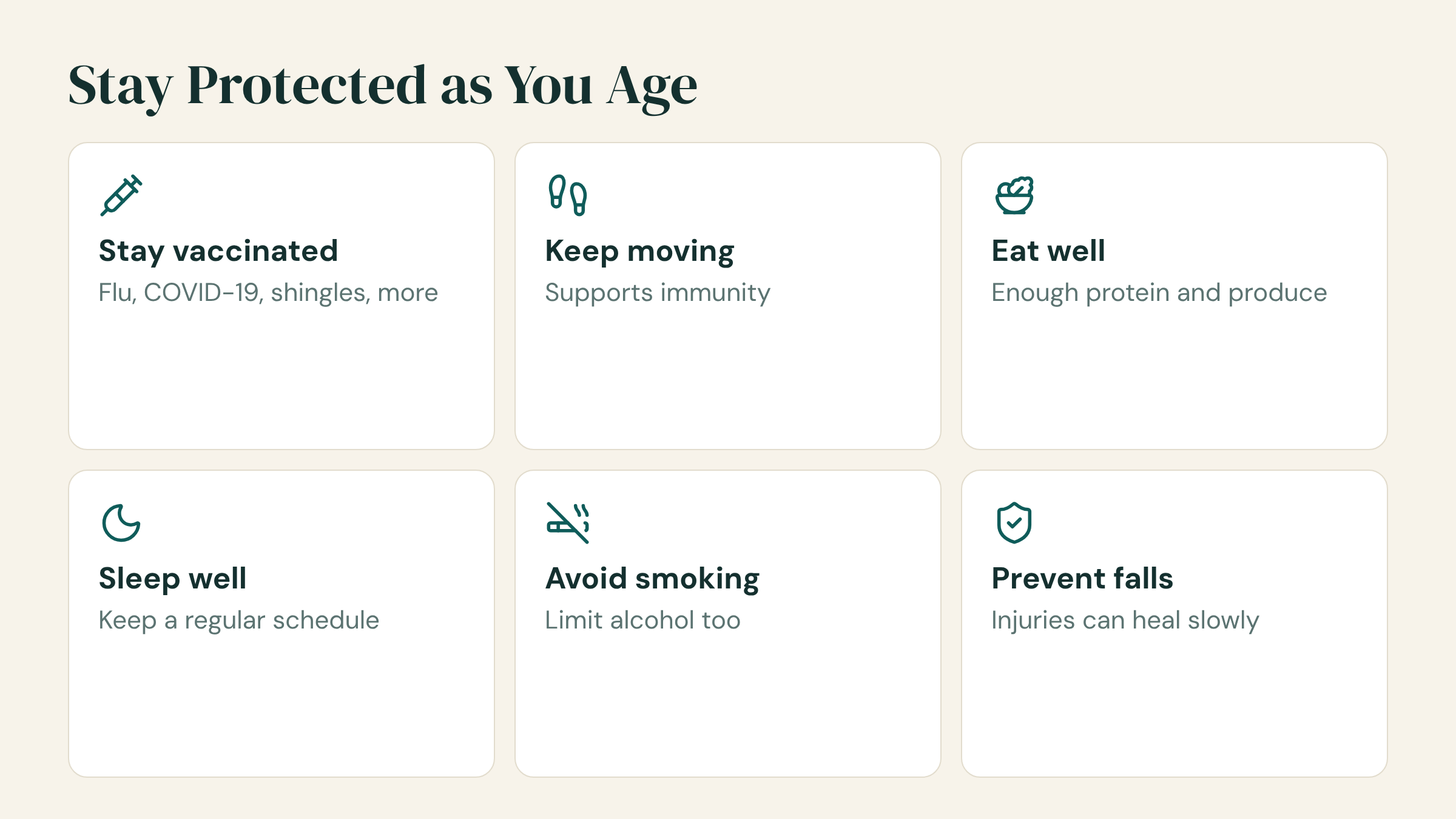
MedlinePlus says regular physical activity supports the immune system. Exercise also helps maintain muscle and balance, which matters for preventing falls. Walking, swimming, cycling, gardening, and strength exercises all count. Choose activities you enjoy, and check with your doctor before starting something new if you have a health condition.
Eat Well
Healthy eating helps keep immunity strong. As people age, appetite can shrink, and it may get harder to shop, cook, or chew. Focus on nutrient-rich foods, including:
- Protein from fish, eggs, poultry, beans, and dairy
- Fruit and vegetables for vitamins and fiber
- Whole grains
- Foods rich in vitamin D, including fatty fish and fortified foods
The recommended amount of vitamin D rises to 800 IU a day after age 70, according to MedlinePlus. Talk with your doctor about whether you need a supplement instead of guessing.
Sleep and Stress
Sleep patterns often change with age, and many older adults sleep more lightly. Sleep still matters, because poor sleep is linked with a higher chance of catching a virus and slower recovery. Keeping a regular schedule, getting daylight, and limiting caffeine later in the day can help.
Long-term stress can also weaken the body’s ability to fight illness. Staying connected with friends, family, and community, and taking part in activities you enjoy, can help you manage it.
Avoid Smoking and Limit Alcohol
MedlinePlus advises avoiding smoking, because it weakens immunity. It also suggests limiting alcohol and asking your provider what amount is safe for you. Alcohol can interact with many medicines and increases the risk of falls. If you smoke, your doctor can help you find support to stop.
Protect Yourself From Falls and Injuries
Because immune changes can slow healing, MedlinePlus recommends taking steps to prevent falls and injuries. Remove loose rugs, improve lighting, use grab bars, wear supportive shoes, and have your eyes checked regularly. Clean any cuts properly, and have wounds that are slow to heal looked at, especially if you have diabetes.
What About Immune Supplements for Older Adults?
Older adults are a major target for immune supplements, but the NIH Office of Dietary Supplements says that for most people they do not prevent infections or speed recovery. They mostly help if you have a deficiency. Older adults also tend to take more medicines, which raises the chance of interactions. Show your doctor or pharmacist everything you take, including vitamins and herbs.
Keep Up With Routine Care
Regular checkups are a chance to review your medications, vaccines, and any long-term conditions. Keeping conditions such as diabetes well managed supports your general health. Dental care counts too, since mouth infections can affect how you feel overall and make it harder to eat well.
When to See a Doctor
Contact a healthcare professional if you have frequent infections, wounds that do not heal, unexplained fever or weight loss, or a sudden change in thinking or energy. Sudden confusion, trouble breathing, or chest pain need urgent medical care. If you have flu or COVID-19 symptoms, call early, since treatments can be time-sensitive for older adults.
Reduce Exposure During Busy Seasons
Washing your hands often and avoiding close contact with people who are ill are simple steps that can lower your exposure. These habits matter most during cold and flu season.
The Bottom Line: How Aging Changes Your Immune System
Aging makes the immune system slower to respond, can reduce how well or how long vaccines protect you, and can slow healing. You cannot stop these changes, but you can work with them. Stay current with recommended vaccines, keep active, eat well, sleep enough, avoid smoking, and speak to a healthcare provider early if something changes.
Related articles
- Best Foods for Immune Support
- Gut Health and Immunity: What’s the Connection?
- Elderberry: Benefits, Risks, and Evidence
For more detail, see the official guidance from MedlinePlus: Immune System and Disorders.
This article is for general information only and is not medical advice. Talk to a healthcare professional about your symptoms, and before starting any supplement, especially if you take medication or have a medical condition.
2 Comments on “How Aging Changes Your Immune System”