You are sitting in a quiet room when you notice it: a ringing, buzzing, hissing, or whooshing sound that nobody else can hear. That sound is called tinnitus, and it is very common.
Ringing in the ears, known as tinnitus, can have many different causes.
For some people it comes and goes. For others it is always there and can affect sleep, focus, and mood. This guide explains what causes it, what may help, and when you need medical care.
What Is Tinnitus?
Tinnitus means hearing a sound when no outside sound is present. It is a symptom rather than a disease. Mayo Clinic says it can be a symptom of more than 200 different health conditions.
Often, doctors cannot find an exact cause. Even so, a checkup is worthwhile, because some causes can be treated.
Common Causes of Ringing in the Ears
Hearing Loss
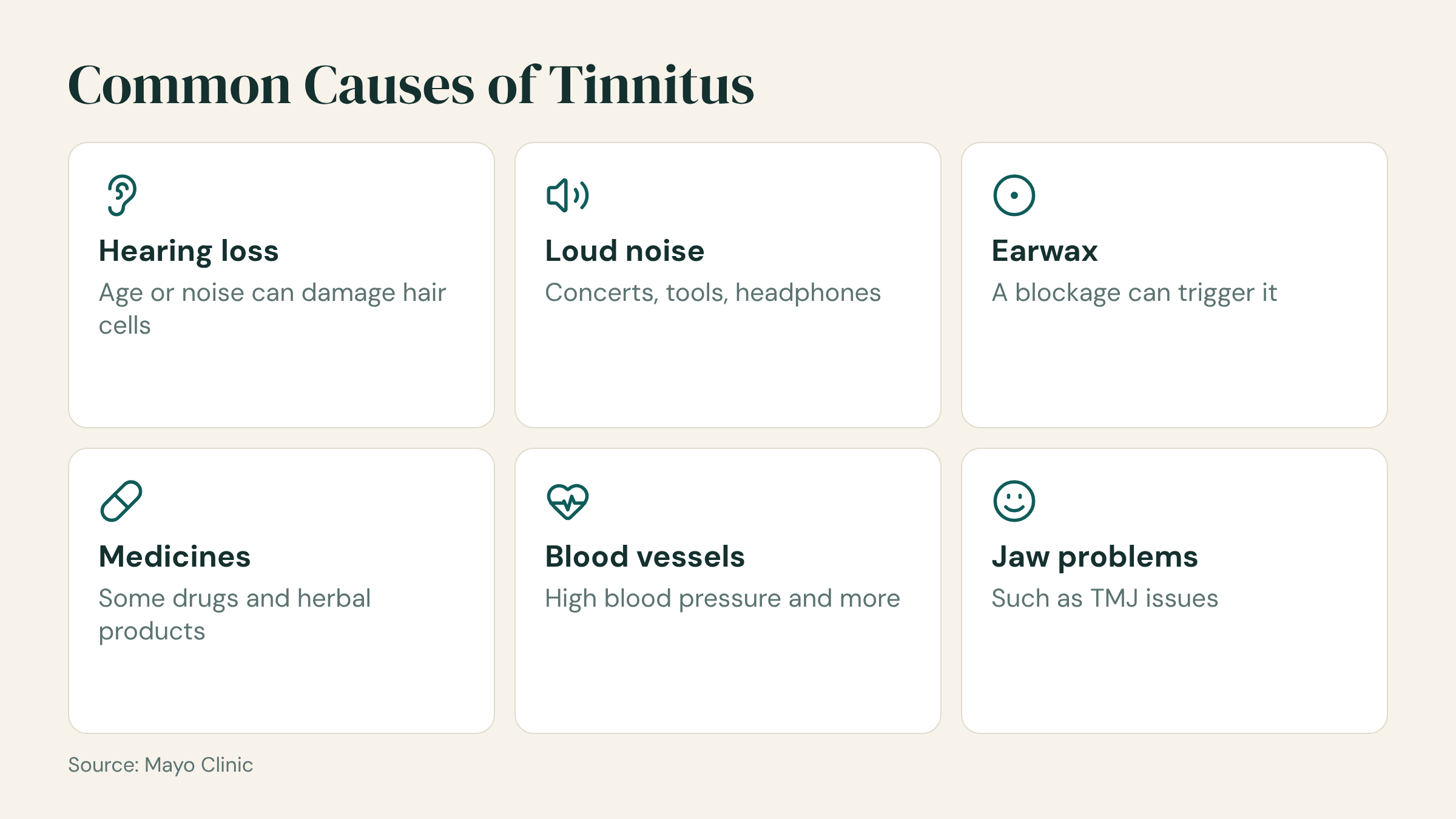
This is a leading cause. Age or loud noise can damage tiny hair cells in the inner ear. Mayo Clinic says about 9 in 10 people with tinnitus have some noise-related hearing loss.
Loud Noise
Concerts, power tools, loud headphones, and noisy workplaces can all damage your hearing. You may notice ringing after a loud event. It might fade, but repeated exposure can lead to lasting problems.
Earwax and Ear Problems
A blockage from earwax or debris can trigger tinnitus. Ear infections, eustachian tube problems, and otosclerosis, a condition that affects the middle ear bones, can also play a part.
Jaw Problems
Problems with the temporomandibular joint, where your jaw meets your skull, can be involved. If your jaw clicks or hurts, tell your doctor or dentist.
Medicines and Substances
Mayo Clinic lists NSAIDs, some antibiotics, cancer drugs, diuretics, some antidepressants, and malaria medicines. Some herbal supplements, marijuana, and tobacco are on the list too.
Do not stop a prescribed medicine by yourself. Ask your doctor whether it could be involved.
Blood Vessel Conditions
High blood pressure, atherosclerosis, and malformed blood vessels can cause pulsatile tinnitus, a sound that pulses with your heartbeat. This type should be checked by a doctor.
Other Conditions
Less common causes include Meniere’s disease, head or neck injuries, vestibular migraine, and tumors such as acoustic neuroma. Diabetes, thyroid disease, anemia, and autoimmune disorders can also be linked.
Who Is at Higher Risk?
- People exposed to loud noise, including at work
- Older adults
- Men
- People who use tobacco, marijuana, or alcohol
- People with obesity, heart disease, or high blood pressure
- People with a history of depression, anxiety, arthritis, or head injury
How Tinnitus Can Affect Daily Life
Ringing in the ears is more than an annoyance for some people. Mayo Clinic links it with fatigue, stress, sleep problems, trouble concentrating, memory issues, depression, anxiety, irritability, and headaches.
If tinnitus is affecting your mood or your sleep, you do not need to just live with it. Support is available.
What May Help
Tinnitus often cannot be cured, but several approaches can make it less noticeable.
- Treating the cause: Removing earwax, changing a medicine, or treating a blood vessel problem may ease symptoms.
- Hearing aids: These may help when hearing loss is the cause.
- Sound therapy: White noise machines, fans, and soft background sounds can help mask ringing, especially at night.
- Counseling: Cognitive behavioral therapy teaches coping skills, and tinnitus retraining therapy combines sound and counseling.
- Treating linked problems: Medicines may help with anxiety, depression, or insomnia.
Do Supplements Help?
Many products claim to stop ringing in the ears. Mayo Clinic says there is little evidence that alternative treatments work. Ginkgo, melatonin, and zinc have been tried, but none is supported as an effective treatment.
Some herbal supplements can actually be a cause, so check with your doctor before trying one.
Simple Tips for Daily Life
- Protect your ears from loud sounds
- Keep your headphone volume low
- Use a fan or soft music at bedtime
- Manage stress with relaxation or exercise
- Notice whether caffeine, alcohol, or lack of sleep makes it worse
- Do not use cotton swabs in your ears, since they can push wax deeper
When to See a Doctor
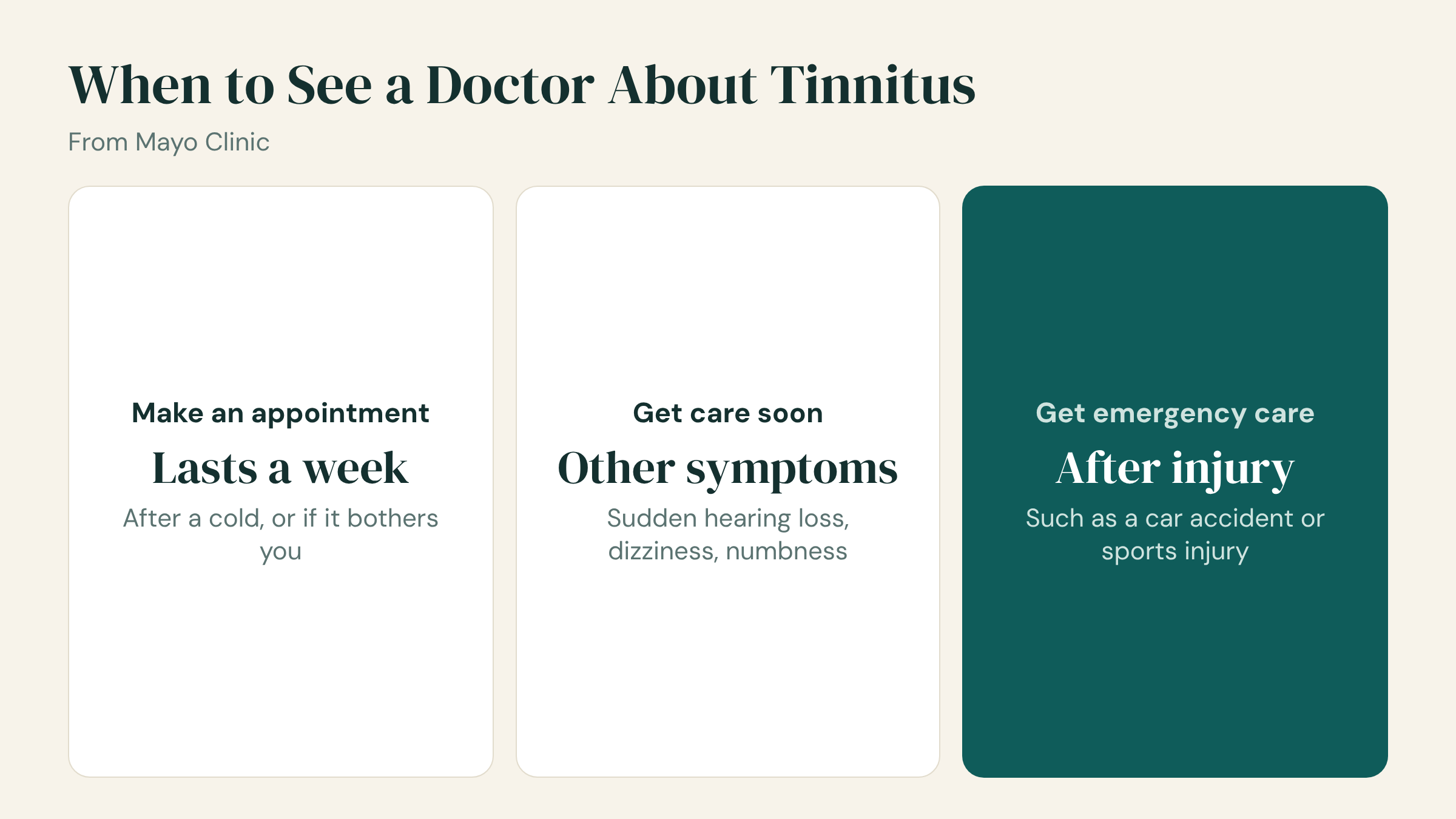
Mayo Clinic gives clear advice:
- Make an appointment if tinnitus starts after a cold and does not go away within a week, or if it bothers you.
- Get care as soon as possible if tinnitus comes with sudden hearing loss, dizziness, or numbness or weakness in your face, arm, or leg, or if it causes anxiety, depression, or poor sleep.
- Get emergency care if tinnitus develops after a car accident, sports injury, or similar event.
Sudden hearing loss in one ear is a reason to get help quickly. Please do not wait to see if it improves.
What to Expect at Your Appointment
Your doctor may look in your ears, check your hearing, and ask about your medicines, noise exposure, and health history. Note when the sound began, what it sounds like, and whether it is in one ear or both.
You may be referred to an ear, nose, and throat doctor or an audiologist.
Common Questions
Does tinnitus mean I am going deaf?
Not necessarily, although it is often linked with hearing loss. A hearing test can tell you more.
Will it go away?
Ringing after a loud event may fade. Long-term tinnitus often cannot be cured, but many people find it becomes less noticeable with support.
Tinnitus and Stress
Many people find that the sound feels louder when they are tired or stressed. Worrying about it can make you notice it more, which can create a frustrating cycle. Learning relaxation skills will not remove the sound, but it may make it easier to live with.
The Bottom Line
Ringing in the ears is a symptom with many possible causes, including hearing loss, earwax, medicines, and blood vessel problems. It often cannot be cured, but sound therapy, hearing aids, and counseling can help.
Protect your ears from noise, and see a doctor if it lasts, bothers you, or comes with sudden hearing loss or dizziness.
Related articles
- Dry Eyes: Common Causes and What May Help
- Best Foods for Eye Health
- How Vision Changes With Age
- Can Supplements Help Tinnitus? What the Evidence Says
This article is for general information only and is not medical advice. Talk to a healthcare professional about your symptoms, and before starting any supplement, especially if you take medication or have a medical condition.