
Carrots may get all the attention, but they are only part of the story. Many foods provide nutrients that your eyes use every day, from leafy greens to fish.
Here are the best foods for eye health and the nutrients that make them useful.
No food can cure eye disease or replace an eye exam, though a healthy diet supports your long-term health. Here are the foods worth adding to your plate, and what to know about eye supplements.
Leafy Greens
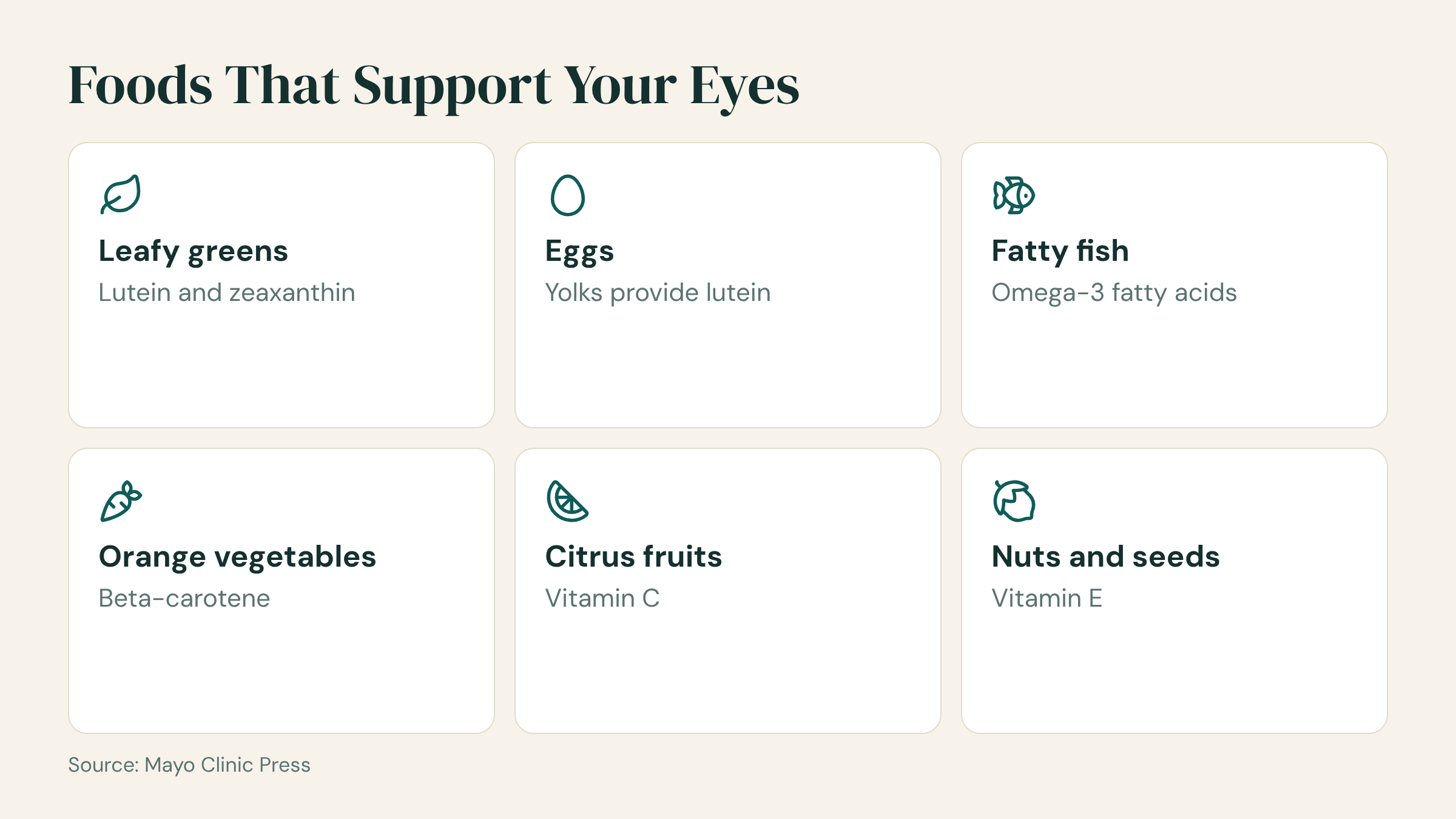
Dark greens are among the best choices for your eyes. Mayo Clinic Press lists spinach, kale, collard greens, mustard greens, Swiss chard, watercress, and parsley as sources of lutein and zeaxanthin.
These natural pigments are found in the macula, the part of the eye that gives you sharp central vision. Try adding a handful of greens to soups, omelets, or smoothies.
Eggs
Egg yolks provide lutein and zeaxanthin as well. Pairing eggs with spinach is an easy way to get both. If you have been told to limit eggs, follow your doctor’s advice.
Orange and Yellow Vegetables
Orange bell peppers are also a useful source of lutein and zeaxanthin. Carrots and sweet potatoes provide beta-carotene, which your body turns into vitamin A.
Vitamin A helps your eyes see in low light. Most people get enough from a varied diet, so eating extra carrots will not give you better than normal vision.
Fatty Fish
Fish such as salmon, tuna, halibut, and herring provide omega-3 fatty acids. Mayo Clinic Press also lists smaller amounts in flaxseed, chia seeds, walnuts, and canola oil.
Try to include fish in your meals through the week, if you eat it. Baked or grilled fish is an easy dinner.
Citrus and Colorful Fruits
Oranges, strawberries, kiwifruit, and other fruits provide vitamin C, an antioxidant nutrient. Mayo Clinic Press recommends about five servings of colorful fruits and vegetables a day.
Nuts and Seeds
Almonds and sunflower seeds contain vitamin E, while walnuts and chia seeds add some omega-3s. A small handful makes a useful snack.
Beans and Lean Protein
Beans, lean meat, and seafood provide zinc. Mayo Clinic Press notes that zinc’s role in eye health is unclear, but it remains an essential mineral that you need from your diet.
Why Overall Diet Matters
Your eyes depend on healthy blood vessels. Diabetes and high blood pressure can both damage your vision, so meals that help control these conditions can also protect your eyes.
Limit sugary drinks, highly processed snacks, and too much salt. Choose whole grains, vegetables, and lean proteins more often.
A Sample Eye-Friendly Day
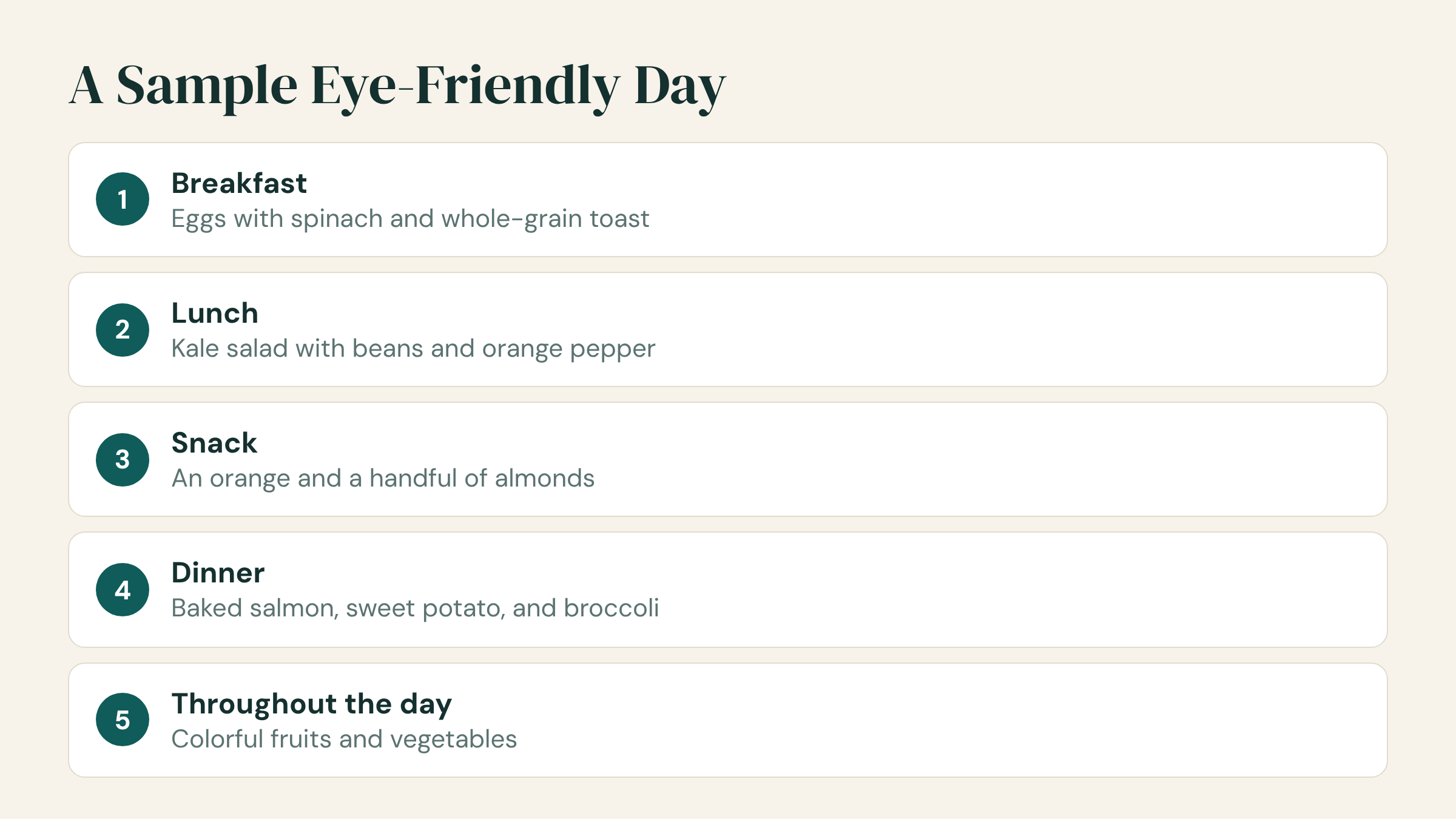
- Breakfast: Eggs with spinach and whole-grain toast
- Lunch: Kale salad with beans, orange pepper, and olive oil
- Snack: An orange and a handful of almonds
- Dinner: Baked salmon, sweet potato, and broccoli
Adjust these ideas to your budget, tastes, and health needs.
Do You Need Eye Vitamins?
Most people do not. Mayo Clinic Press says vitamin and mineral supplements may slow an existing eye disorder but do not appear to prevent eye disease.
There is one key exception. The National Eye Institute says AREDS 2 supplements may help keep intermediate age-related macular degeneration from progressing to late AMD. These are high-dose formulas, so use them only on your eye doctor’s advice.
The NEI also says that food and regular multivitamins cannot provide the same mix. That matters only if you have been told you need this formula.
Common Myths About Food and Eyes
- Carrots give you night vision: They help if you are low in vitamin A, but they will not give you super sight.
- Eye vitamins prevent all eye disease: Benefits in AREDS studies were seen in people with intermediate or advanced AMD.
- Bilberry fixes your eyesight: Be doubtful of quick-fix claims on herbal eye products.
Other Habits That Protect Your Eyes
- Do not smoke
- Wear sunglasses outdoors
- Get regular eye exams
- Stay active
- Manage diabetes and blood pressure
- Take breaks from screens
Shopping List for Healthy Eyes
- Spinach, kale, or other greens (fresh or frozen)
- Eggs
- Orange bell peppers and carrots
- Canned or fresh salmon or tuna
- Oranges and berries
- Walnuts, almonds, and chia seeds
- Beans and lentils
Canned fish and frozen vegetables are often cheaper and just as useful. Check the salt in canned foods.
When to See an Eye Doctor
Good food does not replace eye care. The American Academy of Ophthalmology says healthy adults should get a baseline eye exam by age 40. Seek care promptly for sudden vision changes, eye pain, or new flashes and floaters.
Common Questions
Can diet reverse vision problems?
No. Diet supports your overall health, but it will not replace glasses or treat eye disease.
Are omega-3 supplements good for eyes?
Evidence is mixed, and fish is a good food-based source. Ask your doctor before starting a supplement, particularly if you take a blood thinner.
Is it better to eat vegetables raw or cooked?
Both are good. A little healthy fat can help your body absorb carotenoids, so olive oil on salad or cooked greens is useful.
Make Eye-Healthy Meals Easy
You do not need special ingredients or expensive recipes. Keep frozen spinach ready for soups and pasta sauces. Buy canned tuna or salmon for quick lunches, and add peppers or carrots to your usual dishes.
Cooking a bigger batch of vegetables at the start of the week also saves time. Choose one or two small changes, and repeat them until they become part of your routine.
Making It a Habit
You do not need to change everything at once. Try adding one extra serving of vegetables a day, or swapping one snack for fruit and nuts, and build from there. Small habits are easier to keep over time.
The Bottom Line: Best Foods for Eye Health
Leafy greens, eggs, colorful produce, fish, and nuts all support healthy eyes. Most people do not need an eye vitamin, unless an eye doctor recommends one for AMD.
Eat a varied diet, avoid smoking, and keep up with your eye exams.
Related articles
- Dry Eyes: Common Causes and What May Help
- How Loud Is Too Loud? Protecting Your Hearing
- How Vision Changes With Age
This article is for general information only and is not medical advice. Talk to a healthcare professional about your symptoms, and before starting any supplement, especially if you take medication or have a medical condition.
2 Comments on “Best Foods for Eye Health”