
It is easy to skip eye and hearing checks when nothing seems wrong. The trouble is that many eye and ear problems develop slowly, with few early symptoms.
How often should you get your eyes checked, and when do you need a hearing test? Here is a simple guide.
Regular checks can catch changes before they affect your daily life. Here is a simple guide to when to get tested, who may need checks sooner, and what to expect.
Why Regular Checks Matter
You may not notice gradual changes, since your brain adapts. The American Academy of Ophthalmology says glaucoma often has no early symptoms, so regular exams are important.
The National Institute on Deafness and Other Communication Disorders says age-related hearing loss develops slowly, so people often do not notice it right away.
How Often Should You Get Your Eyes Checked?
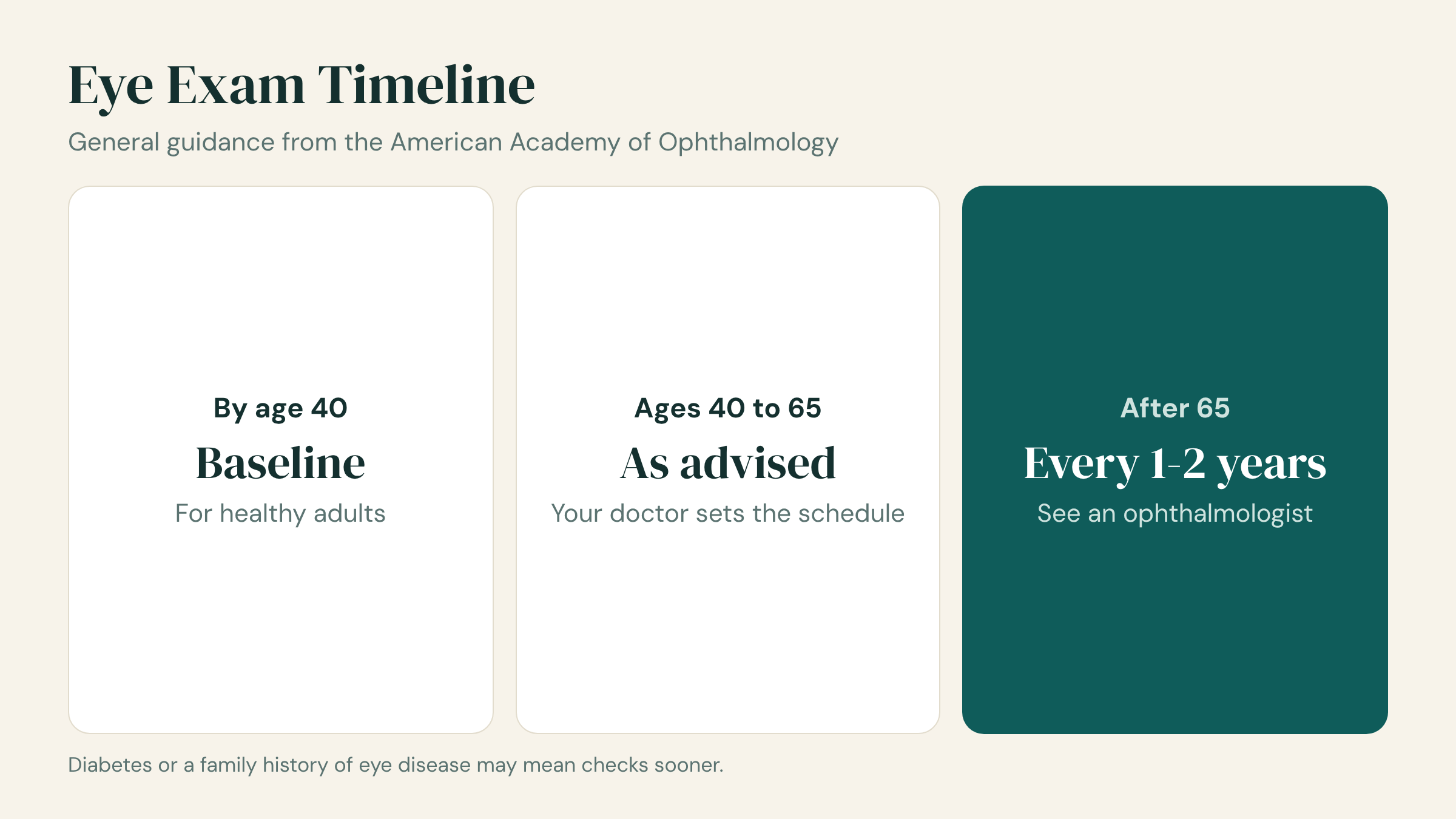
The AAO offers these general guidelines for adults:
- By age 40: Get a baseline eye exam if you are healthy.
- After age 65: See an ophthalmologist every one to two years.
Between these ages, your doctor will suggest a schedule based on your eyes and your risks. If you wear glasses or contact lenses, you may need more frequent checks.
Who May Need Eye Exams Sooner?
- People with diabetes
- People with high blood pressure
- People with a family history of glaucoma or macular degeneration
- Those who have had an eye injury or surgery
- Contact lens wearers
- Anyone with new symptoms
What Happens at an Eye Exam?
An eye exam goes beyond reading letters on a chart. Your doctor may check your vision, eye pressure, and the health of your retina. They may use drops to widen your pupils for a better view, so bring sunglasses and consider arranging a ride home.
Eye exams can also reveal other health problems. The AAO says they can show signs of high blood pressure and high cholesterol.
How Often Should You Get Your Hearing Checked?
There is no single schedule that suits everyone. Many people benefit from a baseline test around middle age, or sooner if they have symptoms or noise exposure. Ask your doctor what makes sense for you.
The NIDCD says about one in three US adults aged 65 to 74 has hearing loss, and nearly half of adults over 75 have difficulty hearing. If you are in these age groups, it is sensible to discuss testing.
Who May Need Hearing Tests Sooner?
- People who work around loud noise
- People who use loud tools or attend many concerts
- Those taking medicines that can affect hearing, such as some chemotherapy drugs
- People with high blood pressure or diabetes
- Anyone with ringing in the ears
- People with a family history of hearing loss
What Happens at a Hearing Test?
A hearing test is usually painless. An audiologist may ask you to wear headphones and respond when you hear tones. They may also test how well you understand speech.
Your results are often shown on a chart called an audiogram. Ask them to explain it in plain language.
Signs You Should Not Wait
Do not wait for your next routine check if you notice:
Eyes:
- Sudden vision loss or blur
- Eye pain
- A sudden increase in floaters or flashes
- A dark curtain across your vision
Ears:
- Sudden hearing loss, especially in one ear
- Hearing changes with dizziness
- Ear pain, drainage, or bleeding
- Ringing with numbness or weakness
These symptoms need prompt or urgent care.
Who Should You See?
- Ophthalmologist: A medical doctor who treats eye diseases and performs surgery.
- Optometrist: A provider who performs eye exams and prescribes glasses.
- Audiologist: A hearing testing specialist.
- Otolaryngologist: An ear, nose, and throat doctor.
Your primary care doctor can also help you decide where to begin.
How to Prepare for Your Visits
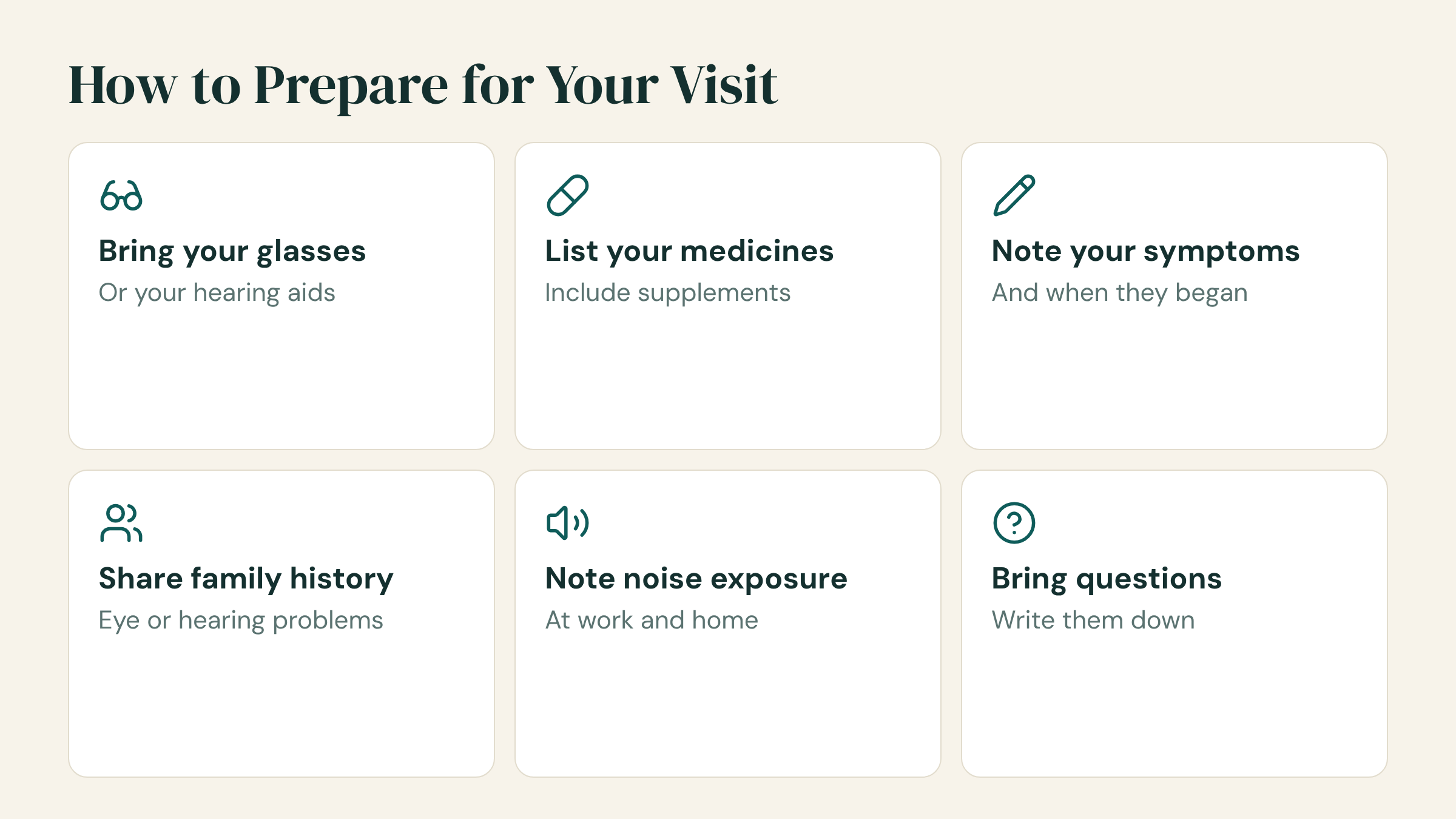
- Bring your glasses or hearing aids
- Bring a list of your medicines and supplements
- Write down your symptoms and when they started
- Share your family health history
- Note your noise exposure at work and home
- Bring your questions
Protect Your Eyes and Ears Between Visits
- Wear sunglasses and protective eyewear
- Use earplugs around loud noise
- Keep headphone volume low
- Do not smoke
- Manage blood pressure and diabetes
- Take regular breaks from screens
Common Questions
Is a vision screening the same as an eye exam?
No. A quick screening can miss problems. A full exam looks more closely at your eye health.
What if I cannot afford these visits?
Ask about insurance coverage, community clinics, and local programs. The NIDCD says Medicare does not cover hearing aids for adults, so check your plan.
Do I need a test if I feel fine?
Yes, a baseline can still be useful. Many problems start with no symptoms, and having earlier results makes changes easier to spot.
Keep Your Records
Ask for a copy of your eye prescription and your hearing test results. Having these makes it easier to spot changes and to compare options if you switch providers or shop for glasses or hearing aids. Write the date of your next check in your calendar so it does not get forgotten.
Should children get checked too?
Yes. Ask your child’s doctor about vision and hearing checks, since problems can affect learning and speech. Schools may also offer screenings.
Keep Your Records Together
Keep a simple note of your last eye and hearing checks, your current prescriptions, and any test results you receive. If you change providers, these details make it easier to compare results over time and to spot changes early. Setting a reminder on your phone can also help you stay on schedule, especially if you have been advised to return at a set time.
The Bottom Line
Get a baseline eye exam by age 40, and see an ophthalmologist every one to two years after 65. Hearing tests depend on your age and risks, so ask your doctor.
Do not wait for routine visits if you notice sudden changes. Getting help early can protect your sight and hearing.
Related articles
- Dry Eyes: Common Causes and What May Help
- How Vision Changes With Age
- Digital Eye Strain: Causes and Simple Relief Tips
This article is for general information only and is not medical advice. Talk to a healthcare professional about your symptoms, and before starting any supplement, especially if you take medication or have a medical condition.



2 Comments on “How Often Should You Get Your Eyes and Hearing Checked?”