
Lutein and zeaxanthin appear on many eye supplement labels, and they have become popular names in eye health. They are natural plant pigments, and you probably eat them already.
Research has shown they matter in a specific situation, but they are not a cure-all. Here is what they are, where to find them, and who may actually benefit from a supplement.
What Are Lutein and Zeaxanthin?
Lutein and zeaxanthin belong to a group of plant pigments called carotenoids. These pigments give some vegetables and egg yolks their color. In the eye, they are found in the macula, the small central part of the retina that gives you sharp vision.
They are often described as filtering light and acting as antioxidants, which is why they are linked with eye health.
Best Food Sources
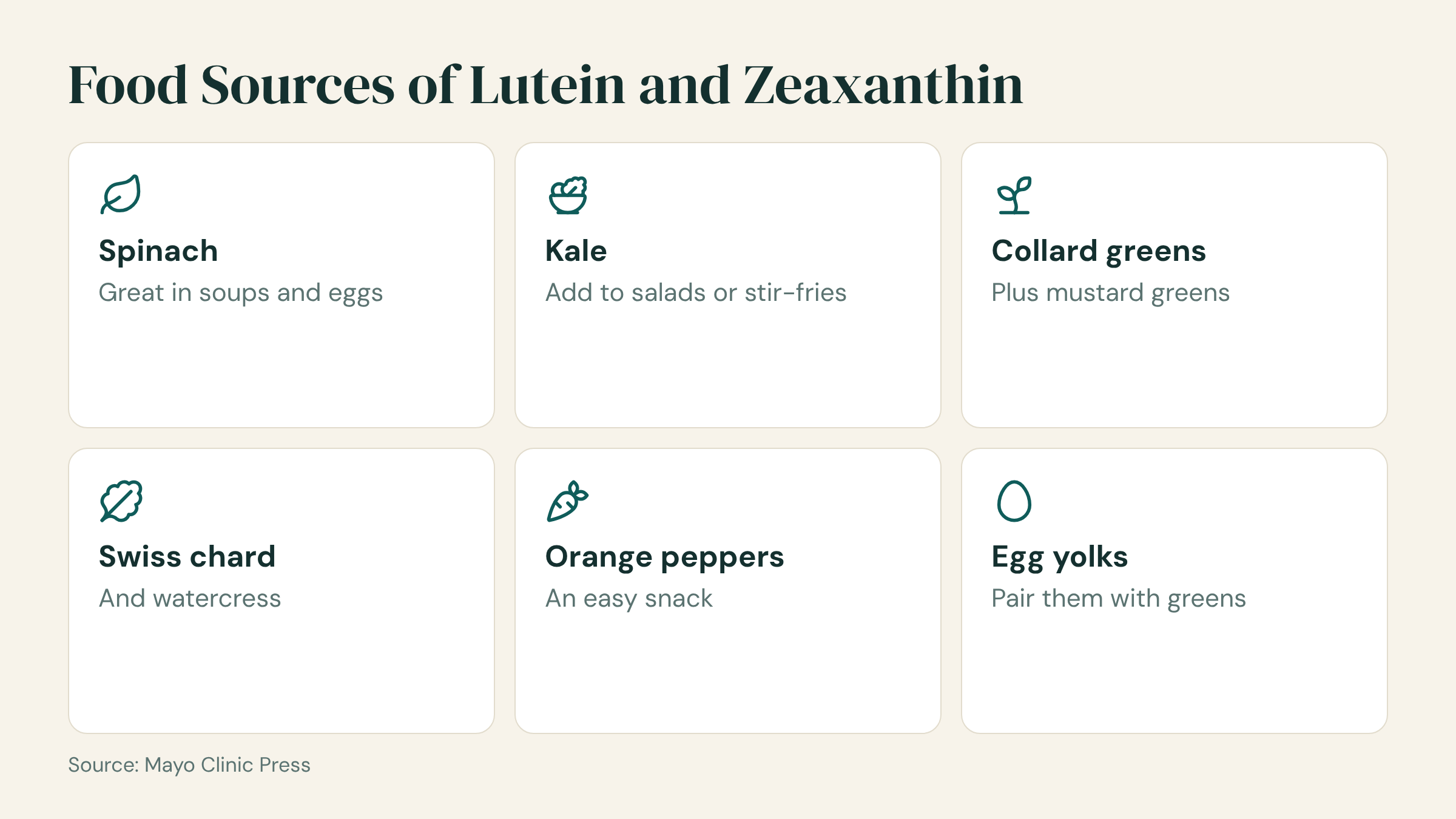
Mayo Clinic Press lists these sources:
- Spinach
- Kale
- Collard and mustard greens
- Swiss chard
- Watercress and parsley
- Orange bell peppers
- Egg yolks
A little healthy fat, such as olive oil in a salad, may help your body absorb carotenoids. Cooking greens with oil or having them with eggs can be a simple way to do this.
What Is Macular Degeneration?
Age-related macular degeneration, or AMD, is an eye disease that affects central vision. It can make reading, driving, and recognizing faces harder. It is a leading reason lutein and zeaxanthin are studied.
What the AREDS2 Study Found
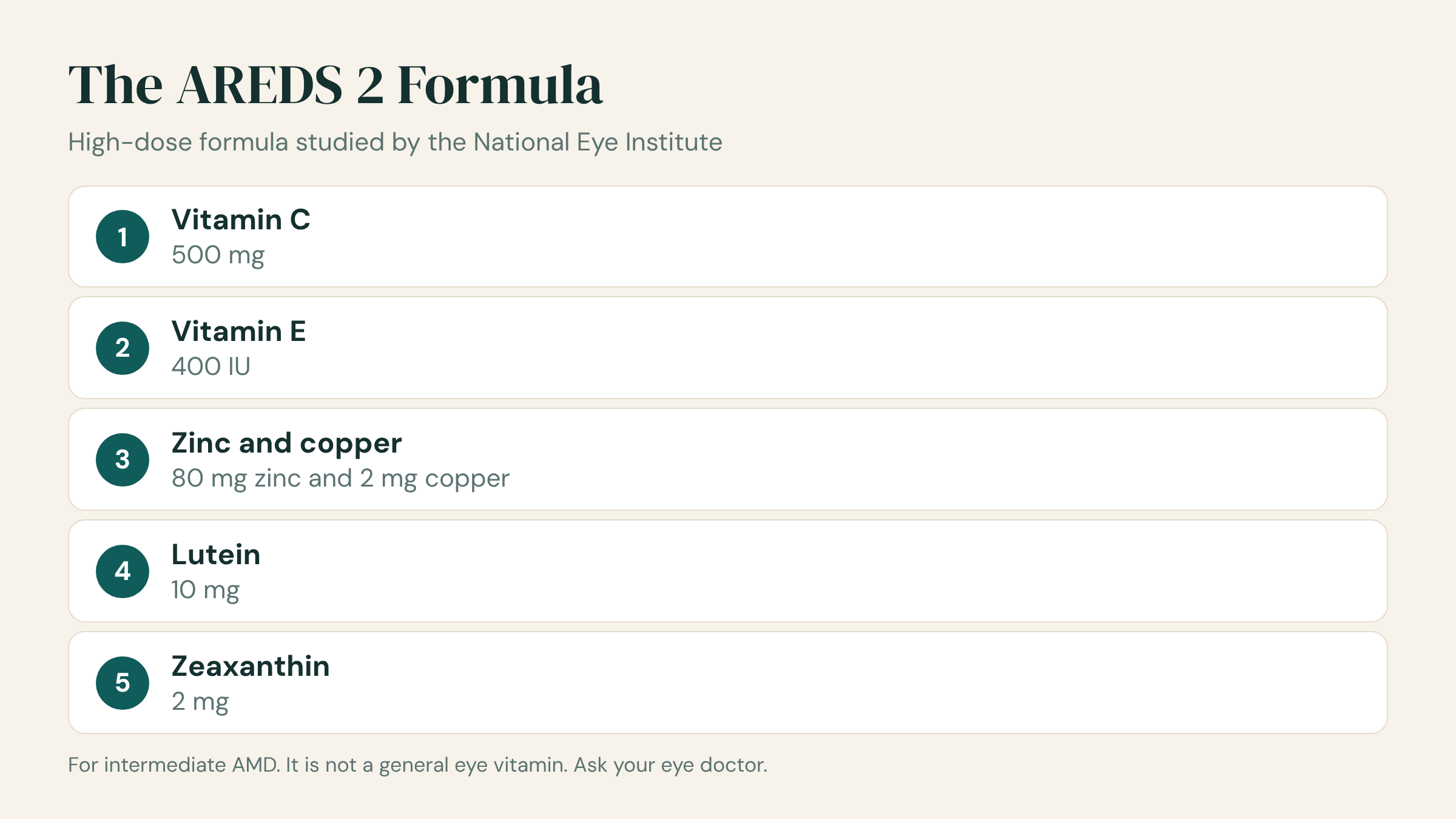
The National Eye Institute studied a special high-dose supplement for AMD. The AREDS 2 formula contains:
The NEI says these supplements may keep intermediate AMD from progressing to late AMD. They may also slow progression in the other eye for someone with late AMD in only one eye.
Who May Benefit?
People with intermediate AMD in one or both eyes are the main group, based on the NEI.
The supplements are not expected to help people with late AMD in both eyes. The NEI also says AREDS 2 supplements cannot prevent early AMD from developing into intermediate AMD.
Mayo Clinic Press adds that people with no disease or early-stage disease saw no benefit. So these formulas are not a general eye vitamin for everyone.
Why Beta-Carotene Was Removed
The older AREDS formula contained beta-carotene, which can raise lung cancer risk in people who smoke or used to smoke. AREDS 2 replaced it with lutein and zeaxanthin. The NEI says smokers should choose AREDS 2.
Safety Considerations
These are large doses. The NEI says they may affect digestion and interact with other medicines, so talk with a doctor first. The zinc amount is far above what most people need, and high doses of vitamin E may not suit everyone.
Do not start a high-dose eye formula just because you are getting older. Get an eye exam first, so you know whether you have AMD and what stage it is.
Do You Need a Lutein Supplement?
Most people without AMD should focus on food. Mayo Clinic Press says vitamin and mineral supplements may slow an existing eye disorder but do not appear to prevent eye disease.
The NEI notes that food and regular multivitamins cannot provide the same mix as AREDS 2. That applies to people who have been told they need that formula, not to everyone.
Other Ways to Protect Your Eyes
- Do not smoke: Ask for help if you need support to quit.
- Wear sunglasses: They can also help with glare.
- Eat a varied diet: Aim for colorful fruits and vegetables.
- Stay active: Exercise supports your whole body.
- Manage health conditions: Diabetes and high blood pressure can affect your eyes.
- Get regular eye exams: Many eye diseases show no early symptoms.
Warning Signs to Report
See an eye doctor promptly if you notice:
- Straight lines that look wavy
- A dark or blank spot in your central vision
- Sudden blurred vision
- Trouble recognizing faces
- Many new floaters or flashes of light
How to Read an Eye Supplement Label
Not every product that mentions “AREDS” matches the studied formula. Compare the label with the amounts listed by the NEI, and ask your eye doctor which product suits you. Marketing terms such as “eye support” or “vision formula” do not tell you much.
Common Questions
Can lutein improve my eyesight?
Be doubtful of that promise. Lutein will not replace glasses or reverse vision problems.
Do lutein and zeaxanthin help with screens?
The strongest research is on AMD. Screen comfort is mostly about blinking and taking breaks.
How much lutein should I eat?
There is no need to count it. Having leafy greens and other colorful vegetables often is a sensible goal.
Simple Ways to Eat More Lutein
Adding these pigments to your diet can be easy and cheap. Try stirring a handful of spinach into eggs or soup, adding kale to a stir-fry, or snacking on orange bell pepper slices. Frozen greens are a handy option that keeps well in the freezer.
Eggs with leafy greens make a simple meal that combines two good sources. Mayo Clinic Press also suggests about five servings of colorful fruits and vegetables a day, which gives you other useful nutrients too.
Are lutein supplements safe?
Ask your eye doctor or pharmacist, especially if you take other medicines or supplements. High-dose combination formulas in particular can interact with other medicines, and they are not needed by everyone. Food sources are a safe and simple choice for most people.
Food First
For most people, food is the simplest place to start. Ask an eye doctor before you start a high-dose eye supplement.
The Bottom Line
Lutein and zeaxanthin are natural pigments found in leafy greens and egg yolks. In AREDS 2, a high-dose formula helped people with intermediate AMD, but it is not a general eye vitamin.
Eat your greens, avoid smoking, and get regular eye exams. Ask your eye doctor before taking a high-dose supplement.
Related articles
- Dry Eyes: Common Causes and What May Help
- How Loud Is Too Loud? Protecting Your Hearing
- How Vision Changes With Age
This article is for general information only and is not medical advice. Talk to a healthcare professional about your symptoms, and before starting any supplement, especially if you take medication or have a medical condition.
1 Comment on “Lutein and Zeaxanthin: How They Support Eye Health”