
Gut health is everywhere right now, from kombucha to probiotic sodas. It can be hard to tell what is useful and what is just good marketing.
The basics are simpler and cheaper than most products suggest. Here is what your gut needs, what probiotics can and cannot do, why you may feel bloated, and when to see a doctor.
What Is the Gut Microbiome?
Your digestive tract is home to trillions of tiny organisms, including bacteria. Together, they are called the gut microbiome. They help break down food and interact with your body in many ways.
Researchers are still learning about this area. Many claims go further than the science does, so be careful with products that promise to “fix” your gut.
Fiber: The Foundation of Gut Health
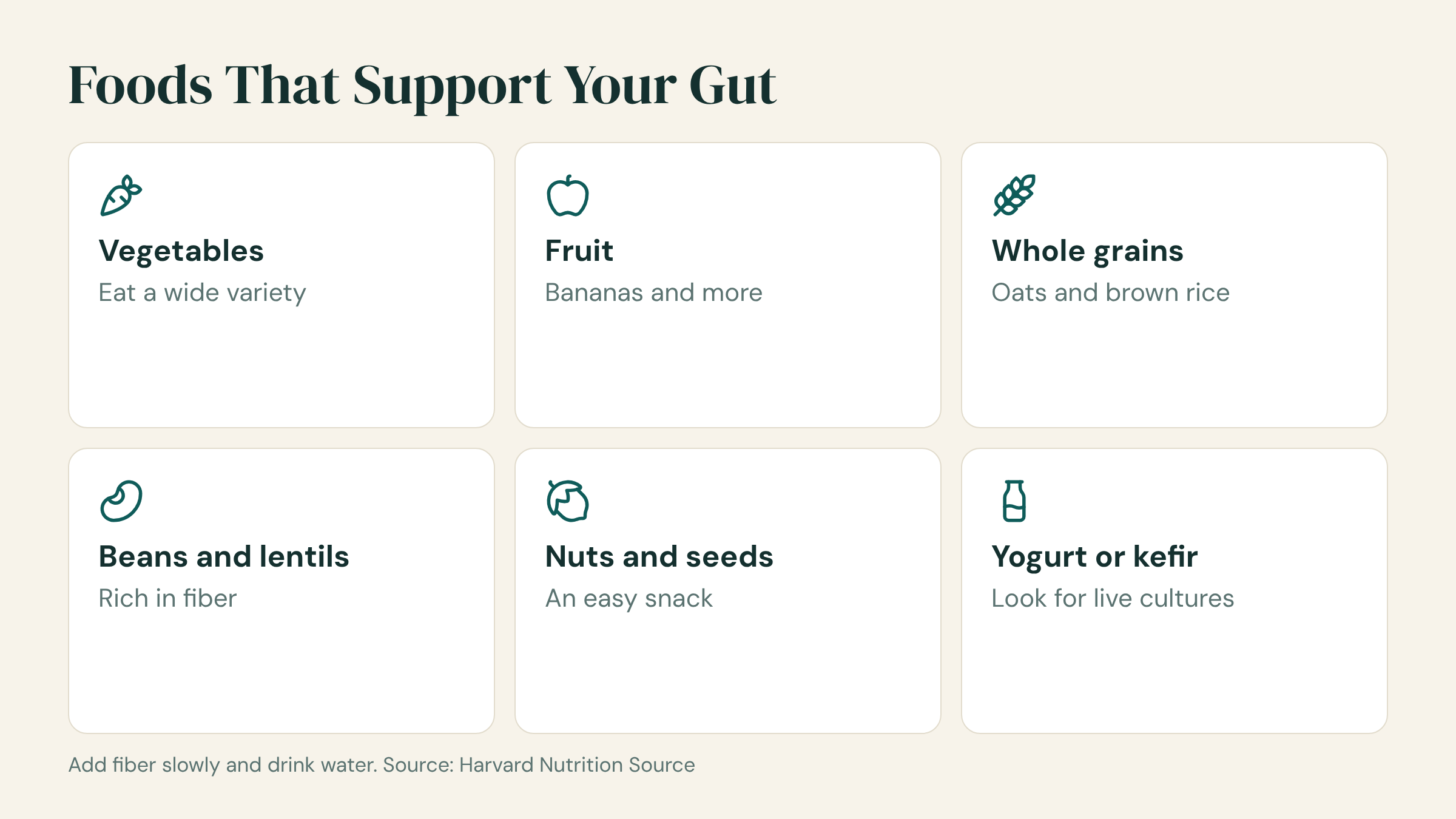
Harvard’s Nutrition Source says a fiber-rich diet of fruits, vegetables, whole grains, beans, nuts, and seeds supports a healthy gut microbiome.
Fiber also keeps you regular and helps you feel full. Add it slowly, and drink water along with it. A sudden jump in fiber can cause gas and bloating.
What Are Prebiotics?
Prebiotics are fibers that feed helpful gut bacteria. Harvard lists inulin as one example, found in onions, garlic, bananas, and chicory root.
You do not need a special product to get them. A varied, plant-rich diet provides plenty.
What Are Probiotics?
Probiotics are live microorganisms that may offer a health benefit when taken in adequate amounts. You can get them from food or supplements.
Fermented Foods
Yogurt, kefir, sauerkraut, kimchi, and tempeh often contain probiotics. Heating and pasteurizing kill them, so sourdough bread and many shop-bought sauerkraut or kimchi products may lack them. Look for “live and active cultures” on the label.
Probiotic Supplements
Harvard says research is mostly low quality and inconsistent about which strains, doses, and durations work. There is limited evidence for some conditions, such as antibiotic-associated diarrhea, irritable bowel syndrome, and constipation.
It concludes that a relatively healthy person is unlikely to benefit from probiotic supplements. Some products contain fewer live bacteria than labeled, or different strains.
Who Should Avoid Probiotic Supplements?
Harvard says people with weakened immune systems, those taking immunosuppressant drugs, and those with severe illness should avoid them. Everyone should talk with a doctor before starting one.
What About Probiotic Sodas?
Prebiotic sodas contain less sugar than regular soda, but Harvard says their health benefit is unproven, and the sugar still adds up. Enjoy them as a treat if you like them, not as a health product.
Common Causes of Bloating
Feeling bloated now and then is common. Possible causes include:
- Eating too quickly or swallowing air
- Large meals
- Fizzy drinks
- Beans, onions, and other gas-producing foods
- Constipation
- Lactose or other food intolerances
- Stress
The American Psychological Association says stress can intensify gut pain and bloating, and can speed up or slow down digestion.
Simple Tips for Bloating
- Eat slowly and chew well
- Try smaller meals
- Take a gentle walk after eating
- Cut back on fizzy drinks
- Increase fiber gradually
- Keep a food diary to spot triggers
Everyday Habits for a Healthy Gut
- Eat a variety of plants: Mix up your fruits, vegetables, grains, and beans.
- Drink enough water: It helps fiber work well.
- Move your body: Regular activity can help keep things moving.
- Sleep well: Aim for a regular routine.
- Manage stress: Your gut and brain are closely connected.
- Use antibiotics only when needed: Take them as prescribed.
When to See a Doctor
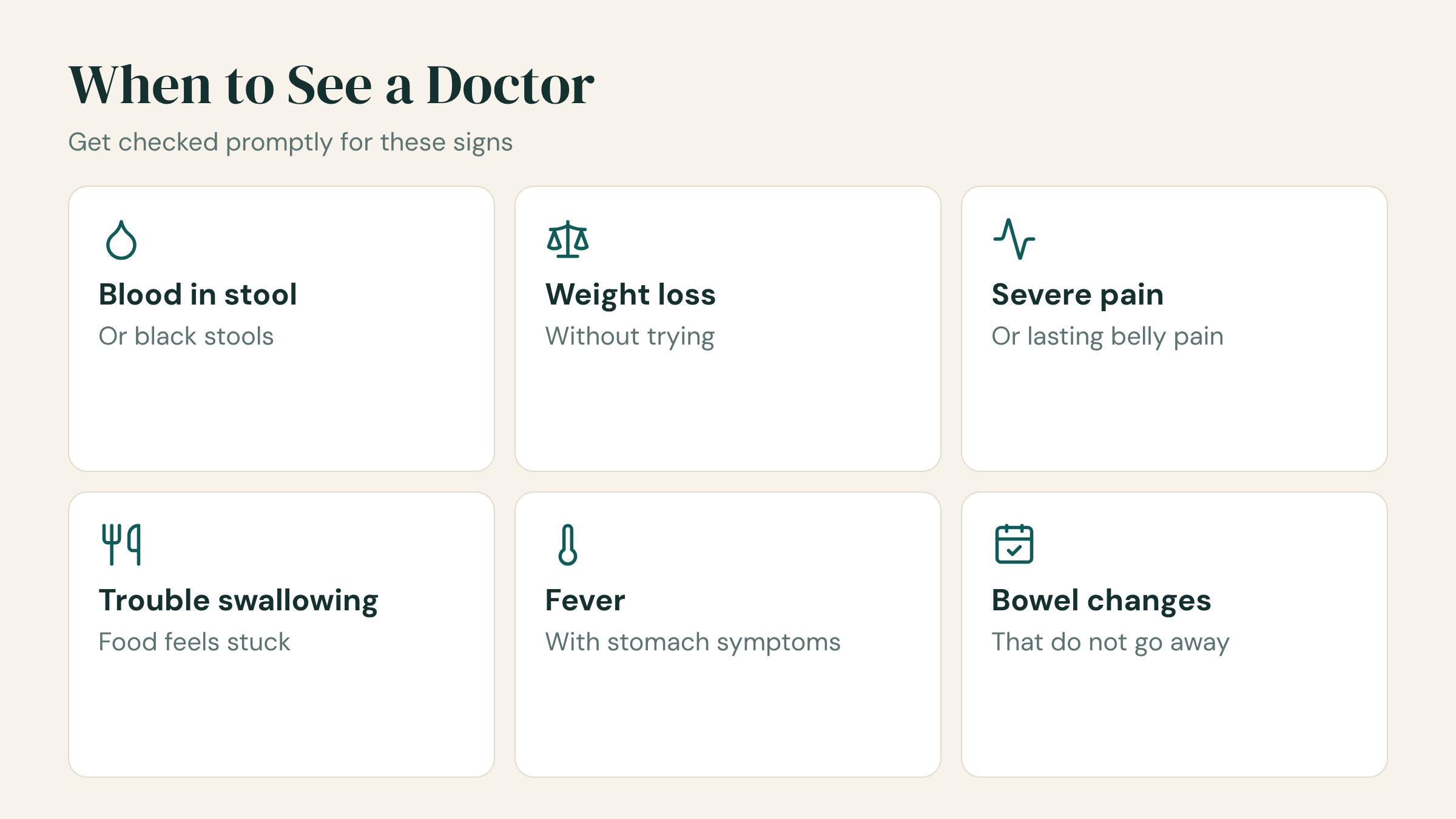
Talk to a doctor if your digestive symptoms are new, lasting, or affecting your daily life. Get checked promptly if you notice:
- Blood in your stool, or black stools
- Unexplained weight loss
- Severe or lasting belly pain
- Trouble swallowing
- Vomiting that does not stop
- A fever along with stomach symptoms
- A lasting change in your bowel habits
These symptoms can have serious causes, so do not try to treat them with supplements. Also ask your doctor about colon cancer screening at the recommended age.
A Simple Gut-Friendly Day
- Breakfast: Oatmeal with banana and nuts
- Lunch: Bean and vegetable soup with whole-grain bread
- Snack: Plain yogurt with live cultures and berries
- Dinner: Grilled fish, brown rice, and vegetables
Common Questions
Do I need a gut test kit?
Home microbiome tests are popular, but they may not give you useful medical answers. Speak with a doctor about your symptoms first.
Are “detox” and “cleanse” products helpful?
Your body does not need them to work properly, and some can cause problems. A fiber-rich diet is a safer choice.
Should I take probiotics with antibiotics?
Evidence is limited, so ask your doctor or pharmacist. They can tell you whether it is safe for you.
How to Add More Fiber Without Discomfort
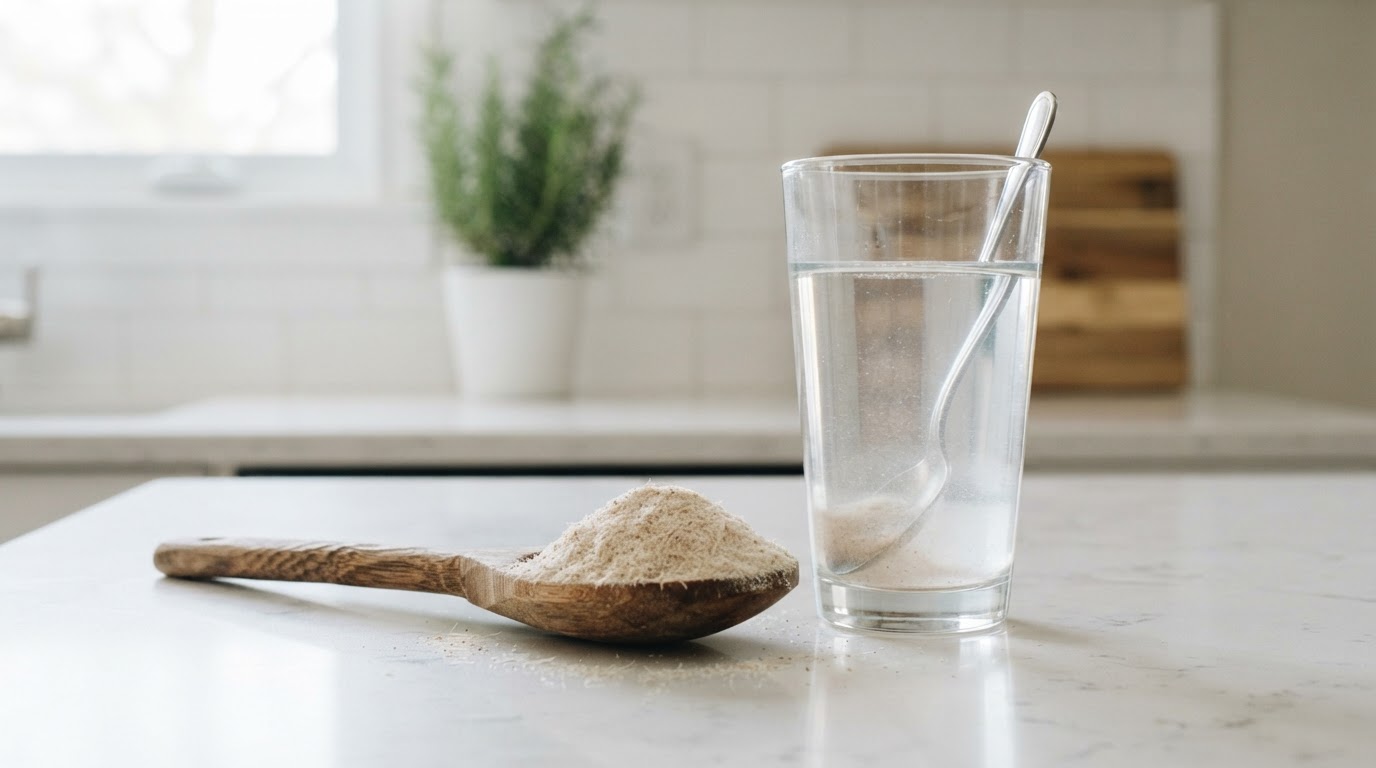
Going from a low-fiber diet to a high-fiber one overnight can leave you gassy and uncomfortable. Make one small change at a time, then give your body a few days to adjust.
- Swap white bread for whole-grain bread
- Add beans to a soup or salad
- Keep the skin on fruit where you can
- Snack on nuts instead of chips
- Have oatmeal for breakfast
Drink water through the day as you add more fiber. If a certain food always causes trouble, note it in a diary and try a different one. People with some digestive conditions may do better with specific advice from a doctor or dietitian.
Start With One Change
You do not need to overhaul your diet. Add one fiber-rich food a day, drink water with it, and see how your body responds before adding more.
The Bottom Line
A healthy gut starts with fiber, a variety of plants, and regular habits. Fermented foods can be a tasty addition, but most healthy people are unlikely to benefit from probiotic supplements.
Occasional bloating is common, but warning signs such as blood in your stool or unexplained weight loss need medical care.
Related articles
This article is for general information only and is not medical advice. Talk to a healthcare professional about your symptoms, and before starting any supplement, especially if you take medication or have a medical condition.
1 Comment on “Gut Health Basics: Fiber, Probiotics, and Bloating”