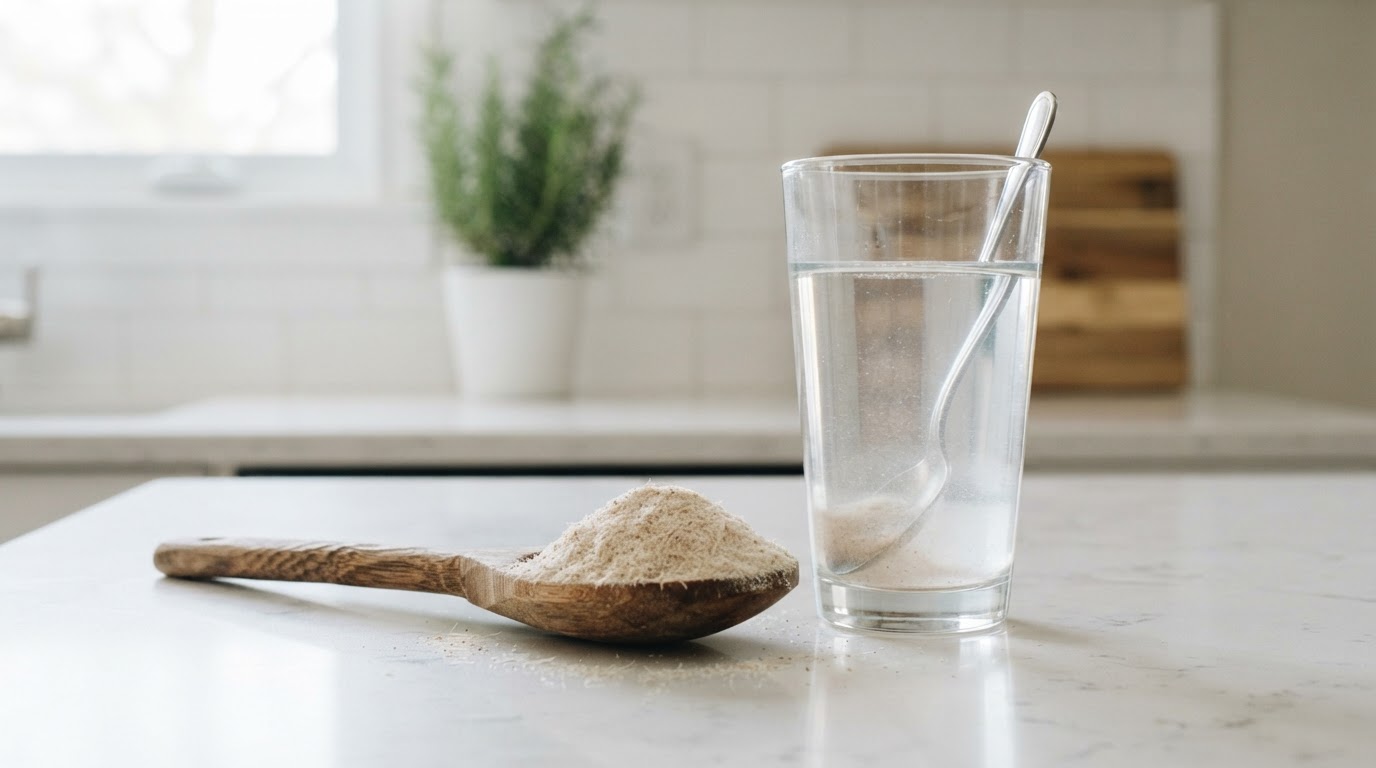
Psyllium husk comes from the seeds of the Plantago ovata plant. It’s the main ingredient in many fiber supplements and one of the best-studied ways to add soluble fiber to your diet. It absorbs water to form a gel, which explains most of its benefits.
Key takeaways: Psyllium Husk
- Psyllium can ease both constipation and loose stools by normalizing stool consistency.
- It can lower LDL cholesterol as part of a heart-healthy diet.
- Always take it with a full glass of water.
- Start with a small dose to limit gas and bloating.
- Take it at least 2 hours apart from medicines.
Benefits of psyllium
- Constipation: softens and bulks up stool, making it easier to pass.
- Diarrhea: absorbs excess water, firming loose stools.
- IBS: soluble fiber like psyllium is recommended for some people with irritable bowel syndrome.
- Cholesterol: the US FDA allows a health claim that 7 g a day of soluble fiber from psyllium husk, as part of a diet low in saturated fat and cholesterol, may reduce the risk of heart disease.
- Blood sugar: taken with meals, it can slow sugar absorption and modestly improve blood sugar in people with type 2 diabetes.
- Fullness: the gel helps you feel full.
How to take psyllium
- Start with about 1 teaspoon (around 3–5 g) once a day.
- Mix it into at least 240 ml (8 oz) of water or another liquid and drink it straight away, before it thickens.
- Drink extra fluid through the day.
- Increase gradually over 1–2 weeks to the dose on the label, often up to 10 g a day or more in divided doses.
- Take it at least 2 hours before or after other medicines.
Side effects and safety
- Gas, bloating and cramping, especially when starting
- Choking or blockage risk if taken without enough liquid. Don’t take it if you have difficulty swallowing or a narrowing of the esophagus or bowel.
- It can reduce absorption of some medicines, including certain diabetes and heart medicines.
- Rare allergic reactions, mostly in people who handle the powder often.
See a doctor before using psyllium if you have a sudden change in bowel habits lasting more than 2 weeks, rectal bleeding, severe abdominal pain or diabetes. For overall gut health, see gut health basics.
Frequently asked questions
Is it safe to take psyllium every day?
For most people, yes, when taken with plenty of water. Food sources of fiber should still be the foundation.
How long does psyllium take to work for constipation?
Usually 12–72 hours.
Related articles
For more detail, see the official guidance from MedlinePlus: Dietary Fiber.
This article is for general information only and is not medical advice. Ask your pharmacist about interactions before taking psyllium with other medicines.