
A thick, yellow toenail is easy to hide inside a sock, so many people ignore it for months. Nail fungus is very common, though, and it rarely goes away by itself.
Most cases are more of a nuisance than a danger, but some people need care sooner. Here is how to spot nail fungus, what causes it, and what your treatment options are.
What Is Nail Fungus?
Nail fungus is an infection of the nail, known medically as onychomycosis. Cleveland Clinic says it is usually caused by dermatophytes, a type of mold that feeds on keratin, the protein in your nails.
It affects about 1 in 10 people overall and about half of people over 70. It is much more common in toenails than fingernails, since feet spend so much time in warm, damp shoes.
Signs of Nail Fungus
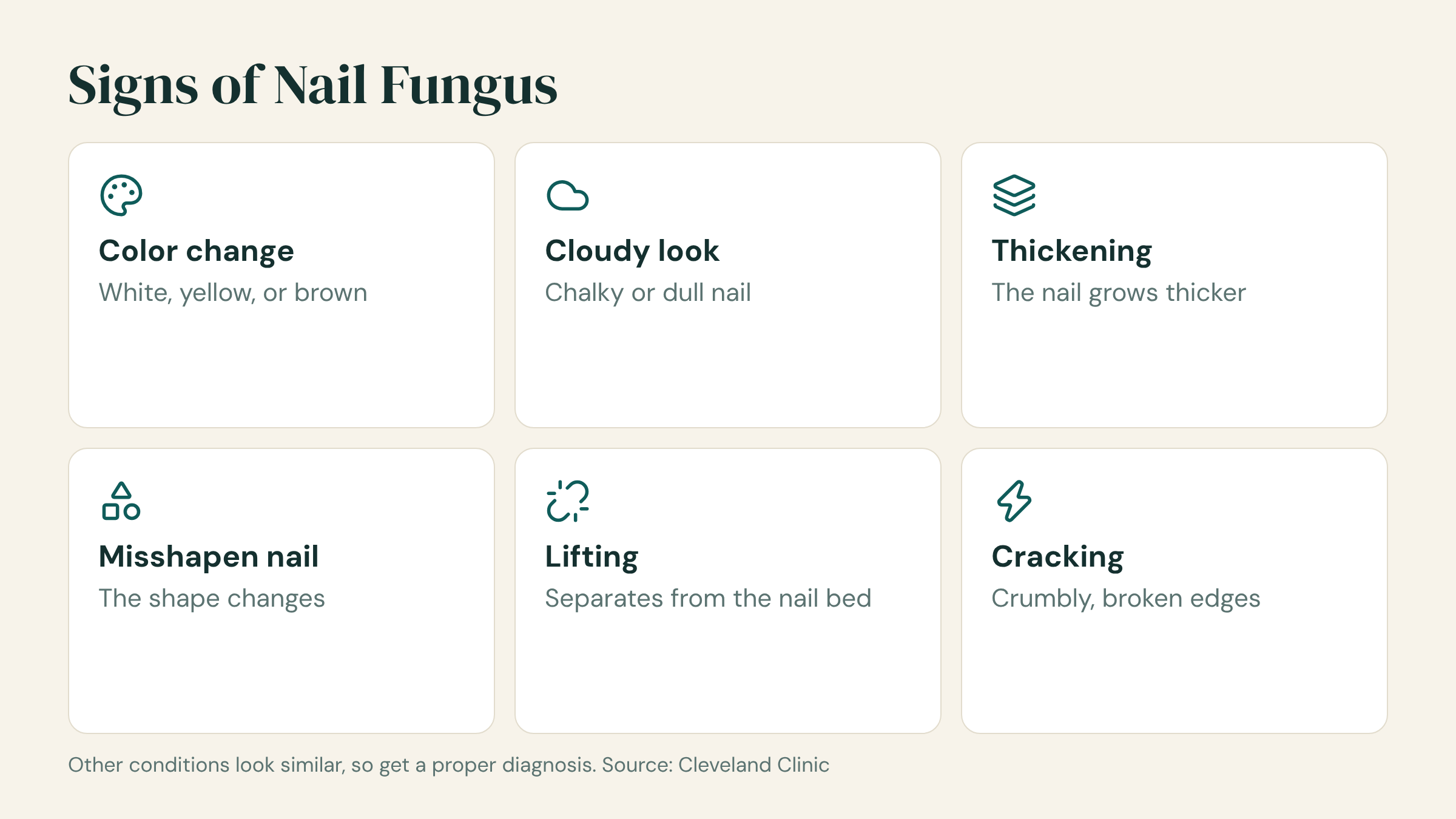
It often starts small, perhaps as a pale spot at the tip of the nail. Over time, you may notice these changes:
- White, yellow, or brown color
- A chalky or cloudy look
- Thickening of the nail
- A misshapen nail
- The nail separating from the nail bed
- Cracking or crumbling edges
It is usually not painful at first. A thick nail can start to hurt if it presses inside your shoe.
Is It Always Fungus?
No. Not every thick or discolored nail has a fungal infection. Cleveland Clinic notes that other issues can cause similar changes, including psoriasis, injury, and other nail conditions.
That is why testing matters. A provider may look at the nail and often confirms the diagnosis by checking a sample under a microscope or growing a culture. Using antifungal treatment on a nail that does not have fungus wastes time and money.
What Causes Nail Fungus?
The fungus usually enters through a tiny crack or cut in your toe. It spreads through direct contact or by touching infected surfaces.
It grows well in warm, moist places such as pool areas, locker rooms, and public showers. It can also spread to other nails, the skin between your toes, your groin, or your scalp.
Who Is at Higher Risk?
Cleveland Clinic lists these risk factors:
- Older age, especially over 60
- Athlete’s foot
- Diabetes
- Excessive sweating
- A nail injury
- Poor circulation
- Psoriasis
- A weakened immune system
How Is Nail Fungus Treated?
Treatment takes patience. It often lasts several months because a healthy nail has to grow out, and the infection can return. Options include:
- Oral antifungal medicines: These are generally the most effective option. Your provider may use blood tests to watch for side effects.
- Topical antifungals: These are applied to the nail and work best when combined with oral medicine.
- Laser treatment: This is not a cure and is not usually a first choice.
- No treatment: Mild cases that cause no problems may not need treatment.
Oral medicines can interact with other drugs, so share your full medicine list with your provider before you start.
Do Home Remedies Work?
You will find many suggestions online, from vinegar soaks to tea tree oil. Strong evidence for these remedies is limited, and the nail is a hard barrier for anything applied to the surface.
If you have diabetes or poor circulation, do not experiment on your feet without medical advice. Small injuries can turn into bigger problems.
What About Nail Polish?
Polish can hide discolored nails, but Cleveland Clinic advises avoiding it while using a topical antifungal, since it traps the moisture that fungi like.
Ask your provider if you want to use it during treatment, and keep your nails clean and dry.
How to Prevent Nail Fungus
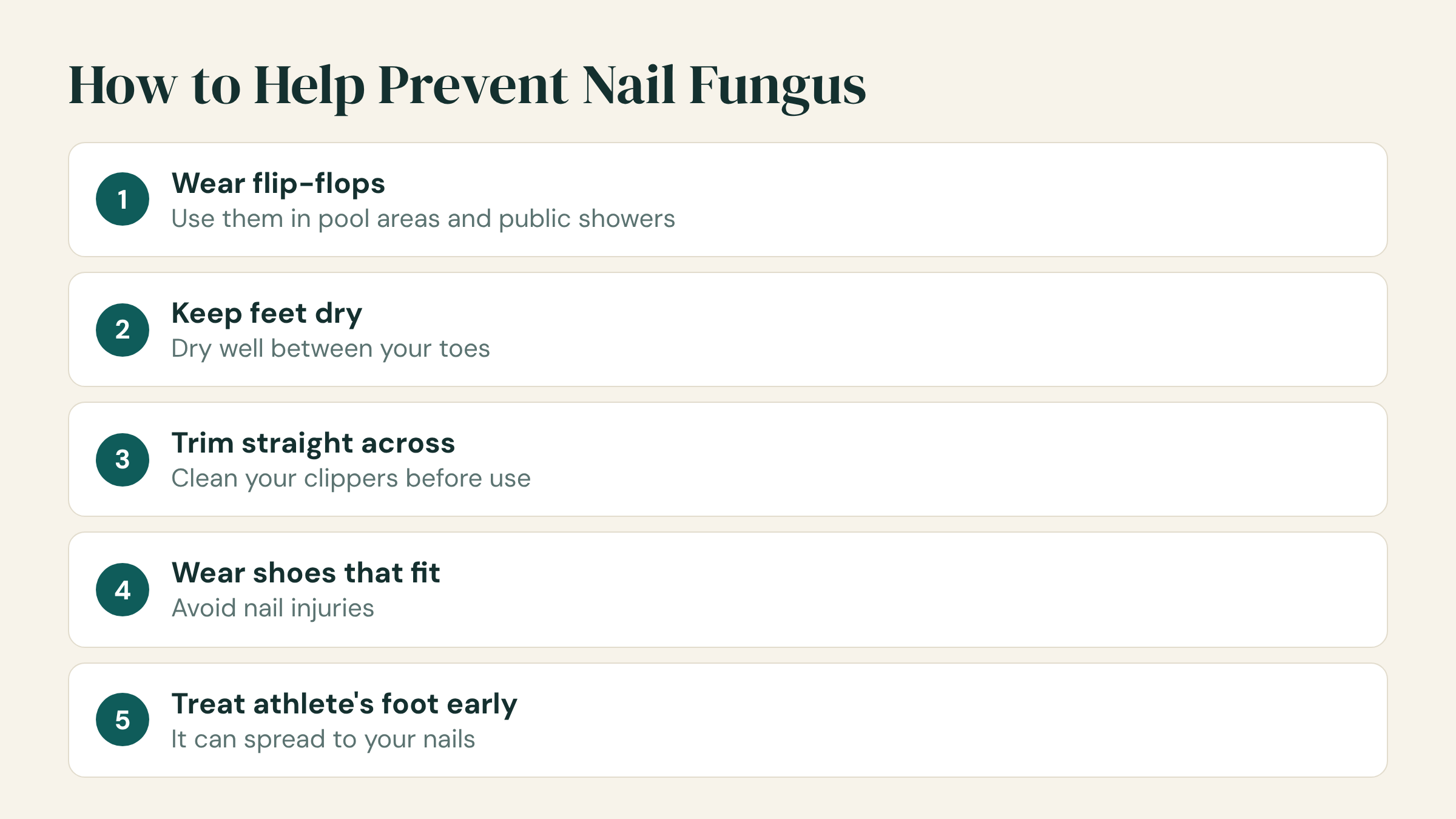
A few habits can lower your risk and help stop it from coming back:
- Wear flip-flops in pool areas, locker rooms, and public showers
- Keep your feet dry, including between your toes
- Trim nails straight across
- Clean your clippers before use
- Avoid nail injuries
- Wear shoes that fit properly
- Treat athlete’s foot early
People with diabetes should follow their foot care guidance closely and check their feet regularly.
When to See a Doctor
See a provider if home care is not enough or if the nail bothers you. Cleveland Clinic says to seek care if you have:
- Diabetes
- Circulation problems
- A weakened immune system
- Redness, pain, or pus near the nail
Rarely, the infection can lead to cellulitis, a skin infection that needs prompt treatment. Spreading redness, warmth, swelling, or fever needs medical care right away.
Also get a dark streak under a nail checked, particularly on a single nail. Brown lines can sometimes be a sign of melanoma.
Common Questions About Nail Fungus
Is nail fungus contagious?
Yes. It can spread through direct contact or infected surfaces, so avoid sharing clippers, towels, and socks.
Will nail fungus go away by itself?
It often does not. Mild cases may not need treatment, but they can slowly get worse, so it is worth asking for advice.
How long until a nail looks normal?
It can take many months, since toenails grow slowly. Your nail may keep looking damaged for a while even when treatment is working.
Can it come back?
Yes. Keeping your feet dry and protecting them in shared wet areas can help lower that risk.
Fingernail Fungus vs. Toenail Fungus
Fingernail fungus is less common than toenail fungus. Your hands get more air and are washed more often, and fingernails also grow faster than toenails.
If a fingernail looks thick, lifted, or discolored, get it checked. Yellow or green nails can also be caused by a bacterial infection, which needs different care.
The Bottom Line
Nail fungus is common and usually starts with a small change in color or thickness. Get a proper diagnosis before you start treatment, because other conditions can look the same.
Treatment takes time, so be patient. See a doctor promptly if you have diabetes, poor circulation, or a weak immune system, and keep your feet clean and dry to help prevent it.
Related articles
- Dry Skin After 50: Causes and Simple Care Tips
- How Sleep and Stress Affect Your Skin
- Vitamin C for Skin: Food, Serum, or Supplement?
This article is for general information only and is not medical advice. Talk to a healthcare professional about your symptoms, and before starting any supplement, especially if you take medication or have a medical condition.



2 Comments on “Nail Fungus: Signs, Causes, and When to See a Doctor”