
Weight loss is full of bold promises, from miracle pills to extreme diets. Many of them work briefly at best, and some can harm your health.
Here is what the evidence says actually works for long-term weight management.
Lasting change is usually less exciting but more reliable. Here is what the evidence supports, why weight-loss supplements often disappoint, and when it is worth getting professional help.
Why Weight Gets Harder to Manage With Age
Your body weight is affected by food, movement, sleep, stress, hormones, medicines, and genetics. It is not just about willpower.
Age plays a part too. Metabolism and muscle can change over time, and Mayo Clinic notes that metabolism slows around menopause, which often leads to weight gain.
What Actually Works
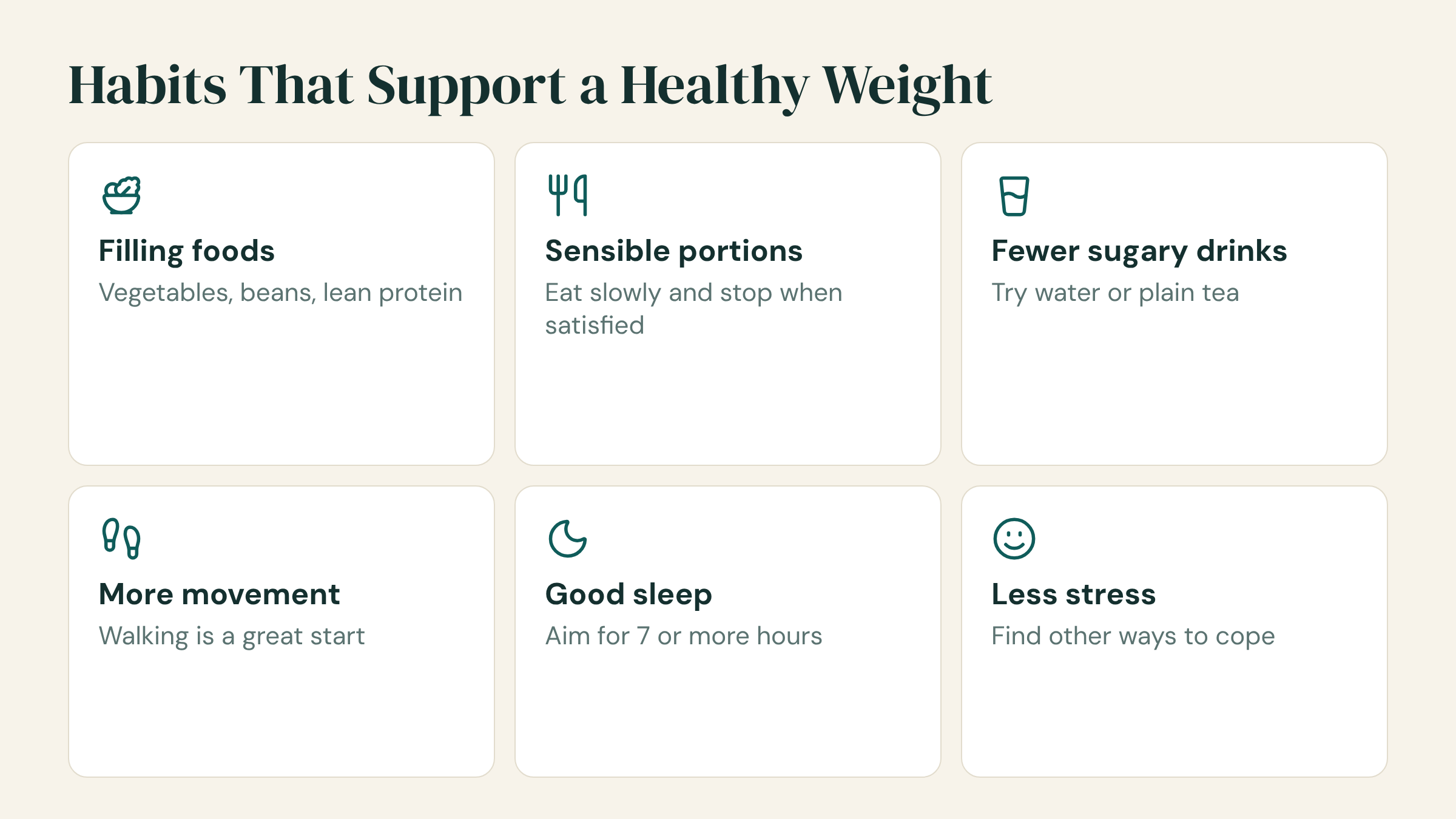
The NIH Office of Dietary Supplements says the most reliable approaches remain eating well, reducing calories, and being physically active.
Choose Filling Foods
Vegetables, fruits, beans, whole grains, and lean proteins can help you feel full. Fiber and protein are especially helpful, because they tend to keep hunger away for longer.
Watch Your Portions
You do not have to give up every food you enjoy. Use a smaller plate, slow down when eating, and stop when you feel satisfied rather than stuffed.
Cut Back on Sugary Drinks
Soda, sweet coffee drinks, and juice can add calories quickly without filling you up. Water, sparkling water, or unsweetened tea are simple swaps.
Move More
Physical activity burns calories and supports your heart, mood, and muscles. Walking is a great starting point. Strength exercises can help you keep muscle as well.
Sleep Well
Poor sleep can make it harder to stick to healthy habits. Mayo Clinic says regularly getting under 7 hours a night is linked with weight gain.
Manage Stress
Stress can change your appetite and lead to eating for comfort. Find other ways to cope, such as a walk, a call with a friend, or slow breathing.
Why Crash Diets Often Fail
Very low-calorie diets may lead to fast weight loss at first, but they are hard to maintain. They can leave you hungry, tired, and short of nutrients. Many people regain the weight.
A slow, steady change is easier to keep up. Pick habits you can imagine still following in a year.
Do Weight-Loss Supplements Work?
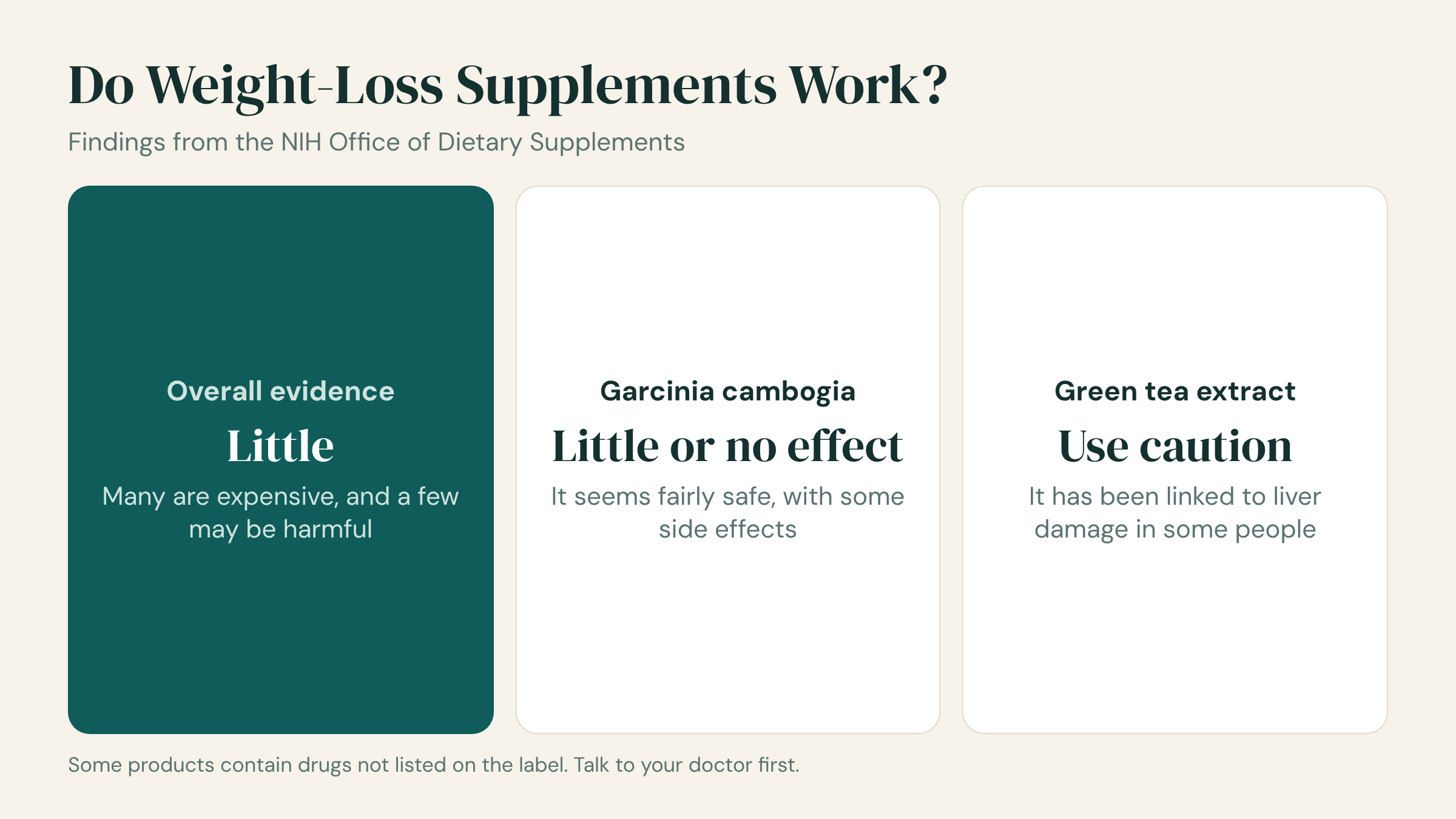
The NIH says there is little scientific evidence that weight-loss supplements work. Many are expensive, some interact with medications, and a few may be harmful.
- Green tea extract: Drinking green tea may produce a small loss, but the extract has been linked to liver damage in some people.
- Caffeine: It may help with a little weight loss, but tolerance builds with regular use.
- Garcinia cambogia: It appears to have little to no effect.
- Chromium: It may produce a very small reduction in weight and body fat.
- Glucomannan: It has little to no effect on weight.
- Guar gum: It probably does not aid weight loss.
Safety Warnings
The NIH warns that some products may contain prescription drugs or controlled substances that are not listed on the label. Bitter orange can raise blood pressure and heart rate, and yohimbe can cause serious heart effects, including death.
Talk with a healthcare provider before using any of these products, especially if you have high blood pressure, diabetes, heart disease, or liver disease.
Be wary of claims such as “melts fat” or “lose weight without diet or exercise.” If it sounds too good to be true, it probably is.
Set Realistic Goals
Instead of focusing only on the scale, set goals you can control:
- Walk for 20 minutes most days
- Add a vegetable to lunch and dinner
- Replace one sugary drink a day with water
- Go to bed at a set time
Weight naturally goes up and down from day to day. Look for the trend over several weeks rather than one number.
Track Your Progress Kindly
Keeping a simple food or activity log can show you patterns. Non-scale wins count too, such as having more energy, sleeping better, or climbing stairs with less effort.
A bad day does not undo your progress. Simply return to your plan at the next meal.
When to Get Medical Help
Talk to a healthcare professional if you have trouble losing weight or gain weight quickly without a clear cause. Thyroid problems, medicines, and other conditions can affect your weight.
A doctor or dietitian can help you build a safe plan, and they can tell you whether prescription medicines or other treatments might be suitable.
If you often feel out of control around food, or you are skipping meals or making yourself sick, please reach out to a professional for support.
Common Questions
Is breakfast necessary for weight loss?
Not for everyone. What matters most is your overall eating pattern. Choose a routine that keeps you satisfied.
Can I target belly fat?
You cannot choose where your body loses fat. Regular activity and healthy eating can help reduce overall body fat.
A Simple One-Week Starter Plan
- Day 1: Write down what you eat and drink, without judging it.
- Day 2: Take a 20-minute walk.
- Day 3: Replace one sugary drink with water.
- Day 4: Add a vegetable to dinner.
- Day 5: Go to bed 30 minutes earlier.
- Day 6: Plan and shop for healthy meals.
- Day 7: Review your week, and pick one habit to keep.
Small steps like these are easier to repeat, and repeating them is what makes the difference.
How fast should I lose weight?
Slow and steady is usually easier to maintain. Ask your doctor or dietitian what pace is safe for you, particularly if you have a health condition or take medication.
The Bottom Line: Weight Management
Healthy weight management comes down to steady habits: filling food, regular movement, good sleep, and stress management. Most weight-loss supplements offer little benefit, and some carry real risks.
Start small, stay patient, and ask a professional for help if you need it.
Related articles
This article is for general information only and is not medical advice. Talk to a healthcare professional about your symptoms, and before starting any supplement, especially if you take medication or have a medical condition.

4 Comments on “Healthy Weight Management: What Actually Works”