Your nails can sometimes offer clues about your health. A change in color, shape, or texture may be harmless, or it may be worth mentioning to your doctor.
Here is what your nails say about your health, and which changes need a doctor’s attention.
It helps to keep this in perspective. Cleveland Clinic says many nail changes are normal, and most signs have several possible causes. Nails cannot diagnose a disease by themselves. Here is what certain changes may mean.
What Do Healthy Nails Look Like?
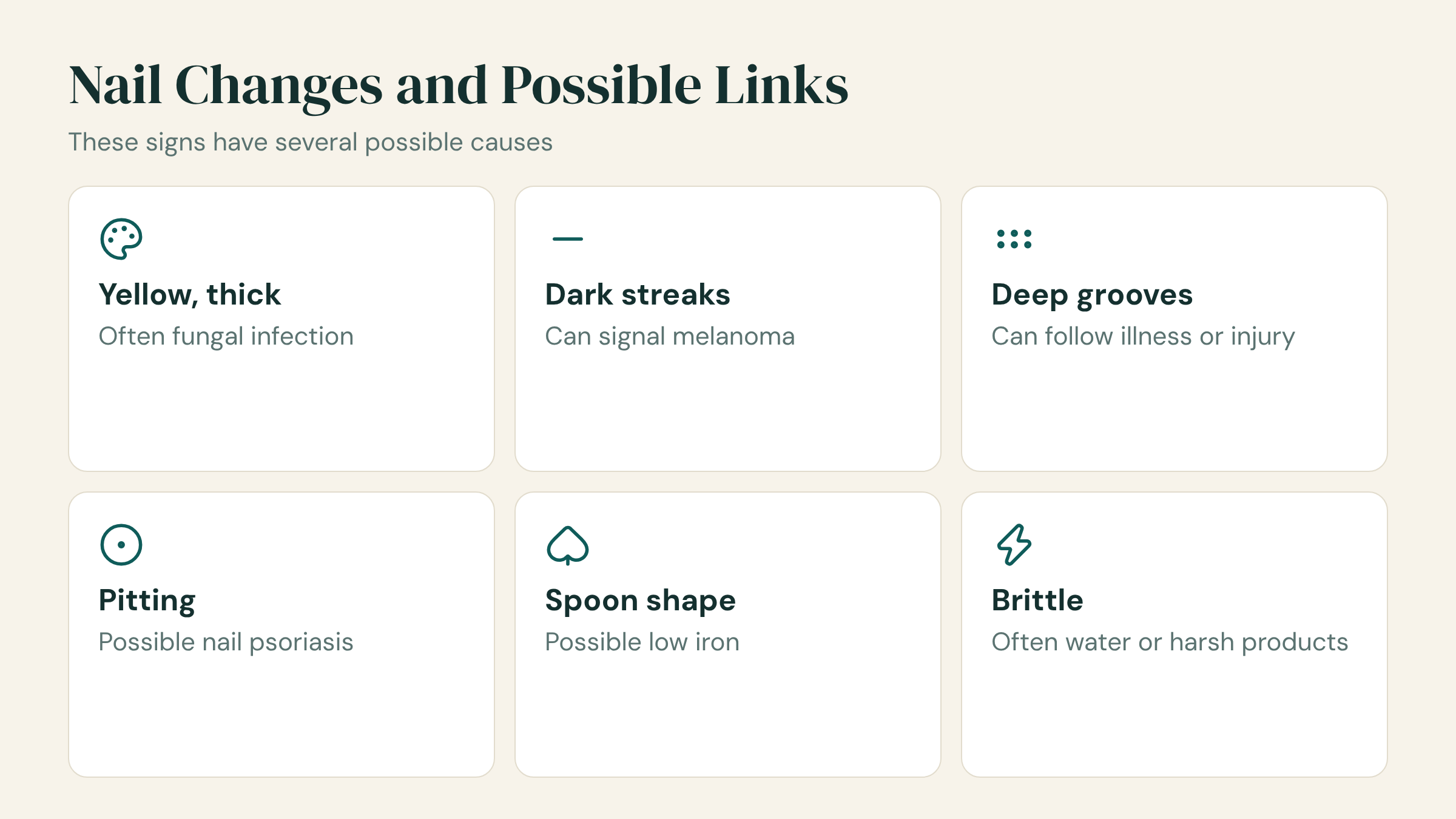
Healthy nails tend to look smooth, with an even color and no spots or dents. Mild ridges can appear with age. Small changes are common, so look for anything new, unusual, or getting worse.
Yellow or Thick Nails
Yellow, thickened toenails often point to a fungal infection. Some antibiotics can also cause a yellow tint.
Rarely, thick, curved, yellow or green nails may be linked to yellow nail syndrome, mostly in people over 50. This condition may be tied to circulation or lung problems.
White Spots
Cleveland Clinic says cloudy white spots are generally not a concern. They are a common harmless finding, and they usually grow out with the nail.
A very common myth says they mean low calcium, but that is not a reliable sign.
Dark Lines or Brown Streaks
This is the change you should not ignore. Brown lines under a nail may be a harmless mole or pigment change, but lines running into the cuticle can signal melanoma, a serious skin cancer.
Pigment changes are more common in African American and Asian people, and these usually affect several nails. Brown color affecting a single nail should be checked soon, especially if it is new or widening.
A dark spot after an injury is often a bruise. If it moves outward as your nail grows, that is reassuring.
Horizontal Lines and Grooves
Deep side-to-side lines are known as Beau’s lines. They can appear with psoriasis or kidney disease, and other horizontal lines may be related to stress.
Illness, injury, and some treatments can also interrupt nail growth, which leaves a groove that moves up as the nail grows.
Vertical Ridges
Lines that run from base to tip often become more noticeable as you get older. They are usually harmless. If ridges come with color changes or brittleness, an infection could be involved, so get them checked.
Pitted Nails or “Oil Drop” Patches
Small dents, yellow-red patches, nail lifting, or redness near the cuticle can point to nail psoriasis. A dermatologist is the right person to see for this.
Spoon-Shaped Nails
Nails that curve upward like a spoon can be linked to iron-deficiency anemia or kidney disease. A blood test can check your iron levels. Do not take iron supplements without testing first.
Brittle or Splitting Nails
Brittle nails are often caused by water and harsh products, as Mayo Clinic explains. Cleveland Clinic adds that brittle, soft, or splitting nails may sometimes reflect low iron, zinc, or selenium.
Try gloves, moisturizer, and acetone-free remover for about a month. Then speak with a doctor if there is no improvement.
Red Nails or Swollen Skin
Redness, swelling, or pain around a nail may mean a nail infection called paronychia, which often starts when bacteria get in through a cut near the cuticle. See a provider if there is pus or spreading redness.
Small Cysts Near the Nail
Small lumps near the cuticles may occur with arthritis. Cleveland Clinic says these are benign, but a hand surgeon may evaluate them.
Nail Changes From Treatments
Some chemotherapy drugs can cause darkened nails or white bands. Tell your care team about any changes during treatment. They can advise you on how to care for your nails.
Quick Guide to Nail Changes
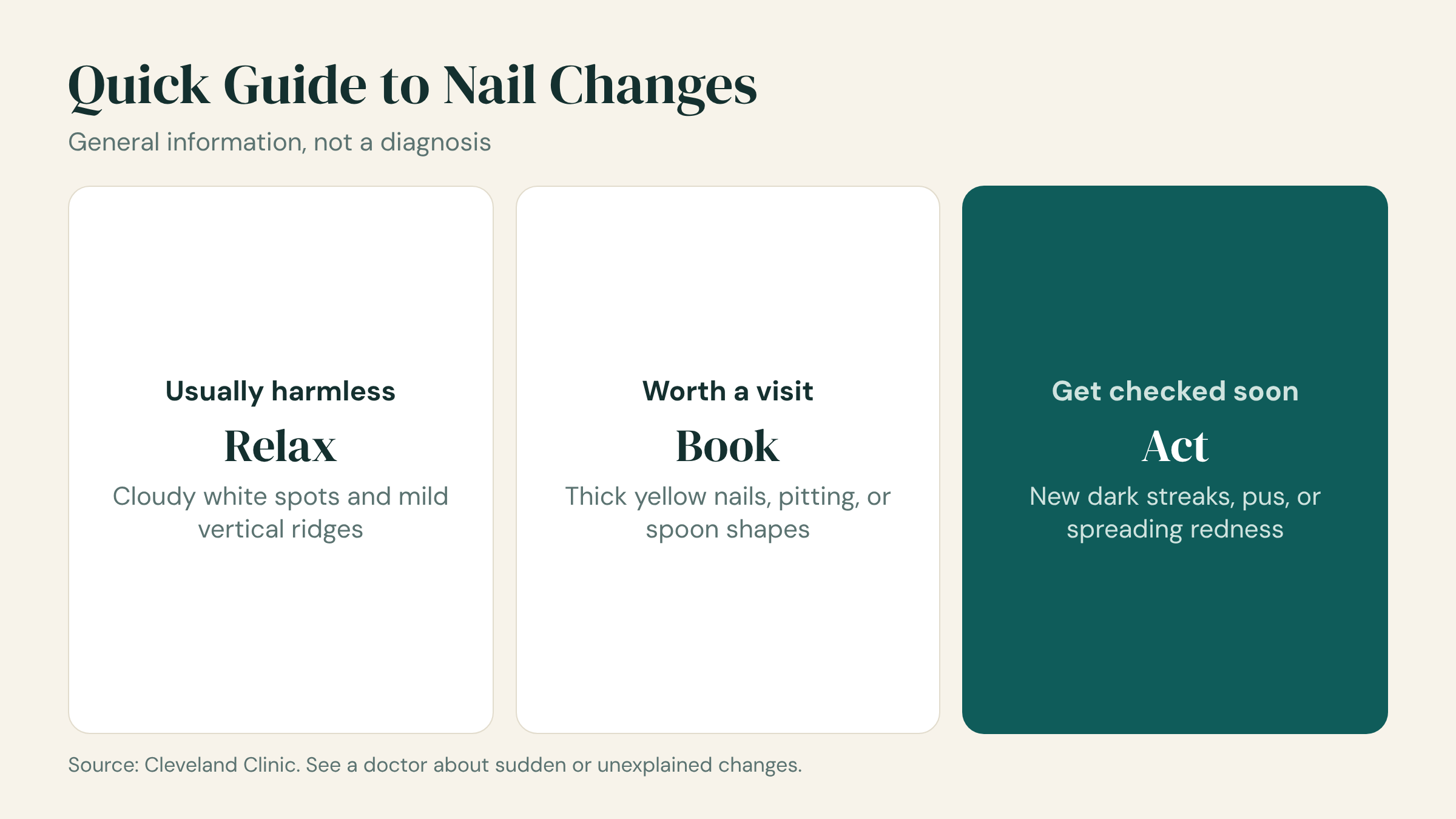
- Usually harmless: Cloudy white spots and mild vertical ridges
- Worth a visit: Thick yellow nails, pitting, spoon shapes, or brittle nails that do not improve
- Get checked soon: New brown or black streaks, pus, or spreading redness
How to Check Your Nails
Take a look at your nails once a month in good light, without polish. Check your toenails as well as your fingernails.
If you notice a change, take a photo with the date. Nails grow slowly, so photos help you and your doctor see what has changed.
Tips for Healthy Nails
- Keep nails clean and dry
- Wear gloves for cleaning
- Moisturize your nails and cuticles
- Avoid biting nails or picking cuticles
- Use licensed salons with sterilized tools
When to See a Doctor
Cleveland Clinic advises seeing a doctor as soon as possible about any change that is sudden, unexplained, or looks abnormal. You should also get checked if nail changes come with other symptoms, such as swelling, fatigue, or breathing problems.
Common Questions
Can nails show heart or lung problems?
Sometimes nail changes appear with these conditions, but nails alone cannot diagnose them. Share any other symptoms with your doctor.
Should I remove polish before a doctor’s visit?
Yes, if you can. Bare nails allow your doctor to see color and shape clearly.
Why Nails Can Reflect Your Health
Your nails are constantly growing from the base. When your body is under strain from illness or a lack of nutrients, that growth can be affected. The change then shows up later as the nail grows out.
This is why a nail problem may appear weeks after the event that caused it. A groove that starts near the cuticle can act as a rough timeline of something that happened to your body.
Do nails change as you get older?
Yes. Nails may grow more slowly and become thicker or more ridged with age. These changes are common, but anything sudden is still worth checking.
The Bottom Line: What Your Nails Say About Your Health
Most nail changes are harmless, but some deserve attention. Dark streaks, sudden changes, and nail problems alongside other symptoms should be checked.
Look at your nails now and then, take a photo of anything new, and ask a doctor when you are unsure.
Related articles
- Dry Skin After 50: Causes and Simple Care Tips
- How Sleep and Stress Affect Your Skin
- Vitamin C for Skin: Food, Serum, or Supplement?
- Nail Fungus: Signs, Causes, and When to See a Doctor
This article is for general information only and is not medical advice. Talk to a healthcare professional about your symptoms, and before starting any supplement, especially if you take medication or have a medical condition.