Hearing loss usually sneaks up on you. Family members may notice before you do, perhaps because the TV is louder or you keep asking people to repeat themselves.
Knowing the early signs of hearing loss helps you get tested and treated sooner.
Because it happens slowly, many people wait years to get help. Spotting the early signs can help you stay connected and safe. Here is what to look for and what to do next.
How Common Is Hearing Loss?
The National Institute on Deafness and Other Communication Disorders says about one in three US adults aged 65 to 74 has hearing loss. Nearly half of adults over 75 have difficulty hearing.
Age-related hearing loss usually affects both ears equally. Because it develops slowly, you may not notice it right away.
Early Signs of Hearing Loss
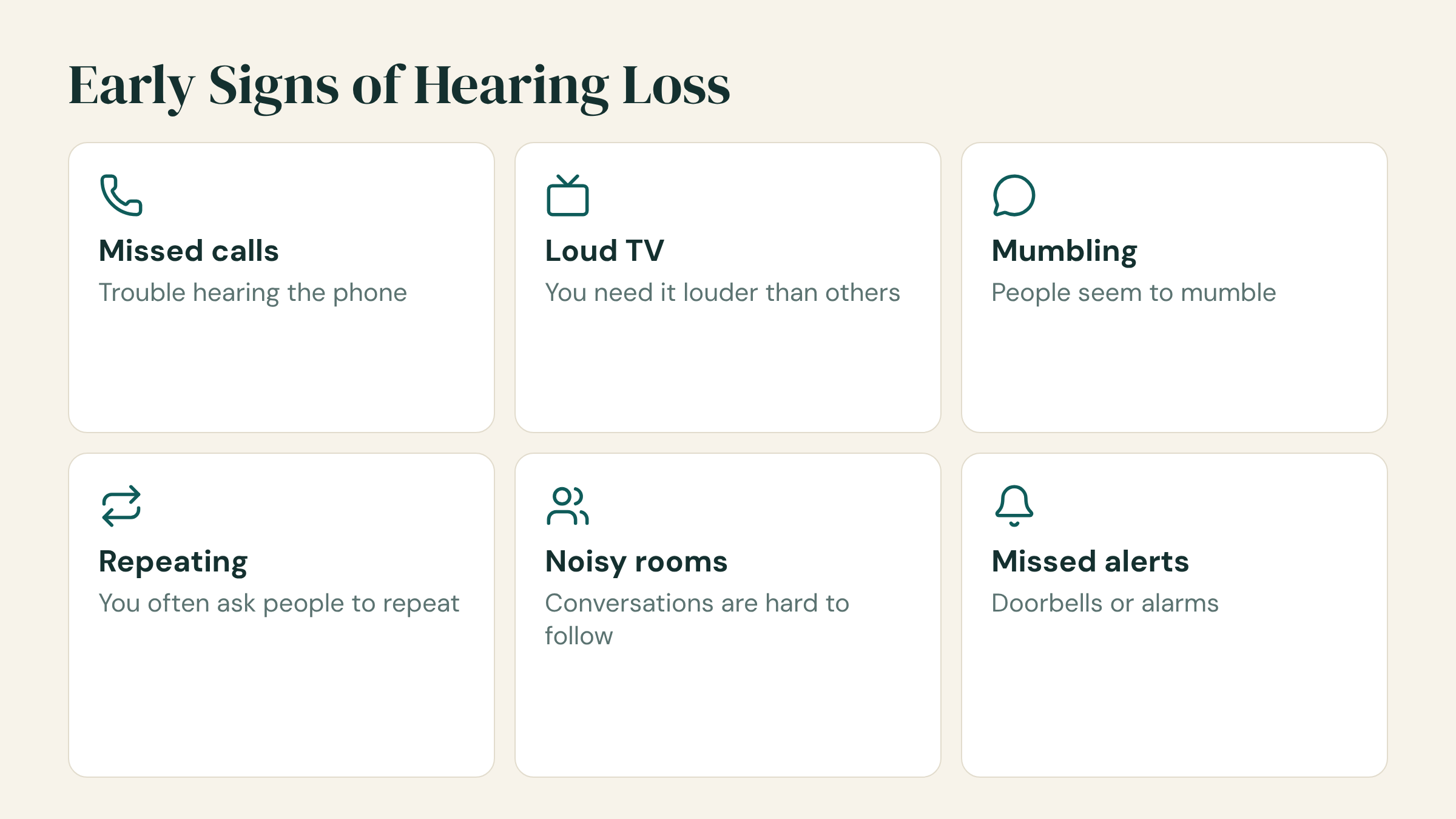
Ask yourself whether any of these sound familiar:
- Trouble hearing the phone or doorbell
- Needing the TV louder than others do
- Thinking that people mumble
- Asking people to repeat themselves
- Difficulty following talk in noisy rooms
- Trouble understanding speech on the phone
- Sounds that seem muffled
- Ringing or buzzing in your ears
- Missing smoke alarms or other warning sounds
The NIDCD says that answering yes to three or more questions on its hearing checklist suggests a possible hearing problem. If several of these apply to you, it is worth getting tested.
Why Hearing Loss Matters
Hearing loss affects more than your ears. It can make it harder to follow a doctor’s instructions or respond to warnings. It can also reduce the joy of chatting with family and friends.
Over time, some people pull back from social activities because conversations feel tiring. This can lead to isolation. Getting help early can keep you involved in life.
What Causes Hearing Loss?
Aging
Most often, age-related hearing loss comes from changes in the inner ear. Less commonly, it comes from changes in the middle ear or the nerve pathways to the brain.
Loud Noise
The NIDCD says long-term noise exposure is often combined with age-related loss. Tiny hair cells in the inner ear can be damaged by loud sounds, and they do not grow back.
Health Conditions
High blood pressure and diabetes can play a part.
Medicines
Some medicines can harm inner ear cells, including some chemotherapy drugs. If you notice changes, ask your doctor. Do not stop a medicine by yourself.
Earwax
Sometimes a simple blockage is to blame. A clinician can check and safely remove it.
Signs That Need Prompt Care
Most hearing loss develops slowly. Some changes need quicker attention:
- Sudden hearing loss, especially in one ear
- Hearing loss with dizziness
- Ear pain, fluid, or bleeding
- Hearing loss after a head injury
- Numbness or weakness in your face, arm, or leg
Get medical help right away for these signs.
Who Can Check Your Hearing?
You can start with your primary care doctor. The NIDCD also lists these options:
- Otolaryngologist: An ear, nose, and throat doctor.
- Audiologist: A hearing testing specialist.
- Hearing aid specialist: A licensed professional who fits hearing aids.
Treatment Options
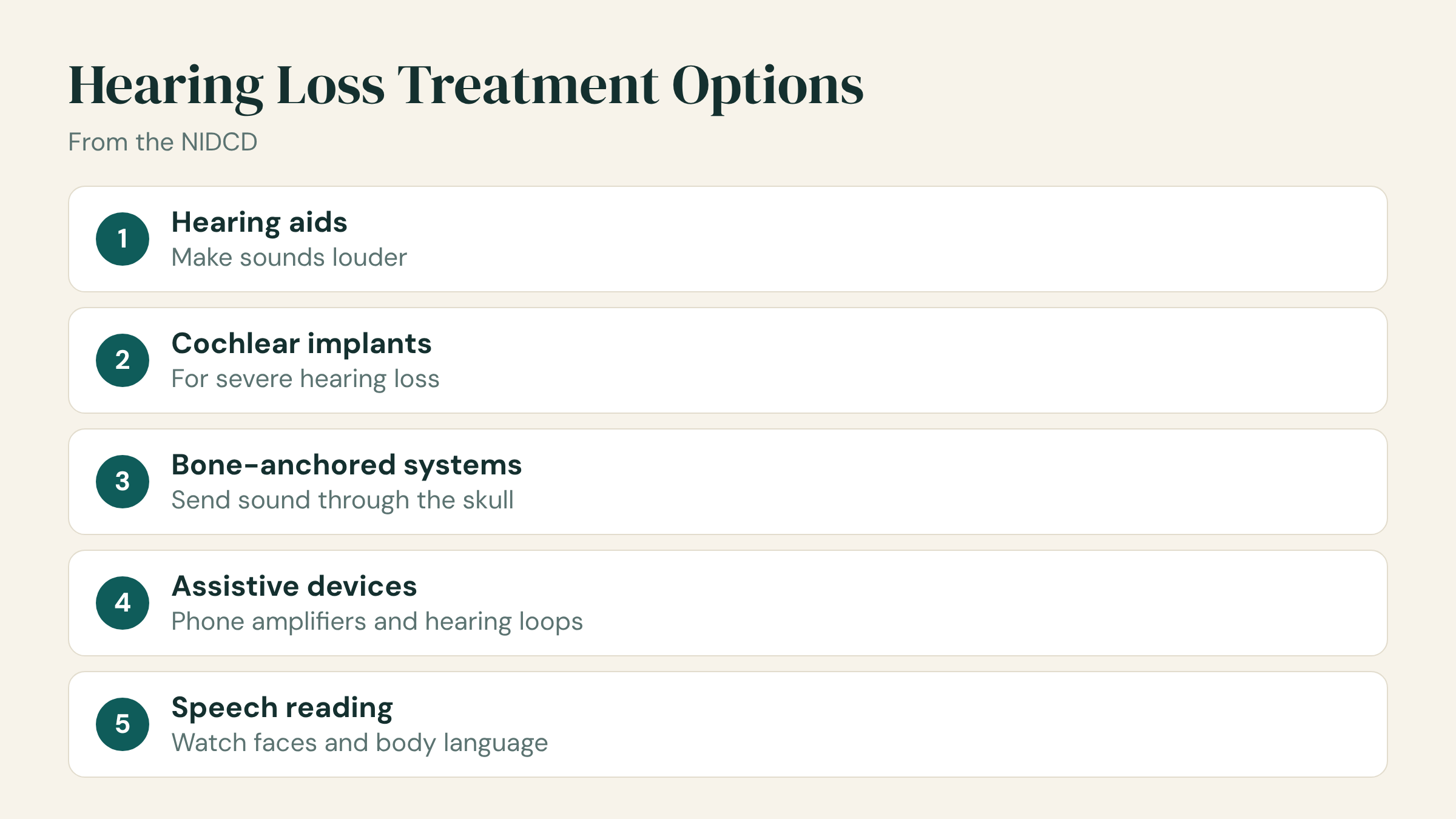
- Hearing aids: These electronic devices make sounds louder. Try more than one model, and use a trial period.
- Cochlear implants: These are surgically implanted devices for severe hearing loss.
- Bone-anchored systems: These send sound through the skull to the inner ear.
- Assistive devices: Phone amplifiers, apps, and hearing loops can help in specific settings.
- Speech reading: Watching a speaker’s face and body language can help.
Insurance coverage varies, and the NIDCD says Medicare does not cover hearing aids for adults, so check your own plan.
Tips for Everyday Conversations
- Tell people that you have trouble hearing
- Face the person you are talking to
- Turn off the TV or move away from noise
- Choose a quiet table at restaurants
- Ask people to speak clearly, not to shout
Telling friends and family helps them support you. Both sides may need time to get used to communicating differently.
How to Protect the Hearing You Have
Scientists do not currently know how to prevent age-related hearing loss, but you can limit noise damage. Avoid loud sounds, shorten your exposure, and use earplugs or earmuffs. Managing blood pressure and diabetes also supports your overall health.
Can Supplements Prevent Hearing Loss?
Be wary of products that promise to restore your hearing. Once hair cells are damaged, they do not regenerate. A hearing test is a better first step than a supplement.
Common Questions
Will hearing aids make my ears lazy?
This is a common worry, but hearing aids are designed to help you hear sounds you are missing. Ask an audiologist any questions you have.
Is one ear worse than the other normal?
Age-related loss usually affects both ears equally. If one ear is clearly worse, get it checked.
Can I take an online hearing test?
Online checks can be a useful first step, but they do not replace a full test.
How to Bring It Up With a Loved One
If you think someone you love has hearing loss, choose a calm, quiet moment. Share specific things you have noticed, such as the TV volume, and offer to go to a hearing test with them. It can take time for people to accept these changes. Being patient and kind usually works better than repeated reminders.
Should I wait until my hearing gets worse?
There is no benefit in waiting. A test gives you a starting point, even if you decide not to use hearing aids yet.
Are over-the-counter hearing aids an option?
They may suit some adults with mild to moderate hearing loss. A hearing test can tell you what level of loss you have, and whether they are a good fit.
The Bottom Line
Hearing loss often starts slowly, with muffled speech, a louder TV, and trouble in noisy rooms. It is common, and help is available.
If you notice these signs, get a hearing test. If your hearing changes suddenly, seek medical care right away.
Related articles
- Dry Eyes: Common Causes and What May Help
- Best Foods for Eye Health
- How Vision Changes With Age
- Can Supplements Help Tinnitus? What the Evidence Says
This article is for general information only and is not medical advice. Talk to a healthcare professional about your symptoms, and before starting any supplement, especially if you take medication or have a medical condition.