
Holding a menu at arm’s length is often the first sign. Then night driving feels harder, or you need brighter light to read. Your eyes change as you get older, just like the rest of your body.
Some vision changes with age are normal, while others need an eye doctor’s attention.
The American Academy of Ophthalmology says that aging affects the eyes, but vision loss is not a normal part of getting older. Here is what is common, what is not, and how to protect your sight.
Trouble Seeing Up Close
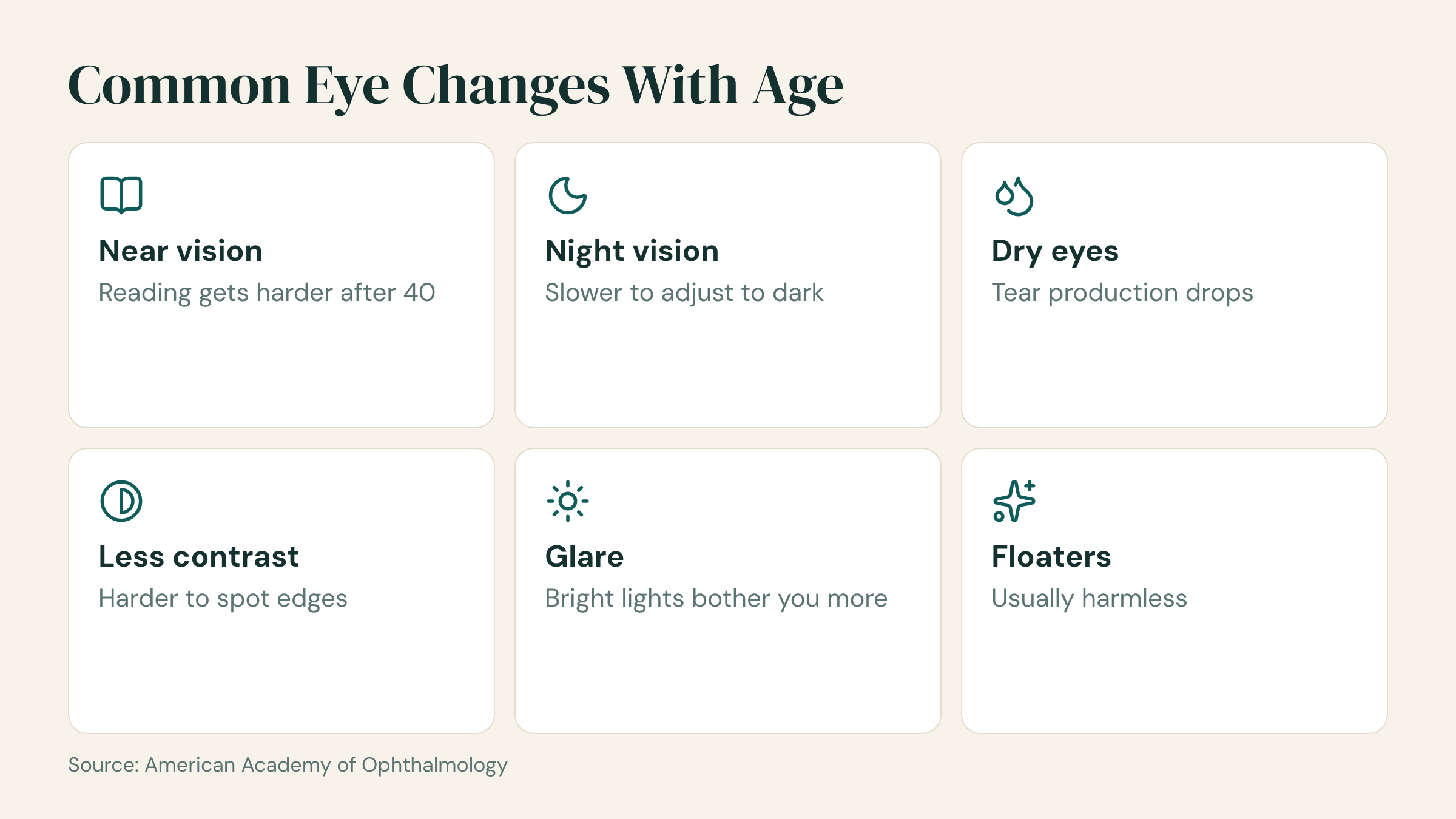
Presbyopia usually begins after age 40. It makes close-up tasks such as reading harder. Reading glasses are the most common fix. Contact lenses, refractive surgery, and daily prescription eye drops are other options.
Weaker Night Vision
Rod cells in the eye, which help you see in low light, weaken with age. Your eyes take longer to adjust to darkness, and night driving gets harder. Be extra careful, and ask your eye doctor if night driving worries you.
Dry Eyes
Tear production drops as you age, and dry eye is especially common after menopause. Your eyes may feel gritty, burn, or even water more than usual. Lubricant drops often help.
Less Contrast
It can become harder to tell objects from similar-colored backgrounds, such as a step on a same-colored floor. Better lighting and contrasting colors at home can help you stay safe.
More Glare
Bright lights can bother you more. Sunglasses, a wide-brimmed hat, better lighting, and matte screen filters can all help.
Floaters and Flashes
The gel inside your eye changes with age, which can cause floaters and flashes of light. These are usually harmless. A sudden increase in either should be seen by an ophthalmologist right away, since it can be a sign of a retinal problem.
Eyelid Changes
Blepharitis, an inflammation of the eyelids, becomes more common and can cause redness, swelling, and crusting. Gentle eyelid care may help, and an eye doctor can advise you.
Eye Diseases That Become More Common
Cataracts
A cataract is a clouding of the eye’s lens. Vision may become blurry or faded, and glare can get worse. Surgery can replace the cloudy lens when it starts to affect daily life.
Age-Related Macular Degeneration
AMD affects central vision, which is needed for reading and recognizing faces. The National Eye Institute says AREDS 2 supplements may slow progression for people with intermediate AMD.
Glaucoma
Glaucoma damages the optic nerve. The AAO says it often has no early symptoms, so regular exams matter a great deal.
Diabetic Eye Disease
Diabetes can damage blood vessels in the eye. Managing blood sugar and having regular eye exams can help protect your sight.
Normal Changes vs. Warning Signs
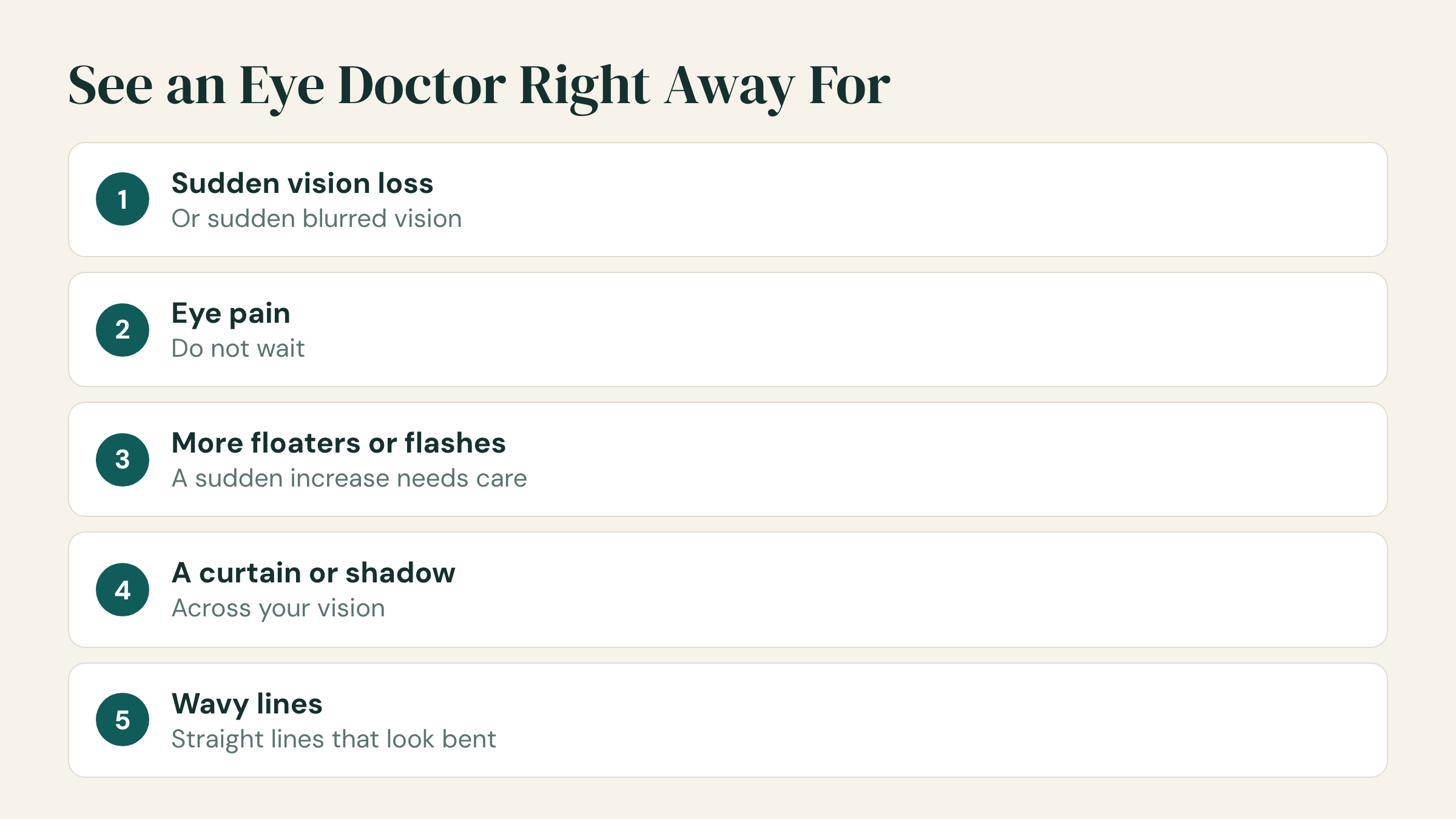
Needing reading glasses or brighter light is common. See an eye doctor right away for any of these:
- Sudden vision loss or blurriness
- Eye pain
- A sudden increase in floaters or flashes
- A curtain or shadow across your vision
- Straight lines that look wavy
- Double vision
If vision changes come with face drooping, arm weakness, or trouble speaking, call emergency services.
How to Protect Your Vision
- Get eye exams: The AAO advises a baseline exam by age 40, and exams every one to two years after 65.
- Do not smoke: Ask for help if you need it.
- Eat well: Choose colorful vegetables, fruits, and fish.
- Exercise: Stay active to support your overall health.
- Manage health conditions: Keep diabetes and blood pressure under control.
- Wear sunglasses: Protect your eyes from bright sun.
- Sleep well: The AAO links poor sleep with some eye diseases.
Prevent Falls and Injuries
The AAO notes that falls can cause eye injuries, and these most often happen at home. Keep rooms well lit, make sure railings are secure, and keep walkways clear. Wear protective eyewear during yard work and home repairs.
What an Eye Exam Can Reveal
Eye exams do more than update your glasses. The AAO says they can reveal health problems such as high blood pressure and high cholesterol. Mention any new symptoms and bring a list of your medicines.
Living Well With Vision Changes
Low vision tools and rehabilitation can help people with vision loss stay independent. Magnifiers, brighter lights, large-print books, and phone settings can all make life easier. Ask your eye doctor about services near you.
Common Questions
Will reading glasses make my eyes weaker?
This is a common myth. Presbyopia develops with age, whether you wear reading glasses or not.
Do carrots improve eyesight?
Carrots are healthy, but they will not sharpen your vision unless you are short of vitamin A.
Can I prevent cataracts?
You cannot prevent all cataracts. Mayo Clinic Press says the link between multivitamins and lower cataract risk comes only from observational studies, so do not rely on supplements. Not smoking and wearing sunglasses are sensible steps.
Help Your Eyes at Home
A few changes can make daily life easier. Use brighter bulbs where you read and cook, and add night lights in hallways and bathrooms. Keep your glasses clean, and keep a spare pair nearby. Marking step edges with contrasting tape can help you see them more clearly. If you use your phone often, make the text larger in your settings.
Is it safe to drive at night with cataracts?
Glare and poor contrast can make night driving risky. Tell your eye doctor if you notice halos or feel unsure on the road. They can check your vision and advise you.
Should I wear sunglasses in winter?
Bright sun and glare can bother your eyes all year, especially near snow. Sunglasses can help you stay comfortable.
Keep Up With Your Appointments
Regular eye exams can pick up changes you may not notice yourself, so keep your appointments even if your vision seems fine.
The Bottom Line: Vision Changes with Age
Reading glasses, slower night vision, and dry eyes are common with age. Vision loss, however, is not a normal part of aging.
Book regular eye exams, protect your overall health, and get help quickly for sudden changes.
Related articles
- How Often Should You Get Your Eyes and Hearing Checked?
- Best Foods for Eye Health
- How Loud Is Too Loud? Protecting Your Hearing
This article is for general information only and is not medical advice. Talk to a healthcare professional about your symptoms, and before starting any supplement, especially if you take medication or have a medical condition.
2 Comments on “How Vision Changes With Age”