You leave a concert and your ears are ringing. By morning, it may be gone, so it is easy to think no harm was done. But noise can damage your hearing without you noticing, and that damage adds up.
So how loud is too loud? Here is how to tell, and how to protect your ears.
The National Institute on Deafness and Other Communication Disorders calls noise-induced hearing loss the only type of hearing loss that is completely preventable. Here is how to know when sound is too loud and how to protect your ears.
How Noise Damages Hearing
Sound travels through your ear canal and makes the eardrum and three tiny bones vibrate. That vibration moves fluid in the inner ear, bending tiny hair cells that send signals to your brain.
Too much noise can damage or kill these hair cells. The NIDCD says human hair cells do not regenerate, so the damage is lasting.
What Is a Safe Sound Level?
Sound is measured in decibels. The NIDCD gives these guidelines:
- Sounds at or below 70 dBA are unlikely to cause hearing loss, even after long exposure.
- Long or repeated exposure at or above 85 dBA can cause hearing loss.
- The louder the sound, the less time it takes to cause damage.
How Loud Are Everyday Sounds?
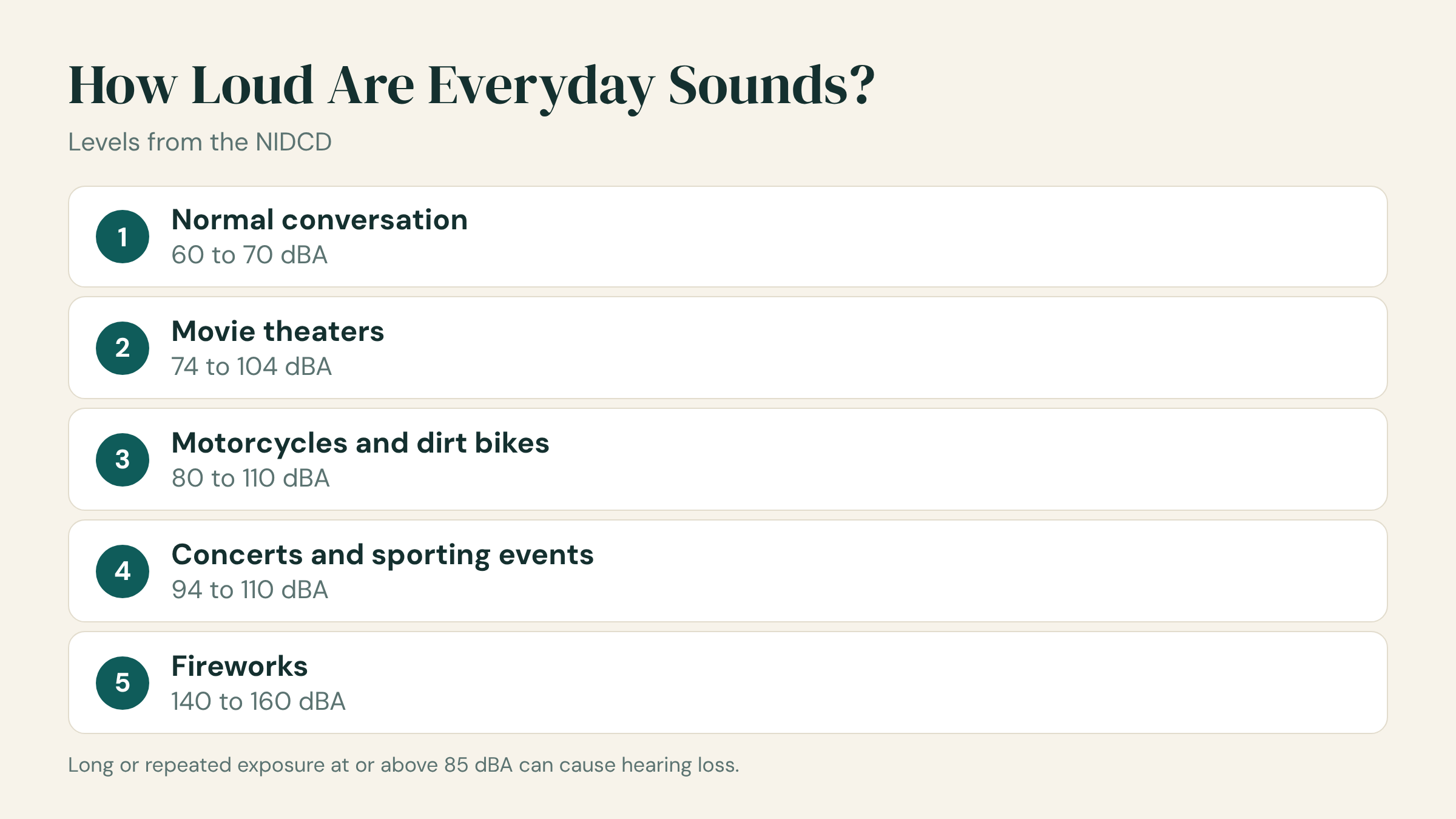
- Normal conversation: 60 to 70 dBA
- Movie theaters: 74 to 104 dBA
- Motorcycles and dirt bikes: 80 to 110 dBA
- Concerts and sporting events: 94 to 110 dBA
- Sirens: 110 to 129 dBA
- Fireworks: 140 to 160 dBA
Distance and time also matter. A sound can be too loud, too close, or last too long.
Signs a Sound Is Too Loud
- You must raise your voice to be heard
- Your ears hurt
- You have ringing afterward
- Sounds seem muffled once you leave
Temporary hearing loss may fade within 16 to 48 hours, but the NIDCD says there may still be lasting damage.
Signs of Noise-Induced Hearing Loss
This type of hearing loss usually happens gradually. Watch for muffled sounds, trouble understanding speech on the phone or in noisy rooms, and needing to raise the TV volume. Ringing or buzzing, called tinnitus, is another sign.
Sudden, extreme sounds such as gunshots or explosions can rupture the eardrum or damage the middle ear bones, causing immediate and permanent loss.
How to Protect Your Hearing
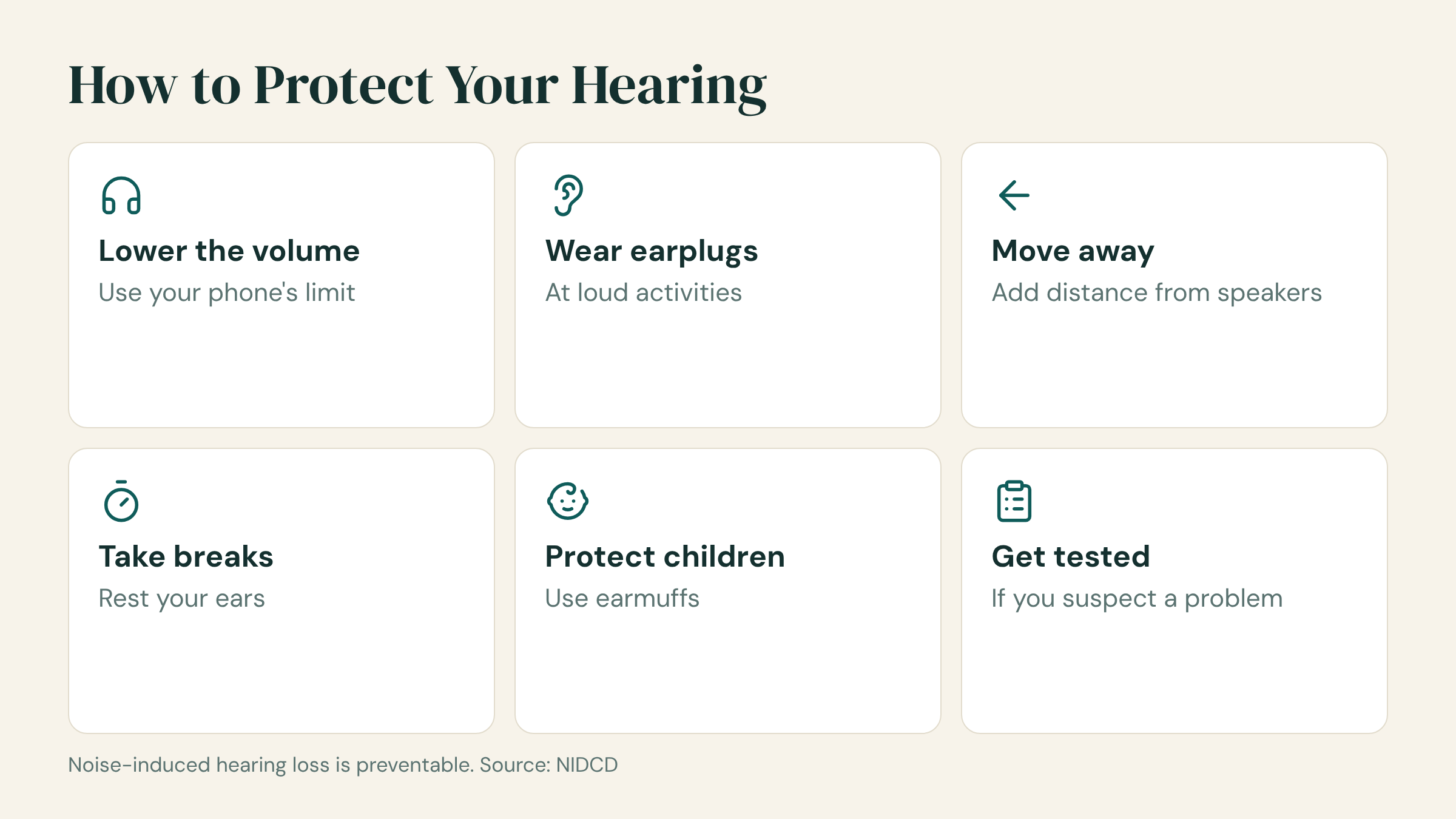
The NIDCD suggests simple steps:
- Know the risks: Learn which sounds are hazardous.
- Wear protection: Use earplugs or earmuffs during loud activities.
- Move away: Put distance between you and loud sounds you cannot reduce.
- Protect children: Young ears need help staying safe.
- Get tested: Check your hearing if you suspect a problem.
Headphone Safety
Headphones and earbuds put sound close to your ear, and it is easy to turn them up on a noisy bus. Try these tips:
- Keep the volume at a comfortable level
- Use your phone’s volume limit or hearing health feature
- Take regular listening breaks
- Consider noise-canceling headphones so you do not need to turn the volume up
- If someone nearby can hear your music, it may be too loud
Protecting Your Hearing at Work
Construction, manufacturing, farming, music, and other jobs can be noisy. If your workplace is loud, ask about hearing protection and hearing checks. Wear protection the entire time you are exposed, since even short gaps add up.
Noise at Home
Lawn mowers, leaf blowers, power tools, and motorcycles can all reach harmful levels. Keep earplugs in your toolbox or garage so they are easy to grab.
Concerts, Sports, and Fireworks
You do not need to skip the fun. Carry earplugs, stand away from speakers, and take breaks in a quieter area. Watch fireworks from a distance, and keep small children well back.
Choosing Hearing Protection
- Foam earplugs: Cheap, easy to carry, and work well when inserted properly.
- Musician’s earplugs: These lower volume while keeping sound clear.
- Earmuffs: Good for tools and for children.
- Custom earplugs: An audiologist can fit these for you.
When to Get a Hearing Test
Get tested if you notice ringing that does not go away, muffled sounds, or trouble following conversations. Seek care quickly for sudden hearing loss, especially in one ear.
If you work around loud noise, ask how often you should be tested.
Common Questions
Can damaged hearing grow back?
No. The NIDCD says human hair cells do not regenerate, which is why prevention is so important.
Are phone sound apps accurate?
They can give you a rough idea of how loud a place is, which is often useful. They are not a medical test.
Are children more at risk?
Children often cannot move away from loud sounds by themselves, so adults need to protect them.
Teach Good Hearing Habits Early
Hearing damage builds up over a lifetime, so good habits are worth starting young. Set a volume limit on children’s devices, and offer earmuffs at loud events. Talk to teenagers about headphones, since they may listen for long periods. Lead by example by wearing your own protection when using a lawn mower or going to a concert. Small steps taken early can help protect hearing for decades.
Is noise at the gym harmful?
Group classes can be very loud. If you must shout to be heard, ask for a lower volume, move away from the speakers, or wear earplugs. The same goes for loud restaurants, bars, and clubs, where a few hours can add up.
Do earplugs make music sound bad?
Foam plugs can muffle sound, but musician’s earplugs are made to keep it clearer.
Teach Children Early
Children can benefit from these habits too. Set volume limits on their devices and use ear protection at loud events.
The Bottom Line: How Loud Is Too Loud?
Long or repeated exposure to sounds at or above 85 dBA can harm your hearing, and that damage cannot be reversed. The good news is that noise-induced hearing loss is preventable.
Keep your volume down, carry earplugs, and move away from loud sounds. Your future self will thank you.
Related articles
- How Often Should You Get Your Eyes and Hearing Checked?
- Dry Eyes: Common Causes and What May Help
- Best Foods for Eye Health
This article is for general information only and is not medical advice. Talk to a healthcare professional about your symptoms, and before starting any supplement, especially if you take medication or have a medical condition.