If your ears ring all day, you will probably search for anything that promises relief. Tinnitus supplements are heavily advertised, often with claims of silencing the ringing for good.
Here is what the evidence says about supplements for tinnitus, and what works better.
Unfortunately, the evidence does not back up most of those promises. Here is what research suggests, why some products may even make things worse, and which options have better support.
Why Tinnitus Is So Hard to Treat
Tinnitus is a symptom, not a single disease. Mayo Clinic says it can be linked to more than 200 health conditions. Since the causes differ so much, one pill is unlikely to work for everyone.
Tinnitus can also change over time and may fade from your attention. This makes it easy to credit a supplement when the change would have happened anyway.
What Mayo Clinic Says About Supplements
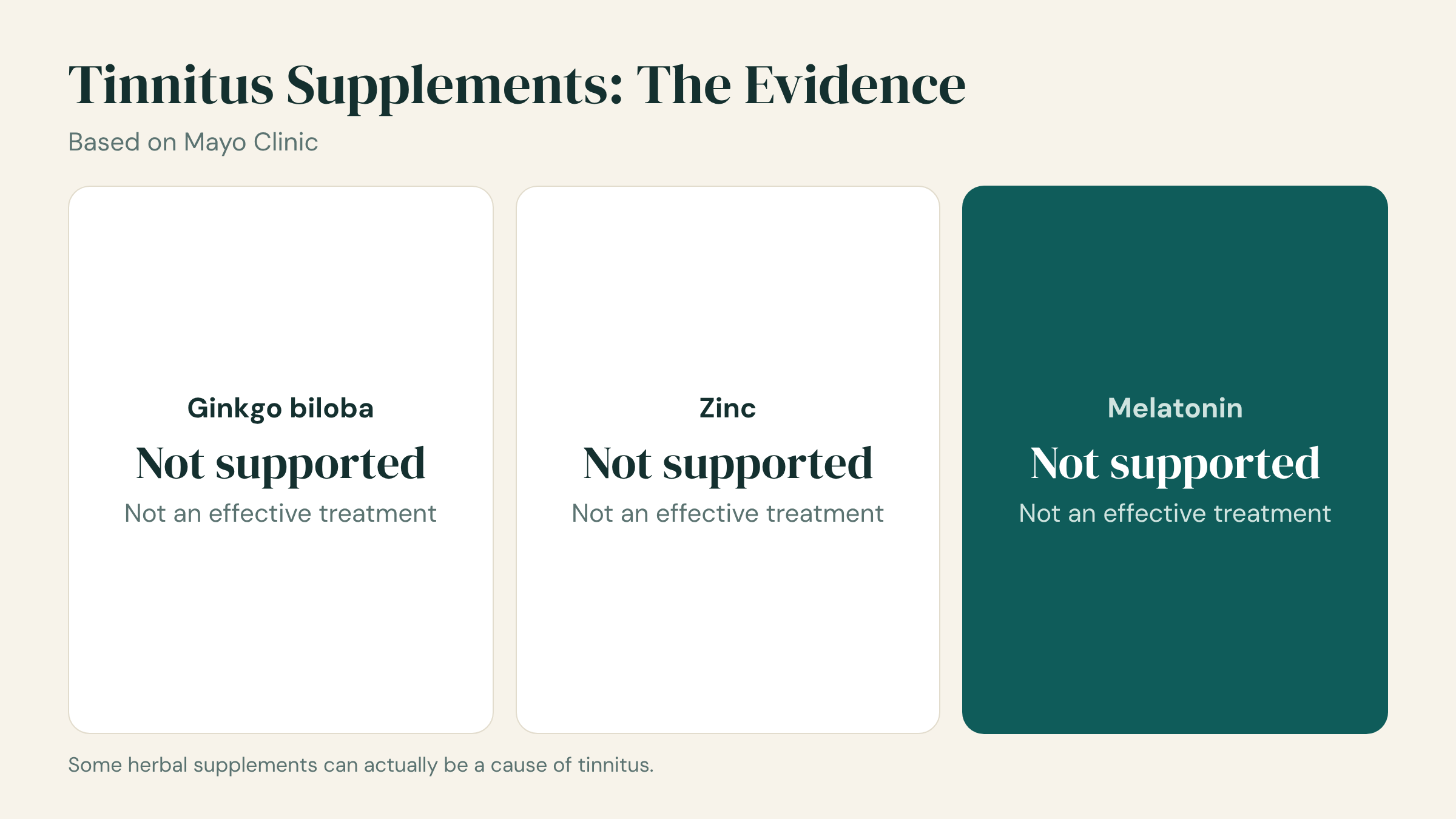
Mayo Clinic says there is little evidence that alternative treatments work. Ginkgo biloba, melatonin, zinc supplements, and acupuncture have been tried, but none is supported as an effective treatment.
Ginkgo Biloba
Ginkgo is probably the best-known tinnitus herb. It is often promoted for circulation. Despite its popularity, it is not supported as an effective tinnitus treatment.
The National Center for Complementary and Integrative Health has a page on its uses and safety. Ginkgo may not suit everyone, especially people taking blood thinners. Ask a doctor or pharmacist before using it.
Zinc
Zinc is an essential mineral, so it is often added to ear formulas. Trying zinc for tinnitus has not been shown to work.
Too much zinc can cause problems of its own. The NIH fact sheet gives more detail on recommended amounts. If you think you may be low, ask your doctor about testing.
Melatonin
Some people with tinnitus sleep poorly, so melatonin may seem like a good idea. It is not supported as a tinnitus treatment. It may help some sleep timing problems, but the NCCIH says it does not appear to improve overall sleep quality.
If poor sleep is your main complaint, a background sound and good sleep habits may be a better place to start.
Vitamins and “Ear Blends”
Many products combine vitamins, herbs, and minerals into a single formula. Blends can be hard to judge, since studies rarely test the exact mix sold in stores.
Testing is also a concern. The FDA does not review supplements for safety and effectiveness before they are sold.
Could a Supplement Make It Worse?
Possibly. Mayo Clinic lists some herbal supplements among the things that can cause tinnitus. Stimulants in some products may also leave you feeling more on edge.
If your ringing started or got worse after beginning a product, tell your doctor and bring the bottle with you.
Red Flags in Tinnitus Marketing
- Claims to cure tinnitus or end ringing permanently
- Promises of results in days
- Stories of a “secret” doctors do not want you to know
- Claims that it repairs hearing damage
- Long videos with no clear ingredient list
- Pressure to buy several bottles right away
The NIDCD says human hair cells in the inner ear do not regenerate, so be doubtful of any product claiming to rebuild them.
What Has Better Support?
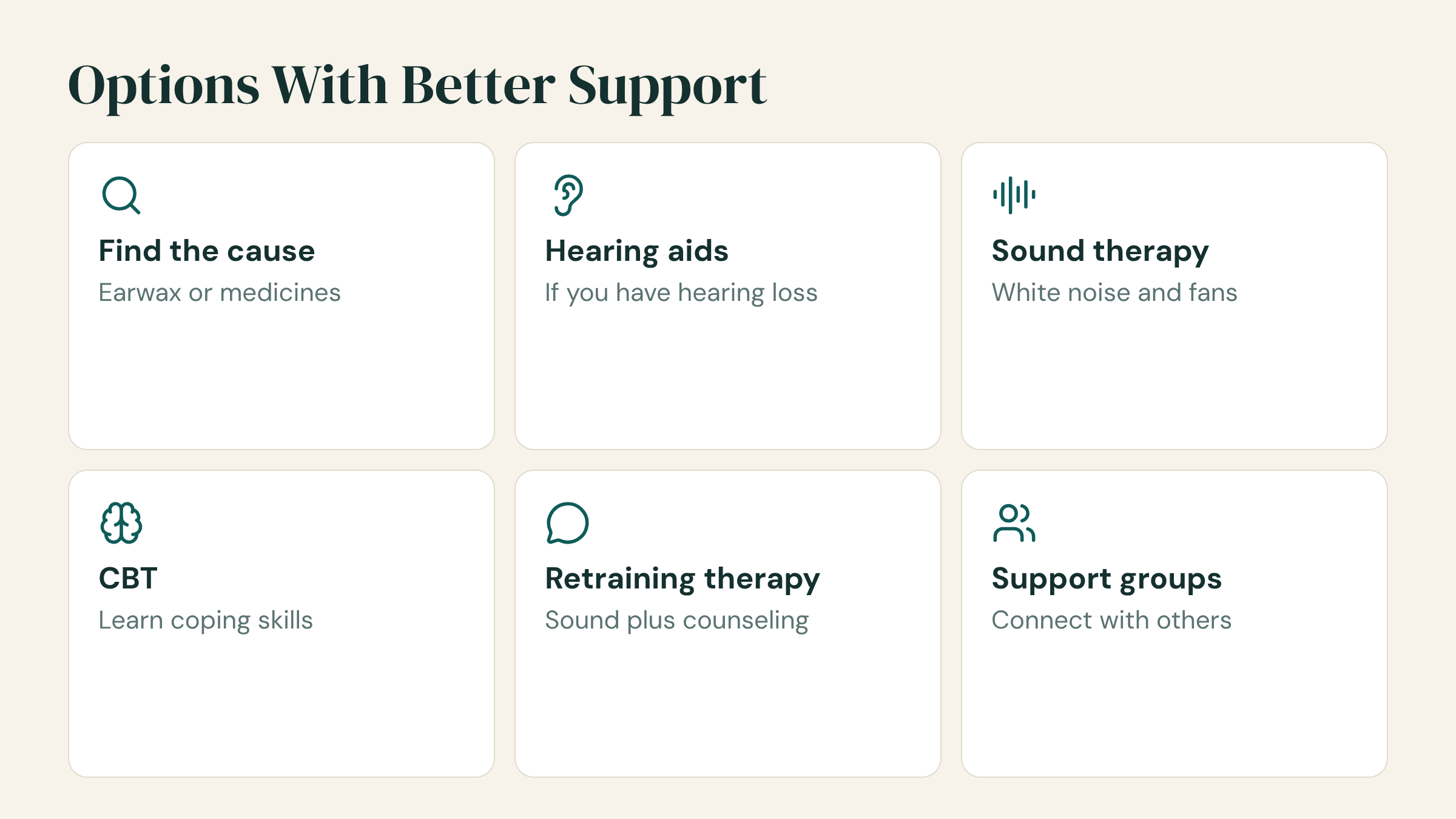
These options may not cure tinnitus, but they can make it easier to live with:
- Find the cause: Earwax removal or a medicine change may help if that is the problem.
- Hearing aids: These may help if you also have hearing loss.
- Sound therapy: White noise, fans, or soft background sounds can mask the ringing.
- Cognitive behavioral therapy: CBT teaches you skills to cope with the sound.
- Tinnitus retraining therapy: This combines sound masking and counseling.
Everyday Ways to Cope
- Protect your ears from loud noise
- Play soft sound at night
- Make time for relaxation
- Stay active
- Keep a regular sleep routine
- Join a support group, if you find it helpful
Before You Try a Supplement
If you still want to try one, these steps can lower your risk:
- Get your ears and hearing checked first
- Show the label to your doctor or pharmacist
- Look for a third-party testing seal
- Choose a single ingredient rather than a blend
- Set a time limit and stop if nothing changes
- Stop right away if you feel unwell or your symptoms worsen
When to See a Doctor
See a doctor if the ringing lasts more than a week after a cold or bothers you. Get care as soon as possible if it comes with sudden hearing loss, dizziness, or numbness or weakness. Get emergency care if it begins after a car accident or sports injury.
If tinnitus is causing anxiety, depression, or poor sleep, ask for help. In the US, you can call or text 988 if you are in crisis.
Common Questions
Why do some people say a supplement helped?
Tinnitus often changes over time, and stress relief or better sleep can make it feel quieter. That makes it hard to tell what really helped.
Is there any cure for tinnitus?
Tinnitus often cannot be cured, but it can usually be managed. Be careful with any product that promises otherwise.
Should I stop my current medicines?
No. Some medicines can be linked to tinnitus, but stopping one on your own can be risky. Talk to your doctor first.
Can diet help tinnitus?
There is no proven tinnitus diet. A balanced diet supports your general health, and managing blood pressure may matter if that is involved.
Can stress make tinnitus feel louder?
Many people notice this. Relaxation will not remove the sound, but it may make it easier to cope.
The Bottom Line: Supplements for Tinnitus
Ginkgo, zinc, and melatonin are not supported as effective tinnitus treatments, and some herbal products may even be a cause.
Start with a medical checkup and a hearing test. Sound therapy, hearing aids, and CBT have better support than most pills, and they will not empty your wallet with bold promises.
Related articles
This article is for general information only and is not medical advice. Talk to a healthcare professional about your symptoms, and before starting any supplement, especially if you take medication or have a medical condition.