Elderberry syrups and gummies have become a familiar sight in the cold and flu aisle. Elderberry is the dark purple fruit of the elder tree, and it has a long history in folk medicine.
The research behind it is limited but not empty. Early studies hint that it may ease some cold and flu symptoms, but those studies are few. There are also real safety points, because parts of the plant can make you sick. Here is a balanced look at what is known.
What Is Elderberry?
Elderberry usually refers to the fruit of the European elder tree, Sambucus nigra. Syrups, lozenges, gummies, capsules, and teas are common forms. People generally take it for colds, flu, and other upper respiratory infections.
What the Research Says
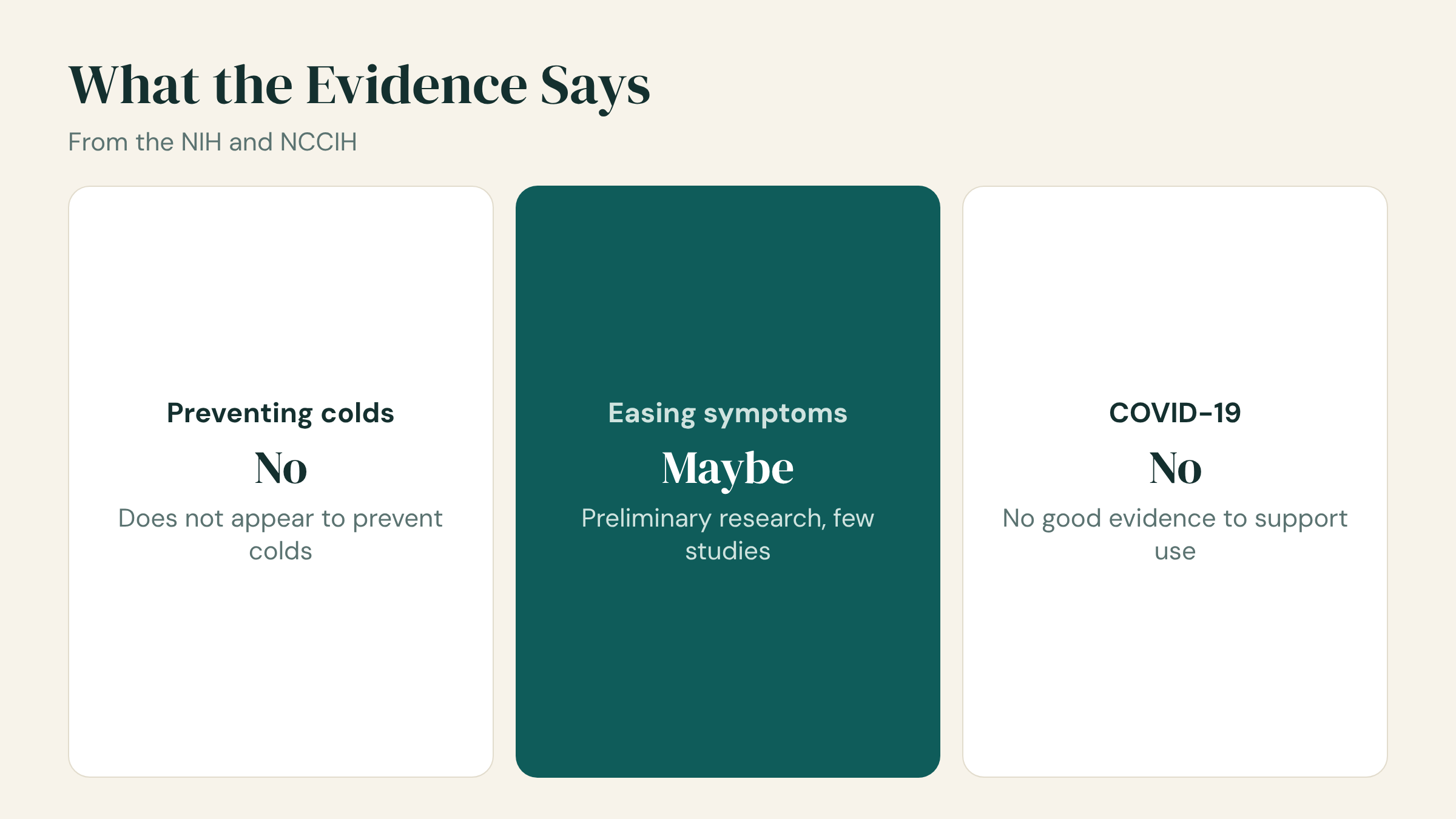
The National Center for Complementary and Integrative Health (NCCIH) says some preliminary research suggests elderberry may ease symptoms of colds, flu, and other upper respiratory infections. It also points out that only a small number of studies have tested it.
The NIH Office of Dietary Supplements gives a similar summary: elderberry does not appear to prevent colds, but it may relieve cold and flu symptoms and speed recovery.
Together, these sources suggest a cautious reading:
- Prevention: Evidence does not suggest it stops you from catching a cold.
- Symptoms: It may help, but the evidence is preliminary.
- Serious illness: Elderberry has not been shown to replace medical care or antiviral treatment.
Small studies are a useful starting point, but they can overstate effects. Different products and doses have also been used, so a study on one extract may not apply to the syrup on your shelf.
Elderberry and COVID-19
Elderberry has been promoted for COVID-19, but NCCIH says there is no good evidence to support this use. It should not be relied on to prevent or treat COVID-19. NCCIH also notes that the FDA and the Federal Trade Commission have acted against companies making unsupported COVID-19 claims about elderberry products. Be wary of any product making similar promises.
Safety: Why Raw Elderberries Are a Concern
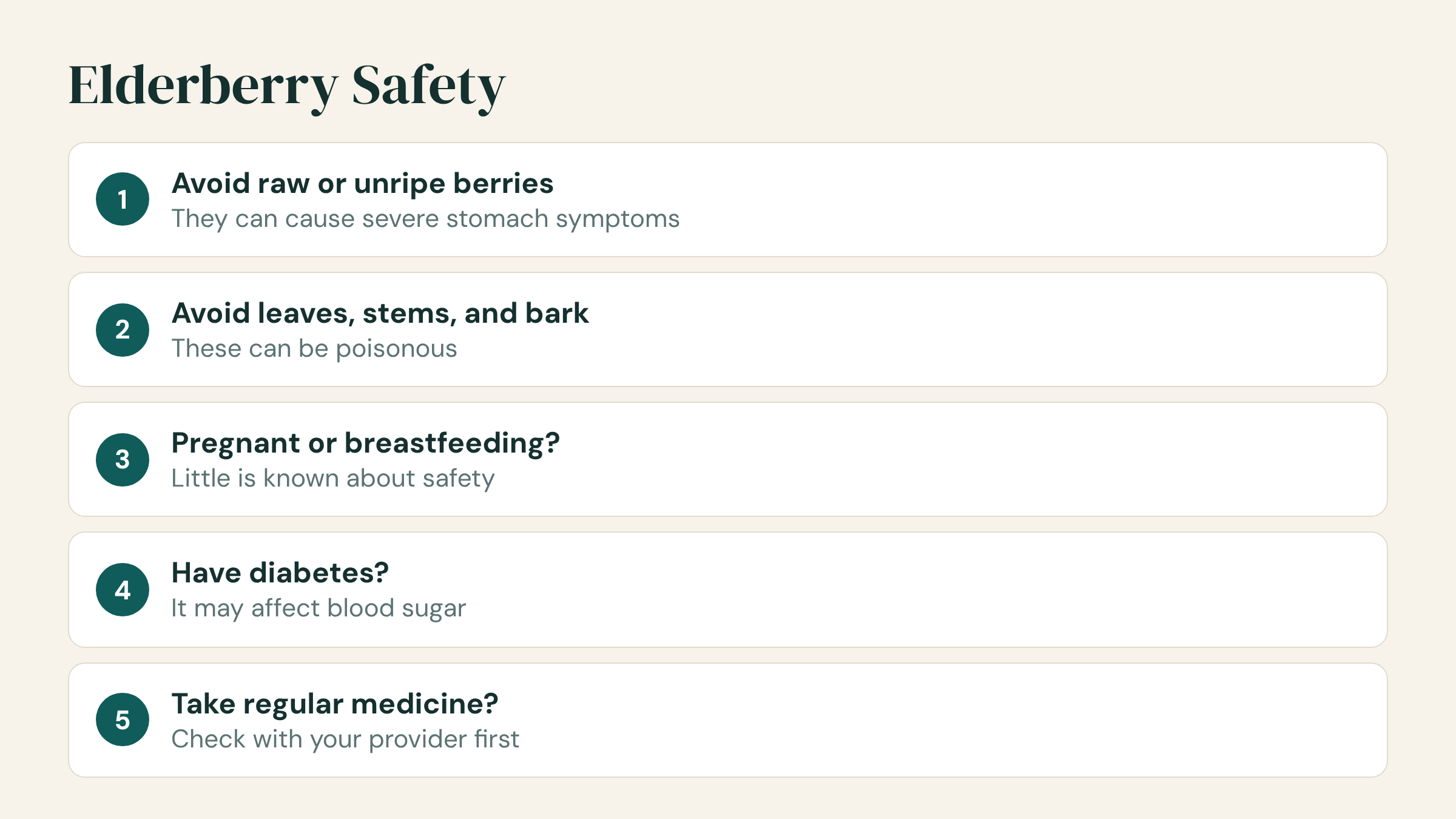
This is the most important thing to know. Raw or unripe elderberries, along with other parts of the elder tree such as leaves and stems, contain compounds that can produce cyanide. NCCIH says these can cause nausea, vomiting, and severe diarrhea.
Cooking destroys the toxin, although NCCIH cautions that eating large amounts can still cause serious illness. The NIH Office of Dietary Supplements adds that bark, seeds, leaves, and raw or unripe fruit can be poisonous, while cooked fruit and properly made supplements avoid this concern.
That means:
- Do not eat raw elderberries.
- Do not use leaves, stems, or bark to make your own tea or remedies.
- Be cautious about homemade syrups, since preparation matters.
- If you forage, be sure of what you have picked, because misidentifying plants brings its own risks.
Who Should Be Careful
Some people should get medical advice before using elderberry:
- Pregnant or breastfeeding people: Little is known about safety during these times.
- People with diabetes: Elderberry may affect blood sugar and insulin.
- People on immune-suppressing medication: Elderberry may reduce the effectiveness of immunosuppressants.
- Anyone taking regular medicines: NCCIH recommends checking with your provider first, since herbs can interact with drugs.
- Parents of young children: Ask a pediatrician before giving elderberry products to a child.
What About Added Sugar?
Many elderberry syrups and gummies contain added sugar. If you take them often or have diabetes, this is worth a look. Sticky gummies can also cling to teeth, so check the label for sugar and take them around a meal rather than as a between-meal snack.
How to Choose an Elderberry Product
If you decide to try elderberry, these steps can help:
- Choose a product from a reputable manufacturer, ideally one with independent third-party testing.
- Check for clear labeling of the extract and amount per serving.
- Be skeptical of claims that it “prevents” or “cures” illness.
- Follow label directions, and do not exceed the serving size.
- Stop using it and talk to a clinician if you notice any side effects.
How It Compares With Other Cold Remedies
Elderberry is one of several popular options, and none of them are a cure. Regular vitamin C may shorten colds slightly, zinc started within 24 hours may shorten them, and echinacea may slightly reduce cold risk without changing severity or duration, according to the NIH Office of Dietary Supplements. All of these findings are modest. Rest, fluids, and basic symptom relief remain the main approach for an ordinary cold.
For flu, a supplement should never replace a recommended vaccine. Older adults, pregnant people, and those with chronic conditions should speak with a clinician promptly if they think they have the flu, because antiviral treatment works best when started early.
When to See a Doctor
Get medical help if you have trouble breathing, chest pain, confusion, a high fever that does not improve, or symptoms that get better and then return worse. If you develop severe vomiting or diarrhea after eating raw or homemade elderberry products, contact a healthcare professional or poison control.
How Long Should You Take It?
Most people use elderberry only for a short time while they have symptoms. Long-term daily safety has not been well studied, so there is little evidence to support taking it all year as general immune insurance. If a product recommends ongoing daily use, ask your clinician whether it makes sense for you.
The Bottom Line
Elderberry may ease cold and flu symptoms, but evidence is preliminary and based on a small number of studies. It does not appear to prevent colds, and there is no good evidence that it helps with COVID-19. Never eat raw or unripe berries or other parts of the plant, and check with your clinician first if you are pregnant, have diabetes, or take regular medication.
Related articles
- How Aging Changes Your Immune System
- Best Foods for Immune Support
- Why You Keep Getting Sick: Common Reasons
For more detail, see the official guidance from NCCIH: Elderberry.
This article is for general information only and is not medical advice. Talk to a healthcare professional about your symptoms, and before starting any supplement, especially if you take medication or have a medical condition.