Your gut does far more than digest food. Its lining is one of the body’s largest points of contact with the outside world, and it is home to huge numbers of microbes. So it is no surprise that researchers are paying close attention to how the gut and the immune system interact.
Here is what science says about gut health and immunity, and how to support both.
That interest has also fueled a booming market in probiotics and “gut health” products. Some of the science is exciting, but much of it is still early. Here is what is reasonably well understood and where the evidence is less certain.
Why the Gut Matters to the Immune System
The NIH Office of Dietary Supplements describes the lining of the digestive tract as a barrier that helps keep germs out, much as your skin does. Everything you swallow passes through this tube, including bacteria and viruses. Your body therefore needs to tolerate food and friendly microbes while also responding to harmful germs.
You may see the claim that “70% of your immune system is in your gut.” That figure is repeated widely in marketing, but it is best treated as a rough way of saying the gut has a lot of immune activity, not as a precise measurement or a promise about what a product can do.
What Is the Gut Microbiome?
Your gut microbiome is the community of bacteria, viruses, fungi, and other microbes living in your digestive tract. Harvard’s Science in the News program describes the relationship as mutually beneficial. Your body provides nutrients and a place to live, and the microbes help process food and produce energy.
Each person’s microbiome is different, and it is shaped by diet, medications, age, and other factors.
How Gut Microbes Talk to Immune Cells
A Harvard Medical School study described by the same program offers a good example of this relationship. Using mice, researchers tracked immune cells leaving the colon and traveling to sites of infection and tumors elsewhere in the body.
In mice with a healthy gut microbiota, this movement worked well. When the microbiota was depleted by antibiotics or disrupted by colitis, a type of gut inflammation, immune cell migration was impaired and the mice had worse outcomes.
It is important to remember this was an animal study. It suggests a mechanism and does not prove the same thing happens in people, or that changing your diet will produce the same effect. Still, it shows why scientists think gut microbes may influence immunity beyond the gut itself.
What Can Disrupt Gut Health?
Several things can change the balance of gut microbes:
- Antibiotics: These can kill helpful bacteria along with harmful ones. They remain essential for bacterial infections, but they should only be used when needed and as prescribed.
- Diet: Diet largely shapes gut microbes, so eating patterns can influence the microbiome.
- Illness: Conditions involving gut inflammation can disrupt the microbial community.
Disruptions have been linked with worsening autoimmune diseases and with differences in how patients respond to immunotherapy, though these areas are still being researched.
Do Probiotics Support Immunity?
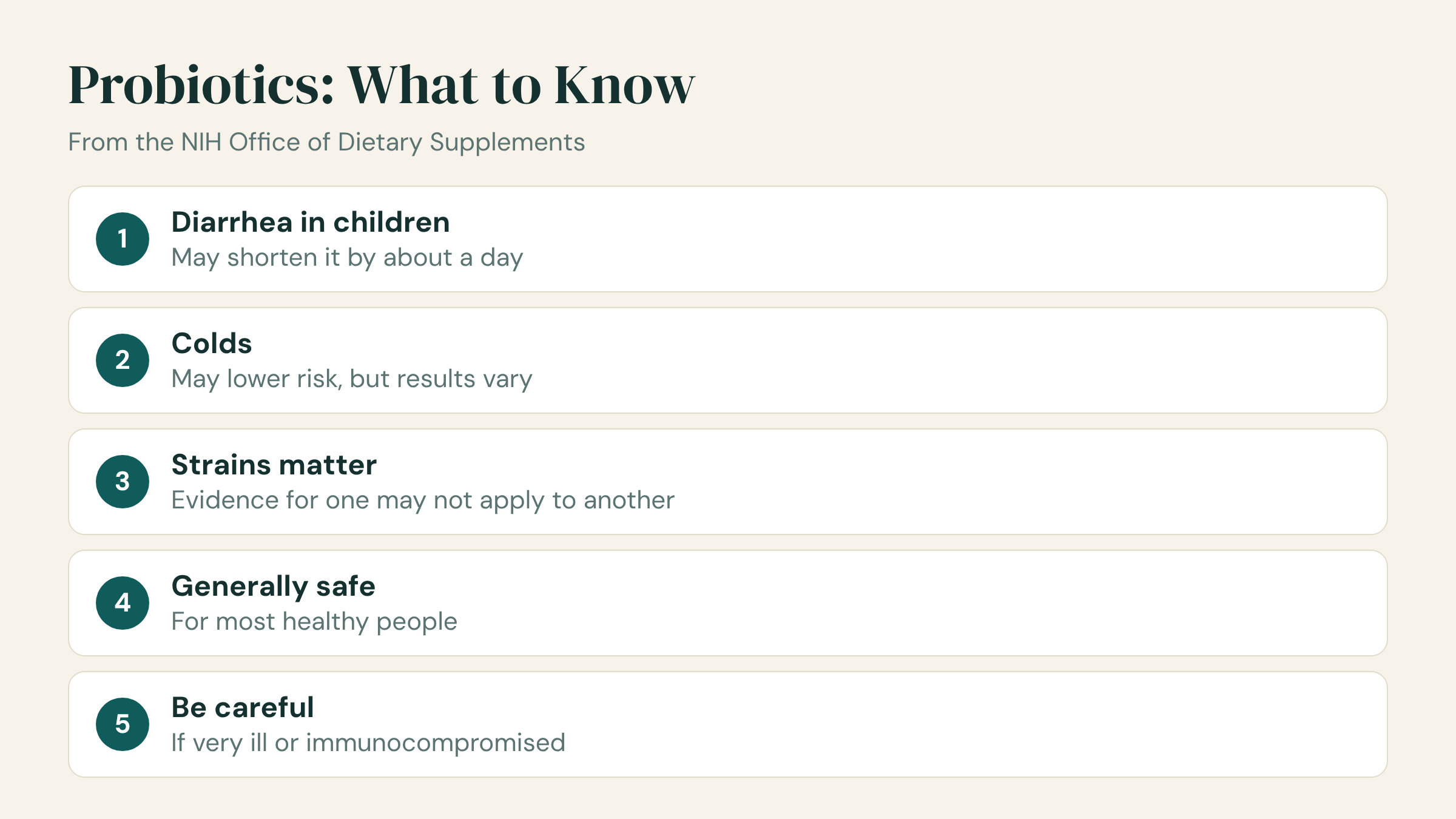
Probiotics are live microbes intended to provide a health benefit. According to the NIH Office of Dietary Supplements:
- Some studies show probiotics shorten acute diarrhea in children by about a day, but others do not.
- Lactobacillus rhamnosus GG and Saccharomyces boulardii may be the most helpful strains for this use.
- Probiotics may reduce the risk of colds and respiratory infections and shorten illness, although results vary from product to product.
That last point is key. Different strains behave differently, so evidence for one does not automatically apply to another. A bottle that simply says “probiotic” tells you little.
Who Should Be Careful With Probiotics
Probiotics are considered safe for most people, but the NIH Office of Dietary Supplements warns they may cause serious illness in very ill people, those with immune problems, and preterm infants. Antibiotics and antifungals may also reduce their effectiveness. If you have a serious illness or weakened immune system, talk to your doctor before taking one.
Food Habits That Support Gut Health
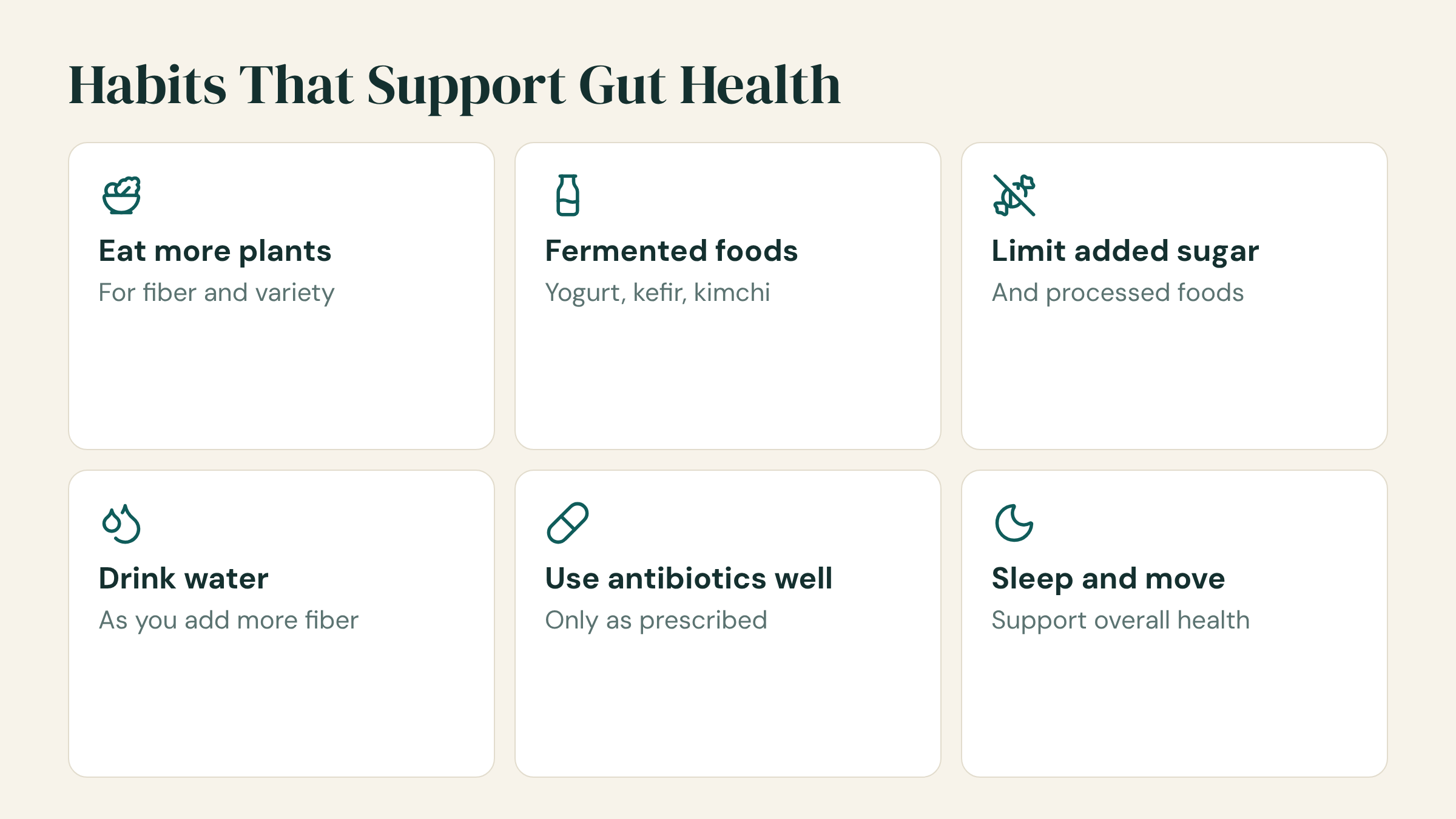
You do not need a supplement to look after your gut. These everyday habits are a sensible starting point:
- Eat a variety of plants: Vegetables, fruit, legumes, nuts, seeds, and whole grains provide fiber and a range of nutrients.
- Include fermented foods if you enjoy them: Yogurt with live cultures, kefir, sauerkraut, and kimchi are options. Choose lower-sugar versions and watch the salt.
- Limit highly processed foods and added sugars: These tend to crowd out fiber-rich foods. Harvard’s article suggests high-sugar diets could affect immune cell movement, but this is a theory, not a tested finding in people.
- Increase fiber slowly: Going too fast can cause gas and bloating. Drink enough water as you add more.
- Use antibiotics only as prescribed: Follow the directions, and do not use leftovers.
Other Habits That Help Both Gut and Immunity
Sleep, physical activity, stress management, and not smoking all support general health. Since the immune system depends on overall health, these basics are as useful here as anywhere else. There is no single food or capsule that can substitute for them.
When to See a Doctor
Talk to a healthcare professional if you have ongoing diarrhea or constipation, unexplained weight loss, blood in your stool, severe abdominal pain, or a persistent change in your bowel habits. These symptoms should be checked out, not managed with probiotics alone.
How to Read Gut Health Product Claims
Look for the full strain name, the amount of live microbes at the end of shelf life, and storage directions. Be cautious with products that promise to “reset” your gut or transform your immunity, because that language goes well beyond the evidence.
The Bottom Line: Gut Health and Immunity
Your gut and immune system are closely connected, and the gut microbiome seems to influence immune function in ways scientists are still working out. Much of the most striking evidence comes from animal studies, and probiotic results vary by strain and product. For most people, a fiber-rich and varied diet, sensible antibiotic use, and healthy daily habits are the best-supported way to care for gut health.
Related articles
- How Aging Changes Your Immune System
- Best Foods for Immune Support
- Why You Keep Getting Sick: Common Reasons
For more detail, see the official guidance from NCCIH: Probiotics.
This article is for general information only and is not medical advice. Talk to a healthcare professional about your symptoms, and before starting any supplement, especially if you take medication or have a medical condition.