You finally grow your nails out, and one snags on your sweater. Then another splits. Weak nails are annoying, and they can make everyday tasks uncomfortable.
If your nails keep breaking, the cause is often simple and fixable.
The good news is that the cause is often simple, such as too much water or harsh products. Here is why nails break, what may help, and when to get them checked.
What Are Nails Made Of?
Your nails are made of layers of keratin, a tough protein also found in hair and skin. New nail grows from under the skin at the base of the nail.
By the time a nail reaches your fingertip, it is no longer living tissue. That means damage to the tip cannot heal, so you have to protect it and wait for healthy growth.
Common Causes of Weak, Breaking Nails
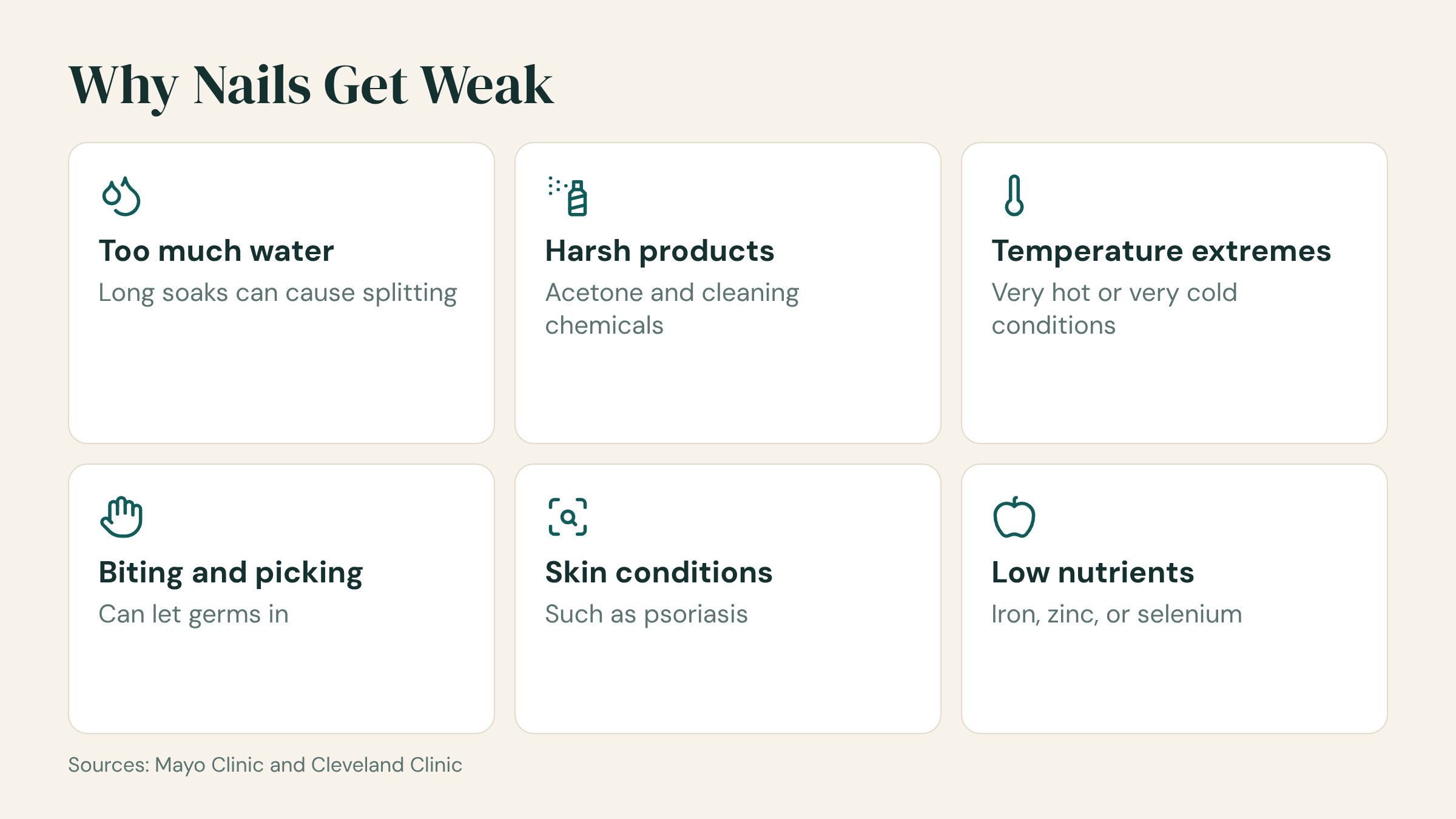
Too Much Water
Mayo Clinic says soaking nails for long periods can make them more likely to split. Frequent dishwashing and cleaning are common culprits.
Harsh Products
Acetone-based nail polish remover and frequent contact with cleaning chemicals can weaken nails. If you change your polish often, this may be a big factor.
Temperature Extremes
Repeated exposure to very hot or very cold conditions can also affect nail strength.
Biting and Picking
Biting your nails or picking at your cuticles can injure the nail bed and let bacteria or fungi in. An infection can then cause more damage.
Skin Conditions
Psoriasis, lichen planus, and dermatitis can all affect the nails. If your skin is also red, scaly, or itchy, mention that to your doctor.
Low Nutrient Levels
Cleveland Clinic says brittle, soft, thin, or splitting nails may reflect low iron, zinc, or selenium. Spoon-shaped nails can also point to iron-deficiency anemia. Only a test can confirm this, so do not guess.
Fungal Infection
Nails that are thick, discolored, or crumbly may have a fungal infection. This is more common in toenails than fingernails.
Simple Habits That Can Strengthen Nails
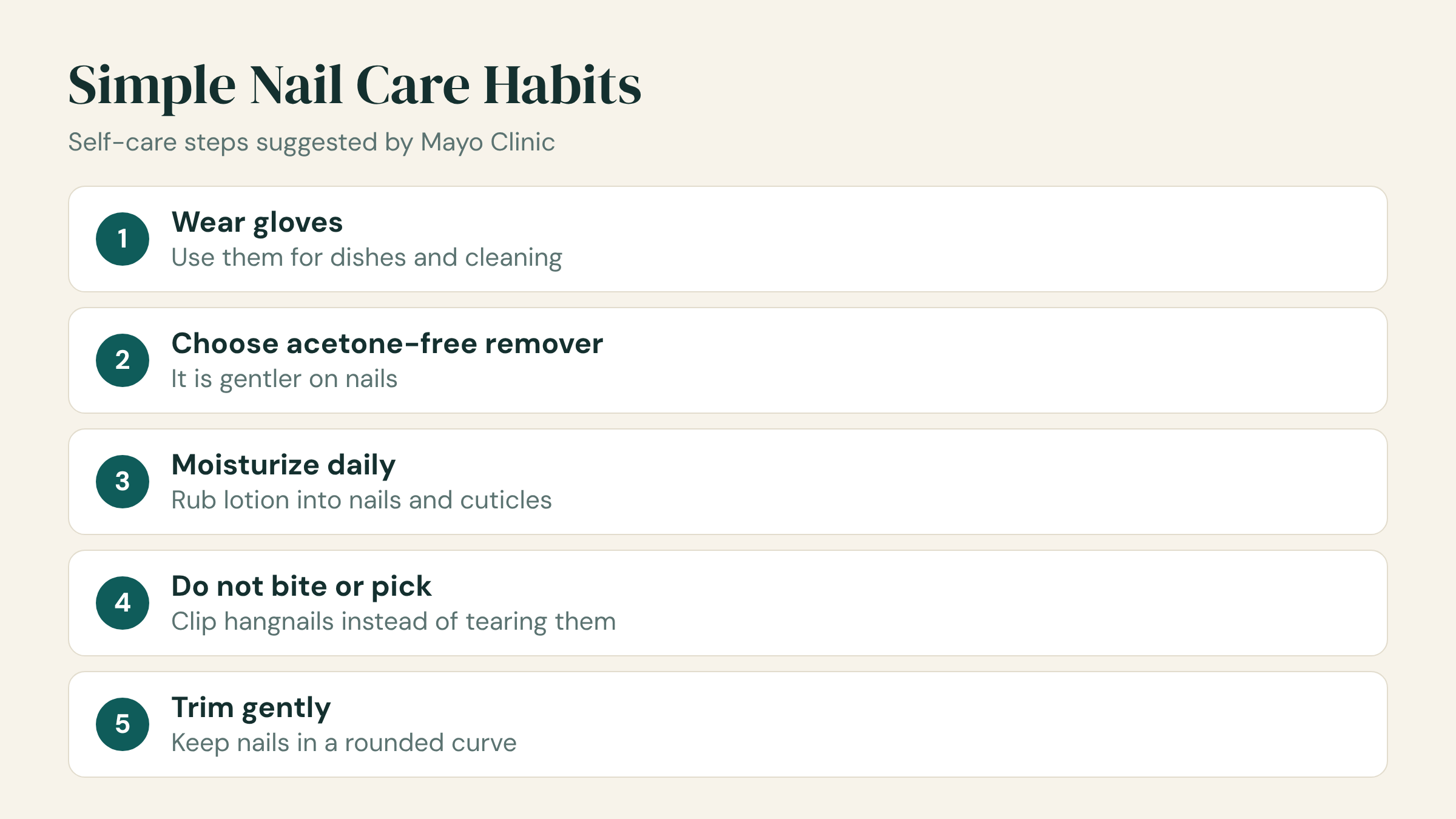
Mayo Clinic suggests these self-care steps:
- Wear gloves: Use them when washing dishes or handling cleaners.
- Choose acetone-free remover: It is gentler on your nails.
- Moisturize daily: Rub lotion into your nails and cuticles.
- Consider a nail hardener: A product designed to harden nails may help.
- Keep nails clean and dry: Avoid biting them or picking at cuticles.
- Clip hangnails: Do not tear them off.
- Trim carefully: Keep nails rounded in a gentle curve.
Moisturizing is easy to forget, so try doing it each night before bed or every time you wash your hands.
Safer Manicure Tips
Manicures can be enjoyable, but poor practices can cause problems. Mayo Clinic suggests these precautions:
- Use a licensed technician in a salon with a current license
- Avoid having your cuticles removed
- Confirm that tools are sterilized
Cuticles help protect the skin around your nail, so leaving them alone lowers your risk of infection. You may also want to give your nails a break from polish now and then.
Does Biotin Help Nails?
You may have heard that biotin strengthens nails. Mayo Clinic notes that a doctor may suggest it, since some research links it to stronger nails.
The NIH says the evidence for hair, skin, and nails is weak overall. High doses can also distort some lab tests, so talk to your doctor first and mention it before any blood work.
Foods That Support Healthy Nails
No food will fix a damaged nail overnight, but a balanced diet gives your body what it needs. Try including:
- Protein: Eggs, fish, poultry, beans, and dairy
- Iron: Lean meat, beans, and leafy greens
- Zinc: Meat, seafood, nuts, and whole grains
- Vitamin C: Fruits and vegetables, which also help you absorb iron from plants
How Long Will It Take to See Results?
Nails grow slowly, so patience matters. The damaged part has to grow out and be trimmed away.
Mayo Clinic suggests giving self-care about a month. If you see no improvement by then, or you have other symptoms, it is time to talk to a doctor or dermatologist.
When to See a Doctor
Most weak nails are not serious, but some changes need attention. Cleveland Clinic advises seeing a doctor about any change that is sudden, unexplained, or looks abnormal.
Get checked promptly if you notice any of these:
- A brown or black streak under one nail
- Pain, swelling, redness, or pus around a nail
- A nail lifting away from the skin
- Nail changes along with fatigue, swelling, or breathing problems
A dark line under a nail is usually harmless, but it can be a sign of melanoma, so it should not be ignored.
Common Questions About Weak Nails
Do gel and acrylic nails weaken natural nails?
They can if they are removed roughly or kept on for long stretches without a break. Removal often involves soaking in acetone and filing, which can both dry the nail. If your nails feel thin afterward, take a break and let them grow out.
Should I drink more water for stronger nails?
Staying hydrated is good for your health, but drinking extra water will not repair a damaged nail. Protecting your nails from long soaks and moisturizing the outside are more likely to help.
Why do my nails get weaker in winter?
Cold air and dry indoor heat can dry out your skin and nails. Temperature extremes can make the problem worse, so wear gloves outdoors and apply moisturizer more often during cold months.
Are white spots on nails a sign of low calcium?
This is a common myth. Cleveland Clinic says cloudy white spots are generally not a concern.
The Bottom Line: Nails Keep Breaking
Most breaking nails come from water, harsh products, or rough handling. Gloves, moisturizer, acetone-free remover, and gentle trimming can make a real difference.
Give your nails time to grow out. If they do not improve after about a month, or you notice unusual changes, ask a doctor to take a look.
Related articles
- Dry Skin After 50: Causes and Simple Care Tips
- How Sleep and Stress Affect Your Skin
- Vitamin C for Skin: Food, Serum, or Supplement?
- Nail Fungus: Signs, Causes, and When to See a Doctor
This article is for general information only and is not medical advice. Talk to a healthcare professional about your symptoms, and before starting any supplement, especially if you take medication or have a medical condition.