Maybe your ponytail feels smaller, your part looks wider, or your hairline has moved back a little. Hair changes after 40 are very common, and they can affect how you feel about your appearance.
Hair thinning after 40 is common in both men and women, and it often has a treatable cause.
Some thinning is a normal part of aging, but not all of it. Here is what changes, why it happens, and when it is worth seeing a doctor.
How Hair Grows
Your hair grows in cycles. Each hair grows for a period, rests, and then sheds so a new one can take its place. Losing some hair every day is normal.
Problems show up when more hairs shed than grow back, or when new hairs come in finer than before. Over time, this makes hair look thinner.
What Thinning Looks Like
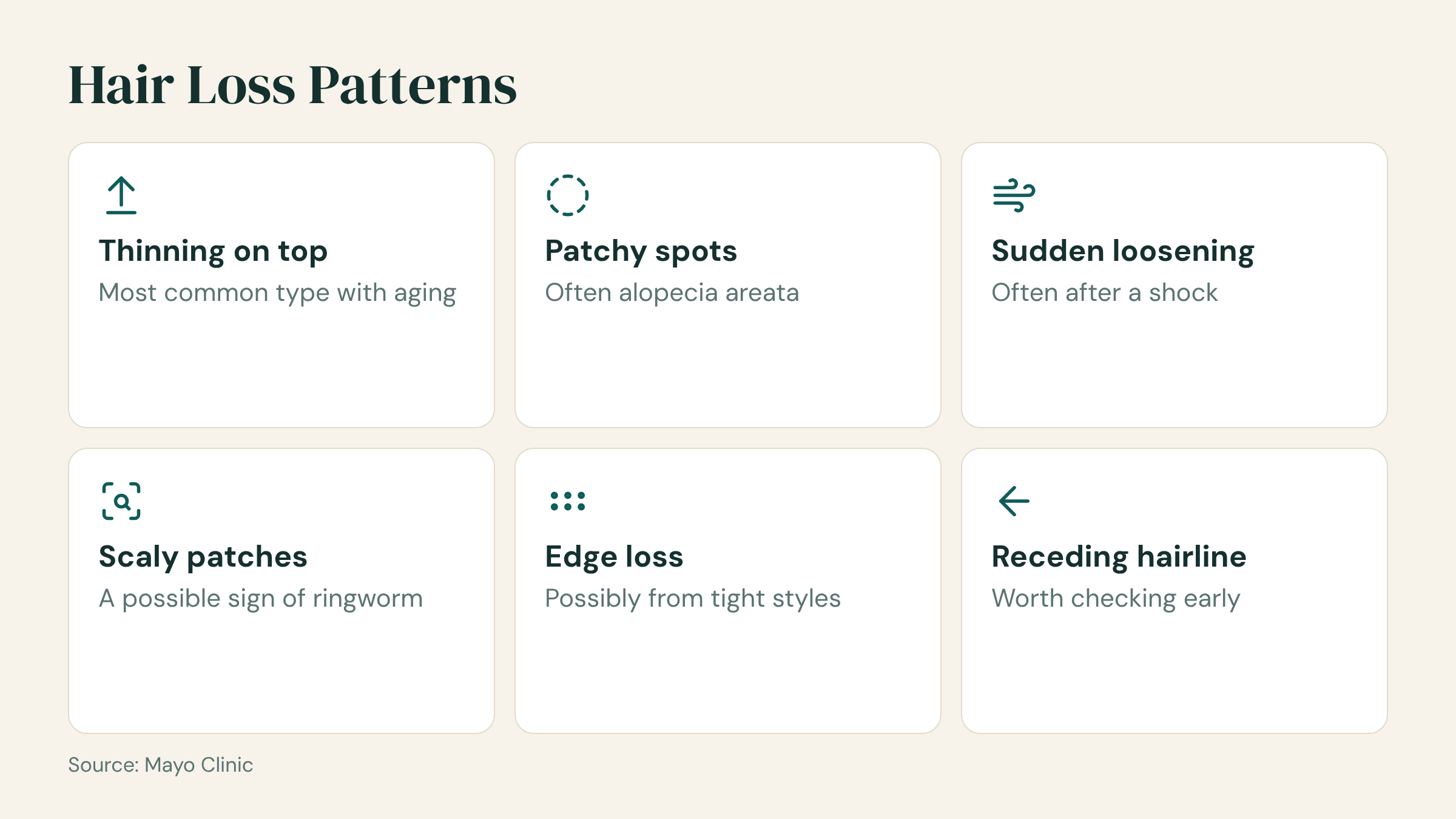
Mayo Clinic says gradual thinning on top of the head is the most common type with aging. Men often see their hairline recede, while women often notice a widening part.
Other patterns can point to a different cause:
- Round or patchy bald spots: Often alopecia areata.
- Sudden loosening: Hair coming out in handfuls after a physical or emotional shock.
- Scaly patches on the scalp: A possible sign of ringworm.
- Hair loss around the edges: Possibly from tight hairstyles.
- A receding hairline in older women: Possibly frontal fibrosing alopecia.
Common Causes of Hair Thinning After 40
Heredity
Mayo Clinic says heredity is the most common cause. Known as androgenic alopecia, it often runs in families and tends to happen gradually.
Hormonal Changes
Menopause, pregnancy, childbirth, and thyroid problems can all affect hair. If thinning comes with fatigue, weight changes, or feeling unusually cold, ask about your thyroid.
Medications
Some medicines used for cancer, arthritis, depression, heart problems, gout, and high blood pressure can cause hair loss. Do not stop a medicine by yourself. Ask your doctor whether it could be involved.
Stress
A very stressful event can cause temporary shedding called telogen effluvium. Cleveland Clinic says acute cases tend to begin two to three months after the event, which makes the cause easy to miss. Most acute cases resolve as new growth returns.
Weight Loss and Poor Nutrition
Mayo Clinic lists significant weight loss and poor nutrition as risk factors. Crash diets can leave your body short of what it needs.
Health Conditions
Diabetes, lupus, scalp infections, and other conditions can play a part.
Hair Care and Styling
Tight pigtails, braids, and rollers can pull on hair over time. Hot-oil treatments and permanents can also cause damage.
Does Hair Change in Other Ways With Age?
Yes. Many people find their hair becomes finer, drier, or a different texture. Gray hairs can also feel coarser. Gentle care can help hair look its best through these changes.
How to Care for Thinning Hair
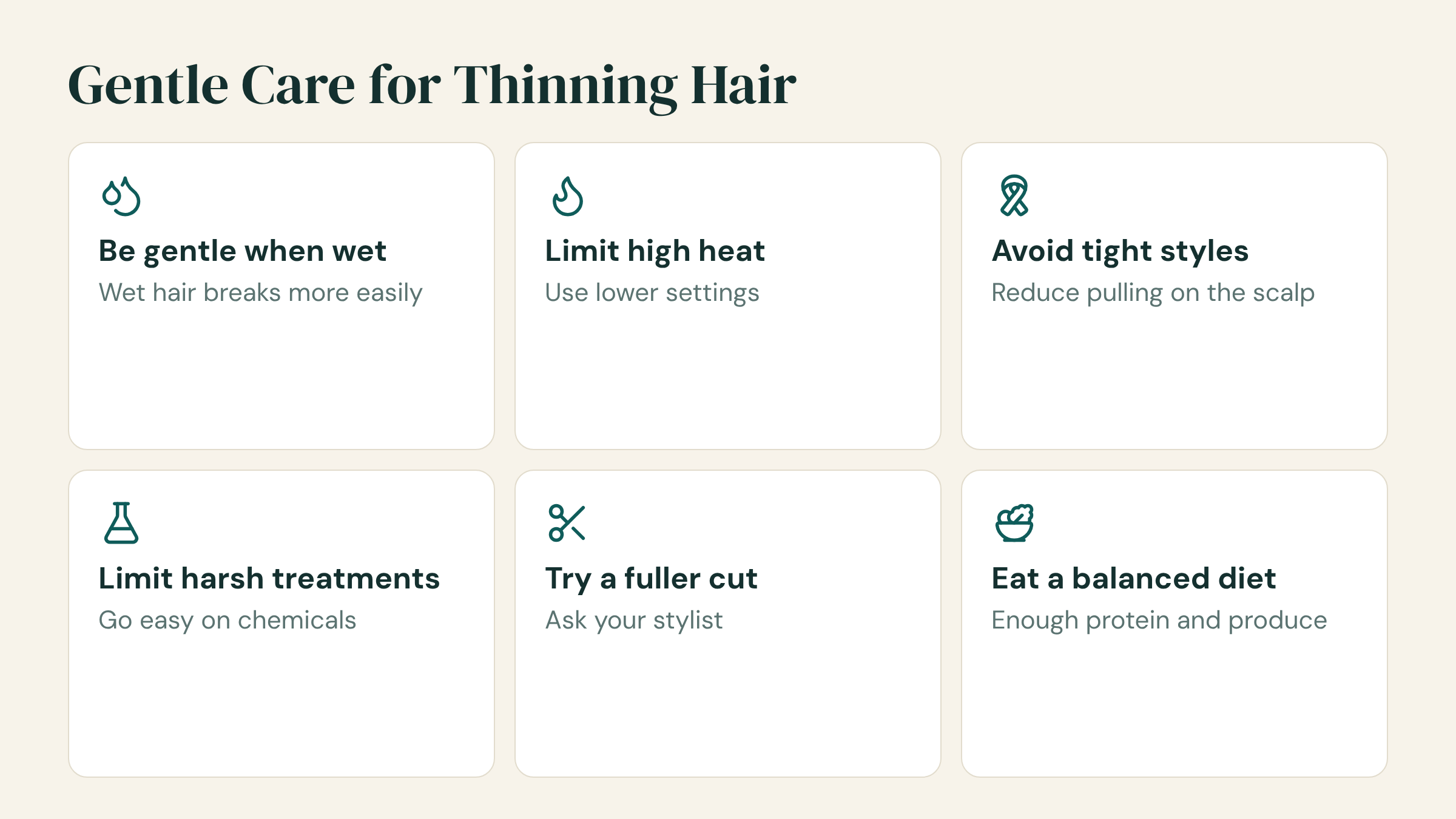
These simple habits may help reduce breakage and make your hair look fuller:
- Be gentle when washing and combing, especially when hair is wet
- Limit high heat from dryers and styling tools
- Avoid tight hairstyles that pull on the scalp
- Go easy on harsh chemical treatments
- Ask your stylist about a cut that adds the look of volume
- Protect your scalp from the sun with a hat
Eat Enough to Support Your Hair
Your hair needs nutrients to grow. A balanced diet with enough protein, fruits, vegetables, and whole grains gives your body the basics.
A supplement is unlikely to help unless you are truly low in a nutrient. The American Academy of Dermatology says most people can meet their needs through a balanced diet.
Do Hair Supplements Work?
Hair blends often contain biotin, but the NIH says evidence for hair, skin, and nails is weak. High-dose biotin can also distort lab tests, including thyroid tests.
Be cautious with any supplement that promises fast regrowth. Ask a healthcare professional before starting one, and mention it before you have blood work.
What Treatments Are Available?
Treatment depends on the cause. A doctor or dermatologist may suggest medicines, address a health issue, or discuss procedures. They may also run blood tests to look for causes such as thyroid problems or low iron.
Early care can matter. Mayo Clinic notes that early treatment for a receding hairline in frontal fibrosing alopecia may help avoid significant permanent baldness.
When to See a Doctor
Mayo Clinic suggests seeing a doctor if:
- You are distressed by persistent hair loss and want treatment
- You notice sudden or patchy hair loss
- You lose more hair than usual when combing or washing
- You notice a receding hairline
It says sudden hair loss can signal an underlying medical condition that needs treatment. Scalp pain, itching, or redness are also worth mentioning.
Common Questions About Hair Thinning
Does washing your hair often cause thinning?
Normal washing does not cause hair loss. You may just notice hairs that were already ready to shed.
Can thinning hair grow back?
It depends on the cause. Hair shed after stress usually returns, while inherited thinning tends to continue without treatment.
Does wearing a hat cause hair loss?
A normal hat is not a known cause of hair loss, and it can protect your scalp from the sun. Avoid anything very tight.
What to Expect at Your Appointment
It helps to come prepared. Note when you first noticed the change, whether it was sudden or slow, and whether family members have similar hair loss. Bring a list of your medicines and supplements.
Also mention any recent illness, surgery, weight loss, or stressful event. These details can help your doctor find a cause sooner.
The Bottom Line
Hair thinning after 40 is common and is often tied to heredity, hormones, or stress. Gentle care and a healthy diet can help your hair look its best.
If your hair loss is sudden, patchy, or upsetting, see a doctor. The right plan depends on the cause, and acting early often gives you more options.
Related articles
- Dry Skin After 50: Causes and Simple Care Tips
- How Sleep and Stress Affect Your Skin
- Vitamin C for Skin: Food, Serum, or Supplement?
This article is for general information only and is not medical advice. Talk to a healthcare professional about your symptoms, and before starting any supplement, especially if you take medication or have a medical condition.