
Zinc is a mineral your body needs in small amounts, and it plays a part in normal immune function. It has also become a staple of cold remedies, from lozenges to syrups and sprays.
Here is what the evidence says about zinc for immune support, plus safe limits.
Some of the interest is justified. There is reasonable evidence that zinc taken early may shorten a cold. But zinc is a good example of a nutrient where more is not better, because long-term high doses can actually harm immunity. This guide explains the benefits, the limits, and the risks.
What Zinc Does in the Body
Your body cannot store much zinc, so you need a regular supply from food. It is involved in immune function, wound healing, and many other processes. A shortage can affect how well the immune system works, which is one reason correcting a deficiency matters.
How Much Zinc Do You Need?
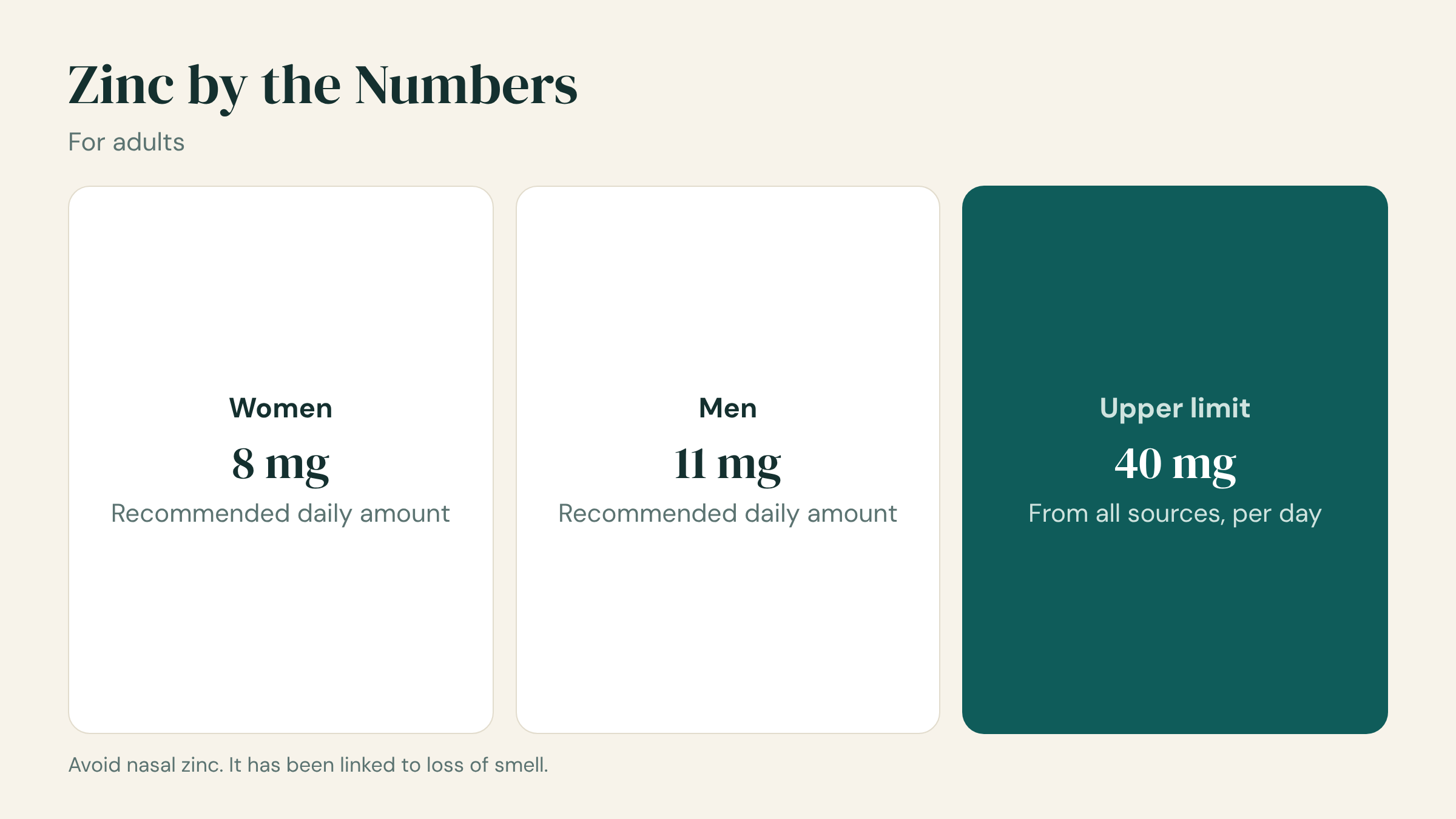
According to Mayo Clinic, recommended daily amounts for adults aged 19 and older are:
- Women who are not pregnant: About 8 mg per day
- Men: About 11 mg per day
Needs are different for children and for people who are pregnant or breastfeeding. Most people can reach these amounts through food.
Food Sources of Zinc
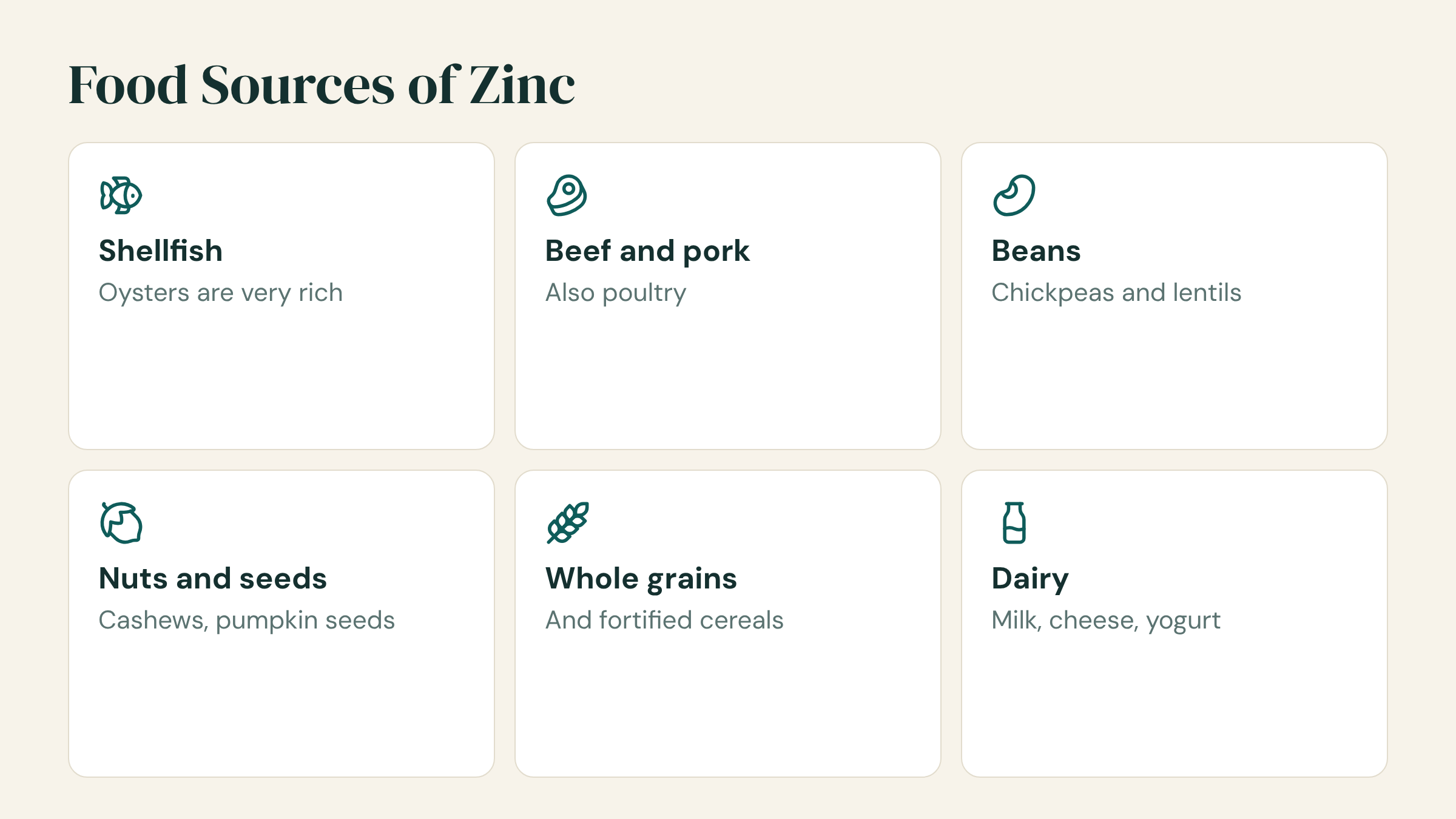
Good sources of zinc include:
- Oysters and other shellfish
- Beef, pork, and poultry
- Beans, chickpeas, and lentils
- Nuts and seeds, such as pumpkin seeds and cashews
- Whole grains and fortified cereals
- Dairy products
Zinc from plant foods can be harder to absorb, so people on vegetarian or vegan diets may want to pay more attention to their intake and talk to a dietitian if they are concerned.
Does Zinc Help With Colds?
This is zinc’s best-known use, and the evidence is cautiously positive. The NIH Office of Dietary Supplements says lozenges and syrup may speed recovery from a cold when started early, but they do not appear to lessen how severe the symptoms are.
Timing seems to matter. Mayo Clinic says zinc syrup or lozenges taken within 24 hours of symptoms starting may shorten a cold. If you wait several days, you may not get the same effect.
A few practical notes:
- Lozenge products vary widely in dose and formulation, so results from a study may not apply to every product.
- Follow the label closely, and do not use lozenges for longer than directed.
- Lozenges can cause nausea or a bad taste in some people.
Other Researched Uses
Research on zinc reaches beyond colds, although much of it involves specific groups. According to the NIH Office of Dietary Supplements, zinc supplements may lower pneumonia risk in young children in lower-income countries and may shorten diarrhea in children with a deficiency. Results in people with HIV are mixed, and zinc does not reduce the risk of death in this group.
These findings are mostly about correcting a shortfall. They do not mean healthy adults with enough zinc will gain extra protection from a supplement.
Safe Upper Limits
The upper limit for adults is 40 mg of zinc per day from all sources. Limits for children and teens are lower, from 4 to 34 mg depending on age. Some single-ingredient supplements contain a large share of that limit in one serving, so it is easy to go over the limit without realizing it, especially if you also take a multivitamin, an immune blend, and lozenges.
Check the amount of elemental zinc on the label and add up everything you take.
Side Effects of Too Much Zinc
Mayo Clinic lists side effects such as diarrhea, dizziness, headache, nausea, upset stomach, and vomiting. The more serious concern is long-term use at high doses.
Excess zinc over time can cause copper deficiency, which may lead to numbness and weakness in the arms and legs. The NIH Office of Dietary Supplements also notes that long-term high intake can impair immunity. In other words, too much of a mineral taken for immune support can end up working against you.
Avoid Nasal Zinc
This is the most important safety warning. Mayo Clinic says not to use zinc placed in the nose, known as intranasal zinc. It has been linked to loss of smell, which may be long-lasting or permanent. Keep this in mind if you come across zinc nasal sprays or gels.
Medication Interactions
Zinc can interfere with some medications:
- Quinolone or tetracycline antibiotics: Zinc can make these less effective. Mayo Clinic advises taking the antibiotic 2 hours before or 4 to 6 hours after zinc.
- Penicillamine: Zinc can reduce its effect. Separate the two by at least 1 hour.
Always mention supplements to your doctor or pharmacist, particularly if you are prescribed an antibiotic while using zinc lozenges for a respiratory infection.
Who Might Actually Need More Zinc?
Most healthy adults eating a varied diet do not need a zinc supplement every day. Some people may have a higher risk of low intake, including those with restricted diets, certain digestive conditions, or heavy alcohol use. If you are concerned, talk to a healthcare provider before adding a daily supplement. That conversation can also rule out other causes of symptoms you may be attributing to low zinc.
A Sensible Way to Use Zinc
For most people, a sensible plan looks like this: eat zinc-rich foods regularly, consider lozenges at the first sign of a cold if they suit you and your clinician has no concerns, follow label directions, and keep your total intake under 40 mg a day. Short-term use is very different from taking high doses for months.
Reading a Zinc Label
Labels may list zinc gluconate, zinc acetate, or zinc citrate. Look for the amount of elemental zinc, since that is the number that counts toward your daily total.
The Bottom Line: Zinc for Immune Support
Zinc supports normal immune function, and lozenges or syrup started within 24 hours may shorten a cold. It does not seem to make symptoms less severe. Too much can cause copper deficiency and may weaken immunity, so stay under 40 mg a day, avoid nasal zinc completely, and ask your pharmacist about interactions with antibiotics.
Related articles
- How Aging Changes Your Immune System
- Why You Keep Getting Sick: Common Reasons
- Gut Health and Immunity: What’s the Connection?
For more detail, see the official guidance from MedlinePlus: Immune System and Disorders.
This article is for general information only and is not medical advice. Talk to a healthcare professional about your symptoms, and before starting any supplement, especially if you take medication or have a medical condition.
1 Comment on “Zinc for Immune Support: Benefits and Safe Limits”