
You finish brushing, spit, and see a streak of pink in the sink. It can be alarming, and many people respond by brushing that area less. That is usually the wrong move.
In most cases, bleeding gums are caused by inflammation from plaque, and better cleaning helps. Sometimes the cause is your technique, a new routine, or something else entirely. Here is how to work out what is going on and what to do next.
Is It Normal for Gums to Bleed?
A little bleeding after starting a new flossing routine can be expected. But regular bleeding is not something to accept as normal. Colgate’s dental resource calls frequent bleeding a clinical sign of gum inflammation. The National Institute of Dental and Craniofacial Research (NIDCR) lists gums that bleed easily among the signs of gum disease.
Cause 1: Plaque and Gingivitis
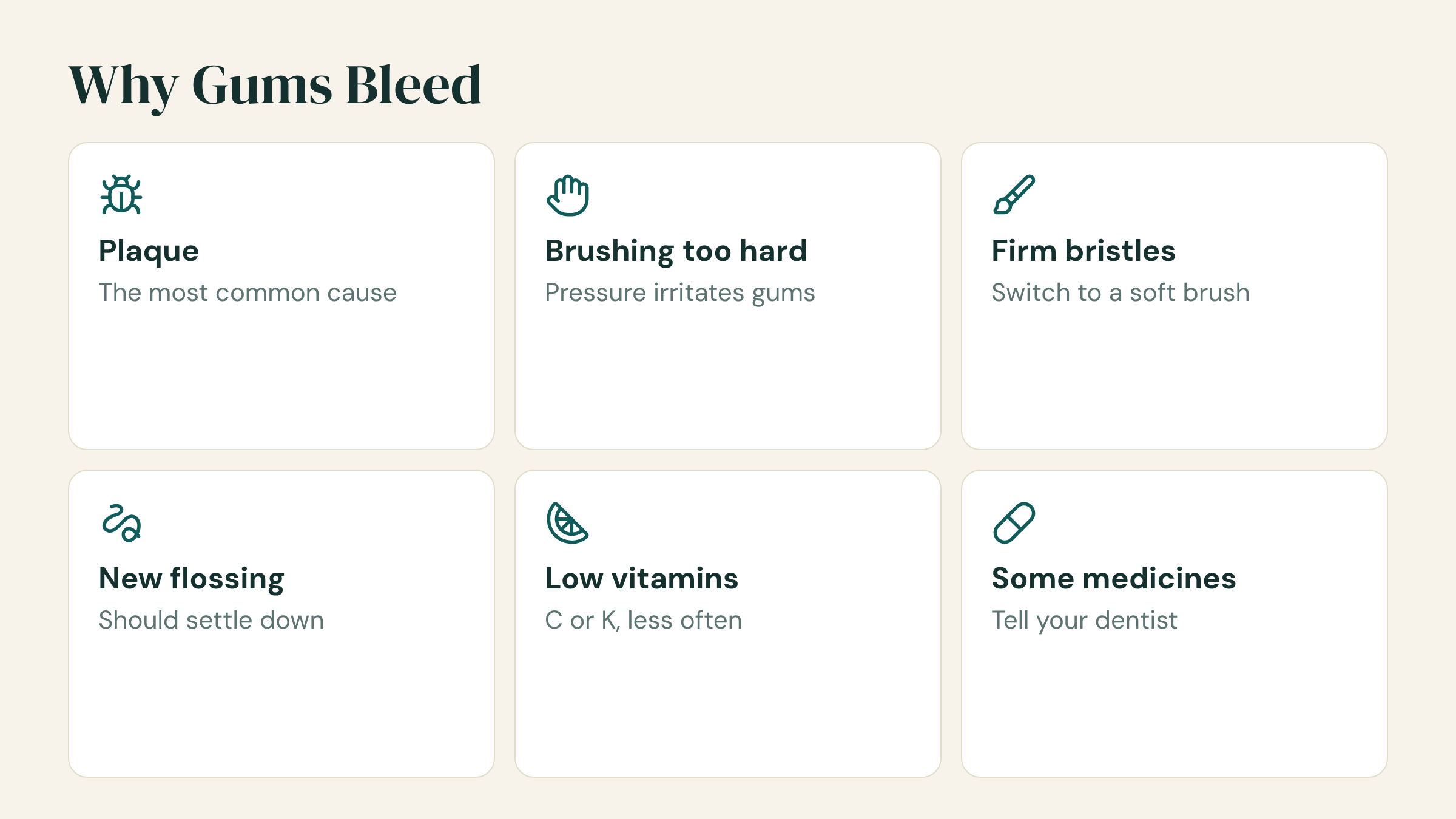
This is the most common reason. Plaque is a sticky film of bacteria that collects along the gum line. It irritates the gums, which then become swollen and bleed easily. This early stage of gum disease is called gingivitis.
When plaque stays on teeth, it hardens into tartar. Tartar then keeps irritating the gums and can only be removed professionally.
Cause 2: Brushing Too Hard
Scrubbing does not make your teeth cleaner. Too much pressure can irritate your gums. If the bristles on your brush are splayed after a short time, you may be pressing too hard.
Cause 3: A Firm Toothbrush
A firm-bristled brush can be rough on gums. The American Dental Association recommends a soft-bristled brush that fits your mouth and reaches all areas easily.
Cause 4: Starting to Floss
If you have just begun flossing, or have returned to it after a long break, your gums may bleed at first. This is common and should stop as your gums get healthier.
Cause 5: Vitamin Shortfalls
Low levels of vitamin C or vitamin K can make gums bleed, although plaque and poor hygiene cause most cases. If you eat a very limited diet, mention this to your doctor. Do not assume a supplement will solve the problem without first getting your gums checked.
Other Possible Causes
Bleeding can have other causes as well. Hormonal changes in girls and women can affect the gums, according to NIDCR, and diabetes is a known risk factor for gum disease. Blood-thinning medicines can make bleeding more likely in general, so tell your dentist about anything you take. Do not stop a prescribed blood thinner without medical advice.
What to Do About Bleeding Gums
- Keep brushing: Brush the bleeding area gently instead of avoiding it. Leaving plaque in place keeps the inflammation going.
- Use a soft brush: Angle it toward the gum line and use short, gentle strokes.
- Clean between your teeth once a day: Floss, interdental brushes, or a water flosser can help reach plaque your toothbrush misses.
- Use fluoride toothpaste twice a day: Choose one with the ADA Seal if available.
- Book a cleaning: A dentist or hygienist can remove tartar that brushing cannot.
- Avoid tobacco: Smoking is the biggest risk factor for gum disease, and it can slow healing.
How Long Should It Take to Stop?
Colgate’s guidance says early bleeding should typically settle within 7 to 14 days of good brushing and flossing. If you are consistent and it is still happening after two weeks, it is time to see a dentist.
Does Mouthwash Help?
A mouth rinse can freshen your mouth, but it does not replace brushing or cleaning between your teeth, because rinsing cannot scrape plaque away. If your dentist prescribes an oral rinse for gum disease, use it as directed. Avoid using over-the-counter rinses to cover up symptoms while you put off a dental visit.
What About Smoking and Bleeding?
Smokers may notice less bleeding even when they have gum problems, so a lack of blood is not proof that smokers have healthy gums. Regular dental exams are especially important if you use tobacco.
When to See a Dentist
Make an appointment if:
- Your gums bleed each time you brush for more than a few days
- Bleeding does not stop shortly after you finish brushing
- It continues beyond 7 to 14 days of good oral care
- The bleeding is heavy
- Your gums are pulling away from your teeth
- Your teeth feel loose, or you have persistent bad breath
Pulling gums may signal deeper problems such as pockets or bone loss. Bleeding from elsewhere too, such as frequent nosebleeds or unexplained bruising, should be checked by a doctor.
A Simple Two-Week Plan
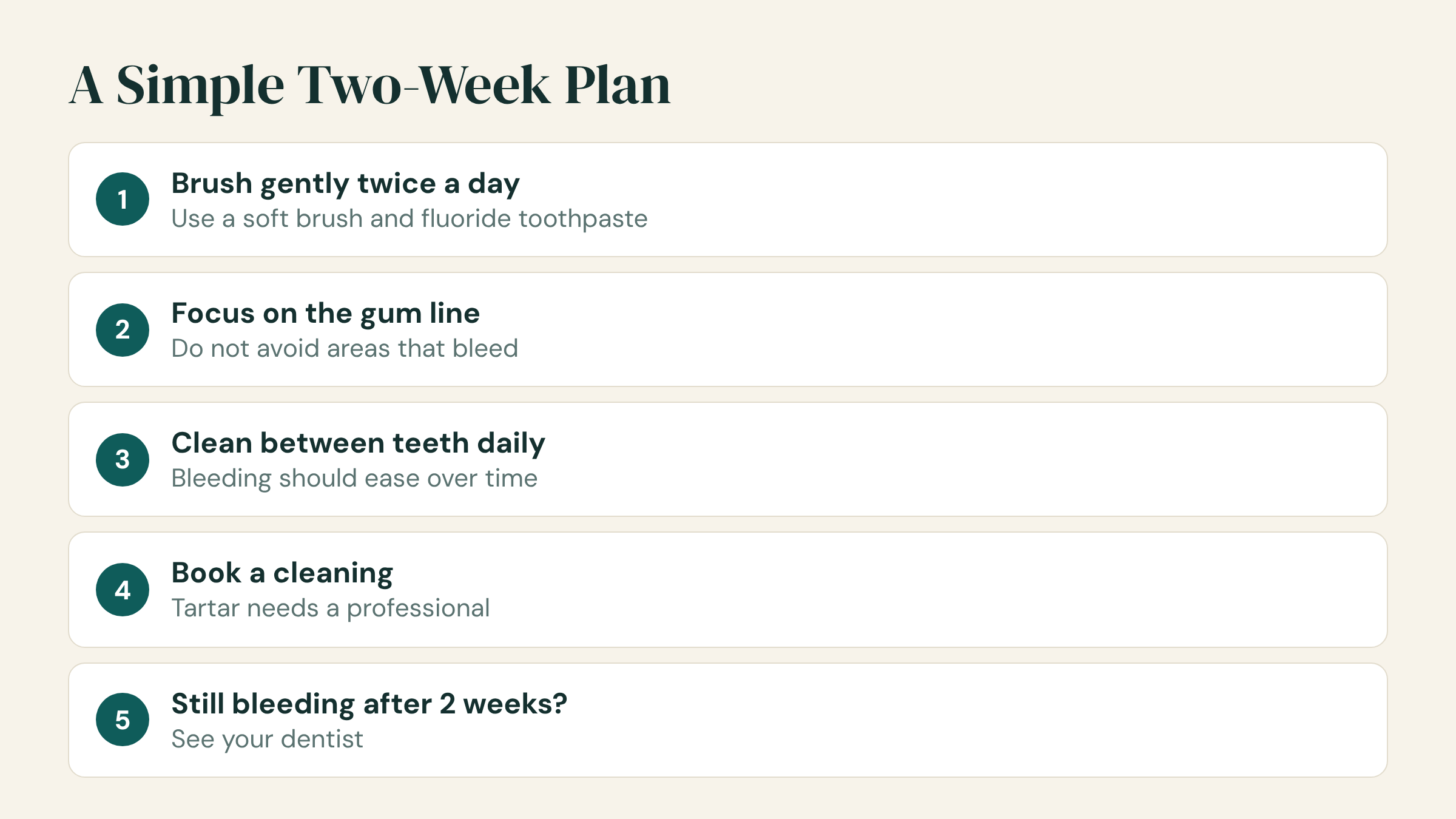
If your gums have started bleeding and you have no other symptoms, try this routine for two weeks:
- Morning and night: Brush gently for two minutes with a soft brush and fluoride toothpaste, paying attention to the gum line.
- Once a day: Clean between all your teeth, even where it bleeds.
- Daily check: Note whether you are seeing less blood.
- Every few months: Replace your toothbrush every three to four months, or sooner if the bristles are frayed.
You should see bleeding ease as your gums settle. If you do not, a dentist can check for tartar or deeper gum problems.
What Not to Do
Do not switch to a harder brush to clean “better,” stop flossing because of a little blood, or rely on rinses and supplements alone. Each of these can leave plaque in place and allow the problem to carry on unnoticed.
A Final Reminder
Keep cleaning gently, even if you see a little blood at first.
The Bottom Line
Bleeding gums are most often a sign of plaque-related inflammation, although hard brushing, a firm brush, a new flossing routine, or low vitamin levels may play a part. Do not stop brushing. Be gentle but thorough, clean between your teeth, and see a dentist if bleeding lasts beyond two weeks or if you have other warning signs.
Related articles
- Dry Mouth: Causes and Why It Matters
- Best and Worst Foods for Your Teeth
- Does Oil Pulling Work? What the Research Says
For more detail, see the official guidance from NIDCR: Periodontal (Gum) Disease.
This article is for general information only and is not medical advice. Talk to a healthcare professional about your symptoms, and before starting any supplement, especially if you take medication or have a medical condition.



1 Comment on “Why Do My Gums Bleed When I Brush?”