
Plaque and tartar are often mentioned in the same breath, as if they were the same thing. They are closely related, but there is one big practical difference: you can remove plaque at home, while tartar needs a dental professional.
Here is plaque vs tartar explained in plain English.
Understanding how one turns into the other explains why daily brushing matters so much, and why even careful brushers still need regular cleanings. Here is a simple guide.
What Is Plaque?
MedlinePlus describes plaque as a sticky film that coats the teeth and contains bacteria. It forms constantly, which is why your teeth can feel fuzzy if you miss a brushing. It is often colorless or pale, so it can be hard to see.
Bacteria in plaque feed on sugars from food and drinks. The American Dental Association explains that these bacteria turn sugars into acids that attack enamel and can lead to cavities. Plaque also irritates the gums, causing inflammation.
What Is Tartar?
Tartar, also called calculus, is plaque that has hardened. If plaque is not removed regularly, it will harden and turn into tartar. It often appears along the gum line or behind the lower front teeth, and it can look yellow or brown.
Tartar forms a rough surface on the teeth that can make it easier for more plaque to stick.
Key Differences at a Glance
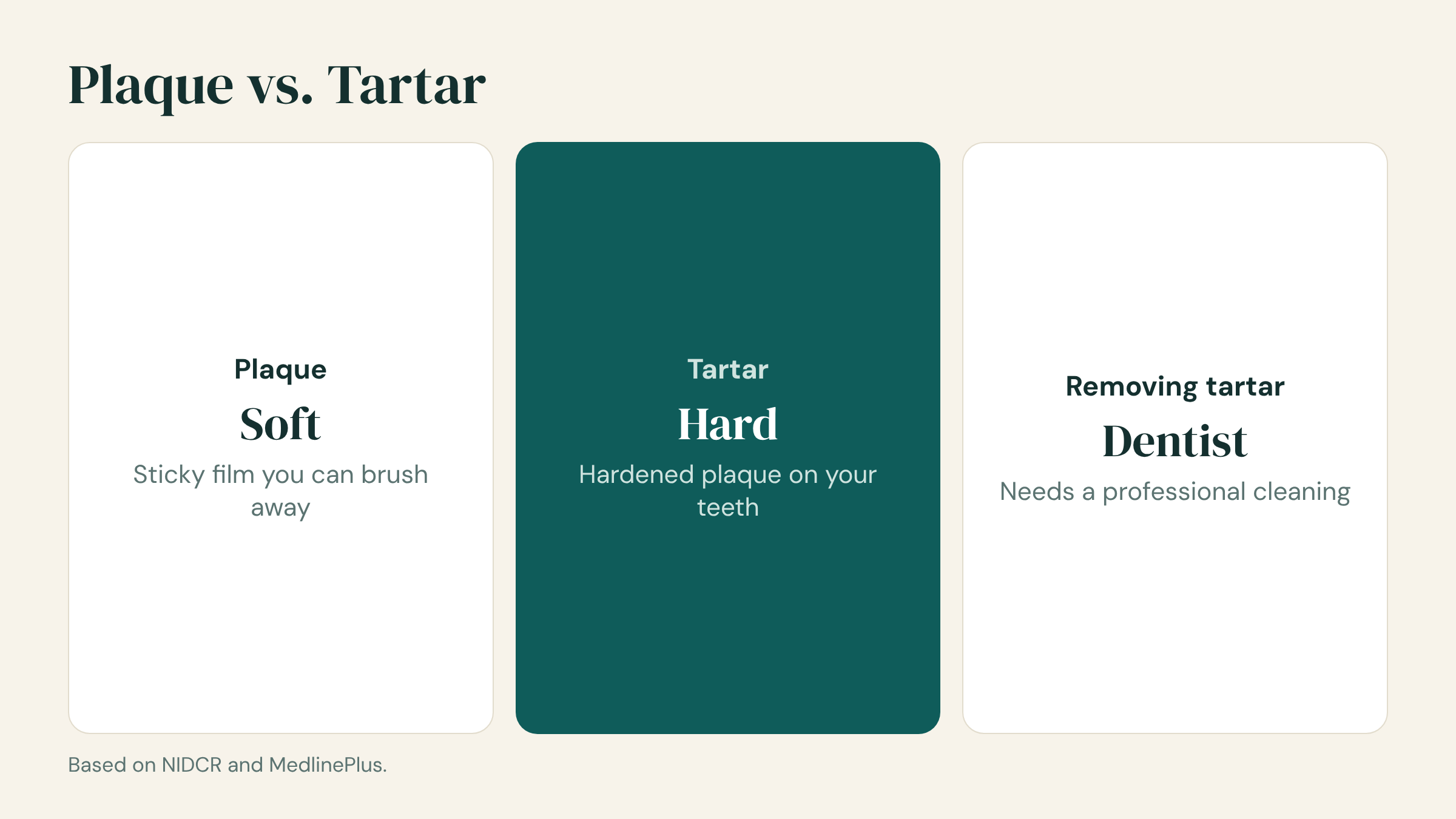
- Texture: Plaque is soft and sticky. Tartar is hard.
- Color: Plaque is often colorless or pale. Tartar is often yellow or brown.
- Removal: Plaque can be removed by brushing and cleaning between your teeth. Tartar needs a professional cleaning.
- Effect: Plaque can lead to cavities and gum inflammation. Tartar keeps gums irritated and can contribute to gum disease.
Why Tartar Is a Problem
The National Institute of Dental and Craniofacial Research (NIDCR) says bacteria in plaque and tartar trigger inflammation that damages the gums and supporting tissue. Early on, this shows up as red, swollen, or bleeding gums. If it is not treated, it can spread to the bone that holds your teeth, leading to pain when chewing or loose teeth.
Tartar can also stain more easily than enamel, so it can make your smile look discolored. And once it forms, brushing will not get it off. NIDCR is clear that only a professional cleaning by a dentist or dental hygienist can remove it.
How to Remove Plaque at Home
MedlinePlus recommends these steps:
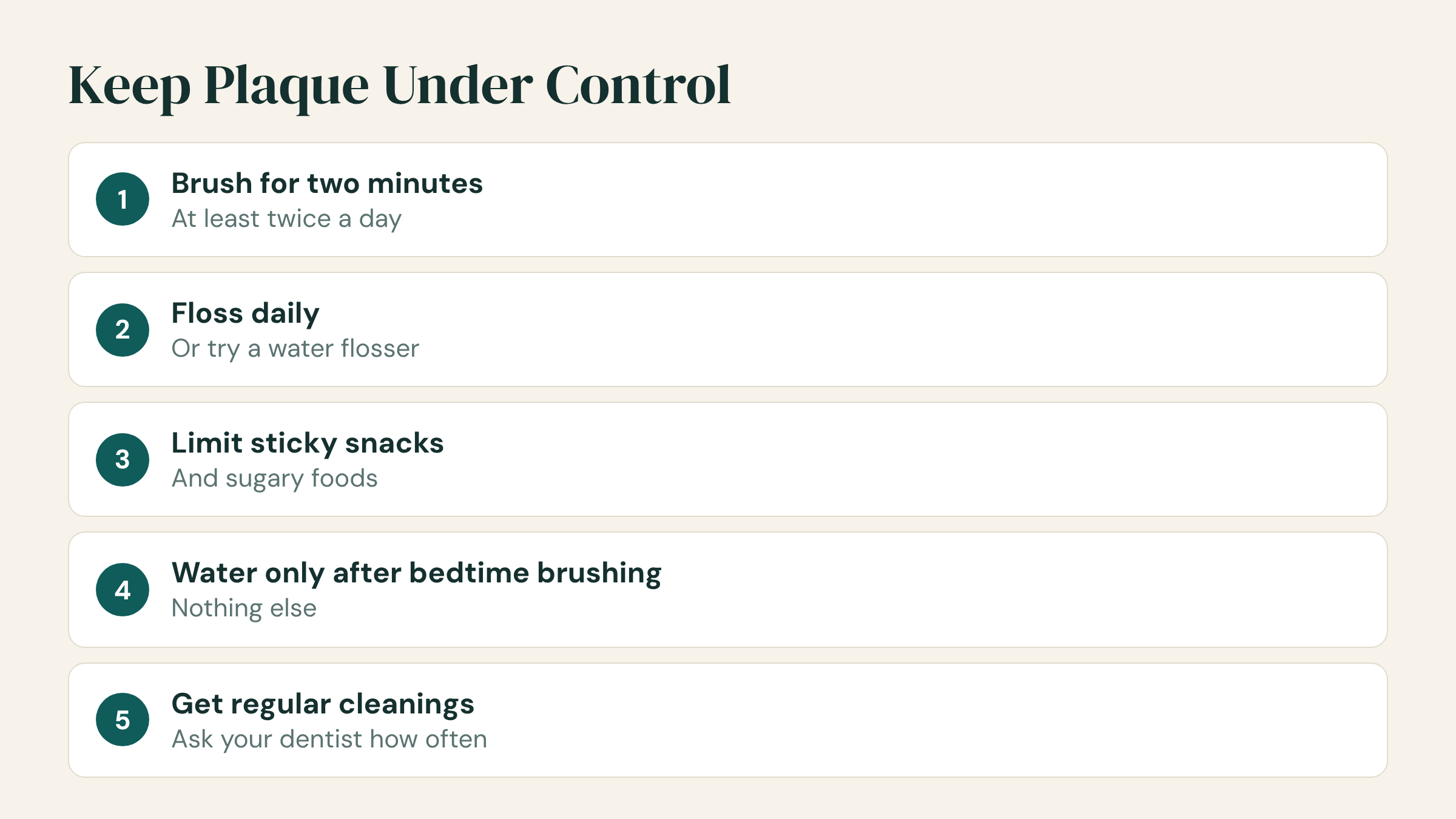
- Brush at least twice a day for at least two minutes each time.
- Use a brush with soft to medium rounded bristles that fits your mouth.
- Use a fluoride toothpaste that is not too abrasive.
- Floss gently at least once a day.
- Consider an electric toothbrush, which MedlinePlus says cleans better than manual brushes.
- Consider a water irrigation device, which can help flush debris from between your teeth and below the gum line.
How Tartar Is Removed
A dentist or hygienist removes tartar during a professional cleaning, using special instruments. This is called scaling. If gum disease has developed, you may need a deeper cleaning below the gum line, known as scaling and root planing.
MedlinePlus recommends seeing a dentist or hygienist at least every six months for a thorough cleaning and exam. People with gum disease may need to go more often. Your dentist can tell you what schedule is right for you.
Avoid trying to scrape off tartar yourself with sharp tools or kits bought online. You can damage your gums and enamel.
Do Tartar-Control Toothpastes Work?
Tartar-control toothpastes are designed to slow the buildup of new tartar. They cannot remove tartar that has already formed. If you tend to build up tartar quickly, ask your dentist if one might suit you. Make sure it contains fluoride, and tell your dentist if it makes your teeth more sensitive.
Diet Tips That Help
What and when you eat also matters. MedlinePlus advises limiting snacks between meals, especially sticky or sugary foods and starchy carbohydrates such as potato chips. If you snack in the evening, brush afterward. After you brush at night, do not eat or drink anything except water.
The ADA adds that eating during meals is less harmful than frequent snacking, because saliva flow is higher during meals. If you do snack, it suggests fruits, vegetables, or cheese.
Who Is More Likely to Get Tartar?
Some people build up tartar faster than others. Smoking, dry mouth, crowded teeth, and braces or other dental work that makes cleaning harder can all play a part. Older adults may also find cleaning harder if they have arthritis or other limits on dexterity. An electric toothbrush or floss holder may help. Your hygienist can show you which areas you are missing.
How to Check Your Own Cleaning
Disclosing tablets, available from pharmacies, temporarily stain plaque so you can see what you have missed. Chew one after brushing, and look for colored patches. These often appear along the gum line and between teeth. They are a helpful way to improve your technique, and they are especially useful for teaching children.
When to See a Dentist
See a dentist if you can see hard yellow or brown deposits near your gums, or if your gums are red, swollen, or bleeding. Also make an appointment if you have persistent bad breath or loose teeth. If it has been more than a year since your last cleaning, it is a good time to book one.
Plaque, Tartar, and Children
Plaque affects children as well as adults, so help young children brush until they can do it well on their own, and ask your dentist when to start regular cleanings.
The Bottom Line: Plaque vs Tartar
Plaque is a soft, sticky film of bacteria you can brush away. Tartar is hardened plaque that only a dental professional can remove. Brushing twice a day, cleaning between your teeth once a day, limiting sugary snacks, and having regular professional cleanings are the best ways to keep both under control.
Related articles
- How to Brush and Floss the Right Way
- Does Oil Pulling Work? What the Research Says
- Are Oral Health and Heart Health Linked?
For more detail, see the official guidance from NIDCR: Periodontal (Gum) Disease.
This article is for general information only and is not medical advice. Talk to a healthcare professional about your symptoms, and before starting any supplement, especially if you take medication or have a medical condition.
3 Comments on “Plaque vs. Tartar: What’s the Difference?”