
Oil pulling has moved from traditional Ayurvedic practice to social media, where videos claim that swishing coconut oil can whiten teeth, prevent cavities, and strengthen gums. Some even suggest it can treat dental infections.
It sounds simple, cheap, and natural, which helps explain its popularity. But how much of this holds up? The evidence is limited, and the main dental authorities are not convinced. Here is what the studies show and how oil pulling compares with the basics.
What Is Oil Pulling?
Oil pulling involves swishing a tablespoon or teaspoon of oil around the mouth, often for up to 20 minutes, and then spitting it out. Coconut, sesame, and sunflower oils are commonly used. Fans say the oil “pulls” bacteria or toxins out of the mouth.
What Does the American Dental Association Say?
According to a PolitiFact review, the American Dental Association says there are no reliable scientific studies showing that oil pulling reduces cavities, whitens teeth, or improves oral health. Instead, it recommends brushing twice a day for two minutes with fluoride toothpaste and flossing once a day.
What the Studies Show
PolitiFact rated one popular social media claim about coconut oil pulling “Mostly False” after reviewing the evidence, which is mixed and limited:
- A 2022 review of nine human studies found that oil pulling may reduce some oral bacteria, but it had no effect on plaque or gums.
- A 2021 trial in Thailand with 36 people with inflamed gums found palm oil pulling may reduce one tooth-decay bacterium. Virgin coconut oil performed no better than palm oil.
- A 2020 UK review of four coconut oil studies described the evidence as limited and called for more robust research.
Lower bacteria counts sound good, but they are not the same as fewer cavities or healthier gums. Studies are small, methods differ, and few look at real-world dental outcomes over the long term.
Claims vs. Evidence
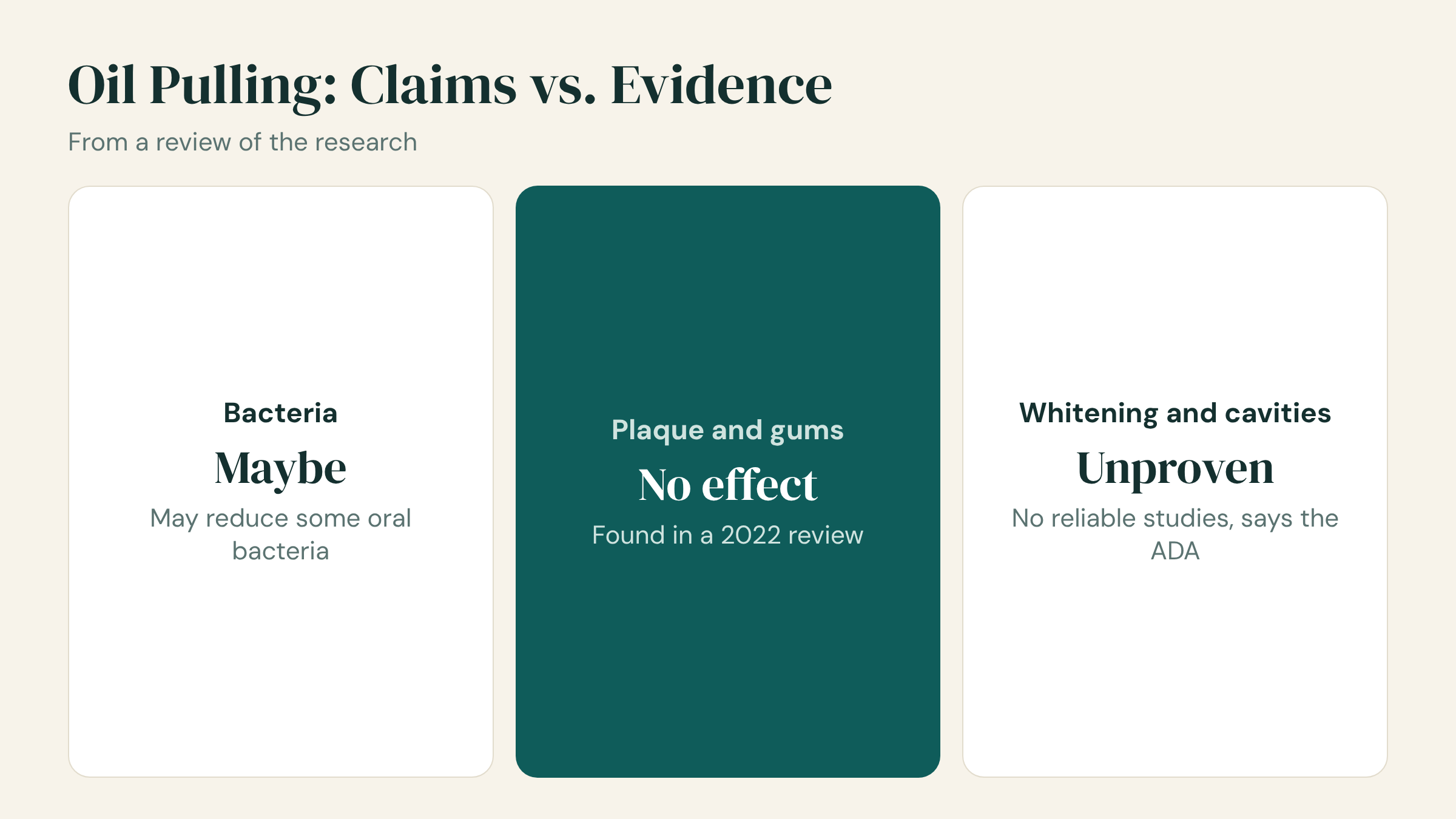
- “It whitens teeth”: There is no good evidence for this. The ADA says no reliable studies show it.
- “It prevents cavities”: This is unproven. Reducing one type of bacterium in a small study does not show fewer cavities.
- “It reduces plaque and strengthens gums”: The 2022 review found no effect on plaque or gums.
- “It removes toxins”: There is no good evidence for this claim.
- “It cures infections”: It should never be used for an infected tooth. A dental infection needs professional treatment.
Why It Is Not a Substitute for Brushing
Plaque is a sticky film that clings to your teeth, and brushing physically removes it. Swishing oil does not replace this action, and it does not deliver the fluoride that helps strengthen teeth. A Cleveland Clinic source quoted by PolitiFact said oil pulling may help with bacteria and gum inflammation, but it “can’t substitute for brushing twice a day and flossing.”
Possible Downsides
For most adults, swishing food oil is unlikely to cause major harm, but keep these points in mind:
- Delayed care: The biggest risk is relying on it instead of seeing a dentist for pain, bleeding, or decay.
- Swallowing or inhaling oil: Do not swallow the oil, and avoid oil pulling if you have trouble swallowing. It is not suitable for young children.
- Jaw soreness: Twenty minutes of swishing can tire your jaw.
- Nausea: Some people find the texture unpleasant.
- Allergies: Avoid oils you are allergic to.
Spit the oil into the trash and not the sink, since oil can clog drains over time.
If You Still Want to Try It
If you enjoy oil pulling and your dentist has no concerns, treat it as an extra, not a replacement. Use a small amount of food-grade oil, swish gently for a shorter time, spit it out, and then brush as usual with fluoride toothpaste. Keep your regular dental appointments, and stop if you have any discomfort.
What Works Better

The best-supported steps for healthy teeth and gums are well established:
- Brush twice a day for two minutes with fluoride toothpaste
- Clean between your teeth once a day
- Limit sugary snacks and drinks
- Avoid tobacco
- See your dentist for checkups and cleanings
If you want a whiter smile, ask your dentist which whitening options are safe for your teeth. Discoloration can also come from tartar or decay, so an exam can help you figure out what is really going on.
Why Do Natural Remedies Spread So Fast Online?
Oil pulling is easy to try, costs little, and makes people feel they are doing something active. Short videos also tend to share personal stories rather than clinical data. Your mouth may feel slick and clean afterward, which feels like proof. But a pleasant feeling is not the same as evidence of less plaque or fewer cavities. When you see a health claim online, look for what dental organizations and quality reviews say, and watch for accounts selling a product.
What About Coconut Oil Toothpaste?
Homemade or “natural” toothpastes may leave out fluoride, one of the most useful ingredients for preventing cavities. Check the label, and choose a product with fluoride unless your dentist advises otherwise. Abrasive home mixtures, such as those with baking soda or charcoal, should be discussed with a dentist first because they may wear down enamel.
When to See a Dentist
See a dentist for tooth pain, swelling, bleeding gums, loose teeth, or bad breath that will not go away. Facial swelling, fever, or trouble swallowing or breathing need urgent care. Do not try to treat these problems at home with oil.
Do Children Need to Avoid It?
Yes. Young children may swallow the oil, and there is no good reason to expose them to that risk. Helping them brush twice a day with fluoride toothpaste, in the amount your dentist suggests, is far more useful.
The Bottom Line
Oil pulling may reduce some mouth bacteria, but research is limited, and there is no reliable evidence that it whitens teeth, prevents cavities, or improves gum health. The American Dental Association recommends standard care instead. If you like it, use it only as an extra to brushing, flossing, and regular dental visits.
Related articles
- Dry Mouth: Causes and Why It Matters
- Best and Worst Foods for Your Teeth
- Are Oral Health and Heart Health Linked?
For more detail, see the official guidance from NIDCR: Periodontal (Gum) Disease.
This article is for general information only and is not medical advice. Talk to a healthcare professional about your symptoms, and before starting any supplement, especially if you take medication or have a medical condition.
1 Comment on “Does Oil Pulling Work? What the Research Says”